
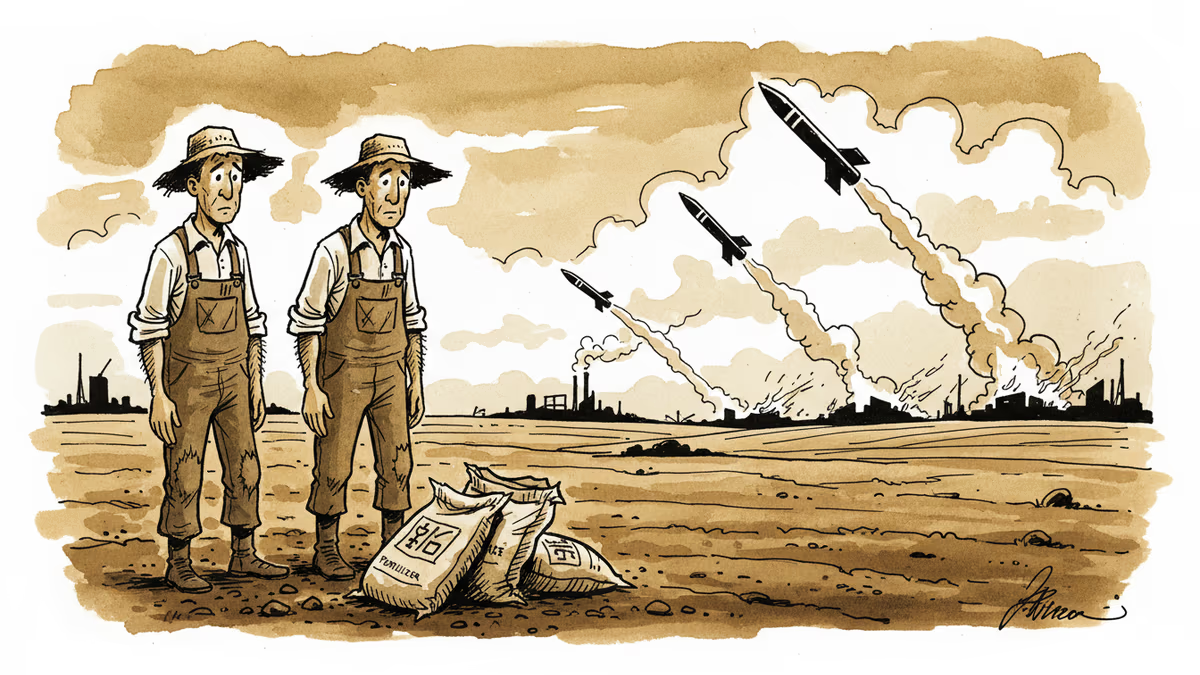
How Middle East War Is Stealing America's Spring
Iran-US conflict has crippled global fertilizer supply chains just before spring planting season, creating worst-case scenarios for American farmers already squeezed by trade wars.
The Worst Possible Timing
"This literally could not be happening at a worse time." Josh Linville's words capture the desperation rippling through America's farmland. The StoneX fertilizer executive isn't talking about oil prices spiking after last weekend's US attack on Iran—he's talking about something potentially more devastating for everyday Americans: the global fertilizer supply chain choking just as spring planting season begins.
March isn't just another month for US farmers. It's when they place orders for fertilizer that must arrive by early April for spring planting. What's happening in the Middle East right now is targeting this critical window with surgical precision.
Hitting Every Pressure Point
The global fertilizer market runs on three key nutrients: phosphates, nitrogen, and potash. Each produced differently, each dominated by different countries. This conflict isn't picking favorites—it's hitting all of them simultaneously.
Nitrogen fertilizers took the biggest hit first. When QatarLNG announced production halts Monday following drone strikes, nearly a fifth of the world's natural gas supply went offline overnight. European gas prices spiked, and with them, production of nitrogen fertilizers that depend on natural gas.
Tuesday brought worse news: Qatar would also stop producing downstream products, including urea. Qatar was the world's second-largest urea exporter in 2024. Iran was third. Urea prices at New Orleans—a key US commodity port—jumped 15% in a single day compared to the previous week.
The Domino Effect Accelerates
"When we look at ammonia, we're looking at almost 30% of global production being either involved or at risk," says Veronica Nigh, senior economist at the Fertilizer Institute. "It gets worse when we think about urea. Urea is almost 50%."

Other fertilizers aren't safe either. Saudi Arabia supplies about 40% of all US phosphate imports. Jordan, Egypt, and Israel also play major roles. Persian Gulf manufacturers are already reporting shutdowns because they've hit storage capacity limits with nowhere to ship their products.
Meanwhile, China—the world's largest phosphate producer—announced last year it would suspend all exports until August to meet domestic demand. The biggest player just left the game when it's needed most.
Farmers' Impossible Choices
Around three-quarters of US fertilizer demand goes to large Midwest operations growing corn, soy, wheat, and cotton. These aren't small family farms that can pivot quickly—they're massive operations that have already made fertilizer decisions based on crop type and soil conditions.
"It's a very critical window right now," Nigh emphasizes. Farmers can't simply switch fertilizer types or delay planting without devastating consequences.
Unlike energy markets, where the US can tap the Strategic Petroleum Reserve during shortages, there's no fertilizer buffer. American farmers, already reeling from the China trade war that cratered demand for US corn and soybeans, are facing a perfect storm. The $11 billion Department of Agriculture bailout will only cover part of their existing losses.
Worst-Case Scenarios Becoming Reality
If the conflict drags on, farmers may face rationing—fertilizing some acres but not others, or planting crops that need less nitrogen. "In the worst-case scenario," Linville warns, "there's only so many tons to go around, and the market has to start figuring out who's the highest bidder. Somebody's gonna go without and have to plant something else."
The Trump administration announced naval escort initiatives Tuesday to protect tankers in the Strait of Hormuz, but the shipping industry has expressed doubt about their effectiveness. Even if successful, oil and gas shipments will likely take priority over fertilizer.
"Fertilizer is not going to be the most valuable thing that's gonna transit the strait," Nigh notes.
Authors
Related Articles
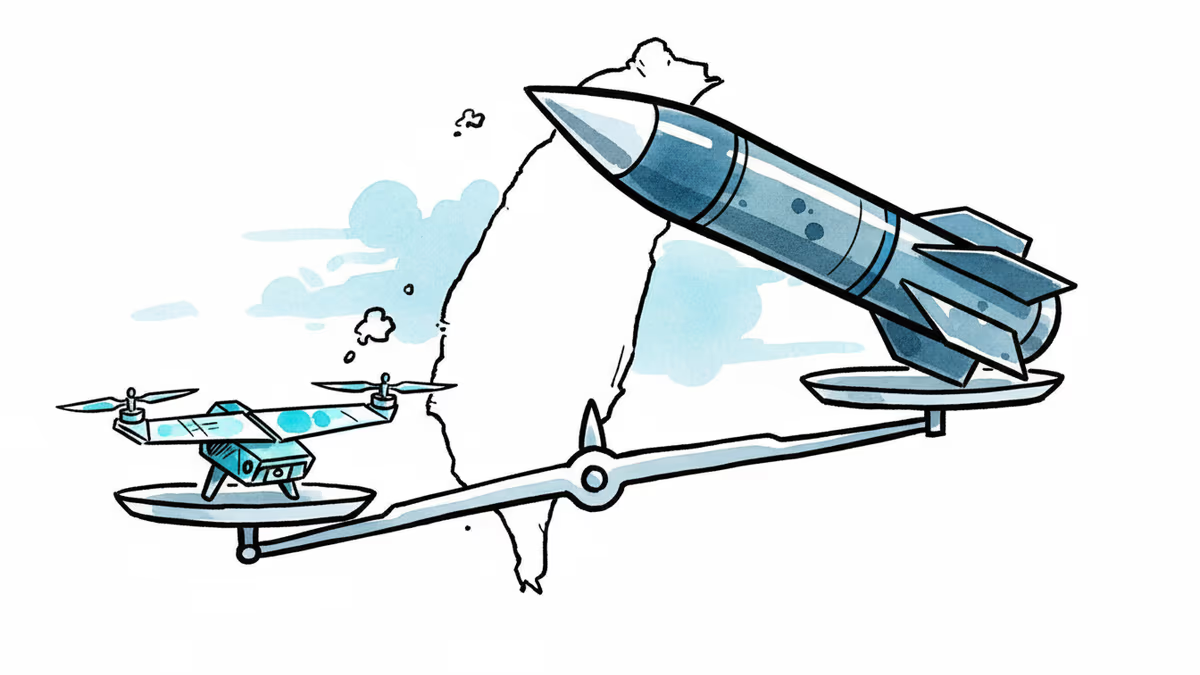
Taiwan's Thunder Tiger became the first Asian firm to win US military drone clearance with a China-free supply chain. As Trump meets Xi, the drone arithmetic reshapes defense strategy.
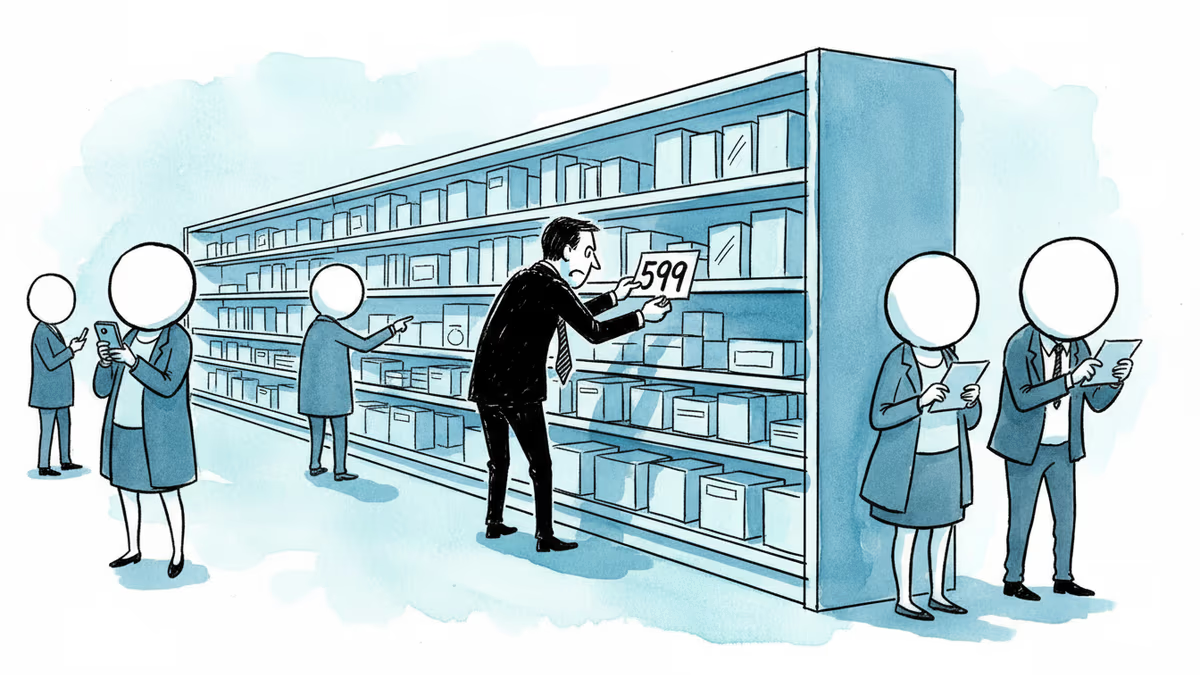
Apple quietly removed the entry-level $599 Mac Mini, raising the starting price to $799 — just one day after Tim Cook warned of chip supply constraints on the earnings call.
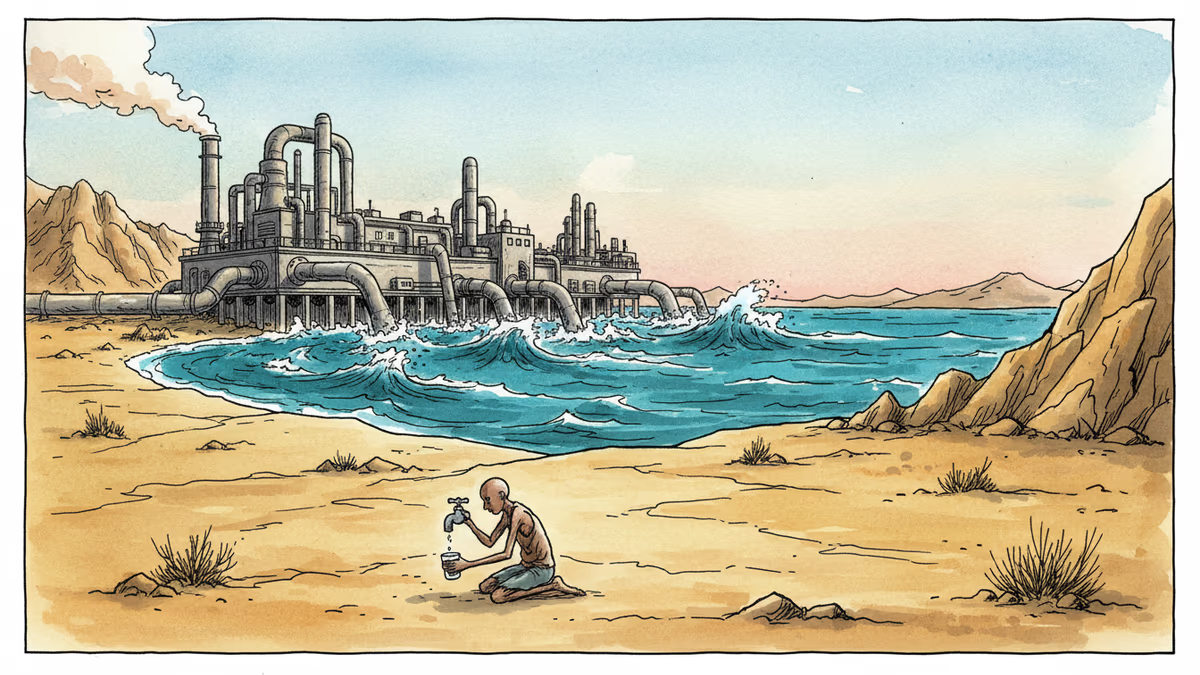
Qatar gets 99% of its drinking water from the sea. As the Middle East prepares to spend $25 billion expanding desalination capacity, this once-niche technology is becoming critical global infrastructure.
Fake shelter apps, death threats by text, and silent infrastructure attacks. The Iran-Israel-US cyber conflict is reshaping what war looks like in 2026.
Taiwan's Thunder Tiger became the first Asian firm to win US military drone clearance with a China-free supply chain. As Trump meets Xi, the drone arithmetic reshapes defense strategy.
Apple quietly removed the entry-level $599 Mac Mini, raising the starting price to $799 — just one day after Tim Cook warned of chip supply constraints on the earnings call.
Qatar gets 99% of its drinking water from the sea. As the Middle East prepares to spend $25 billion expanding desalination capacity, this once-niche technology is becoming critical global infrastructure.
Fake shelter apps, death threats by text, and silent infrastructure attacks. The Iran-Israel-US cyber conflict is reshaping what war looks like in 2026.
Thoughts
Share your thoughts on this article
Sign in to join the conversation