
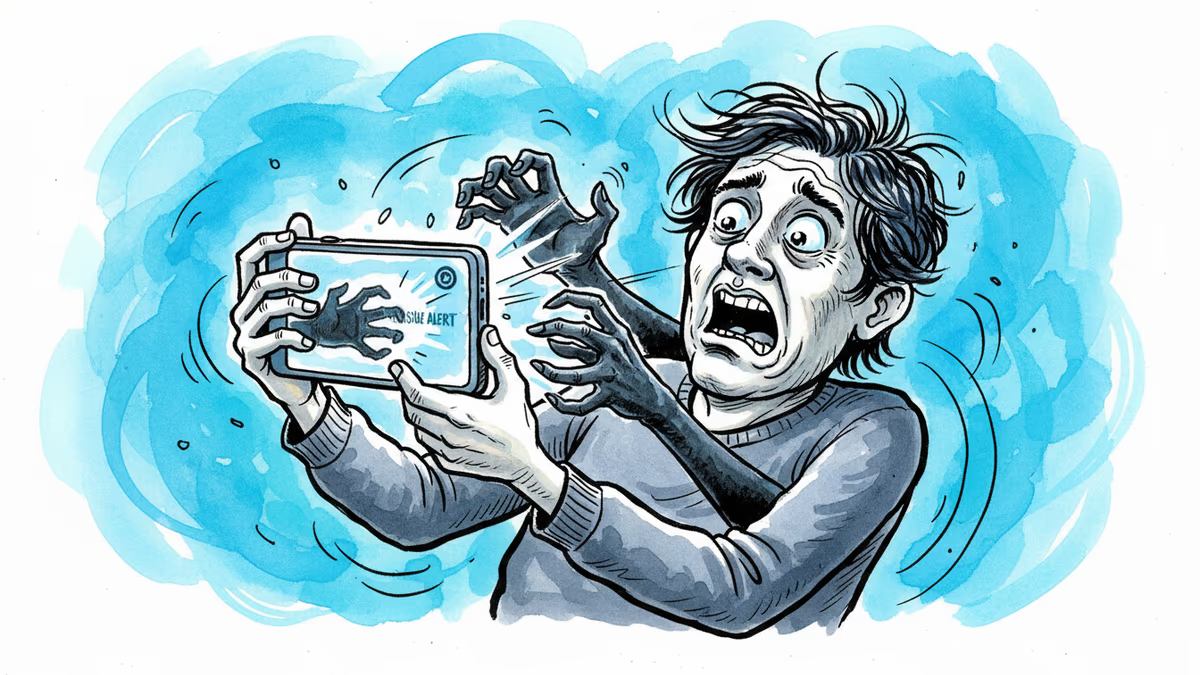
The War You Can't See: Missiles, Malware, and Mass Panic
Fake shelter apps, death threats by text, and silent infrastructure attacks. The Iran-Israel-US cyber conflict is reshaping what war looks like in 2026.
The sirens were real. The military text that followed was not.
When the Alert Becomes the Attack
Earlier this month, as missile warnings blared across Israel, thousands of residents received text messages purportedly from the Israeli military. The message was urgent: download a shelter app immediately. In a moment of genuine fear, clicking the link would have felt instinctive — even responsible. But the app was fake, designed to harvest personal data on a mass scale.
Around the same time, a separate wave of messages landed on Israeli phones: "Netanyahu is dead. Death is approaching you and soon the gates of hell will open before you. Before the fire of Iranian missiles destroys you, leave Palestine." The statement was false. The intent was not information — it was destabilization.
Cybersecurity experts describe these incidents as the visible surface of a far deeper conflict playing out across the internet between Iran, Israel, and the United States, along with their respective networks of online sympathizers and proxy actors.
Three Weapons, One Battlefield
The digital dimension of this conflict operates on three distinct levels, each harder to see than the last.
The most visible layer is social engineering at scale — exploiting real emergencies to trick civilians into surrendering data or spreading panic. The fake shelter app is a near-perfect example: it weaponized the exact moment when critical thinking is hardest. No sophisticated exploit needed. Just fear and a convincing link.
The second layer is psychological operations. Mass disinformation — false reports of a leader's death, fabricated casualty numbers, doctored footage — isn't new. What's changed is velocity. A text message reaches millions in minutes, and a retraction never fully catches up. The goal isn't to win an argument. It's to exhaust trust in every source of information.

The third, least visible layer is infrastructure targeting: probing or attacking power grids, water treatment systems, financial networks, and military communications. Most of this never becomes public. But security researchers say the attempts are constant, and the line between probing and active disruption is increasingly thin.
How We Got Here
This didn't start in 2026. The modern era of state-sponsored cyberwarfare has a fairly precise origin point: 2010, when the Stuxnet worm — widely attributed to a joint US-Israeli operation — physically destroyed centrifuges at Iran's Natanz nuclear facility. No bombs. No troops. Just code.
For Iran, the lesson was unambiguous: cyberspace is a legitimate theater of war, and one where a smaller conventional military can punch well above its weight. In the 15 years since, Iran has invested heavily in offensive cyber capabilities, building units like APT33 and APT42 that Western intelligence agencies have linked to campaigns targeting energy infrastructure, defense contractors, and government networks across the Middle East, Europe, and North America.
The economics are brutally simple. A sophisticated cyberattack costs a fraction of a missile strike. It can be deniable. It rarely triggers a formal military response. And the legal framework governing what constitutes an act of war in cyberspace remains, in 2026, genuinely unresolved.
Who's Watching — and Who Should Be
For cybersecurity professionals, the fake shelter app represents a sobering evolution in attack design. Timing an operation to coincide with a live missile alert isn't just technically competent — it's psychologically sophisticated. It suggests adversaries are now planning cyber operations around real-world events, not just exploiting them opportunistically.
For governments and military planners, the implications are structural. Emergency alert systems, civilian communication networks, and public health infrastructure were designed for peacetime. They're now attack surfaces. The boundary between civilian and military targets — already blurry in modern conflict — is effectively gone in cyberspace.
For ordinary citizens, the uncomfortable truth is that the most effective defenses aren't technical. They're behavioral. Pausing before clicking a link during a crisis. Cross-referencing emergency information through official channels. Recognizing that the moment of highest fear is precisely when adversaries want you to act without thinking.
For tech policy analysts and US officials, this conflict is also a stress test for international norms. The Budapest Convention on Cybercrime covers criminal activity but not state-sponsored warfare. Proposed frameworks for cyber conflict rules of engagement have stalled repeatedly. Meanwhile, the operations continue.
Authors
Related Articles
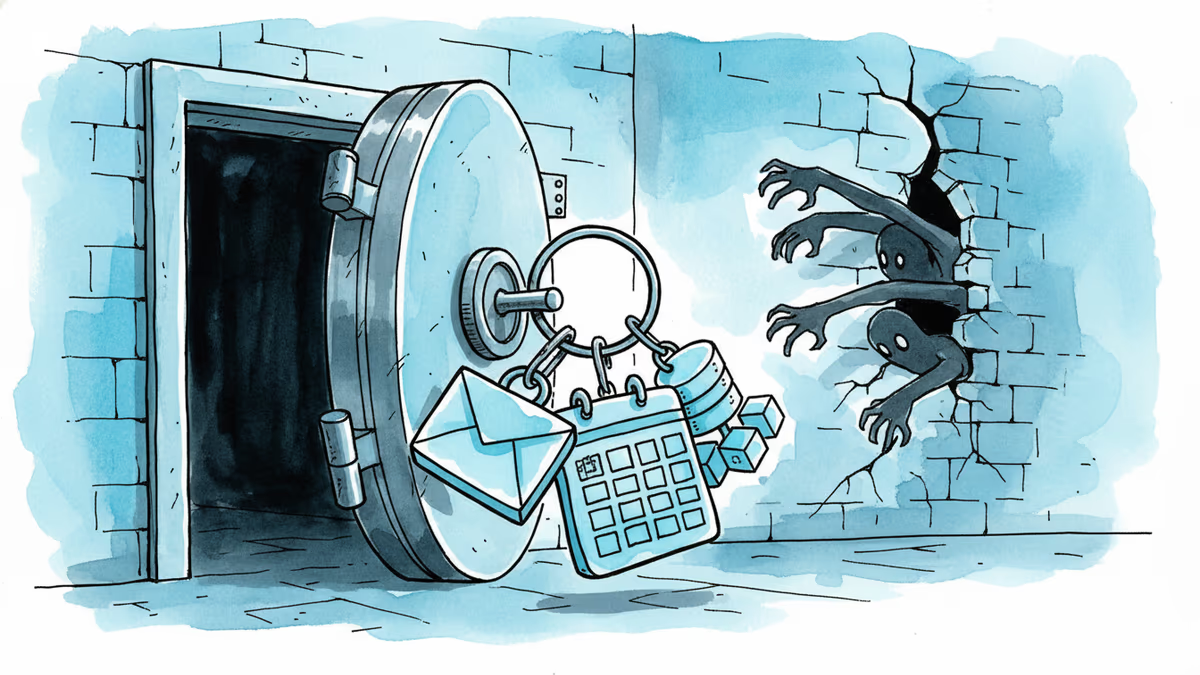
A critical vulnerability in Starlette—downloaded 325 million times per week—puts millions of AI agent servers at risk, exposing stored credentials for email, databases, and third-party services.

GitHub confirmed hackers stole data from 3,800 internal repositories via a poisoned VS Code extension. Here's why developer tools are now the most dangerous attack surface in tech.
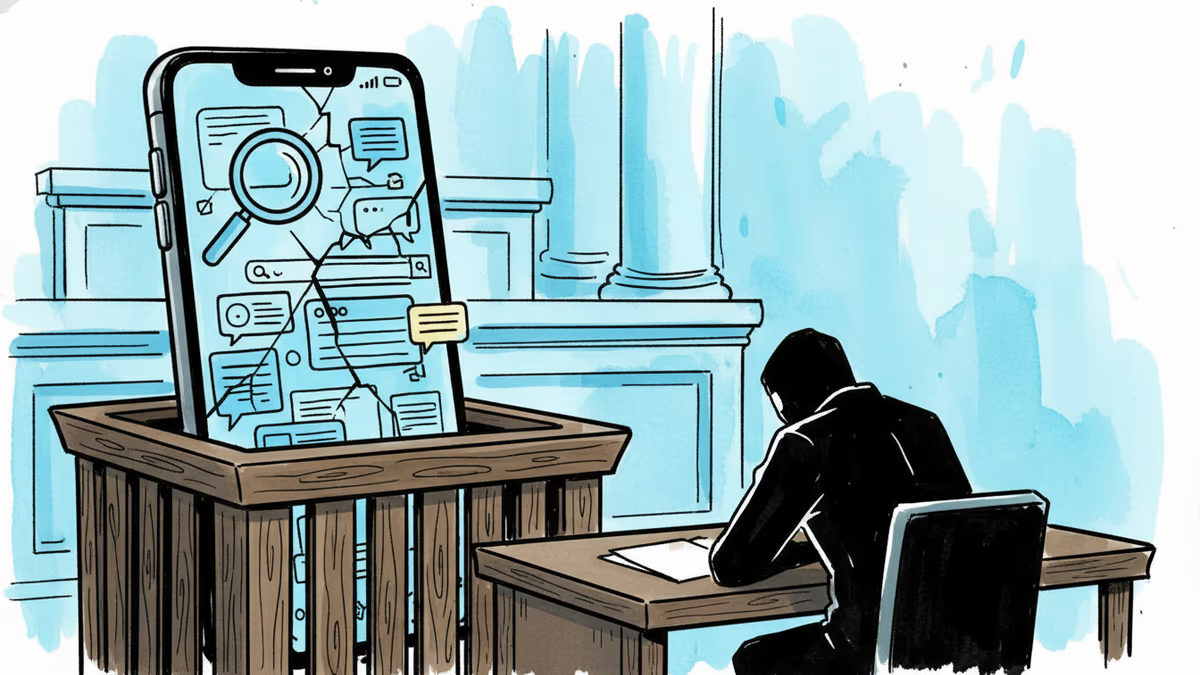
A Utah woman was sentenced to life in prison partly because of her Google searches and deleted texts. The Kouri Richins case reveals how digital footprints have become the courtroom's most reliable witness.
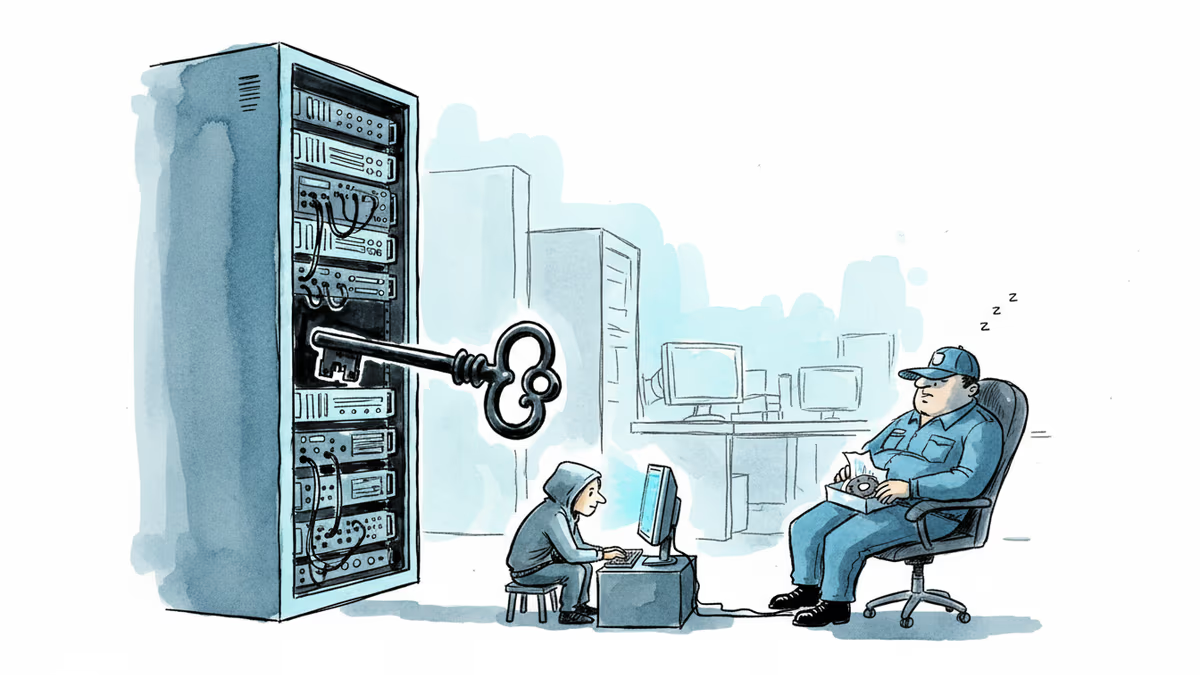
Dirty Frag gives low-privilege users root access on virtually every Linux distro. The exploit code leaked three days ago. Microsoft says attackers are already experimenting with it.
A critical vulnerability in Starlette—downloaded 325 million times per week—puts millions of AI agent servers at risk, exposing stored credentials for email, databases, and third-party services.
GitHub confirmed hackers stole data from 3,800 internal repositories via a poisoned VS Code extension. Here's why developer tools are now the most dangerous attack surface in tech.
A Utah woman was sentenced to life in prison partly because of her Google searches and deleted texts. The Kouri Richins case reveals how digital footprints have become the courtroom's most reliable witness.
Dirty Frag gives low-privilege users root access on virtually every Linux distro. The exploit code leaked three days ago. Microsoft says attackers are already experimenting with it.
Thoughts
Share your thoughts on this article
Sign in to join the conversation