
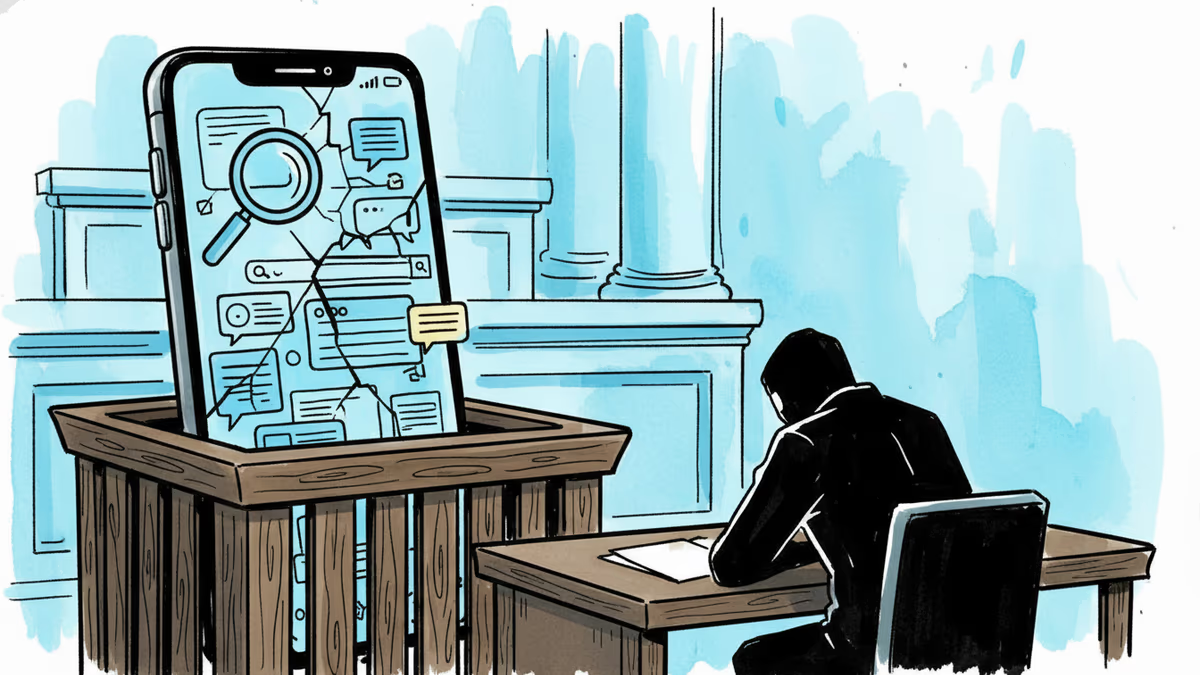
Your Phone Remembers Everything You Delete
A Utah woman was sentenced to life in prison partly because of her Google searches and deleted texts. The Kouri Richins case reveals how digital footprints have become the courtroom's most reliable witness.
"What kind of doctor was Dr. Pepper?" It's the kind of idle curiosity most of us have typed into a search bar at some point. For Kouri Richins, a Utah real estate agent, that harmless query sat in a browser history alongside far less innocent ones — and that combination helped put her in prison for the rest of her life.
What the Phone Knew
In March 2022, Kouri's husband Eric Richins died of a fentanyl overdose at their home. Utah police opened an investigation. Within weeks, they seized Kouri's iPhone — and what they found, or rather what they didn't find on the device, became central to the case.
When investigators cross-referenced the phone's contents against records held by her cell carrier, a pattern emerged: a significant number of text messages sent and received around the time of Eric's death had been deleted from the handset. The carrier's servers, however, had retained the metadata. The messages themselves may have been gone, but the fact that they existed — and then disappeared — was not.
Cell tower ping data filled in the rest. Every time a powered-on smartphone connects to a nearby tower, that handshake is logged. Those logs reconstructed Kouri's movements in the days before Eric died, providing prosecutors with a timeline the defense could not easily dispute. Layered on top: evidence that Kouri had taken out multiple life insurance policies on Eric without his knowledge.
On May 14, 2026, Kouri Richins was sentenced to life without parole. Her internet search history was cited as a key piece of evidence at trial.
Three Layers You Can't Erase

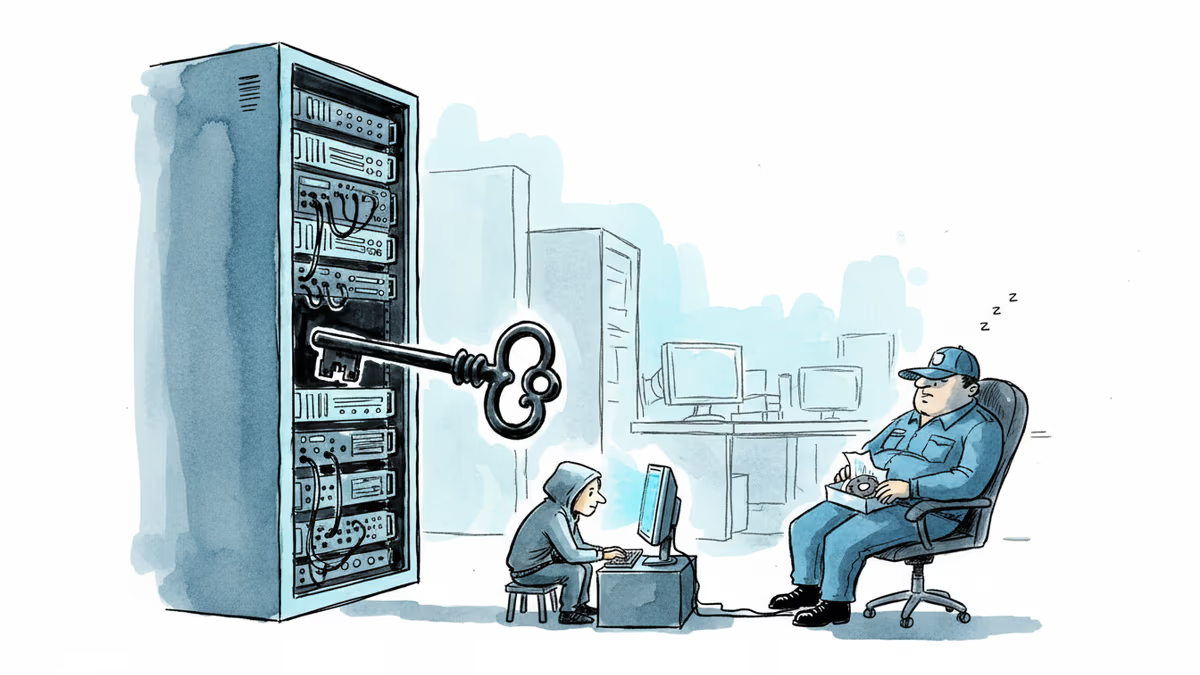
The technical architecture behind this case matters beyond the verdict. Modern digital life exists across at least three independent record layers, and most people only think about one of them.
The first is the device itself. Deleted files aren't immediately overwritten — forensic tools can often recover them until new data physically replaces them. The second is the carrier's infrastructure. Call logs, SMS metadata, and cell tower pings are stored independently of what's on your handset. The third is platform servers: search engines, cloud services, and social platforms maintain their own logs, separate from anything a user can delete on their end.
Prosecutors in the Richins case leaned on layers two and three. The phone had been cleaned; the carrier and platform records had not. This is not a new forensic reality — investigators have used cell tower data since the early 2000s — but the Richins case illustrates how comprehensively these layers now interlock.
The Uncomfortable Question Behind the Verdict
For privacy advocates and legal scholars, the Richins verdict is not a simple win. The question isn't whether the evidence was used appropriately here — courts found it was. The question is structural: what rules govern access to this data before it reaches a courtroom?
The legal landscape shifted meaningfully in 2018, when the U.S. Supreme Court ruled in Carpenter v. United States that accessing long-term cell-site location records requires a warrant. The decision was a landmark acknowledgment that historical location data carries a reasonable expectation of privacy. But the ruling left significant ambiguity: how many days of data triggers the warrant requirement? What about metadata from deleted messages? What about location data obtained from third-party apps rather than carriers directly?
Cybersecurity professionals point out that the gap between what law enforcement can access and what requires judicial oversight remains wide. Digital rights organizations argue that data generated passively — tower pings a user never consciously sent — occupies a different moral category than data a person actively created. Prosecutors counter that data voluntarily shared with third parties (carriers, platforms) has historically carried reduced privacy expectations under the third-party doctrine.
Both positions have legal merit. Neither fully resolves the tension.
This content is AI-generated based on source articles. While we strive for accuracy, errors may occur. We recommend verifying with the original source.
Related Articles
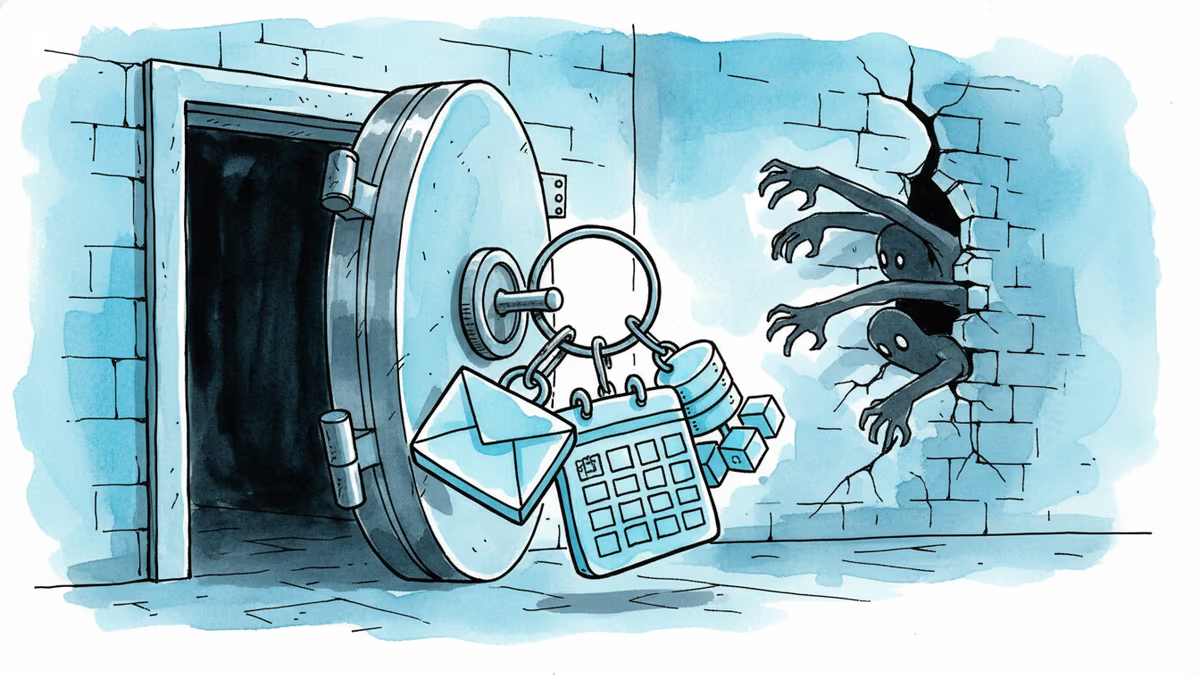
A critical vulnerability in Starlette—downloaded 325 million times per week—puts millions of AI agent servers at risk, exposing stored credentials for email, databases, and third-party services.
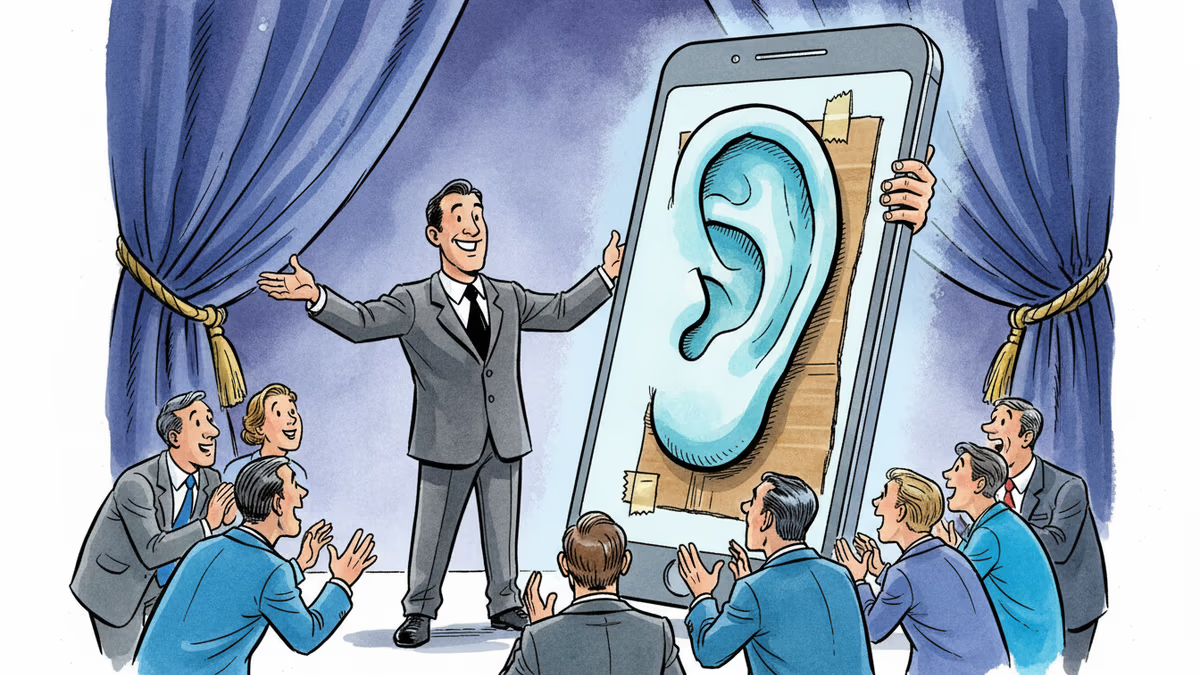
The FTC fined Cox Media and two ad firms $930,000 — not for actually eavesdropping on users, but for falsely claiming they could. The case raises uncomfortable questions about surveillance capitalism.
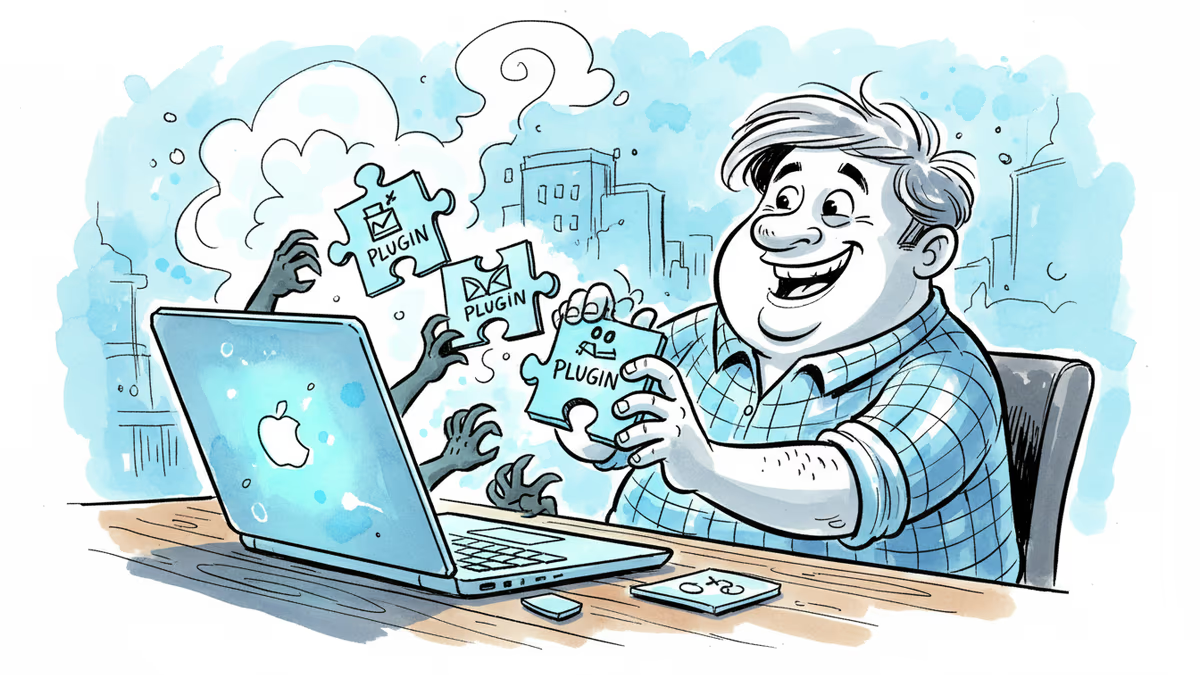
GitHub confirmed hackers stole data from 3,800 internal repositories via a poisoned VS Code extension. Here's why developer tools are now the most dangerous attack surface in tech.
Dirty Frag gives low-privilege users root access on virtually every Linux distro. The exploit code leaked three days ago. Microsoft says attackers are already experimenting with it.
A critical vulnerability in Starlette—downloaded 325 million times per week—puts millions of AI agent servers at risk, exposing stored credentials for email, databases, and third-party services.
The FTC fined Cox Media and two ad firms $930,000 — not for actually eavesdropping on users, but for falsely claiming they could. The case raises uncomfortable questions about surveillance capitalism.
GitHub confirmed hackers stole data from 3,800 internal repositories via a poisoned VS Code extension. Here's why developer tools are now the most dangerous attack surface in tech.
Dirty Frag gives low-privilege users root access on virtually every Linux distro. The exploit code leaked three days ago. Microsoft says attackers are already experimenting with it.
Thoughts
Share your thoughts on this article
Sign in to join the conversation