

The iOS Backlash: Is Apple's 'It Just Works' Empire Showing Cracks?
Analysis of the recent iOS update backlash. Discover why user frustration signals a deeper strategic risk to Apple's brand and competitive moat.
The Lede: Beyond the Bug Reports
Widespread user backlash against Apple's latest iOS update is more than just social media noise; it's a strategic warning signal. For decades, Apple's core competitive advantage has been an intuitive, frictionless user experience. When that 'it just works' promise is broken at a fundamental level, it jeopardizes the very foundation of the company's trillion-dollar ecosystem. Executives should see this not as a technical glitch, but as the erosion of a critical brand asset: user trust.
Why It Matters: The Second-Order Effects
The immediate fallout is user frustration. The long-term consequences are far more severe:
- Erosion of the 'Experience Moat': Apple's walled garden is palatable because the user experience is perceived as superior. When the core interface becomes slow, confusing, and buggy, the walls of that garden start to feel less like a pristine sanctuary and more like a prison. This gives users a reason to peek over the fence at an ever-improving Android ecosystem.
- Opening the Door for Disruption: The next frontier of computing is not about more apps, but about AI-native interfaces that anticipate user needs. A cluttered, unintuitive OS is the antithesis of this future. As startups like Humane and Rabbit pioneer new hardware paradigms, a clunky iOS makes Apple look like a legacy incumbent, vulnerable to a paradigm shift it isn't prepared for.
- The 'Enshittification' Creep: The source complaints—unsolicited animations, moved features, fussy controls—are symptoms of 'feature bloat'. This happens when a mature product's roadmap prioritizes adding more over making things better. It suggests an internal focus on engineering checklists over holistic user experience, a dangerous path for a design-led company.

The Analysis: A Departure from the Jobs Doctrine
Historically, Apple's DNA, imprinted by Steve Jobs, was an obsessive focus on simplicity and user delight. The original iPhone didn't win on specs; it won on an interface so intuitive a child could use it. This recent wave of frustration suggests a departure from that core doctrine.
This isn't the first misstep—Apple Maps' disastrous launch and the flawed 'butterfly' keyboard come to mind. However, this is different. This concerns the OS itself, the central nervous system of every user's digital life. While competitors like Google are leveraging AI to make Android smarter and more predictive with every release, Apple appears to be caught in a cycle of aesthetic tinkering that adds complexity without clear user benefit. The quote from the source material, “one wonders at what point a company’s petrification of obsolescence risks becoming a self-fulfilling prophecy,” is pointed. By forcing non-intuitive changes in the name of 'newness', Apple risks alienating its loyal base and making its own products feel obsolete.
PRISM's Take: Time for a 'Snow Leopard' Moment
This is more than a bad update requiring a patch. It's a cultural warning. The user outrage is a lagging indicator of a product strategy that has drifted from its 'user-first' anchor. Apple cannot afford to ignore these signals. The company needs a 'Snow Leopard' moment—a reference to its 2009 Mac OS X release that famously introduced 'no new features' and instead focused entirely on speed, stability, and refinement.
By publicly dedicating an entire development cycle to perfecting the core experience, Apple would not only fix the immediate issues but also send a powerful message to its users and the market: we haven't forgotten who we are. In the relentless pursuit of 'the next big thing', Apple must not break the beautiful, simple thing that made it dominant in the first place.
Authors
Related Articles
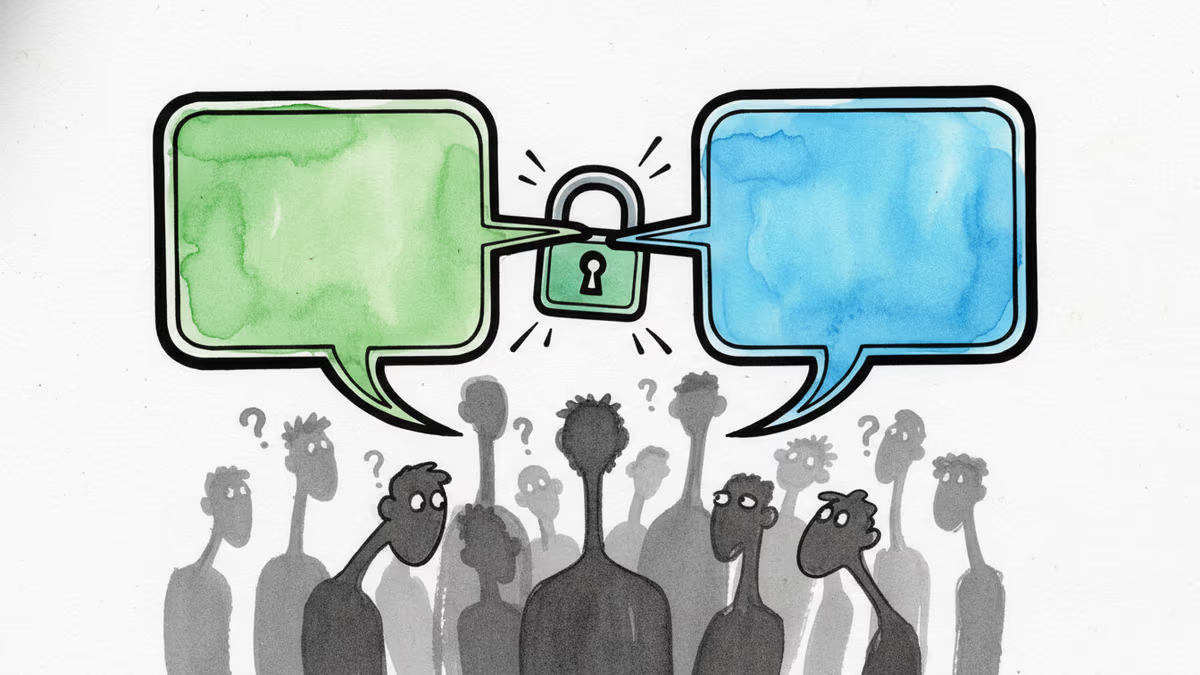
After 15 years of fragmented mobile messaging, Apple and Google are rolling out end-to-end encrypted RCS messaging between iPhones and Android devices. Here's what changed, why it took so long, and what it means for your privacy.
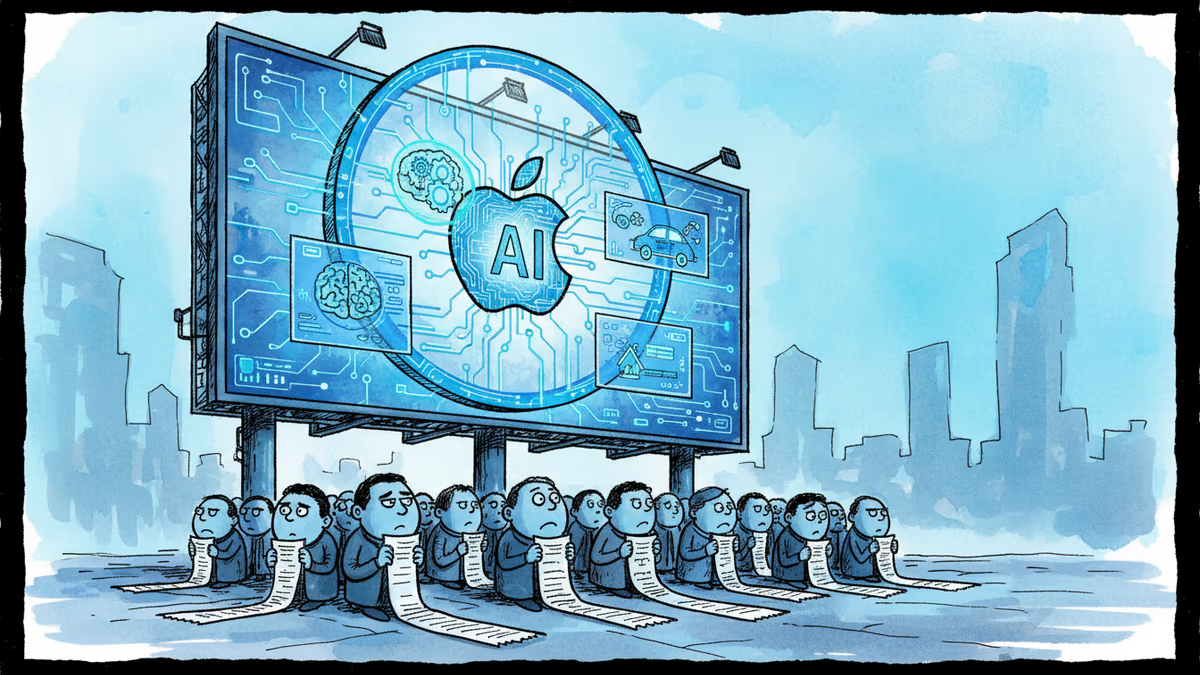
Apple agreed to pay $250 million to settle claims it misled iPhone 16 buyers about Apple Intelligence features. What this means for consumers, Big Tech marketing, and the AI industry.
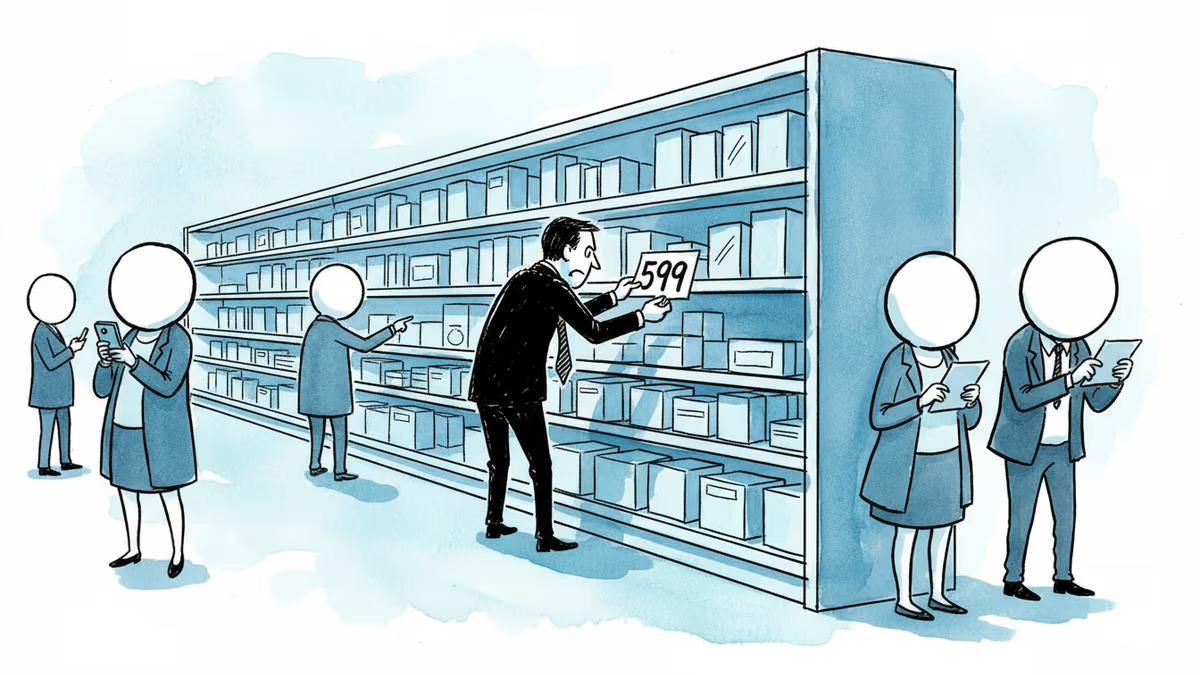
Apple quietly removed the entry-level $599 Mac Mini, raising the starting price to $799 — just one day after Tim Cook warned of chip supply constraints on the earnings call.
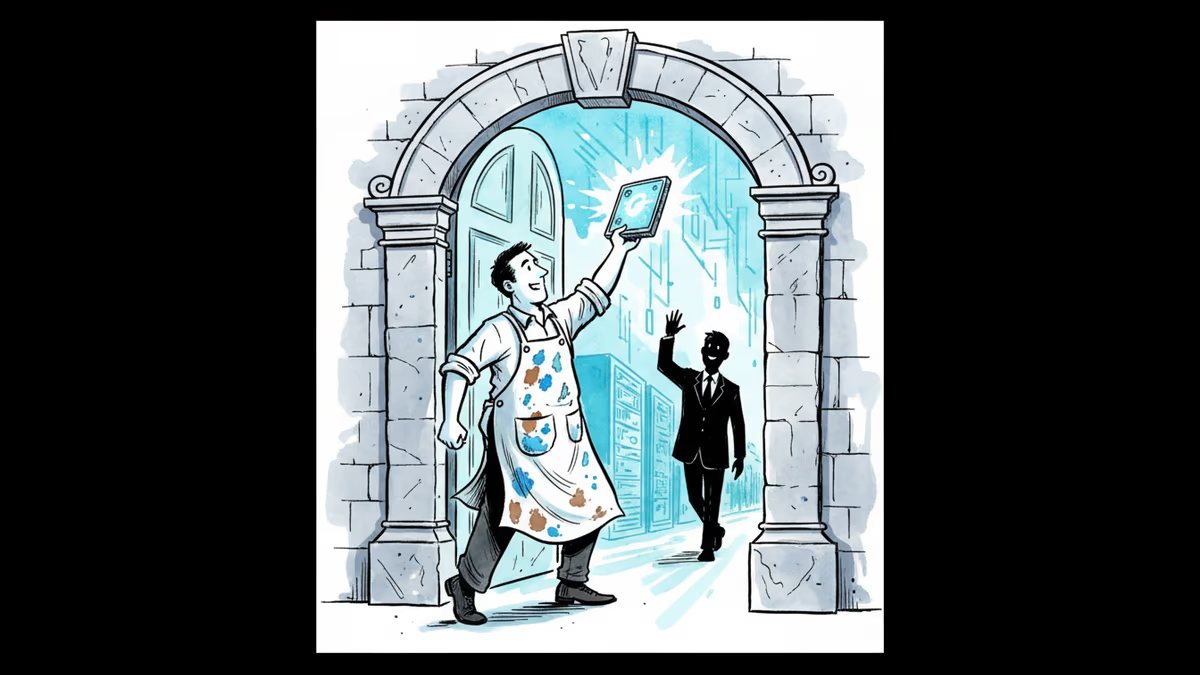
Apple names John Ternus, its hardware engineering chief, as the next CEO. The shift from operator to product person signals where Apple thinks its next decade of growth will come from — and raises real questions about what comes next.
After 15 years of fragmented mobile messaging, Apple and Google are rolling out end-to-end encrypted RCS messaging between iPhones and Android devices. Here's what changed, why it took so long, and what it means for your privacy.
Apple agreed to pay $250 million to settle claims it misled iPhone 16 buyers about Apple Intelligence features. What this means for consumers, Big Tech marketing, and the AI industry.
Apple quietly removed the entry-level $599 Mac Mini, raising the starting price to $799 — just one day after Tim Cook warned of chip supply constraints on the earnings call.
Apple names John Ternus, its hardware engineering chief, as the next CEO. The shift from operator to product person signals where Apple thinks its next decade of growth will come from — and raises real questions about what comes next.
Thoughts
Share your thoughts on this article
Sign in to join the conversation