
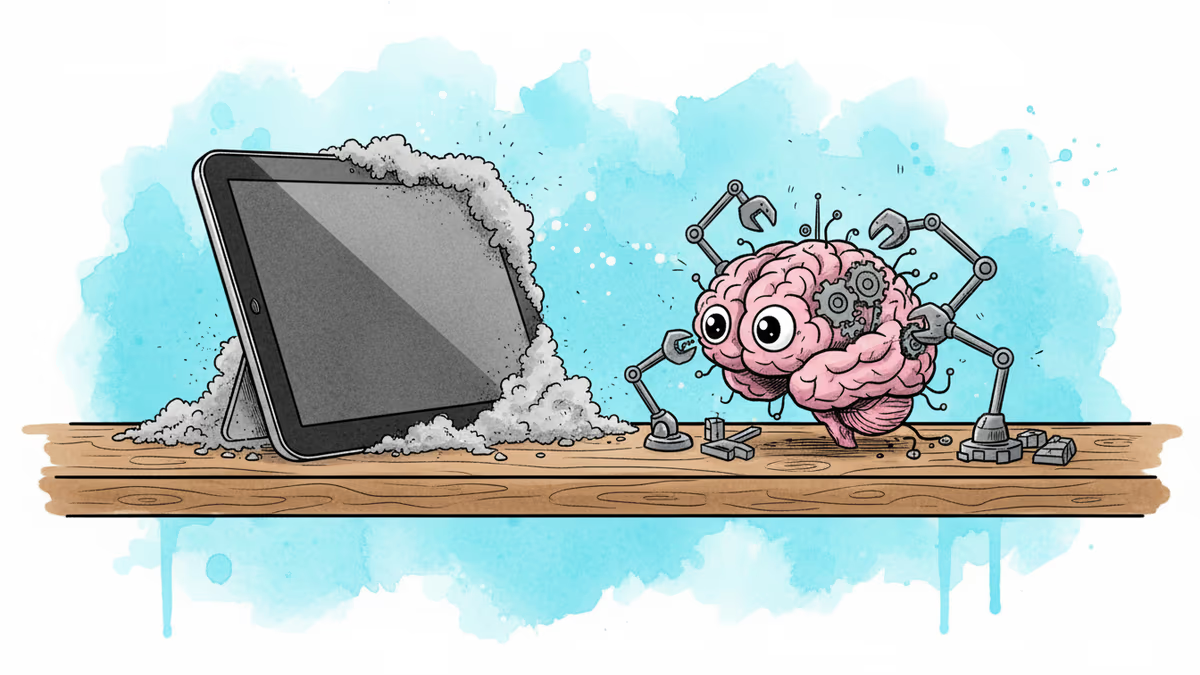
Apple's Smart Home Hub Is Waiting for Siri to Grow Up
Apple's HomePad smart display has been delayed again—now targeting fall 2026—because its AI-upgraded Siri still isn't ready. What does that tell us about where the smart home industry is heading?
Three Delays and Counting
The device has been called many things—HomePod with a screen, smart home display, HomePad—but one label has stuck longer than any other: delayed. Originally slated for sometime in 2025, then pushed to spring 2026, Apple's tabletop smart home hub has now reportedly slipped again to fall 2026. Leaker Kosutami broke the news on X last week, and Bloomberg's Mark Gurman followed with confirmation. Gurman added another detail worth noting: the more ambitious sibling product—a robot arm-equipped home device—has been pushed all the way to 2027.
The reason, according to Gurman, is straightforward: the device is waiting on Siri.
Why Siri Is the Bottleneck
Apple's smart display, internally codenamed J490, isn't designed to be just a screen for video calls or a fancier HomePod. It's meant to be an AI-powered hub for the entire Apple home ecosystem—and that means the new, chatbot-style Siri needs to be its brain. The problem is that brain isn't ready yet.
Apple has been promising a meaningfully smarter Siri since it announced Apple Intelligence at WWDC 2024. The vision: a Siri that understands context, navigates across apps, and handles complex, multi-step requests—not just 'set a timer' but 'find that recipe I saved last month and add the ingredients to my shopping list.' That kind of agentic AI is technically hard for anyone. For Apple, it's doubly complicated by the company's privacy-first architecture. Unlike Google or Amazon, Apple can't simply route everything through the cloud. On-device processing and Private Cloud Compute are core to the pitch—and building genuinely capable AI within those constraints takes time.
The upgraded Siri is now expected to arrive later this year, likely alongside iOS 19. The HomePad follows.

What the Competition Is Doing in the Meantime
The smart home display market hasn't been standing still. Amazon's Echo Hub and Echo Show line, Google's Nest Hub, and Meta's Portal (now discontinued) have all taken swings at the category. Amazon and Google have the advantage of years of iteration and deeply integrated AI assistants—though neither has cracked the mass-market 'essential home device' status either.
What Apple is betting on is differentiation through ecosystem lock-in and AI quality. The 1.5 billion active Apple devices worldwide create a captive audience. If the new Siri genuinely delivers—understanding your iMessage history, your Calendar, your Photos, your HomeKit devices in one coherent experience—that's a moat competitors can't easily replicate. But that's a big 'if,' and every delay chips away at the narrative.
For investors, the delay is a mixed signal. Apple's services and hardware ecosystem revenues remain strong, and one delayed product line won't move the needle on quarterly earnings. But the smart home is increasingly seen as a strategic battleground for the next decade of consumer tech. Ceding ground to Amazon and Google for another 12-18 months has compounding costs.
The Broader Pattern Worth Watching
There's something structurally interesting happening here. For most of consumer electronics history, the cadence was: ship the hardware, improve the software later. Apple itself mastered this—early iPhones lacked basic features that arrived in subsequent iOS updates.
But Apple is now doing the opposite: holding back hardware until the software is ready. That inversion reflects how central AI has become to the value proposition of new devices. A smart home hub without genuinely smart AI isn't a hub—it's an expensive clock.
This logic, if it holds, has implications beyond Apple. It suggests that for an entire category of AI-native devices—home displays, AR glasses, autonomous vehicles—the product launch timeline is no longer determined by chip availability or manufacturing readiness. It's determined by model capability. The hardware waits for the AI.
Authors
Related Articles
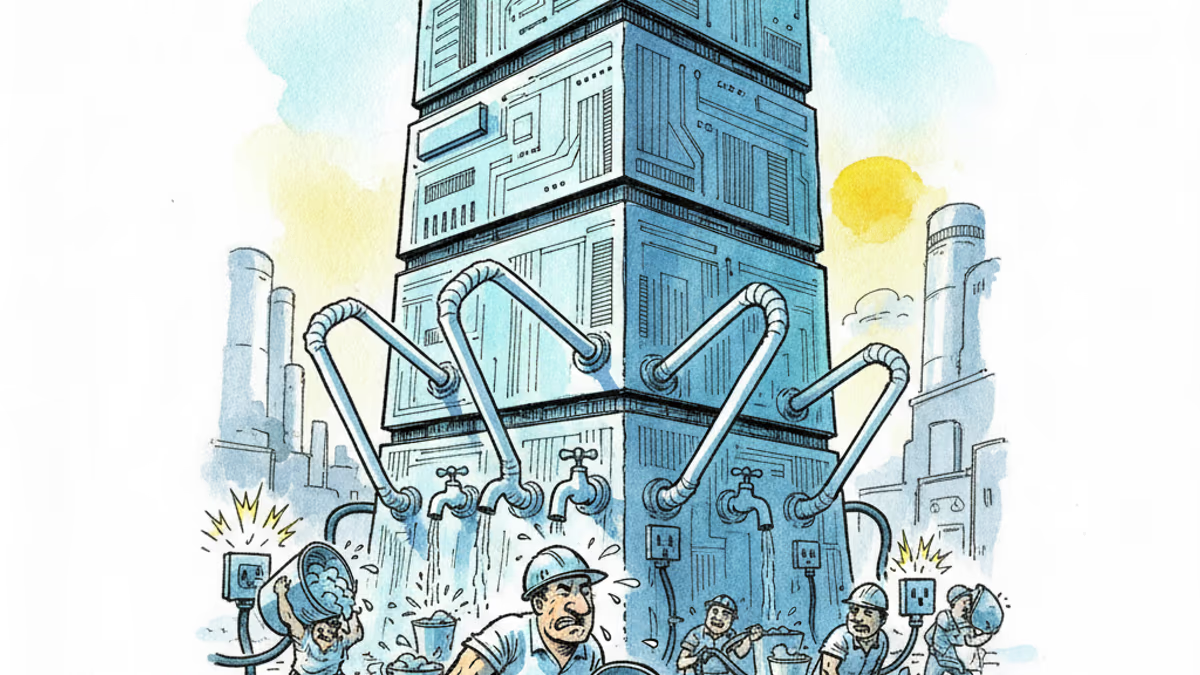
Samsung and SK unveiled a chip and AI investment package worth thousands of trillions of won on June 29. The headline number swings wildly by outlet, but the real contest isn't capital — it's water and power.
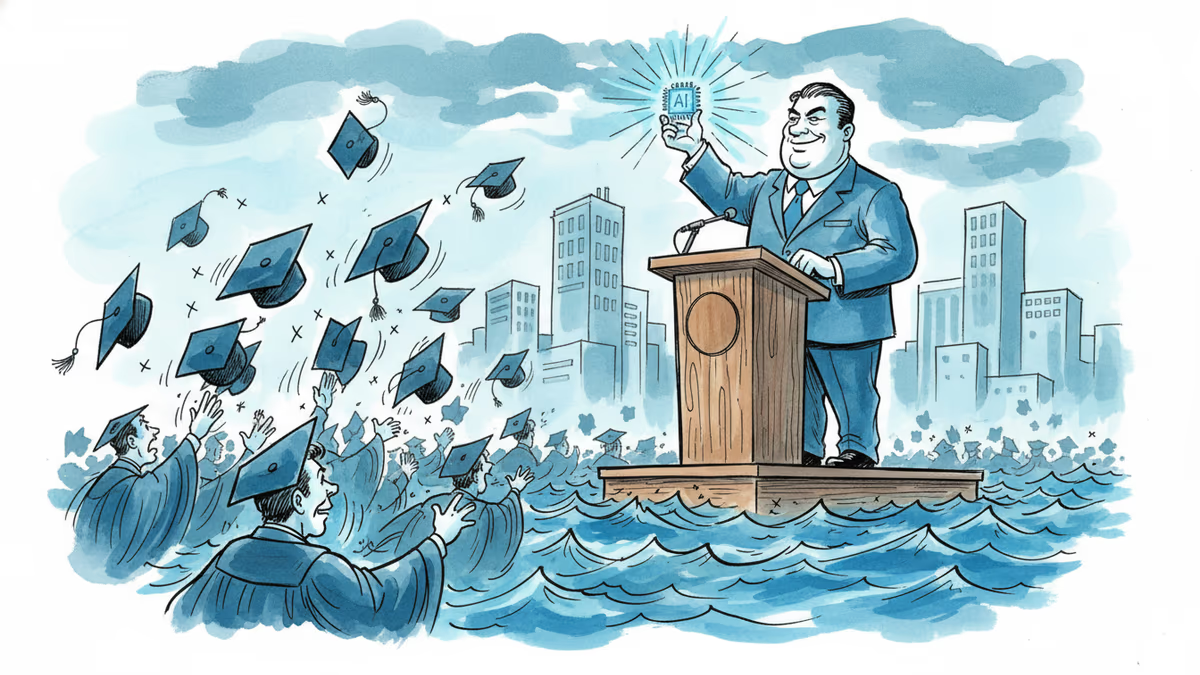
Viral videos show 2026 graduates jeering executives who praise AI at commencement ceremonies. It's not just rudeness — it's a signal about who pays for technological optimism.
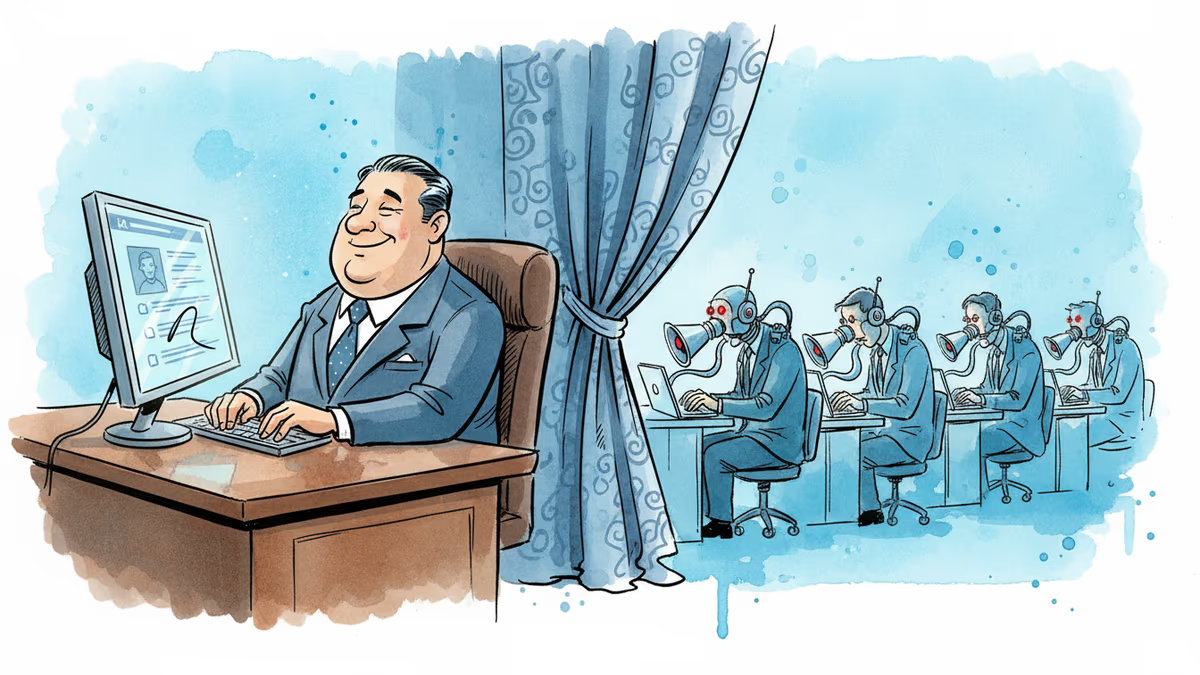
Filipino virtual assistants using AI to ghost-manage LinkedIn profiles for executives is now a structured industry. 30 comments a day, fake engagement rings, and a platform struggling to tell real from fabricated.
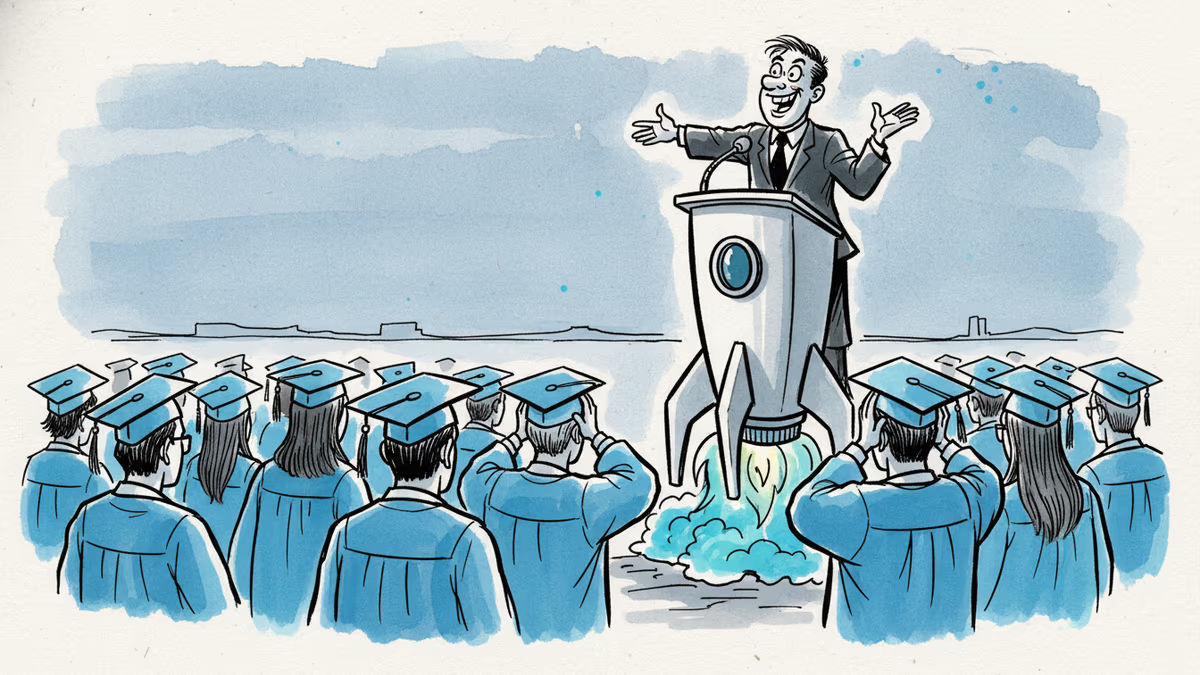
Two commencement speakers learned the hard way that AI enthusiasm doesn't land well with today's graduates. The backlash reveals a widening gap between tech optimism and Gen Z's economic reality.
Samsung and SK unveiled a chip and AI investment package worth thousands of trillions of won on June 29. The headline number swings wildly by outlet, but the real contest isn't capital — it's water and power.
Viral videos show 2026 graduates jeering executives who praise AI at commencement ceremonies. It's not just rudeness — it's a signal about who pays for technological optimism.
Filipino virtual assistants using AI to ghost-manage LinkedIn profiles for executives is now a structured industry. 30 comments a day, fake engagement rings, and a platform struggling to tell real from fabricated.
Two commencement speakers learned the hard way that AI enthusiasm doesn't land well with today's graduates. The backlash reveals a widening gap between tech optimism and Gen Z's economic reality.
Thoughts
Share your thoughts on this article
Sign in to join the conversation