

The Influence Stack Is Inverted: How Niche Creators Became More Powerful Than Pundits
A new Harvard/Columbia study proves niche content creators have more political sway than media giants. Discover the new rules of influence and power.
The Lede: The New Kingmakers Don't Talk Politics
A landmark study from Harvard and Columbia has just put hard data behind a reality that political operatives have only instinctively understood: the new kingmakers in politics and commerce aren't on cable news. They're on niche podcasts and social feeds, talking about anything but politics. For any leader, strategist, or marketer, this is a critical signal. The entire architecture of influence has been inverted. Trust, not reach, is the new apex currency, and it's being minted in the most unexpected corners of the internet.
Why It Matters: The End of the 'Air War'
This isn't just another data point on the creator economy; it's a fundamental shift in the mechanics of persuasion. The findings have profound, second-order effects:
- For Political Strategists: The traditional campaign 'air war'—blanketing TV with ads—is now secondary to a digital 'ground war' fought by thousands of trusted micro-influencers. The study proves that sustained, low-key exposure to a creator's worldview is more effective at shifting opinion than overt political messaging. The goal is no longer just persuading voters, but recruiting trusted messengers who can do it for you.
- For Brands & Marketers: The playbook is rewritten. The most powerful brand ambassador isn't necessarily the one with the biggest audience, but the one with the deepest, non-transactional trust. The study’s 'Politics Paradox'—that creators who rarely discuss politics are most influential when they do—applies directly to marketing. A subtle product placement from a trusted source now carries more weight than a dozen sponsored posts from a career influencer.
- For Tech Platforms: The era of plausible deniability is over. The study’s control group, left to their own devices, drifted rightward, suggesting that the default algorithmic state of major platforms is not neutral. This provides empirical evidence that platform architecture has a political valence, a fact that will intensify scrutiny from regulators and the public.

The Analysis: From Cronkite to the Creator Swarm
We've witnessed a three-act evolution of media power. First came the era of centralized trust: a few anchors like Walter Cronkite held the nation's attention (one-to-many). Then came the cable news era, which fractured the audience and monetized outrage (many-to-many). We have now fully entered the third stage: the age of distributed, parasocial trust (many-to-few, scaled infinitely).
The Trump campaign's 2024 strategy, deploying surrogates like Kash Patel onto fringe, QAnon-adjacent shows, was a guerilla tactic that instinctively grasped this new reality. They weren't trying to win over the center; they were activating niche communities through voices those communities already trusted. While legacy media was focused on Joe Rogan, the real battle was being won on hundreds of smaller fronts.
The Harvard/Columbia research is the formal validation of this strategy. It demonstrates that political identity is increasingly a byproduct of cultural and social identity. By following a creator for their content on gaming, fitness, or comedy, an audience develops a parasocial bond. When that creator subtly introduces a political or social viewpoint, it’s not perceived as an advertisement; it’s received as advice from a 'friend'. This is a far more potent and insidious mechanism of influence than any 30-second attack ad.
PRISM's Take: We've Entered the Age of Mass Niche Media
The core takeaway is that the concept of 'mass media' is obsolete. We now live in an era of mass niche media, where influence is the sum of a thousand coordinated whispers, not a single monolithic shout. The study confirms that the most powerful form of persuasion is indirect and built on a foundation of non-political affinity.
This reality is far more difficult to regulate, counter, or even track than its predecessor. It means the battlefield of ideas is no longer a public square but a million private gardens. For those who understand how to cultivate them, the power to shape the future has never been more decentralized or more absolute.
Authors
Related Articles
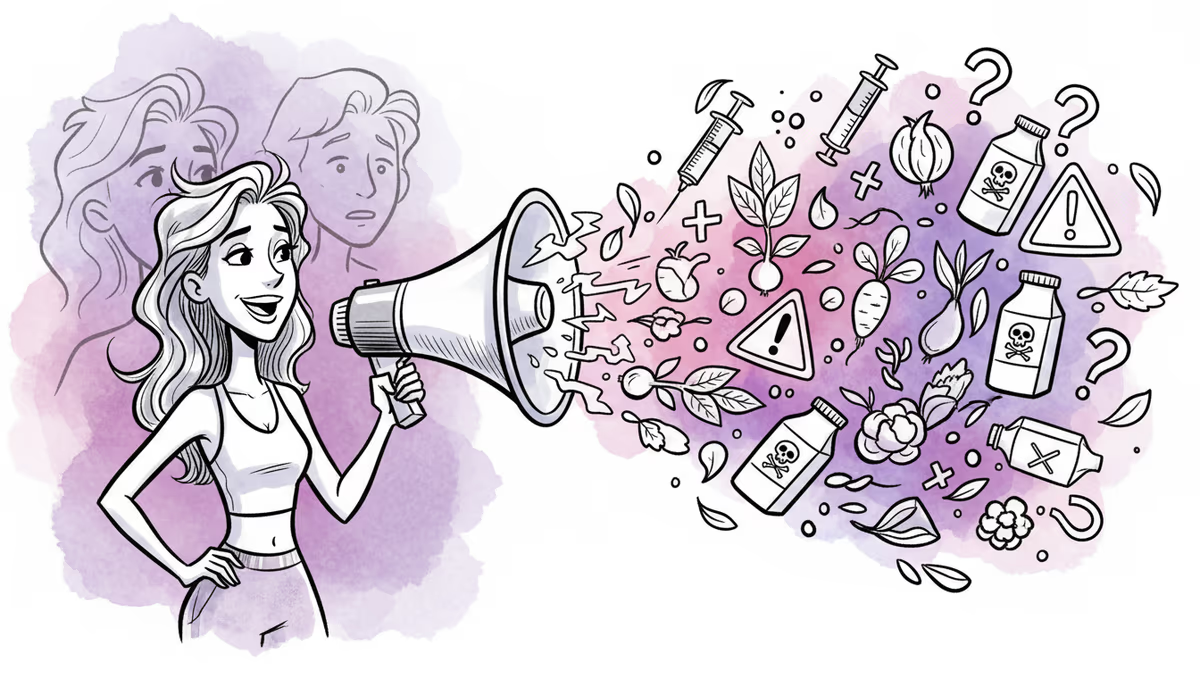
The journey from promoting healthy living to spreading medical misinformation reveals a troubling pattern in how selective science and algorithmic amplification create dangerous echo chambers.
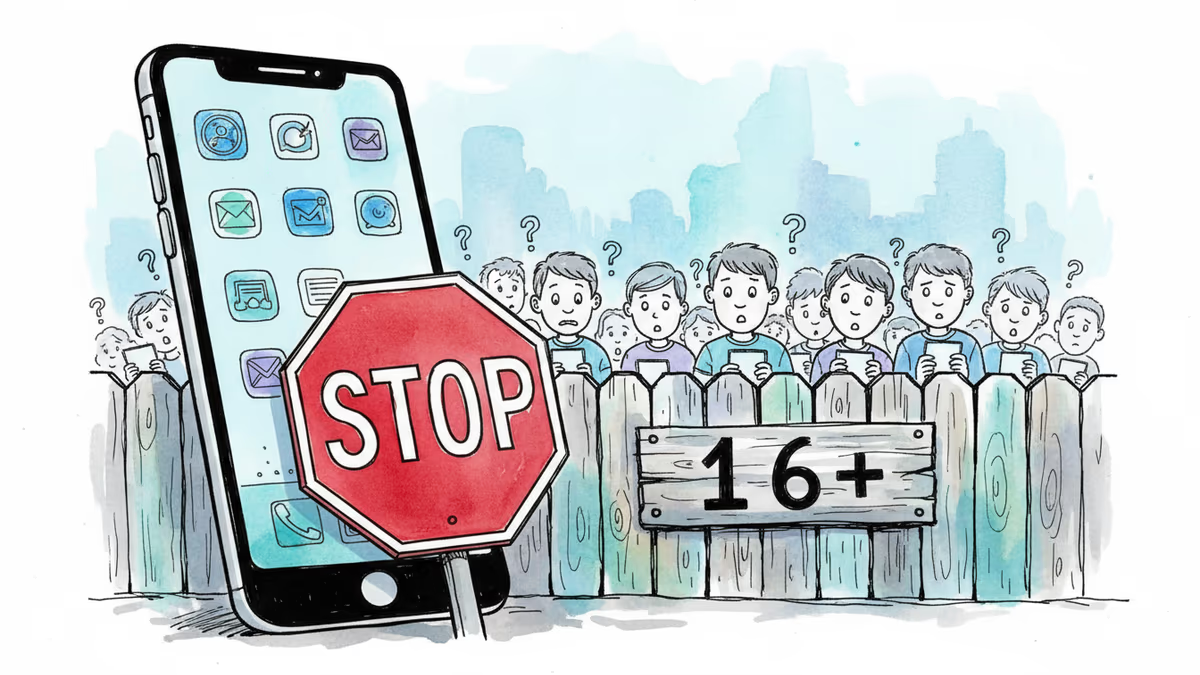
Karnataka state, home to Bengaluru's tech hub, joins a global wave of social media restrictions for minors. But can these bans actually work?
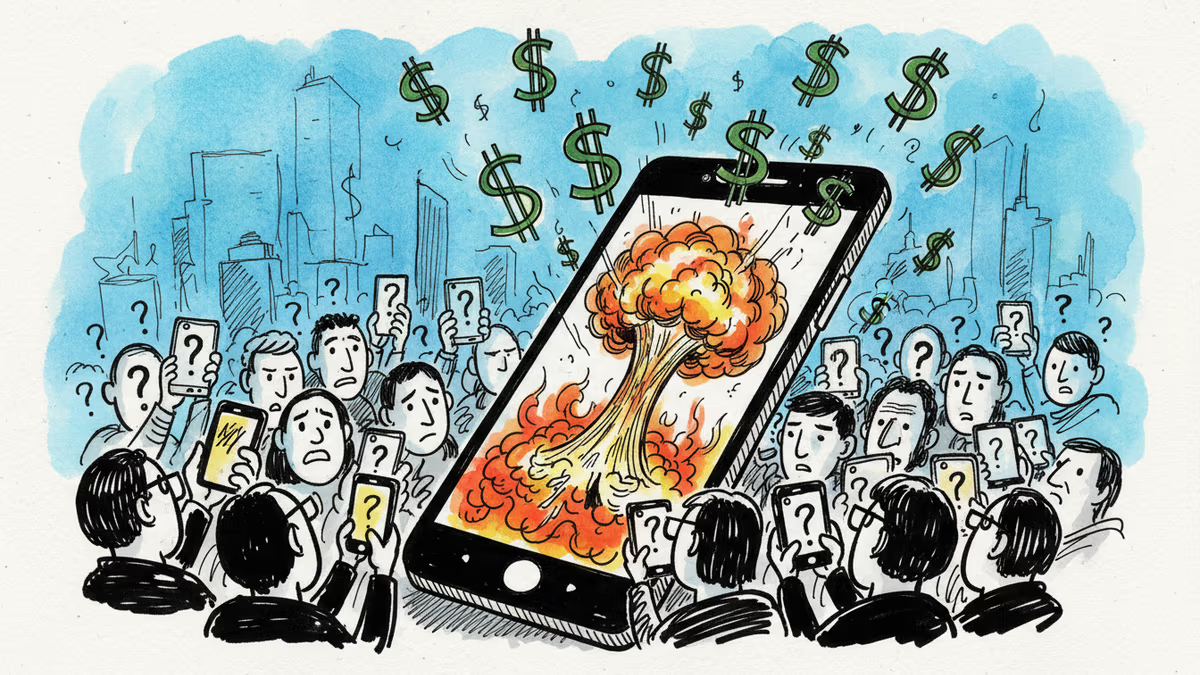
Disinformation flooded X immediately after Israel-Iran attacks, with false content earning millions of views and potential revenue for premium users spreading misleading information.
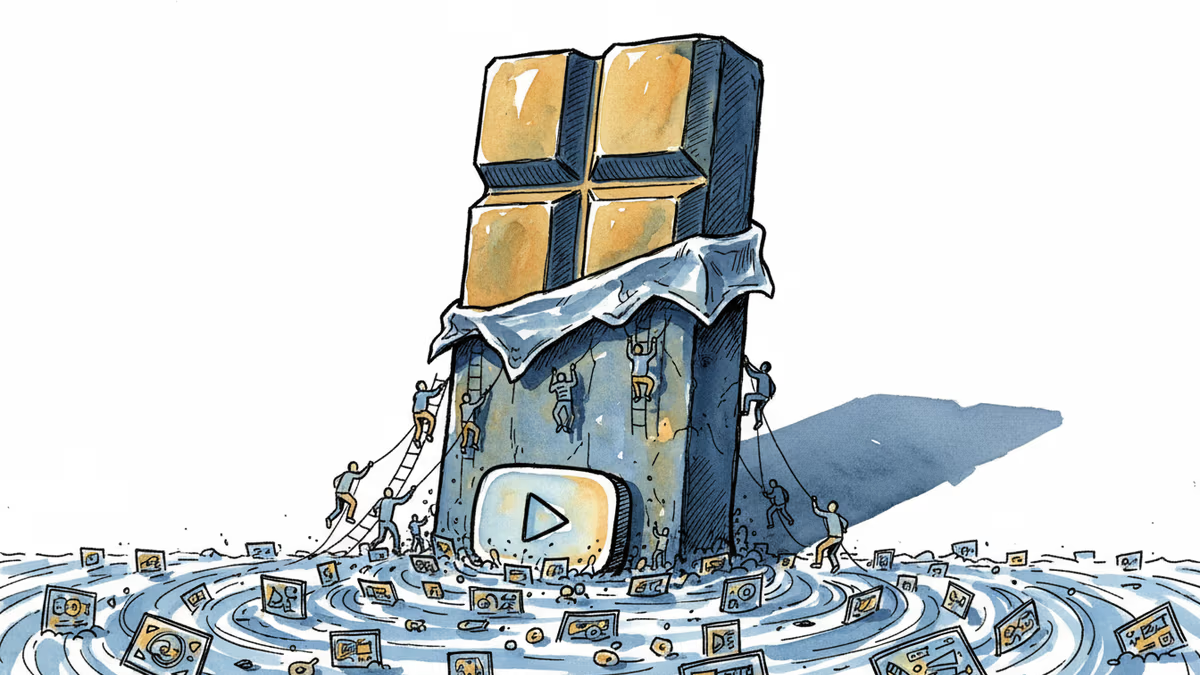
The world's biggest YouTuber lost money on media while his chocolate brand thrived. As AI floods the market with content, creators are scrambling to find new business models.
The journey from promoting healthy living to spreading medical misinformation reveals a troubling pattern in how selective science and algorithmic amplification create dangerous echo chambers.
Karnataka state, home to Bengaluru's tech hub, joins a global wave of social media restrictions for minors. But can these bans actually work?
Disinformation flooded X immediately after Israel-Iran attacks, with false content earning millions of views and potential revenue for premium users spreading misleading information.
The world's biggest YouTuber lost money on media while his chocolate brand thrived. As AI floods the market with content, creators are scrambling to find new business models.
Thoughts
Share your thoughts on this article
Sign in to join the conversation