
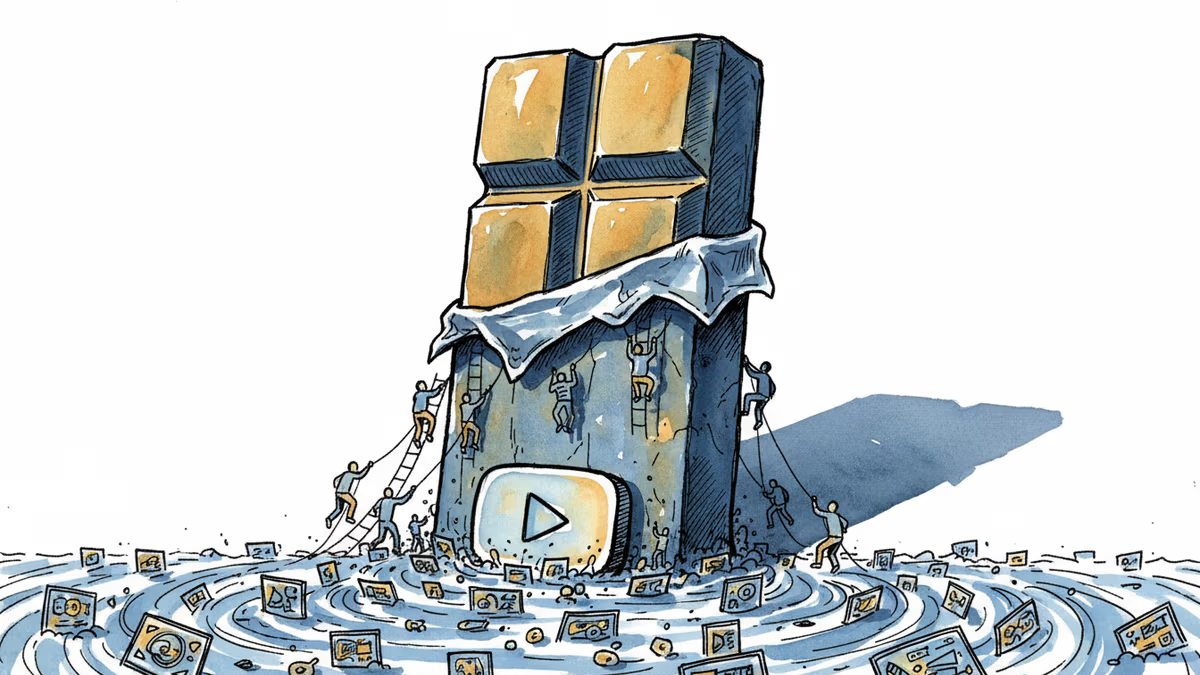
When Even MrBeast Can't Make Money from Content
The world's biggest YouTuber lost money on media while his chocolate brand thrived. As AI floods the market with content, creators are scrambling to find new business models.
270 million subscribers couldn't save MrBeast from losing money on his media business in 2024. Instead, his chocolate brand Feastables generated hundreds of millions in profitable revenue. Meanwhile, ByteDance's AI video tool Seedance 2.0 sent Hollywood studios scrambling with cease-and-desist letters. Two seemingly unrelated headlines that reveal the same uncomfortable truth: the creator economy as we know it is breaking.
The Ad Revenue Mirage
MrBeast's numbers tell a stark story. Despite being the undisputed king of YouTube by subscriber count, his media empire couldn't sustain itself on ad revenue alone. His company posted losses in the media division while his chocolate business turned a profit.
This isn't just about one creator's business model—it's about market saturation. Advertising budgets haven't grown proportionally to the explosion of creators competing for them. Platforms take their cut, brands spread their spend thinner, and creators find themselves fighting over a pie that's not getting bigger.
TechCrunch's analysis reveals that most top-tier YouTubers have already diversified beyond ad revenue. They're launching product lines, building e-commerce businesses, and creating subscription services. The writing's on the wall: if you're still depending primarily on ad revenue in 2026, you're playing a losing game.
AI Floods the Content Market
ByteDance'sSeedance 2.0 launch added fuel to the fire. The AI tool generated viral videos of Brad Pitt fighting Tom Cruise—realistic enough to fool casual viewers. Netflix and other studios immediately sent legal threats, but the damage was done. The barrier to content creation had just dropped to near zero.
For established creators, this represents both opportunity and existential threat. Production costs plummet, but so does the scarcity value of content creation. Anyone can now generate professional-looking videos without cameras, lighting, or editing skills.
The early data suggests a pattern: OpenAI'sSora saw massive initial adoption followed by significant user dropoff. Audiences are developing "AI fatigue"—they can sense the emptiness behind algorithmically generated content. But that doesn't mean AI won't continue disrupting the space.

Authenticity Becomes Currency
Paradoxically, the AI revolution is making human authenticity more valuable, not less. MrBeast's chocolate succeeds because consumers aren't just buying candy—they're buying into his personal brand. The product carries the weight of his reputation, his story, his perceived authenticity.
This shift explains why venture funds like Slow Ventures are backing niche creators with specific expertise. A woodworking creator selling custom chisels. A coffee enthusiast launching bean subscriptions. These aren't just content creators—they're subject matter experts building businesses around their knowledge.
But here's the uncomfortable question: if MrBeast can't make media profitable, how many creators can realistically make this transition? The math suggests a brutal winnowing is coming.
The Democratization Paradox
AI video tools promise to "democratize" content creation, giving small businesses and individual creators access to Hollywood-level production values. A local coffee shop can now create a professional commercial for pennies. An independent filmmaker can produce scenes that would have cost millions just years ago.
Yet democratization often leads to commoditization. When everyone has access to the same tools, the tools themselves lose their differentiating power. We're seeing this play out in real-time as AI-generated content floods social platforms, making it harder for any individual piece to break through.
The question isn't whether AI will change content creation—it already has. The question is whether there's room for human creators in a world where machines can produce infinite variations of any concept.
The Next Saturation Point
As TechCrunch'sKirsten Korosec wondered on their recent podcast: "What's the next saturation point? Not all of these folks can go out and spin off products. So then does the pool of successful creators just simply get smaller?"
The data suggests yes. The creator middle class—those making decent money but not enough to diversify into products—faces the greatest threat. They're too big to ignore AI competition but too small to build MrBeast-level business empires.
Meanwhile, new creators face an almost impossible challenge: breaking through in an attention economy that's simultaneously more crowded and more demanding of authenticity than ever before.
Authors
Related Articles
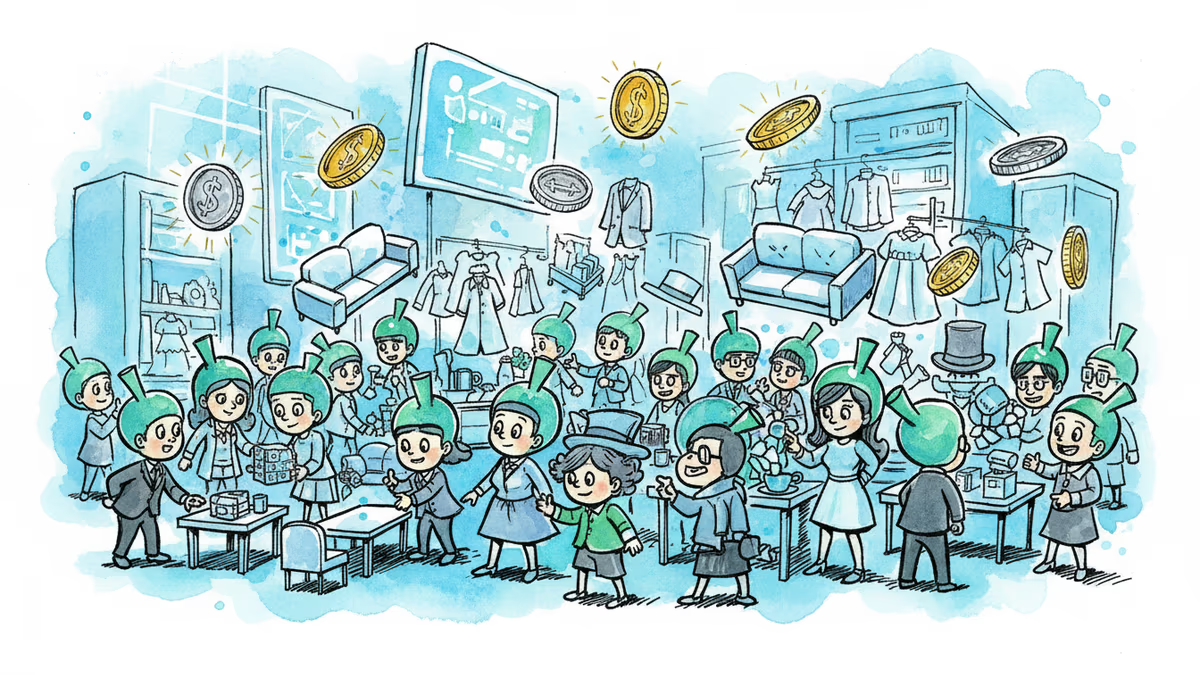
EA introduces creator marketplace in The Sims 4 with new in-game currency 'Moola.' A bold experiment in virtual economies that could reshape gaming monetization.

X introduces 'Paid Partnership' labels 7 years after Instagram. This isn't just about compliance—it's about platform survival in the creator economy.
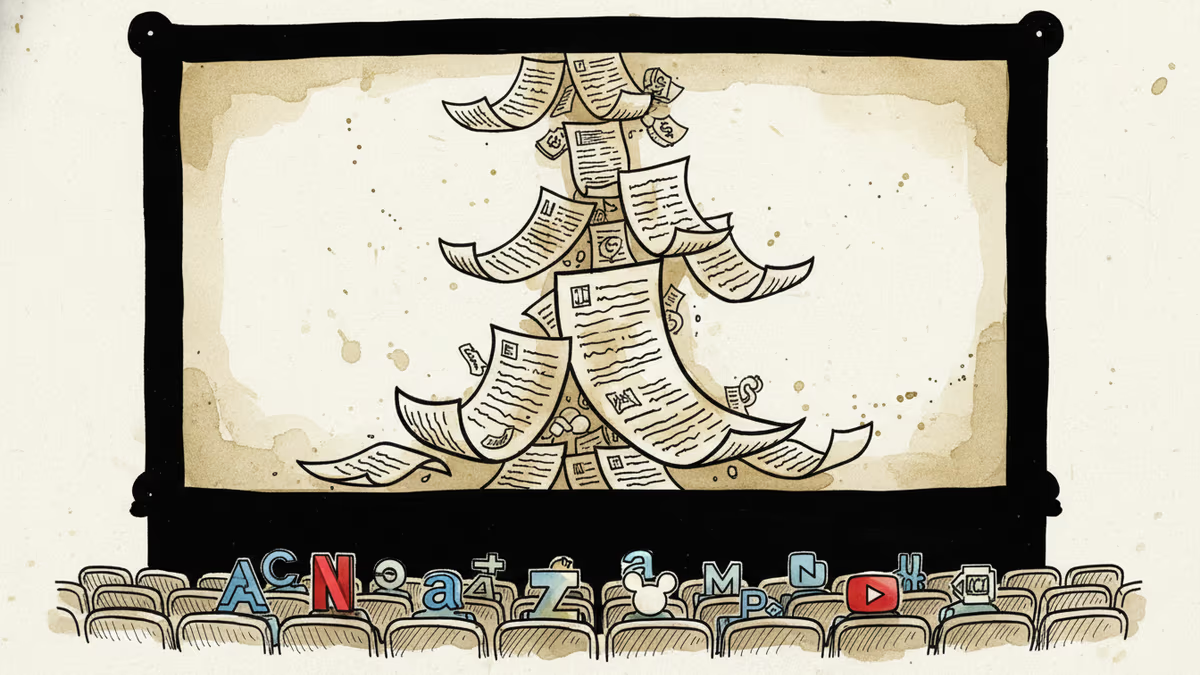
Paramount-Warner merger creates streaming giant with 200M+ subscribers after Netflix abandoned WBD deal. What this mega-consolidation means for content and competition.
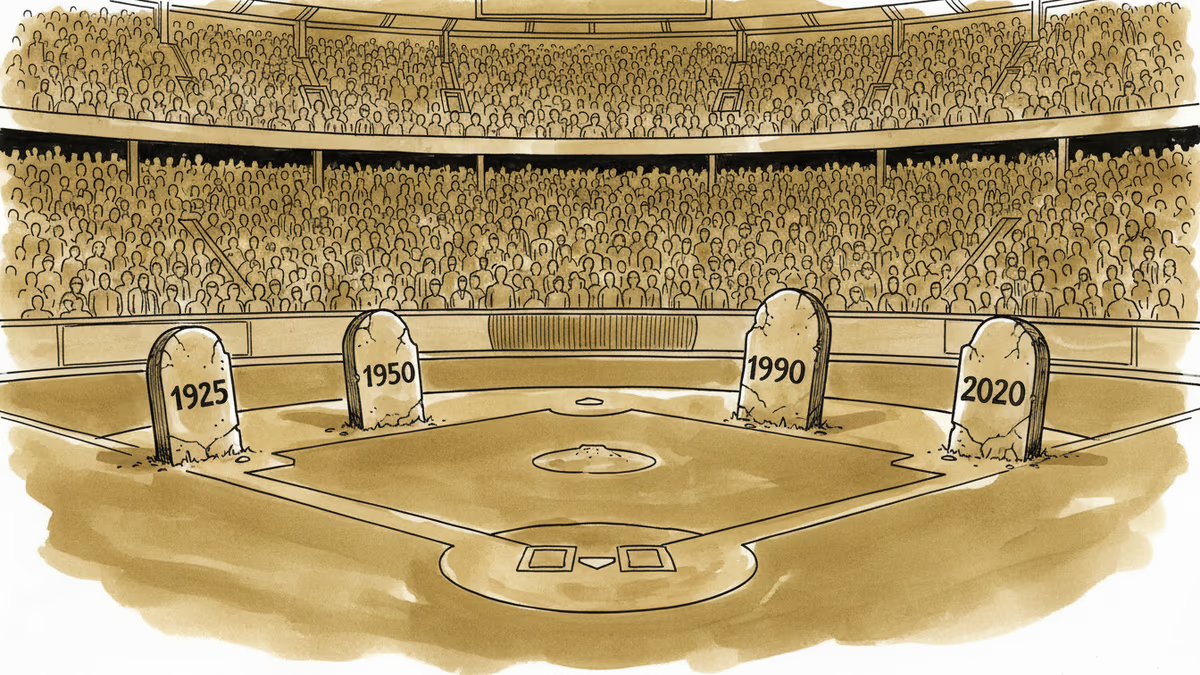
From 1925 to 2026, media has declared baseball's death countless times. Why crisis narratives persist and what they reveal about how sports evolve in the attention economy.
EA introduces creator marketplace in The Sims 4 with new in-game currency 'Moola.' A bold experiment in virtual economies that could reshape gaming monetization.
X introduces 'Paid Partnership' labels 7 years after Instagram. This isn't just about compliance—it's about platform survival in the creator economy.
Paramount-Warner merger creates streaming giant with 200M+ subscribers after Netflix abandoned WBD deal. What this mega-consolidation means for content and competition.
From 1925 to 2026, media has declared baseball's death countless times. Why crisis narratives persist and what they reveal about how sports evolve in the attention economy.
Thoughts
Share your thoughts on this article
Sign in to join the conversation