

The Coming AI Tax: Why Your Next MacBook Is About to Get More Expensive
A global memory shortage driven by AI is set to increase MacBook prices. PRISM analyzes the market forces and why your next laptop purchase will be different.
The Lede: The Invisible Force Reshaping Apple's Roadmap
If you're weighing a MacBook purchase, the debate between M4 or M5 silicon is a distraction. The single most critical factor influencing your decision today isn't a chip—it's the colossal, insatiable appetite of AI data centers for memory. A global supply shock is brewing, and it's poised to dismantle decades of predictable price-performance gains in consumer technology, starting with the laptop on your desk.
Why It Matters: The End of 'Cheaper, Faster, Better'
The unspoken contract between consumers and Big Tech has always been that hardware gets progressively more powerful for the same, or less, money. This fundamental assumption is now under threat. The AI gold rush is causing a massive diversion of high-performance DRAM and NAND memory from the consumer pipeline to enterprise data centers.
This isn't a cyclical shortage; it's a structural market shift with significant second-order effects:
- Corporate IT Budgets: CIOs planning hardware refresh cycles for 2026 will face unforeseen cost overruns. A 10-20% price hike on premium laptops, when multiplied across a workforce, becomes a material expense.
- Consumer Behavior: The upgrade cycle will lengthen. Consumers will be forced to hold onto devices longer, impacting sales volumes for the entire PC market.
- The Digital Divide: As entry-level prices for capable machines creep up, it could widen the accessibility gap for students and lower-income households, reversing years of progress.

The Analysis: Apple's Supply Chain Prowess Faces Its AI Stress Test
For two decades, Apple, under Tim Cook's operational stewardship, has been the undisputed master of supply chain logistics. They famously lock in favorable pricing on key components years in advance, effectively starving competitors and insulating their margins. We saw this with flash memory for the iPod and high-resolution displays for the iPhone.
However, the scale of the current memory demand is unprecedented. Hyperscalers like Amazon, Google, and Microsoft are buying up memory capacity with a ferocity that even Apple may not be able to sidestep. While competitors like HP and Lenovo have already begun telegraphing price increases for 2026, Apple remains silent. This presents a fascinating strategic dilemma for Cupertino:
1. Absorb the Cost: Apple could leverage its massive cash reserves to absorb the increased memory costs, maintaining current price points. This would squeeze their legendary hardware margins but could be a devastating blow to competitors, allowing Apple to aggressively seize market share.
2. Pass the Cost to Consumers: Alternatively, Apple could use the next product cycle (the M5 refresh) to introduce a new, higher price floor. This would protect their margins but risk alienating consumers and slowing growth in their Mac division, which has been a consistent performer.
The MacBook's unified memory architecture—where RAM is soldered to the chip—makes this situation even more acute. Customers can't upgrade later, forcing them to pay the premium for higher-spec models upfront. A price hike on memory will be felt immediately and permanently at the point of sale.
PRISM's Take: This Is Not a Discount, It's a Warning
The current sub-$800 price on the M4 MacBook Air isn't a routine sale; it's the calm before the storm. We assess this is a strategic window for consumers to lock in hardware at pre-shortage prices. The era of assuming your next laptop will be a better value than your last is over. The 'AI Tax' is real, it's coming, and it will be collected not through software subscriptions, but baked directly into the silicon of your next device.
Authors
Related Articles
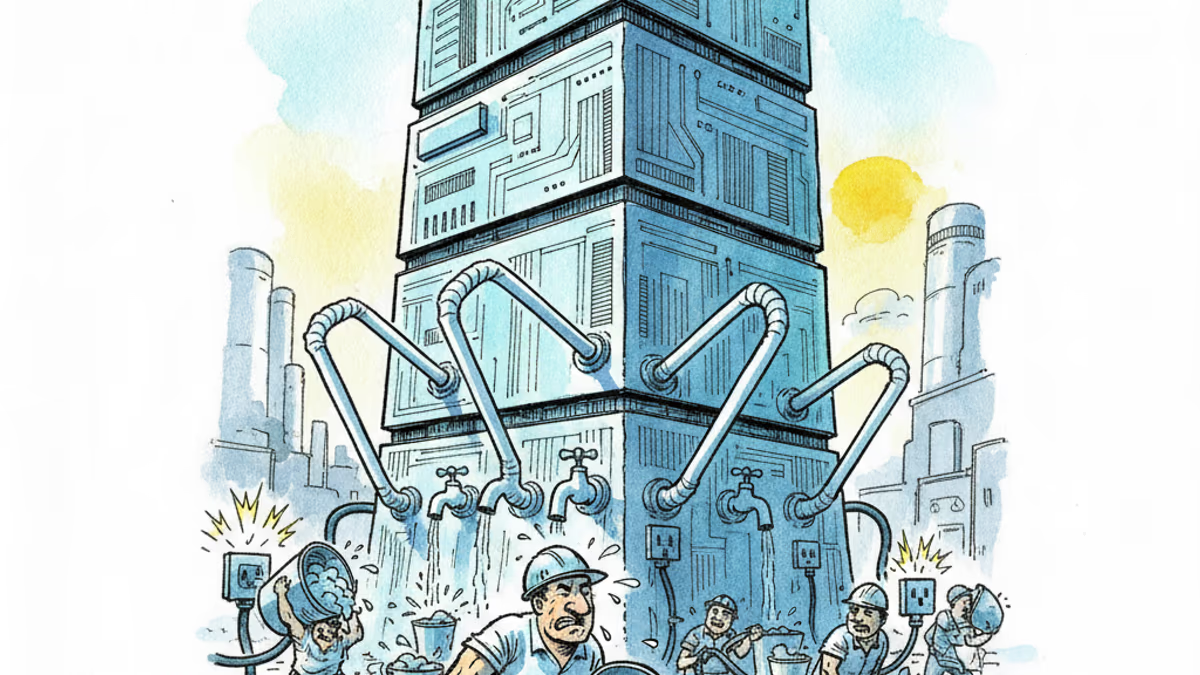
Samsung and SK unveiled a chip and AI investment package worth thousands of trillions of won on June 29. The headline number swings wildly by outlet, but the real contest isn't capital — it's water and power.

Viral videos show 2026 graduates jeering executives who praise AI at commencement ceremonies. It's not just rudeness — it's a signal about who pays for technological optimism.
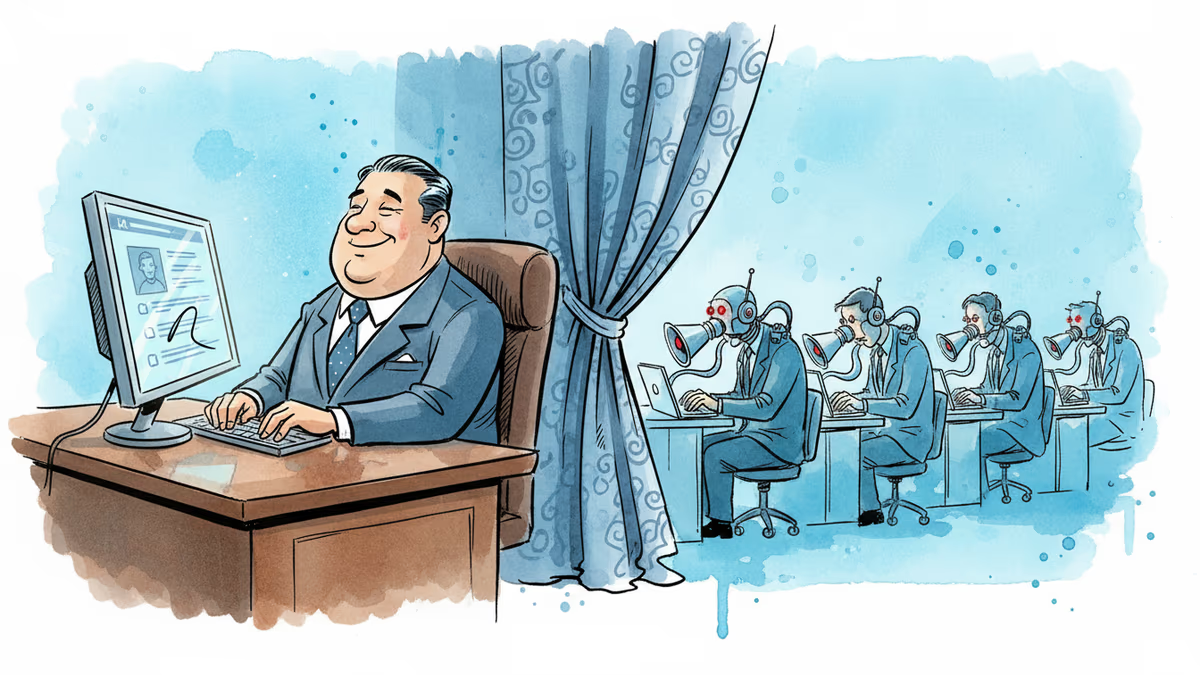
Filipino virtual assistants using AI to ghost-manage LinkedIn profiles for executives is now a structured industry. 30 comments a day, fake engagement rings, and a platform struggling to tell real from fabricated.
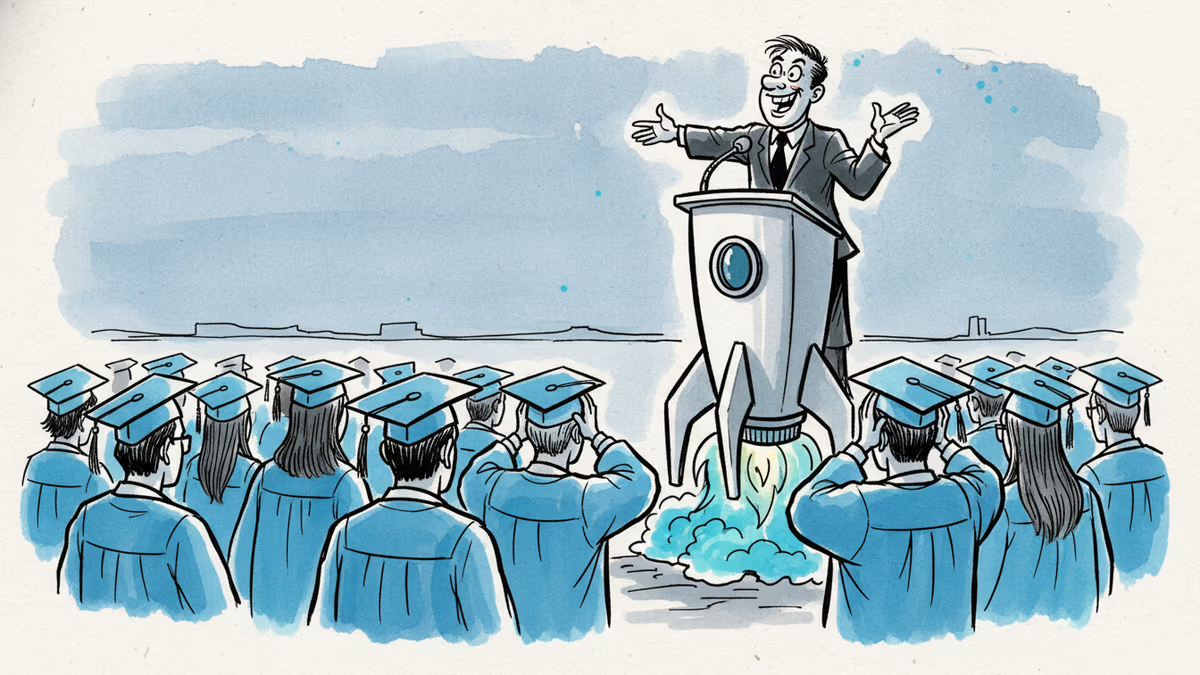
Two commencement speakers learned the hard way that AI enthusiasm doesn't land well with today's graduates. The backlash reveals a widening gap between tech optimism and Gen Z's economic reality.
Samsung and SK unveiled a chip and AI investment package worth thousands of trillions of won on June 29. The headline number swings wildly by outlet, but the real contest isn't capital — it's water and power.
Viral videos show 2026 graduates jeering executives who praise AI at commencement ceremonies. It's not just rudeness — it's a signal about who pays for technological optimism.
Filipino virtual assistants using AI to ghost-manage LinkedIn profiles for executives is now a structured industry. 30 comments a day, fake engagement rings, and a platform struggling to tell real from fabricated.
Two commencement speakers learned the hard way that AI enthusiasm doesn't land well with today's graduates. The backlash reveals a widening gap between tech optimism and Gen Z's economic reality.
Thoughts
Share your thoughts on this article
Sign in to join the conversation