

The AI Cold War Thaws: Why OpenAI's Potential $10B Amazon Deal is a Declaration of Independence
Analysis: OpenAI's potential $10B deal with Amazon is not just about money. It's a strategic declaration of independence from Microsoft, reshaping the AI infrastructure wars.
The Lede: Beyond the Billions
OpenAI's talks with Amazon for a potential $10 billion-plus investment are not just about capital; they represent a fundamental realignment of the AI power structure. This move signals OpenAI's strategic pivot from a de facto Microsoft subsidiary to a truly independent, platform-agnostic entity. For any business leader or investor, this is the key takeaway: the AI infrastructure race just entered a new, multi-polar era, and the old alliances are becoming obsolete.
Why It Matters: The Second-Order Effects
Most reports will focus on the staggering dollar amount. The real story, however, lies in the strategic shockwaves this sends across the tech landscape. This isn't just another funding round; it's a calculated power play with significant consequences:
- The End of Cloud Exclusivity: The unwritten rule of 'one foundation model, one primary cloud' is officially dead. OpenAI is signaling its intention to source compute from the best possible provider, playing hyperscalers against each other to secure capacity and drive down costs for its near-infinite training needs.
- Validation of Sovereign AI Stacks: If this deal proceeds, OpenAI using Amazon's custom Trainium and Inferentia chips would be a massive validation of AWS's decade-long, multi-billion dollar bet on proprietary silicon. It's a direct challenge to Nvidia's market dominance and Google's TPU ecosystem, proving that in-house chips can power the world's most advanced AI models.
- A New Front in the Cloud Wars: The battle for cloud supremacy is no longer just about storage and virtual machines. It's about owning the end-to-end AI development pipeline. By potentially bringing OpenAI into its fold, Amazon hedges its significant bet on Anthropic and ensures it has a relationship with the two most important AI labs in the world.

The Analysis: Deconstructing the Power Play
The Great Compute Diversification
This move was made possible by OpenAI's October restructuring. The quiet removal of Microsoft's 'right of first refusal' as a compute provider was not a minor contractual tweak—it was OpenAI's emancipation proclamation. Sam Altman knows that securing the company's future requires a diversified supply chain for its most critical resource: computational power. The reported $1.4 trillion in infrastructure commitments is a figure no single company, not even Microsoft, can satisfy alone. Relying solely on Azure was becoming a strategic vulnerability, creating a single point of failure and giving Microsoft immense leverage. This deal is OpenAI building a resilient, multi-cloud foundation for its ambitious goal of achieving Artificial General Intelligence (AGI).
Amazon's 'Frenemy' Playbook
Amazon's strategy is a masterclass in AI realpolitik. After investing up to $8 billion in OpenAI's chief rival, Anthropic, courting OpenAI might seem contradictory. It's not. It's a portfolio approach. The generative AI market is too large and too important for even a company of Amazon's size to bet on a single winner. This move mirrors the broader industry trend of 'co-opetition', where even fierce rivals invest in the same third-party platforms. Microsoft and Nvidia, for example, have also poured billions into Anthropic. For Amazon, the prize is twofold: it gains influence over the world's leading AI company and, more importantly, secures a marquee customer to prove its custom silicon can compete at the highest level.
PRISM's Take
This negotiation is a watershed moment, marking the end of the AI industry's simple bipolar alliances. OpenAI is no longer just Microsoft's prized asset; it is becoming a neutral 'AI Switzerland,' leveraging its market-leading position to command resources from all major powers. Amazon, in turn, is ensuring its AWS empire remains the bedrock of the digital economy, regardless of which AI model ultimately reigns supreme. We are witnessing the shift from a client-patron model to a complex web of strategic partnerships, where everyone works with everyone else to hedge their bets in the multi-trillion-dollar race to define the future of intelligence.
Authors
Related Articles

Google's Gmail Live lets you ask your inbox questions out loud. Announced at I/O 2026, it's AI's pitch to skeptics — and a reminder of how much Google already knows about you.
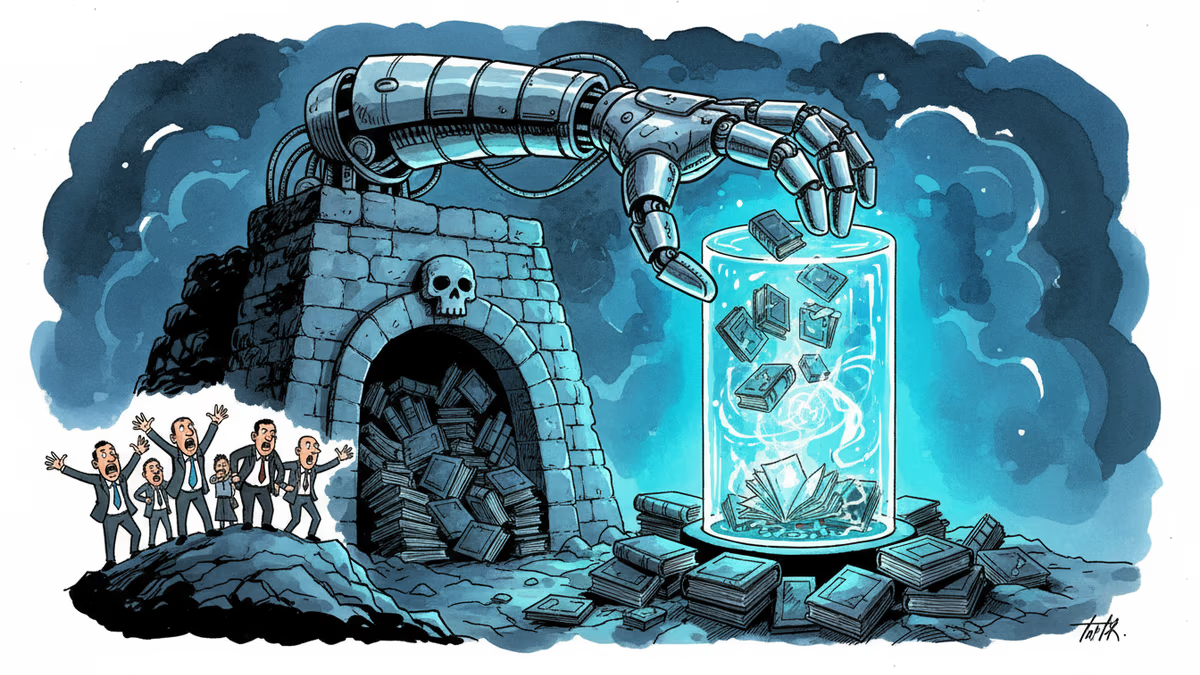
Five major publishers and author Scott Turow have filed a class action lawsuit against Meta, alleging the company used illegal pirate sites like LibGen to train its Llama AI models without permission.
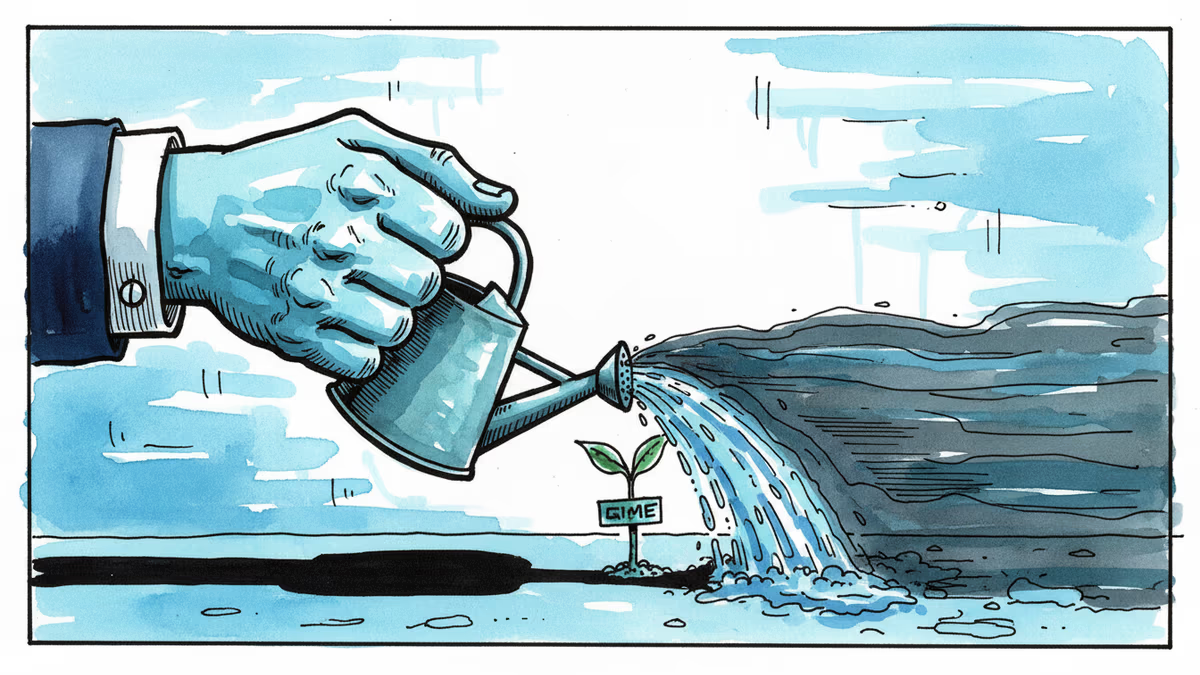
Google is committing up to $40 billion to Anthropic, a direct AI competitor. The deal reveals how the real AI arms race isn't about models — it's about who controls the infrastructure beneath them.

Two ex-Apple engineers built an AI puck that only listens when you press it. At $179, Button is a deliberate bet that dedicated AI hardware beats the Swiss Army knife approach of smartphones.
Google's Gmail Live lets you ask your inbox questions out loud. Announced at I/O 2026, it's AI's pitch to skeptics — and a reminder of how much Google already knows about you.
Five major publishers and author Scott Turow have filed a class action lawsuit against Meta, alleging the company used illegal pirate sites like LibGen to train its Llama AI models without permission.
Google is committing up to $40 billion to Anthropic, a direct AI competitor. The deal reveals how the real AI arms race isn't about models — it's about who controls the infrastructure beneath them.
Two ex-Apple engineers built an AI puck that only listens when you press it. At $179, Button is a deliberate bet that dedicated AI hardware beats the Swiss Army knife approach of smartphones.
Thoughts
Share your thoughts on this article
Sign in to join the conversation