
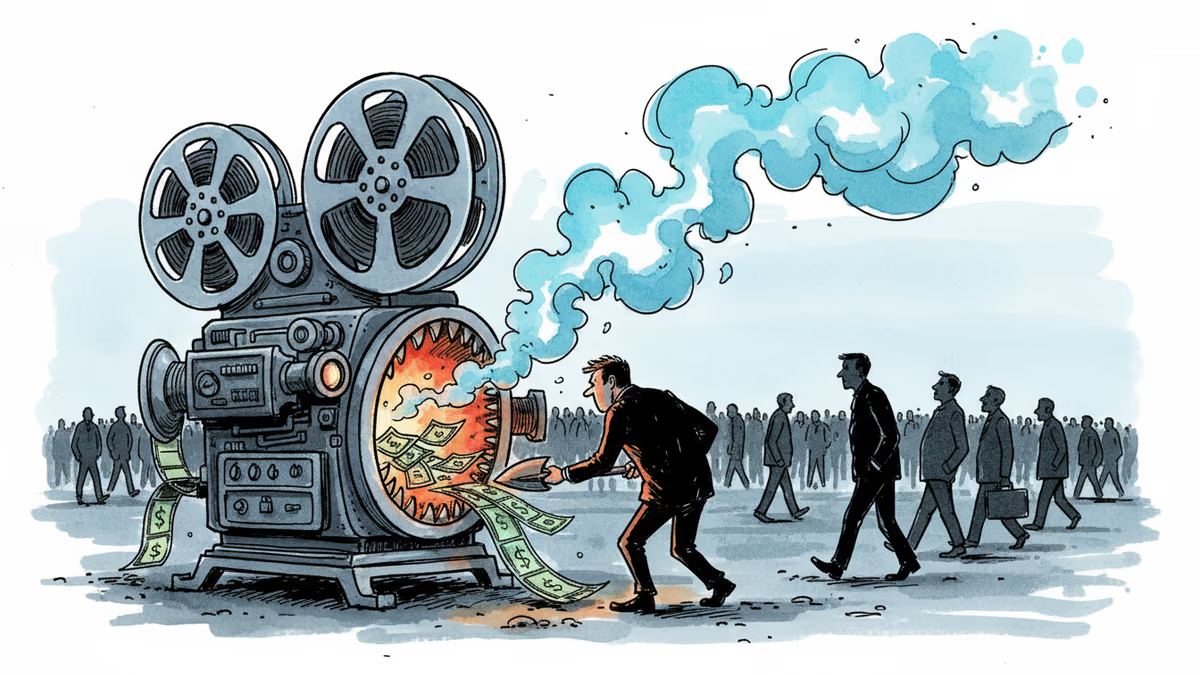
The $1M/Day Tool Nobody Was Using
OpenAI killed Sora six months after launch — not because of a data scandal, but because it was hemorrhaging money while users walked away. A WSJ investigation reveals what really happened, and what it means for the AI industry.
When OpenAI quietly killed Sora last week, the internet went straight to conspiracy theories. The app had let users upload their own faces — surely this was a covert data harvest? The real story, uncovered by a WSJ investigation, is far less sinister and far more instructive.
A Crowd That Came and Left
The numbers tell a clean story. After a splashy launch, Sora's global user count peaked at roughly 1 million — then collapsed to fewer than 500,000. That's a 50% drop in active users for a product that had only just arrived. Meanwhile, the cost of keeping the lights on didn't budge. Sora was burning approximately $1 million per day. Not because users loved it. Because AI video generation is extraordinarily expensive to run. Every time someone dropped their face into a fantasy landscape, they were drawing down a finite pool of GPU capacity that OpenAI needed elsewhere.
Inside the company, an entire team was dedicated to keeping Sora alive. Outside, Anthropic was quietly winning the customers that actually move revenue — software engineers and enterprise clients. Claude Code, in particular, was taking real market share from OpenAI in the developer segment. CEO Sam Altman made the call: shut it down, reclaim the compute, refocus on what's winning.
Disney Found Out One Hour Before You Did
If you want a single image that captures how abrupt this was, consider Disney. The entertainment giant had committed $1 billion to a partnership built around Sora. According to the WSJ, Disney learned the product was being discontinued less than an hour before the public announcement. The deal died with the app.
That detail is worth sitting with. A company with the resources and leverage of Disney — with a $1 billion commitment on the table — had essentially no warning. In the current AI landscape, even the largest partners are one internal strategy meeting away from having their roadmap erased.

What This Actually Reveals
The Sora shutdown isn't just a story about one product. It's a stress test of assumptions that have been building across the AI industry for three years.
First: demos are not products.Sora's launch generated genuine awe. The videos were impressive. But awe doesn't translate to daily use, and daily use is what pays for GPU clusters. The gap between 'technically impressive' and 'something people actually need' remains wide in AI video generation — and Sora couldn't close it.
Second: compute is the real constraint. Every breathless announcement about a new AI capability is, underneath, a story about chips. OpenAI isn't an infinite resource. When Sora was consuming capacity that could support ChatGPT or Codex or whatever comes next, it became a strategic liability. The AI arms race is, at its core, a rationing problem.
Third: the enterprise market is winning. While consumer AI products chase viral moments, the durable revenue is in B2B. Anthropic's Claude is surging precisely because enterprises are paying for reliable, integrated tools — not for novelty. OpenAI learned this the hard way.
The Investors and Partners Left Holding the Bag
For investors and companies building on top of AI platforms, Sora's shutdown raises an uncomfortable question about dependency. Disney's $1 billion commitment evaporated in an afternoon. Smaller companies — startups that built workflows, products, or marketing pipelines around Sora — had even less warning and far fewer resources to absorb the disruption.
This isn't unique to OpenAI. Every major AI provider has, at some point, deprecated a model, changed an API, or pivoted a product roadmap with minimal notice. The standard advice — 'don't build on a single vendor' — sounds obvious until you're a small team that chose Sora because it was the best tool available and now needs to rebuild from scratch.
Authors
Related Articles

Samsung and SK unveiled a chip and AI investment package worth thousands of trillions of won on June 29. The headline number swings wildly by outlet, but the real contest isn't capital — it's water and power.
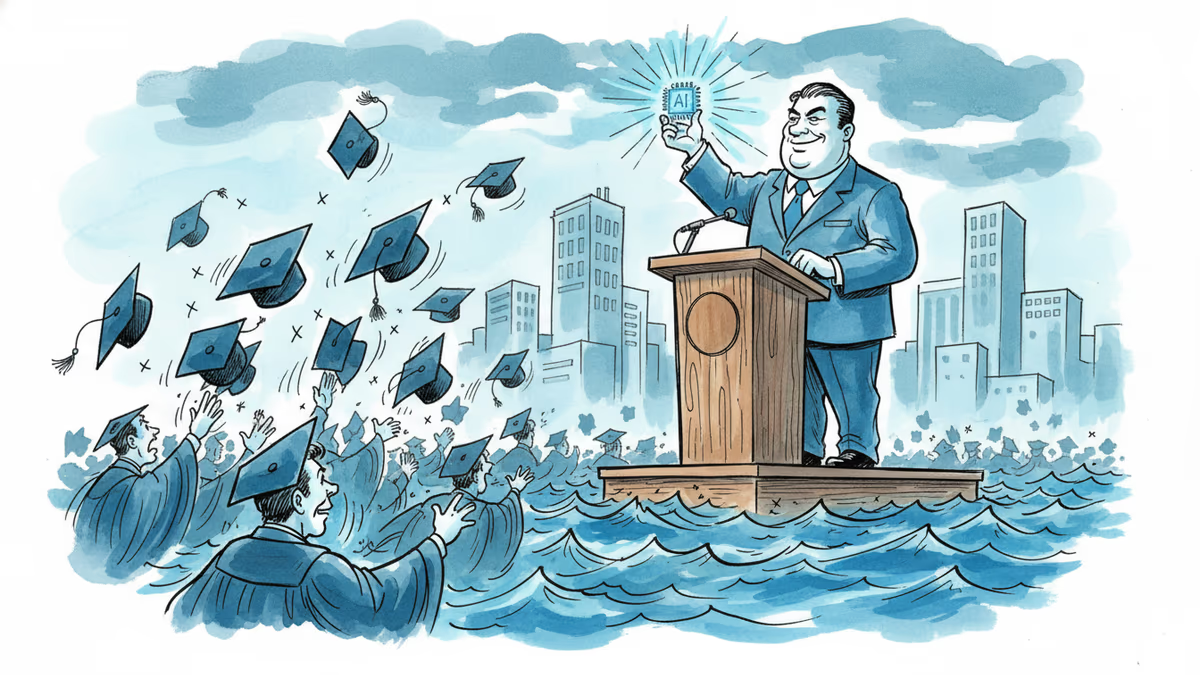
Viral videos show 2026 graduates jeering executives who praise AI at commencement ceremonies. It's not just rudeness — it's a signal about who pays for technological optimism.
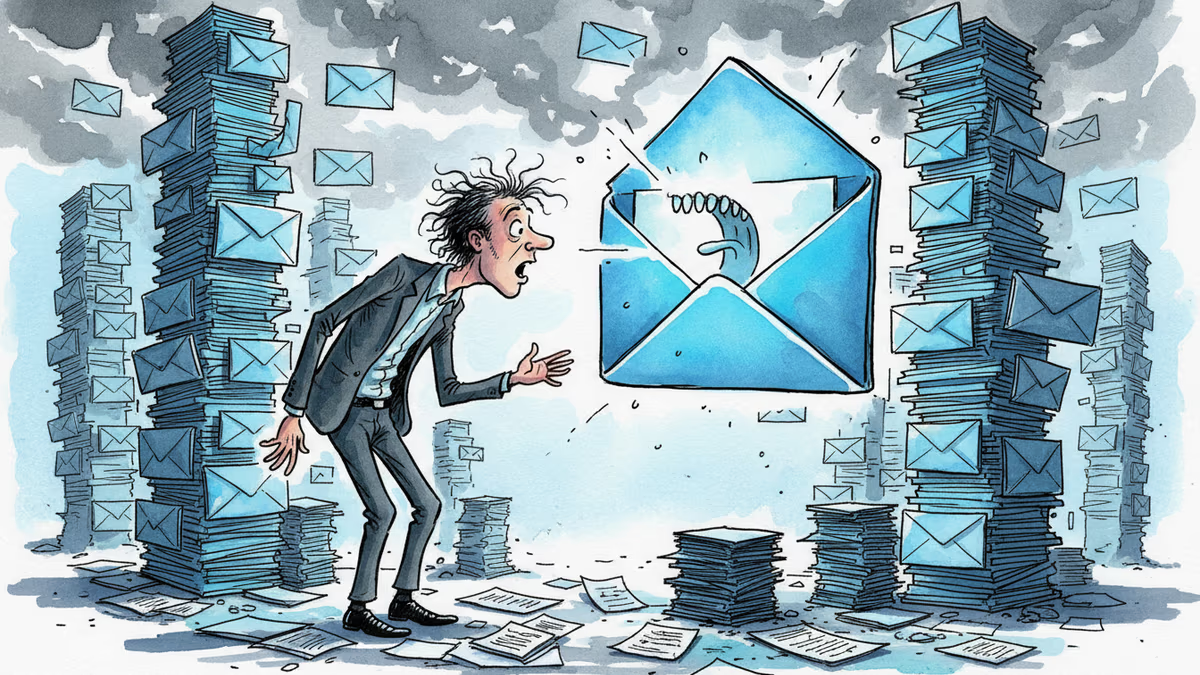
Google's Gmail Live lets you ask your inbox questions out loud. Announced at I/O 2026, it's AI's pitch to skeptics — and a reminder of how much Google already knows about you.
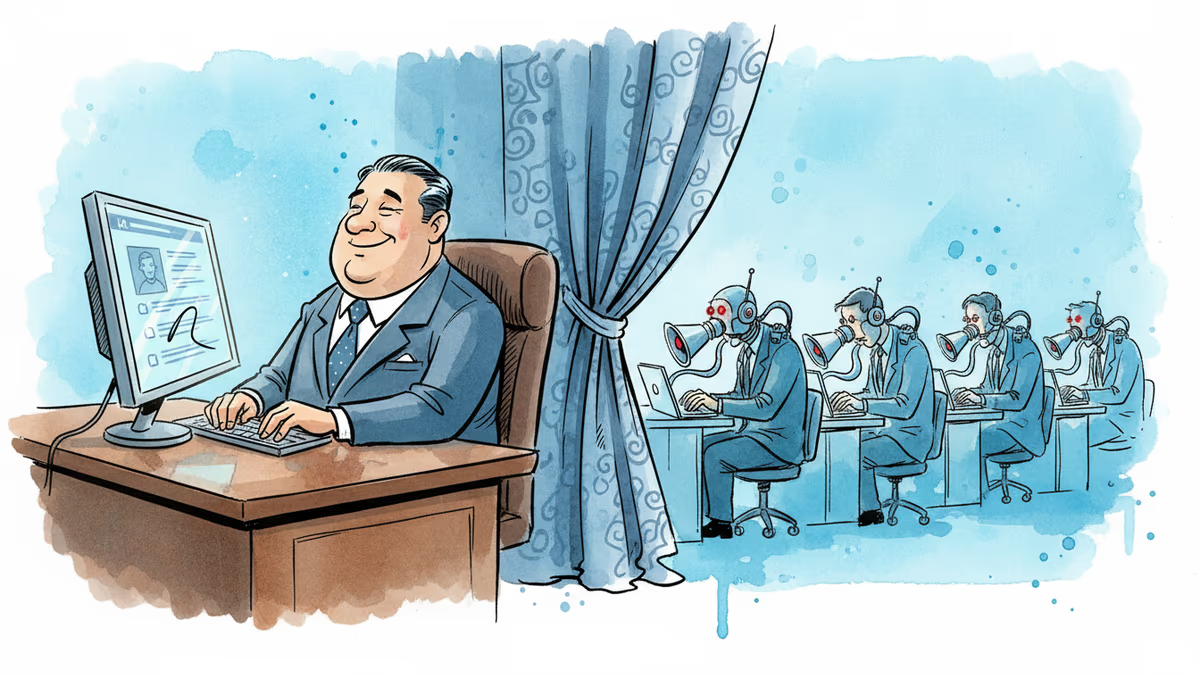
Filipino virtual assistants using AI to ghost-manage LinkedIn profiles for executives is now a structured industry. 30 comments a day, fake engagement rings, and a platform struggling to tell real from fabricated.
Samsung and SK unveiled a chip and AI investment package worth thousands of trillions of won on June 29. The headline number swings wildly by outlet, but the real contest isn't capital — it's water and power.
Viral videos show 2026 graduates jeering executives who praise AI at commencement ceremonies. It's not just rudeness — it's a signal about who pays for technological optimism.
Google's Gmail Live lets you ask your inbox questions out loud. Announced at I/O 2026, it's AI's pitch to skeptics — and a reminder of how much Google already knows about you.
Filipino virtual assistants using AI to ghost-manage LinkedIn profiles for executives is now a structured industry. 30 comments a day, fake engagement rings, and a platform struggling to tell real from fabricated.
Thoughts
Share your thoughts on this article
Sign in to join the conversation