

Tesla Q4 2025 delivery results plunge 15.6% as global competition stiffens
Tesla's Q4 2025 delivery results show a 15.6% YoY decline, missing Wall Street expectations. Analyze the impact of expiring tax credits and rising EV competition.
The EV giant is hitting a major speed bump. Tesla's sales for the fourth quarter of 2025 have taken a sharper-than-expected dive, leaving Wall Street questioning the company's aggressive growth narrative.
Deep Dive into Tesla Q4 2025 delivery results
According to reports from The Verge and Reuters, Tesla delivered 418,227 vehicles in the final quarter of the year. This represents a 15.6% decline compared to the same period in 2024. The numbers aren't just a miss; they're a significant blow to the momentum Elon Musk has built over recent years.

Two primary factors are sapping Tesla's strength: the expiration of the federal EV tax credit in the U.S. and an onslaught of cheaper, high-quality alternatives from rivals. It's becoming increasingly difficult for the company to maintain its premium pricing as the market becomes saturated with more options.
Valuation at Risk: FSD and Humanoid Robots
For years, Tesla's sky-high valuation hasn't been based solely on car sales. Investors have bet on the promise of self-driving cars and humanoid robots. However, with the core automotive business struggling, the pressure is on to prove that these futuristic ventures can actually generate the revenue needed to justify the stock's premium.
Authors
Related Articles
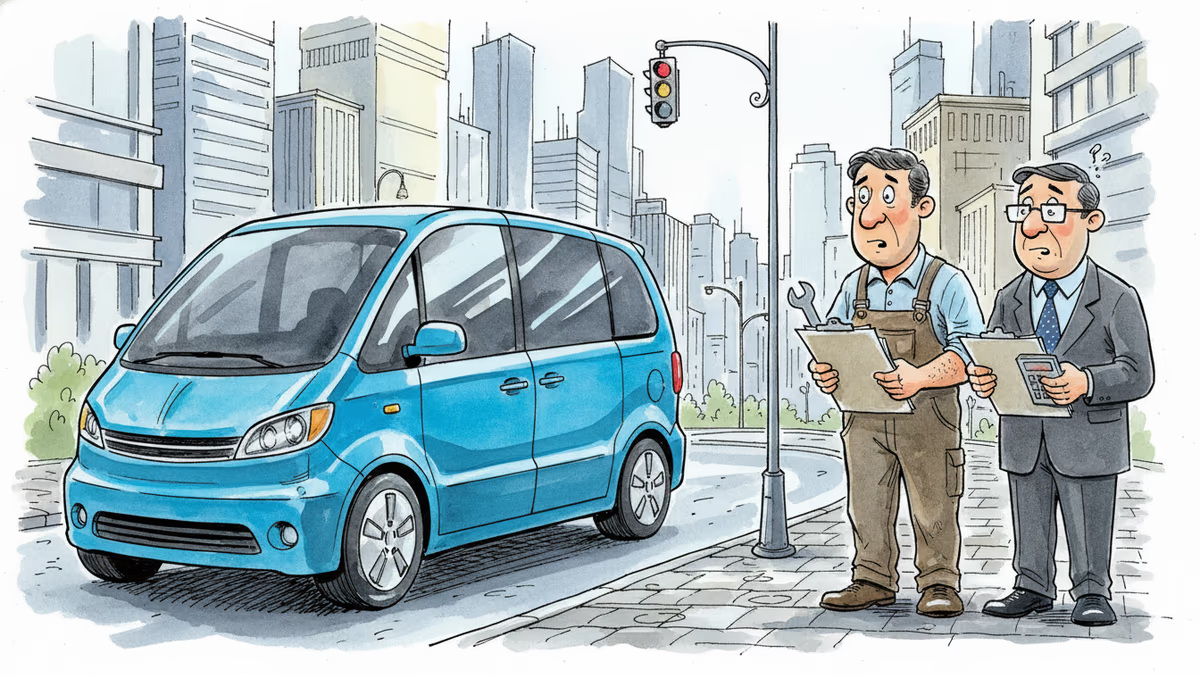
Waymo's new Ojai robotaxi isn't just a vehicle upgrade. It's the company's most serious attempt yet at cracking the cost problem that has kept autonomous vehicles from scaling. Here's what's really at stake.
SpaceX's IPO filing puts AI at the center, claiming a $26.5 trillion market opportunity. But can Grok compete with OpenAI and Anthropic for enterprise customers?
SpaceX filed a nearly 400-page S-1 with the SEC, targeting an IPO as early as June 12. Here's what the filing reveals—and what it doesn't.
SpaceX has filed its S-1 with the SEC, targeting the Nasdaq under ticker SPCX. With $18.67B in revenue but a $4.9B loss, the IPO forces investors to answer one hard question.
Waymo's new Ojai robotaxi isn't just a vehicle upgrade. It's the company's most serious attempt yet at cracking the cost problem that has kept autonomous vehicles from scaling. Here's what's really at stake.
SpaceX's IPO filing puts AI at the center, claiming a $26.5 trillion market opportunity. But can Grok compete with OpenAI and Anthropic for enterprise customers?
SpaceX filed a nearly 400-page S-1 with the SEC, targeting an IPO as early as June 12. Here's what the filing reveals—and what it doesn't.
SpaceX has filed its S-1 with the SEC, targeting the Nasdaq under ticker SPCX. With $18.67B in revenue but a $4.9B loss, the IPO forces investors to answer one hard question.
Thoughts
Share your thoughts on this article
Sign in to join the conversation