

Can AI solve the energy crisis it helped create?
London startup Tem raises $75M to use AI for energy trading, promising 30% savings while data centers drive up electricity costs. A paradoxical solution to AI's power problem.
The $75 Million Bet on AI Fixing What AI Broke
Every ChatGPT query consumes 10 times more electricity than a Google search. As AI data centers send energy costs soaring worldwide, London-based Tem is making a counterintuitive wager: use AI to slash electricity bills by 30%.
The startup just closed an oversubscribed $75 million Series B led by Lightspeed Venture Partners, valuing the company at over $300 million. With 2,600+ business customers across the UK, Tem is now eyeing expansion to Australia and Texas.
"We're in a nice position where we kind of have control over our own profitability," CEO Joe McDonald told TechCrunch. "But we're not that kind of business. We know what we want to achieve as someone who wants to go public."
Cutting Out the 5-6 Middlemen
Here's the problem Tem is attacking: current energy markets have 5-6 intermediary layers between power generators and consumers. Each layer takes profit, adds labor costs, and operates disparate systems.
"In each of them, you've got different teams doing different jobs, taking different levels of profit," McDonald explained. Tem's AI engine, called Rosso, uses machine learning algorithms and LLMs to predict supply and demand, aiming to replace "the humans, the labor costs, and the disparate systems into one single transaction infrastructure."
The goal? Get customer electricity prices closer to wholesale costs by eliminating intermediaries.

The Two-Business Strategy
Tem is cleverly running two businesses simultaneously. Rosso is the AI transaction engine that matches renewable generators with small businesses. RED is a "neo-utility" designed to prove Rosso's value.
"When we first started, we tried to sell our infrastructure to the energy companies, and we got nowhere," McDonald admitted. So they built their own utility to demonstrate the technology.
Currently, RED is the only utility using Rosso, but McDonald has bigger plans. "In reality, it doesn't matter how good [RED] is; it's not going to get above a 40% market share. And it shouldn't, because that becomes a monopoly in itself."
The AWS of Energy?
McDonald's long-term vision sounds familiar to anyone who's watched tech infrastructure plays: "This is just an infrastructure play in the same way AWS was, or Stripe was."
The company's customers include fast-fashion retailer Boohoo Group, soft drink company Fever-Tree, and Newcastle United FC. The strategy of focusing on distributed renewable energy and smaller businesses seems to be working—"The more decentralized and the more distributed, the better it is for the algorithms," McDonald noted.
Regulatory Realities
But here's where it gets complicated. Energy markets aren't like cloud computing or payments—they're heavily regulated, often monopolized, and politically sensitive. Tem's UK success doesn't guarantee smooth expansion to Texas or Australia, where different regulatory frameworks and incumbent utilities hold sway.
The company will need to navigate not just technical challenges but also entrenched interests that have little incentive to embrace AI-driven disruption.
Authors
Related Articles
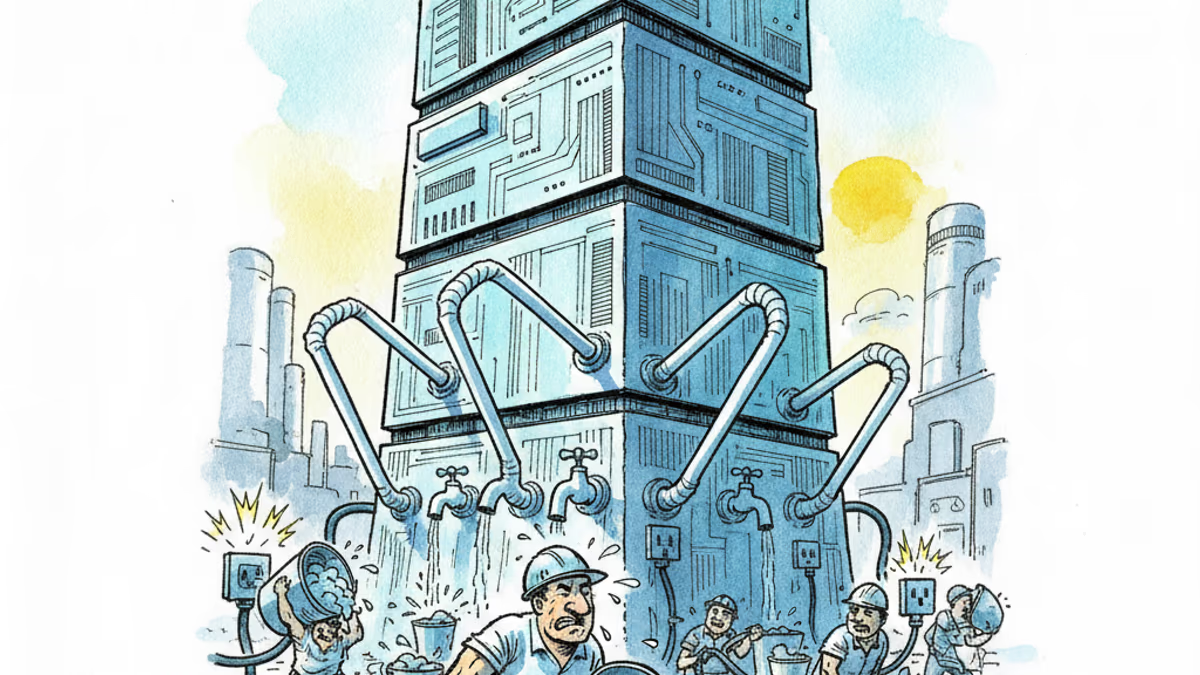
Samsung and SK unveiled a chip and AI investment package worth thousands of trillions of won on June 29. The headline number swings wildly by outlet, but the real contest isn't capital — it's water and power.

Lucra Sports CEO Dylan Robbins landed Cathie Wood's ARK Invest as a Series B lead without building AI. The story behind his unconventional fundraising playbook.
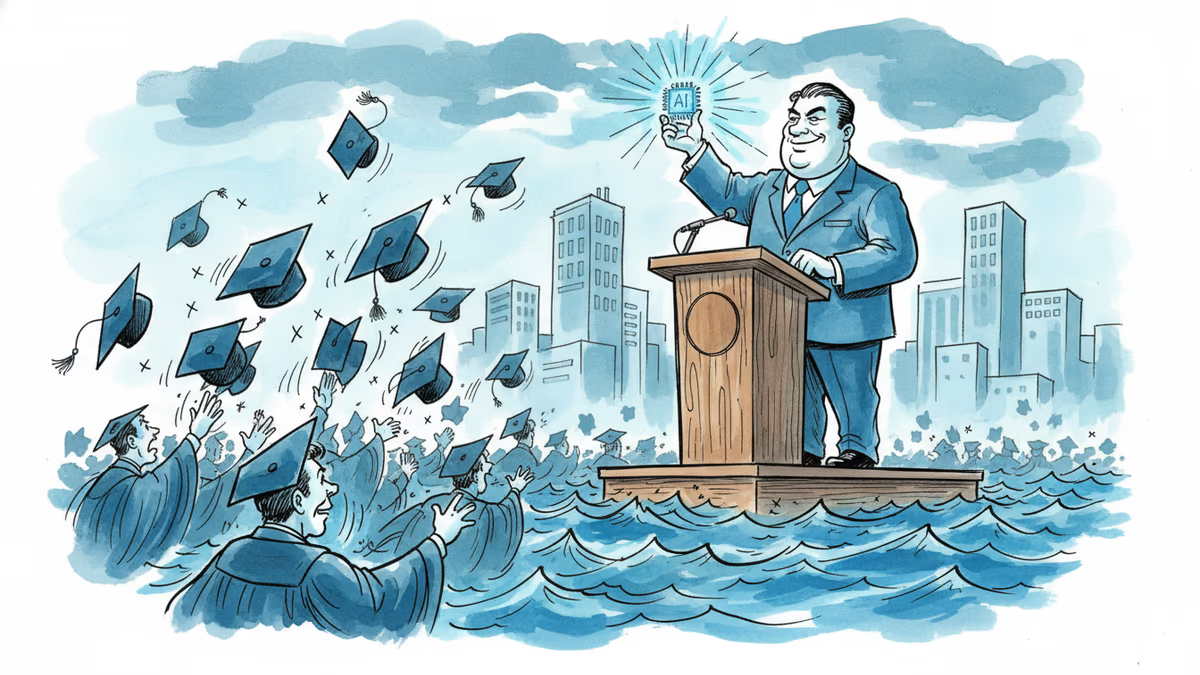
Viral videos show 2026 graduates jeering executives who praise AI at commencement ceremonies. It's not just rudeness — it's a signal about who pays for technological optimism.
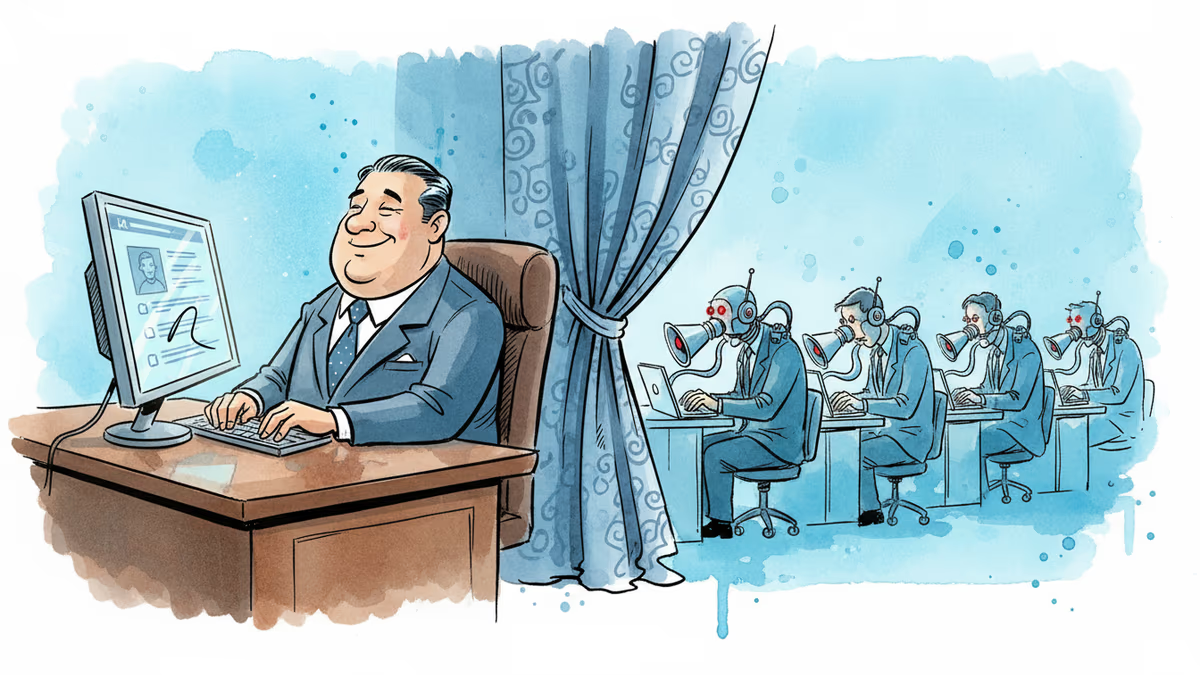
Filipino virtual assistants using AI to ghost-manage LinkedIn profiles for executives is now a structured industry. 30 comments a day, fake engagement rings, and a platform struggling to tell real from fabricated.
Samsung and SK unveiled a chip and AI investment package worth thousands of trillions of won on June 29. The headline number swings wildly by outlet, but the real contest isn't capital — it's water and power.
Lucra Sports CEO Dylan Robbins landed Cathie Wood's ARK Invest as a Series B lead without building AI. The story behind his unconventional fundraising playbook.
Viral videos show 2026 graduates jeering executives who praise AI at commencement ceremonies. It's not just rudeness — it's a signal about who pays for technological optimism.
Filipino virtual assistants using AI to ghost-manage LinkedIn profiles for executives is now a structured industry. 30 comments a day, fake engagement rings, and a platform struggling to tell real from fabricated.
Thoughts
Share your thoughts on this article
Sign in to join the conversation