
Who Does the City Belong To?
Thousands of American teens are reclaiming public spaces in what they call 'takeovers.' Curfews haven't stopped them. The real question is why they had nowhere else to go.
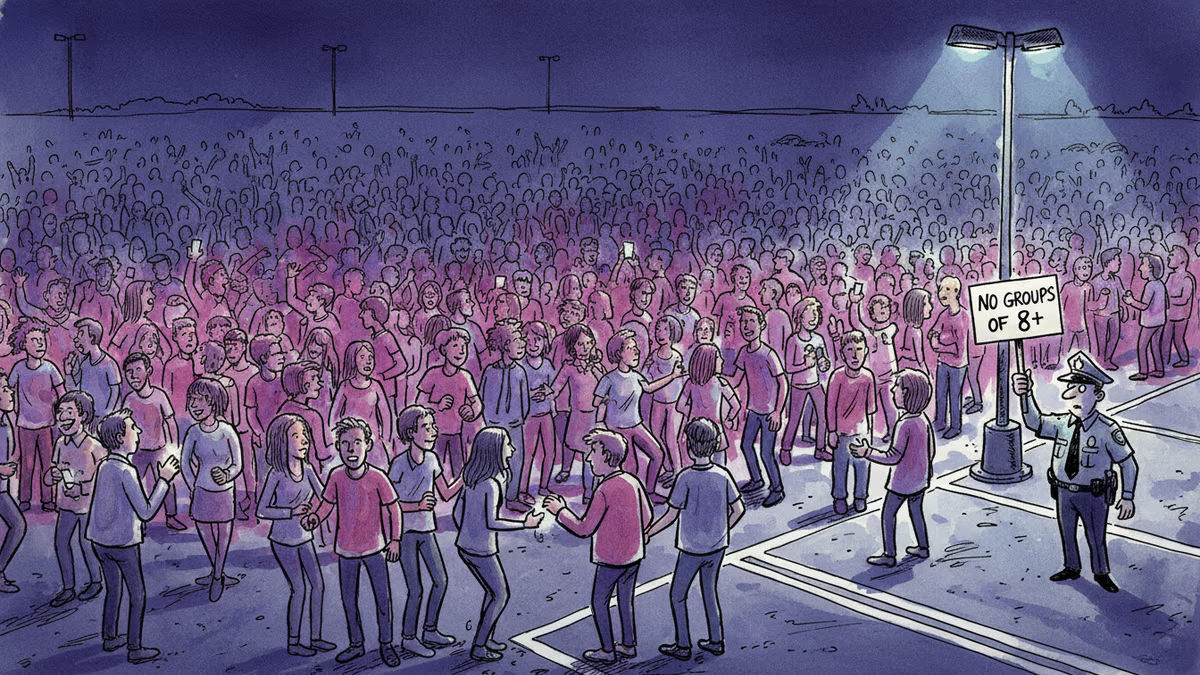
They came by the thousands, organized by Instagram flyer, to stand in a parking lot — because there was nowhere else to go.
This spring, videos of mass teen gatherings have gone viral across Washington, D.C., Los Angeles, Chicago, Detroit, and Jacksonville. Hundreds, sometimes thousands, of young people flooding open spaces, mall parking lots, and neighborhood streets. City officials called them a threat. The teens called them a solution.
They called them takeovers.
What's Actually Happening
The mechanics are deceptively simple. An AI-generated flyer appears on Instagram: "Link up at U Street. 5:00 PM till whenever. Pull up and be hype. Good energy only." Group chats distribute the location. Young promoters build their reputations by how many people show up. And then — they do.
Tyrone Crest, a 19-year-old content creator in D.C., explained the logic plainly to the Washington Post: "The clubs are 21 and up. Adults can go out and have fun on weekends. So what we do is basically try to get everybody to come together, enjoy themselves, have a little fun, get outside."
Ky'onna Hinton, 18, added a layer that cuts deeper: "Covid was in eighth grade for me. My eighth-grade year, I was inside. My ninth-grade year, I was inside. All the stuff people used to do — having fun outside, parties — that got taken away from us. So we trying to live it up now."
Not all of these gatherings stay peaceful. In D.C., some have ended in robberies, vandalism, and at least one incident of gunfire in March — no injuries, but a teenager was arrested for discharging a weapon. That's what pushed city officials into action.
The Curfew That Didn't Quite Work

Mayor Muriel Bowser responded with a targeted curfew policy. When police spot a takeover flyer, the police chief can designate a temporary "extended curfew zone" — forbidding anyone under 18 from gathering in groups larger than eight after 8 p.m. in that specific area.
The mayor says it's working. Critics say it's made things worse, creating a recurring flashpoint in neighborhoods like Navy Yard, where teens keep returning precisely because the zone has become a kind of dare. When asked whether teens would simply violate the curfew, most of the young people interviewed said yes — they would.
D.C. also tried something different. The Department of Parks and Recreation launched Late Night Drip at the Pools, keeping public pools open later into the evening, and hosted Teen Spring Jams at recreation centers — music, dancing, sports, games. Across two weekends, 6,000 teens attended. Youth advocates who had sharply criticized the curfew praised these events without reservation. The teens did too.
Summer is six weeks away. School ends, free time explodes, and 6,000 starts to feel like a small number.
The Deeper Question Cities Don't Want to Ask
Here's what the takeover debate keeps circling without quite landing on: American cities have spent decades quietly eliminating the kind of public space where young people can simply exist without spending money.
Malls replaced town squares. Gentrification priced out informal gathering spots. Parks got locked at dusk. What remained — open to anyone, free, no purchase required — was the parking lot and the street corner. Clubs are 21-plus. Bars are 21-plus. Cafés expect a transaction. The city built itself for consumers, and teenagers, by definition, are the least profitable demographic.
Race and class run through this story too. The teens filling these spaces are disproportionately Black and Latino, from lower-income neighborhoods. Washington Post reporter Jenny Gathright, who has covered the takeovers extensively, noted that the debate touches "issues of public space, issues of race, issues of class, issues of who has the right to occupy space in a city." The same crowd, in a different zip code, might be called a block party.
And then there's the pandemic shadow. The cohort now aged 16 to 20 lost the years when social development is most intense — no school dances, no crowded hallways, no summers of wandering. What psychologists have called social hunger doesn't disappear when the lockdowns end. It defers. And now it's arriving, loudly, in parking lots across America.
The curfew treats the symptom. The flyer treats the cause. That one of them costs the city money and the other costs nothing is not a coincidence — it's the policy choice.
This content is AI-generated based on source articles. While we strive for accuracy, errors may occur. We recommend verifying with the original source.
Related Articles
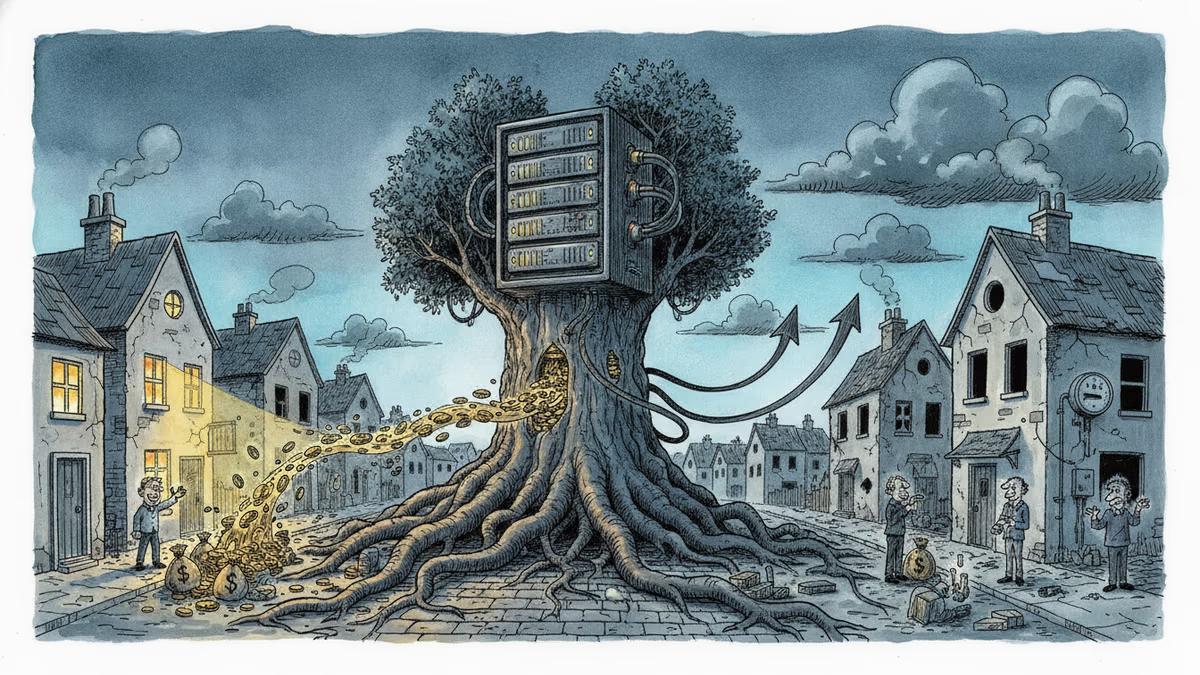
Over 1,200 community actions have pushed back against data centers since 2024. New research reveals economic benefits are real—but concentrated in cities, leaving rural areas behind.
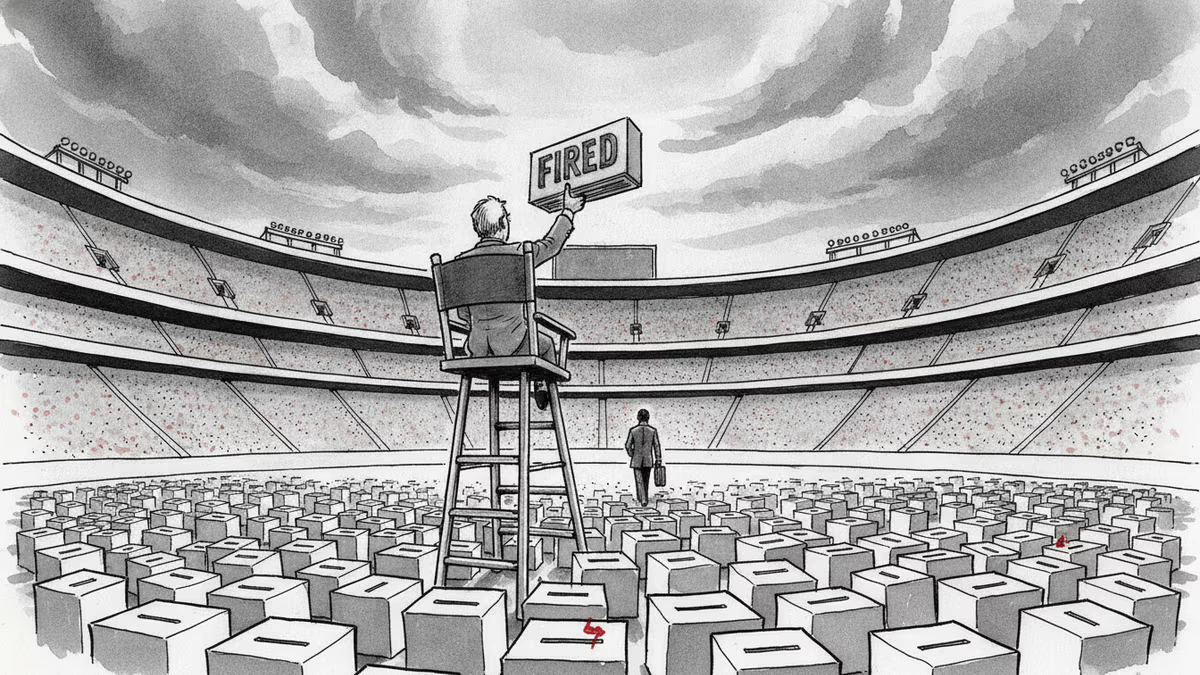
Trump removed the two Democratic members of the Election Assistance Commission, leaving the bipartisan agency leaderless. A Supreme Court ruling made it legal. Here's why a non-crisis can still be a warning sign.
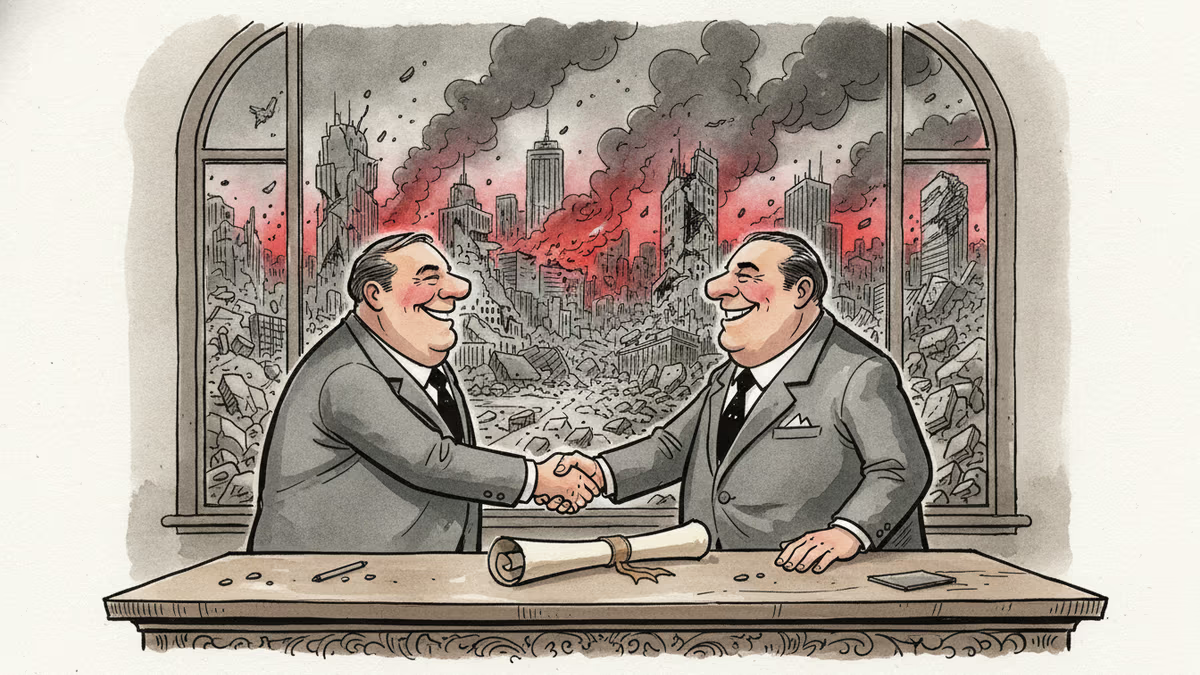
Lebanon and Israel signed a framework agreement in June 2026. Hezbollah rejected it. Israel kept fighting. History suggests this moment is real—and fragile.

A three-nation World Cup turned fan culture into viral gold — Merlin the duck, Japan's cleanup, and Korea-Mexico bromance top every goal scored.
Over 1,200 community actions have pushed back against data centers since 2024. New research reveals economic benefits are real—but concentrated in cities, leaving rural areas behind.
Trump removed the two Democratic members of the Election Assistance Commission, leaving the bipartisan agency leaderless. A Supreme Court ruling made it legal. Here's why a non-crisis can still be a warning sign.
Lebanon and Israel signed a framework agreement in June 2026. Hezbollah rejected it. Israel kept fighting. History suggests this moment is real—and fragile.
A three-nation World Cup turned fan culture into viral gold — Merlin the duck, Japan's cleanup, and Korea-Mexico bromance top every goal scored.
Thoughts
Share your thoughts on this article
Sign in to join the conversation