
The Slow Burn: How Regulation Becomes Prohibition
The UK's generational tobacco ban—permanent for anyone born after 2009—isn't just a health policy. It reveals how decades of 'grudging toleration' quietly build the case for outright bans, with implications for social media and gambling apps.
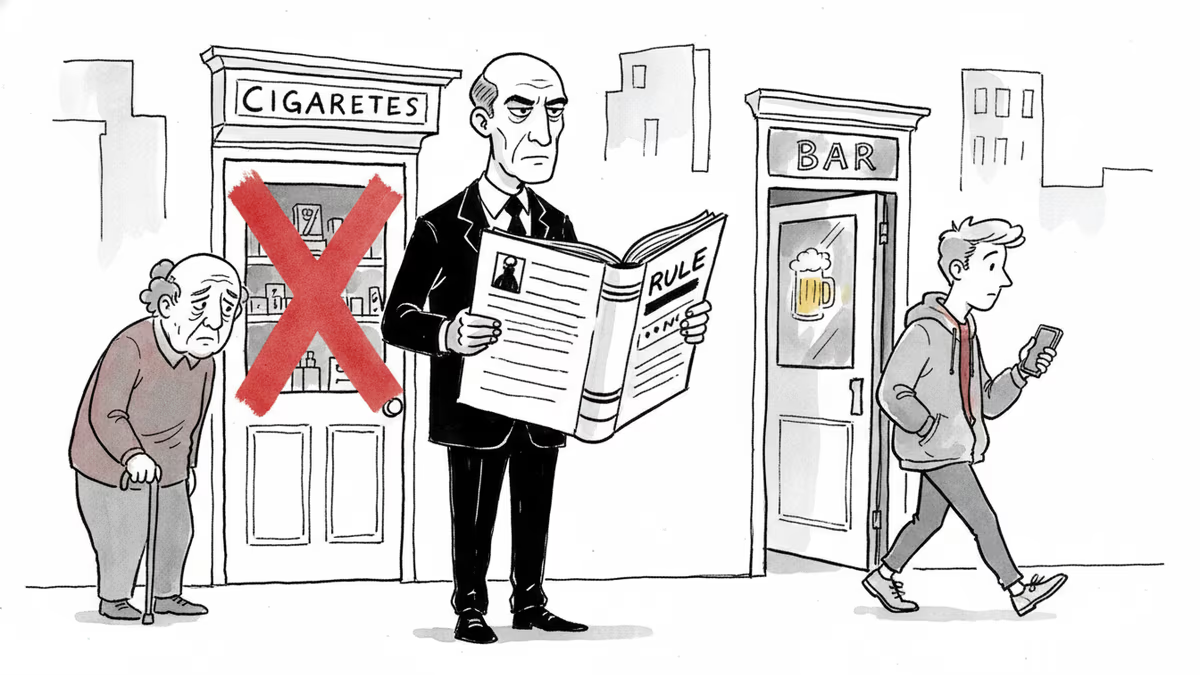
Prohibition doesn't announce itself. It arrives after decades of taxes, warning labels, and smoking bans have done their quiet work.
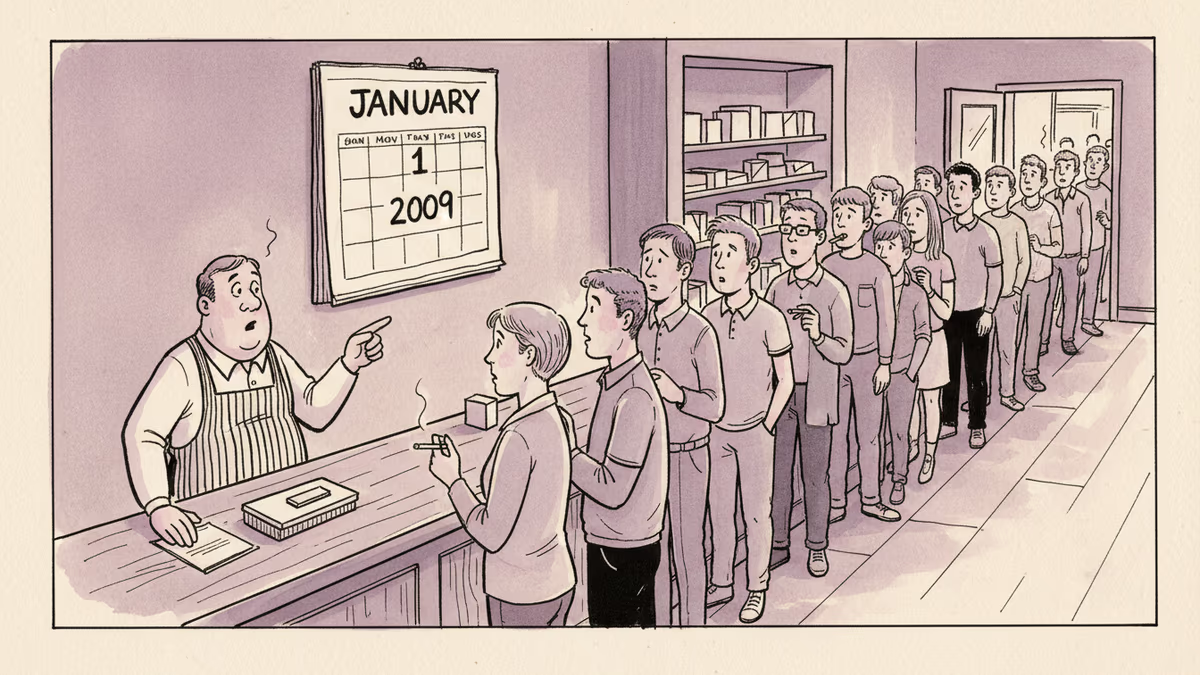
That's the uncomfortable lesson buried inside the UK's new generational tobacco law—a policy so methodical it barely registered as radical when it passed. Starting next year, selling cigarettes to anyone born on or after January 1, 2009, will be illegal. Not until they turn 18. Not with a doctor's note. Permanently. As long as the law stands, no one who is 17 or younger on New Year's Day 2027 will ever legally buy a cigarette in Britain.
A Rolling Ban That Stops Rolling
For nearly two decades, British retailers have operated under a simple rule: if you were born after today's date 18 years ago, you can't buy tobacco. The cutoff moved forward every day. Now it freezes.
The UK isn't alone. The Maldives passed a similar law in November 2024. New Zealand enacted one in 2022—then a new coalition government repealed it before it took effect. In the United States, 22 towns in Massachusetts, starting with the Boston suburb of Brookline, have adopted generational bans. Some observers read that cluster as a precursor to statewide legislation.
These aren't fringe experiments. They represent a genuine policy fork: one path continues the decades-long American approach of taxing, regulating, and stigmatizing tobacco without banning it outright; the other path leads, eventually, to prohibition.
How Grudging Toleration Digs Its Own Grave

Drug-policy scholar Mark Kleiman coined the phrase "grudging toleration" to describe America's relationship with cigarettes. The formula: allow the vice, tax it heavily, restrict where and to whom it can be sold, and saturate the culture with health warnings. Stop short of actually banning it.
For half a century, that formula worked—partially. Adult smoking rates fell from over 40% in 1974 to roughly 10% today. But tobacco still kills approximately 500,000 Americans every year, nearly seven times the annual death toll from drug overdoses. Even by 2035, analysts project more than 160,000 current smokers will die from the habit.
At some point, the marginal returns on public-health messaging flatten. Does anyone lighting a Marlboro in 2026 not know it might kill them? The honest answer is probably no. Which raises an awkward question: if stigma and regulation have gone as far as they can go, what's left?
Here's the counterintuitive part. The very success of gradual regulation has eroded the political constituency that kept prohibition off the table. Fewer smokers means fewer voters with a personal stake in keeping cigarettes legal. A 2023 poll found a majority of Americans would support banning all tobacco products. Legal stigmatization, in other words, manufactured the cultural consensus that may eventually become law.
From Cigarettes to Scroll
The pattern matters beyond tobacco. Last month, a jury ordered Meta and YouTube to pay a woman $6 million for harm their platforms caused her as a child. The plaintiff's legal theory—that addictive product design constitutes a defect—is the same argument that dismantled Big Tobacco in the 1990s. The Public Health Advocacy Institute, whose president Richard Daynard pioneered the tobacco litigation strategy, is now running parallel suits against sportsbooks and prediction markets.
Social media and gambling apps are currently in the "grudging toleration" phase: regulate, restrict minors' access, mandate warnings, but stop well short of banning. That's precisely where cigarettes were in 1985. The tobacco arc suggests that if regulators keep applying pressure long enough, the Overton window eventually shifts.
That doesn't mean the UK's specific approach will work as intended. Some of those banned from buying cigarettes legally will find other ways—through older friends, through black markets that generate their own social costs. The evidence on whether generational bans reduce net harm is still thin. And the US context differs meaningfully: Americans are more individualistic, more skeptical of government intervention, and lack a nationalized health system that makes the fiscal costs of smoking directly visible to taxpayers.
But Carnegie Mellon professor Jonathan Caulkins offers a useful corrective to the reflexive Prohibition-equals-failure narrative: American jurisdictions successfully ban fireworks and raw milk sales all the time, with little controversy. The question isn't whether prohibition ever works—it's which products, in which contexts, meet the threshold.
This content is AI-generated based on source articles. While we strive for accuracy, errors may occur. We recommend verifying with the original source.
Related Articles
The WHO declared an Ebola emergency in May 2026. But this outbreak is caused by the Bundibugyo strain — and no approved vaccine or treatment exists for it. Here's why that changes everything.
The MV Hondius hantavirus outbreak isn't the real story. The real story is how media fear-framing is obscuring the slow collapse of the global public health system designed to protect us.
Trump withdrew Casey Means's surgeon general nomination, signaling the limits of the MAHA movement. What happens when wellness culture tries to become public health policy?
The UK just banned tobacco sales to anyone born after 2009, forever. It's framed as a public health win. But what happens when good intentions collide with bedrock liberties?
The WHO declared an Ebola emergency in May 2026. But this outbreak is caused by the Bundibugyo strain — and no approved vaccine or treatment exists for it. Here's why that changes everything.
The MV Hondius hantavirus outbreak isn't the real story. The real story is how media fear-framing is obscuring the slow collapse of the global public health system designed to protect us.
Trump withdrew Casey Means's surgeon general nomination, signaling the limits of the MAHA movement. What happens when wellness culture tries to become public health policy?
The UK just banned tobacco sales to anyone born after 2009, forever. It's framed as a public health win. But what happens when good intentions collide with bedrock liberties?
Thoughts
Share your thoughts on this article
Sign in to join the conversation