
The Writer Who Needed Stitches to Finally Focus
Science writer David Epstein found unexpected happiness after a head injury forced him to do one thing at a time. What his experience reveals about the attention economy and why focus has become so rare.
It took a head wound to give David Epstein the best workdays he'd had in years.
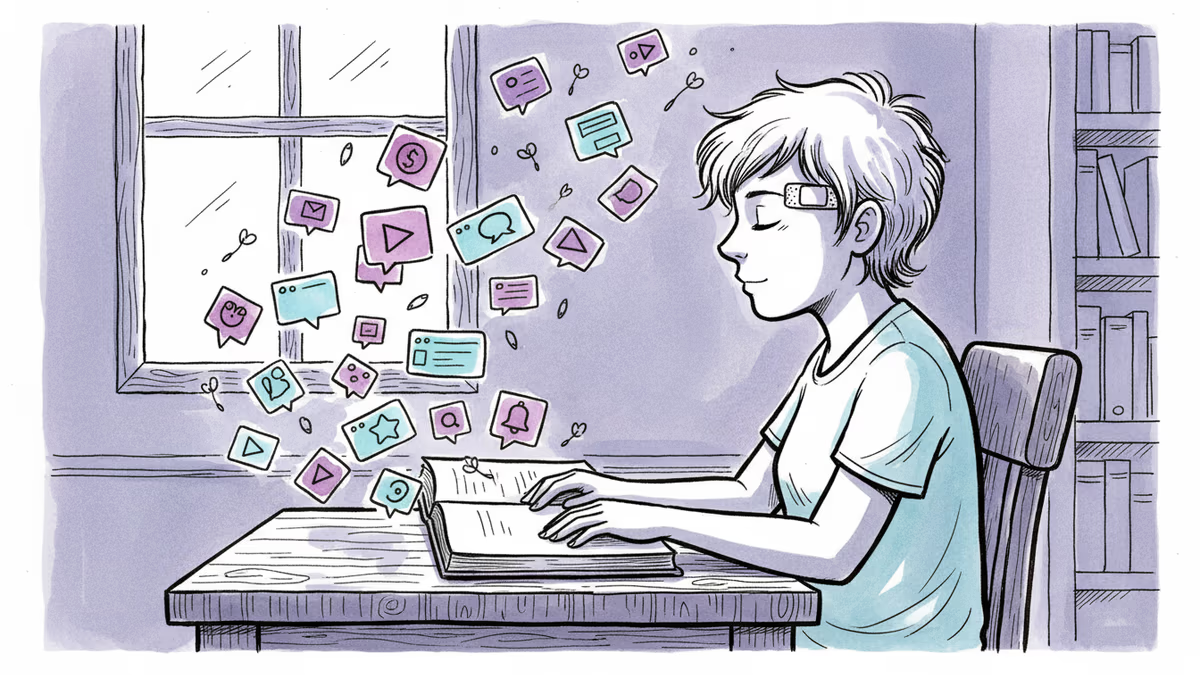
The science writer — best known for Range, his book on the value of generalist thinking — recently recounted an unexpected discovery. After getting stitches in his head, doctors told him to move slowly for a few days. He braced for frustration. Instead, after three days of following orders, he felt genuinely happy. He started keeping a journal to figure out why.
His conclusion wasn't about what he was doing. It was about what he wasn't doing.
One Thing at a Time
"Whether I was reading, working on my computer, or brushing my teeth, I was 'monotasking,'" Epstein writes, "concentrating on one thing at a time." The physical constraint — he couldn't turn his head quickly without pain near the stitches — had effectively installed what he called "a multitasking monitor implanted in my skin." Every attempt to split his attention came with an immediate, physical cost. So he stopped trying.
The result wasn't just productivity. It was something closer to contentment.
Epstein is careful not to oversell the lesson. He acknowledges it shouldn't take a medical situation to force this kind of focus. But the episode crystallized something he'd long argued about creative work: limits aren't the enemy of thinking — they're the condition for it. Only within constraints, he suggests, can the mind actually settle, wander productively, and do the work that matters.
A Crisis That Isn't New, But Is Getting Worse

Epstein's experience lands against a backdrop of mounting evidence that sustained attention is becoming genuinely harder to come by — and not simply because people lack willpower.
Broadcaster and writer Chris Hayes put it bluntly last year: every single aspect of human life is being reoriented around the pursuit of attention. Platforms are engineered to capture and hold the eye for as long as possible. Notifications are designed to interrupt. The architecture of modern digital life is, in a very deliberate sense, hostile to focus.
The downstream effects are showing up in places that would have seemed unlikely a decade ago. Journalist Rose Horowitch reported that elite college students are increasingly unable to read books cover to cover — in part because many arrived at university having never done so in high school. Film students who struggle to sit through a feature film. Graduate students who skim where they once read deeply. The attention-span crisis isn't staying in the scroll; it's reshaping how a generation relates to long-form thought itself.
This matters beyond the classroom. Knowledge work — writing, analysis, coding, strategy — depends on the ability to hold a problem in mind long enough to actually turn it over. If that capacity is being quietly eroded by the cumulative weight of context-switching, the cost doesn't show up on any quarterly report. It shows up in the quality of thinking.
Who Gets to Own Your Attention?
There's a temptation to frame monotasking as a productivity hack — another item for the self-optimization checklist, alongside cold showers and journaling. But Epstein's framing resists that reduction. He isn't arguing for efficiency. He's arguing that creative work requires a particular kind of mental environment, and that environment is increasingly hard to build because the forces dismantling it are structural, not personal.
This creates an uncomfortable asymmetry. When an individual tries to protect their focus, they're doing so against systems built by teams of engineers whose explicit goal is to prevent exactly that. Choosing to monotask isn't just a lifestyle preference. In this context, it's closer to an act of reclamation.
Not everyone finds that framing convincing. Some researchers argue that the "attention crisis" is overstated — that humans have always been distractible, and that new tools also create new forms of engagement and connection. Others point out that the ability to protect one's attention is itself unevenly distributed: knowledge workers with flexible schedules can build focus rituals; warehouse workers and nurses cannot.
And there's a harder question lurking underneath all of this. Epstein discovered the pleasure of focus accidentally, through pain. For many people, the problem isn't that they can't focus — it's that they haven't yet encountered something worth focusing on. The phone wins not just because it's engineered to win, but because it's reliably there, offering stimulation at zero effort, while the harder rewards of deep work require an upfront investment that's easy to defer.
This content is AI-generated based on source articles. While we strive for accuracy, errors may occur. We recommend verifying with the original source.
Related Articles
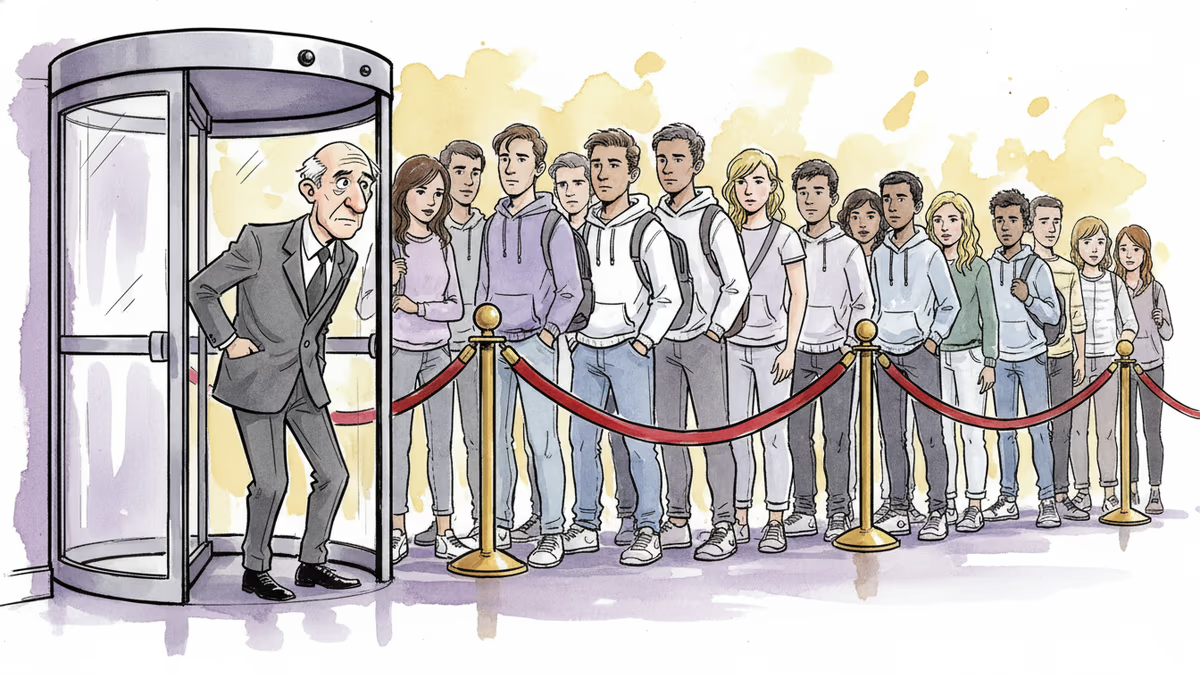
The average U.S. retirement age has climbed from 57 to well past 65. As people live longer and social bonds outside work erode, the old script for stepping away no longer holds. Here's why.
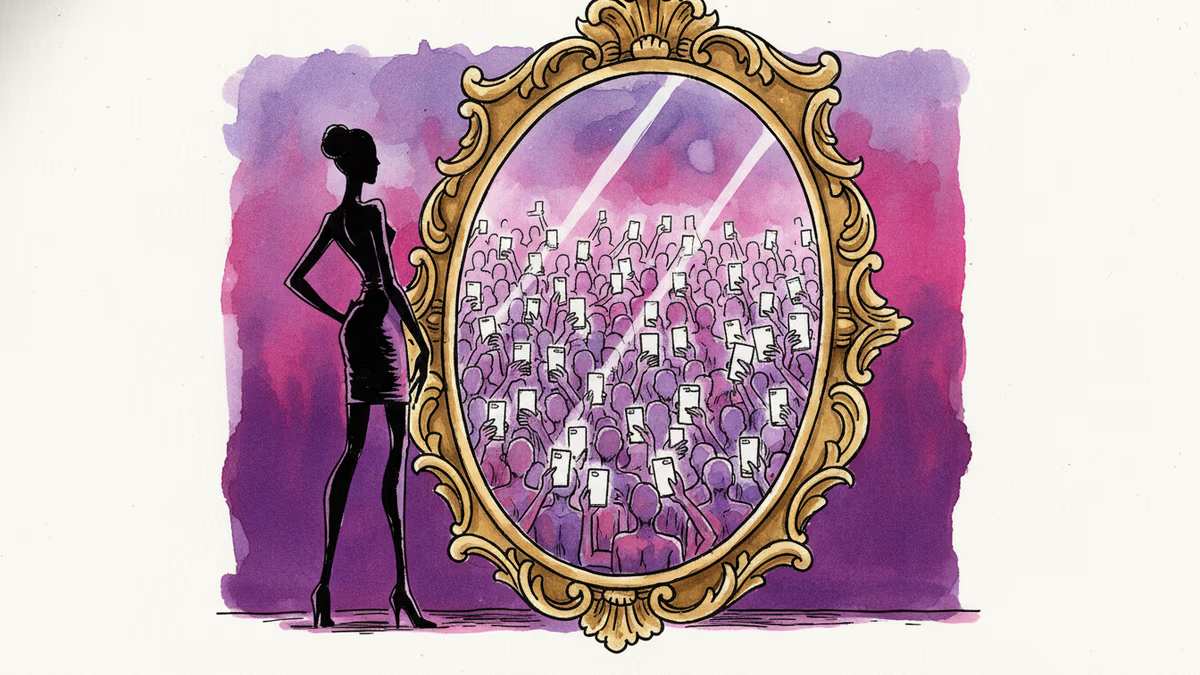
In 2011, Barbara Walters told the Kardashians they had no talent. Fourteen years later, that verdict looks less like an insult and more like a misreading of what talent now means.
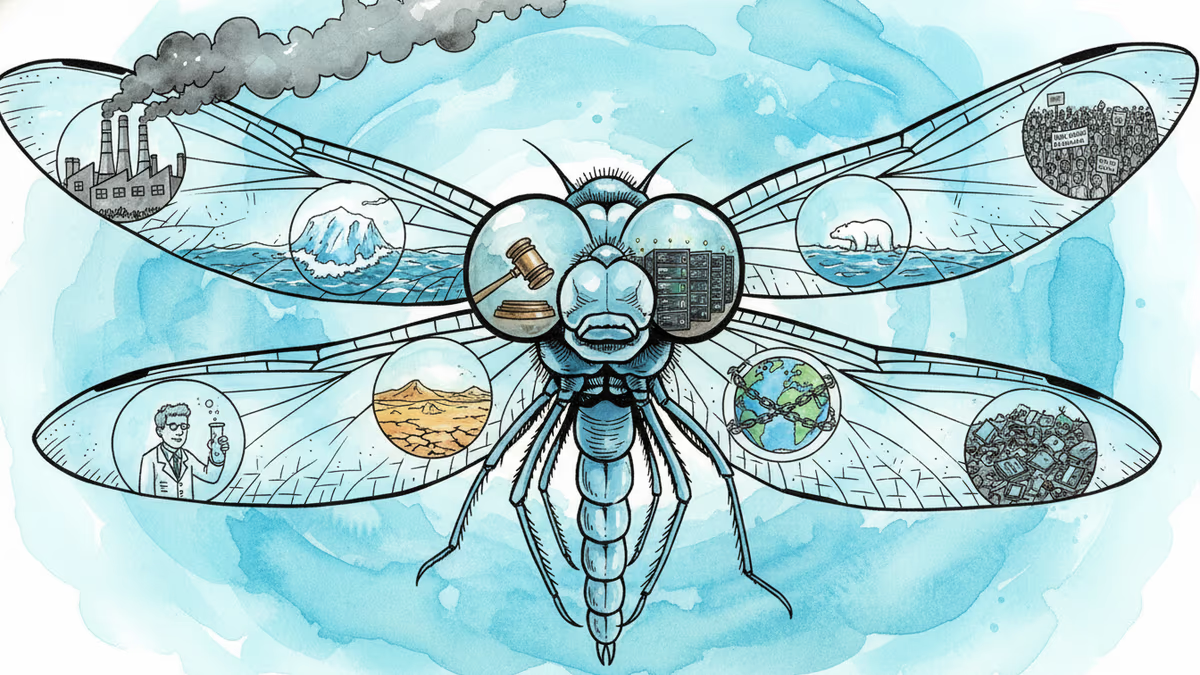
AI looks like liberation, threat, or environmental disaster depending on where you stand. A framework of nine competing narratives reveals why single-lens thinking is the real danger.
The Wizard of the Kremlin isn't really about Putin's evil. It's about the clever people who thought they could manage him—and what that says about how power actually works.
The average U.S. retirement age has climbed from 57 to well past 65. As people live longer and social bonds outside work erode, the old script for stepping away no longer holds. Here's why.
In 2011, Barbara Walters told the Kardashians they had no talent. Fourteen years later, that verdict looks less like an insult and more like a misreading of what talent now means.
AI looks like liberation, threat, or environmental disaster depending on where you stand. A framework of nine competing narratives reveals why single-lens thinking is the real danger.
The Wizard of the Kremlin isn't really about Putin's evil. It's about the clever people who thought they could manage him—and what that says about how power actually works.
Thoughts
Share your thoughts on this article
Sign in to join the conversation