
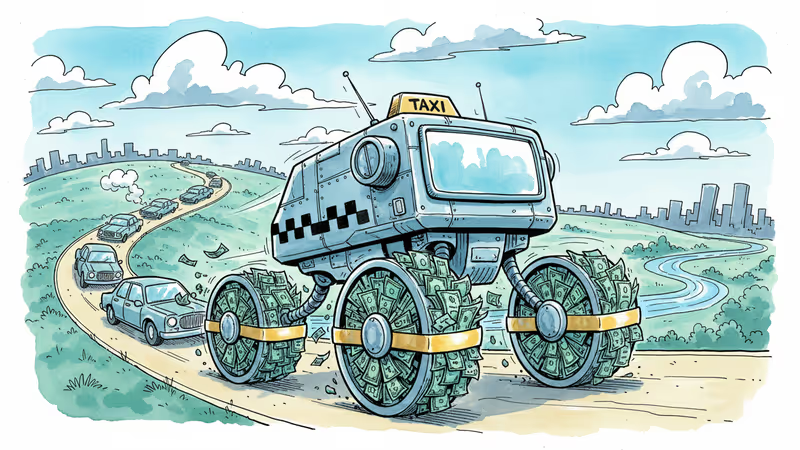
Waymo's $16B War Chest: Funding Autonomy or Burning Cash?
Waymo secures $16 billion for global expansion, but profitability and regulatory hurdles remain. Is this enough to win the autonomous vehicle race, or just expensive experimentation?
$16 billion. That's the war chest Waymo just secured to fuel its global expansion. But here's the uncomfortable question: Is throwing money at self-driving cars the same as solving them?
Waymo's momentum over the past 18 months has been undeniable. The Alphabet-owned company now operates commercial robotaxi services across six major markets — San Francisco Bay Area, Phoenix, Los Angeles, Austin, Atlanta, and Miami. This year, it plans to expand to more than a dozen new cities internationally, including London and Tokyo.
The Bull Case Meets Reality
The numbers tell a compelling story. Waymo provides 400,000 rides weekly across six U.S. metropolitan areas. In 2025 alone, it more than tripled its annual volume to 15 million rides. That's explosive growth by any metric.
Yet industry watchers remain cautiously optimistic at best. Their assessments keep landing in "sort of" and "it depends" territory. Why the hesitation when the data looks so promising?
Alphabet's commitment provides a crucial advantage. Unlike other AV startups that suddenly lost funding when legacy automaker backers got skittish, Waymo has a deep-pocketed parent company that's clearly in it for the long haul. This stability matters enormously in a capital-intensive industry where competitors are dropping out.
The Profitability Puzzle
But growth isn't the same as success — especially when success means turning a profit. Waymo still faces two fundamental challenges: cost and increasing regulatory scrutiny. The company's chief safety officer recently testified at a Senate Commerce hearing, highlighting the growing political attention on autonomous vehicles.
The cost structure remains problematic. Each Waymo vehicle is essentially a rolling computer worth hundreds of thousands of dollars. While the technology is impressive, the economics are still murky. How do you build a sustainable business when your primary asset is exponentially more expensive than a regular taxi?
The Manufacturing Disadvantage

Here's where Waymo faces a structural challenge that money alone can't solve: it doesn't manufacture cars. Unlike Tesla, which controls its entire production pipeline, Waymo relies on automotive partners. This dependency limits its ability to drive down costs through scale or integrate hardware and software seamlessly.
If Waymo pivots to licensing its technology rather than operating fleets, it gains scalability but loses control. That's a risky trade-off for nascent technology under intense regulatory scrutiny.
Beyond Robotaxis: The Broader AV Ecosystem
Interestingly, the most compelling AV investments might not be in consumer transportation at all. Bedrock Robotics just raised $270 million for construction equipment automation. Overland AI secured $100 million for military applications. These specialized use cases offer clearer paths to profitability in controlled environments.
This diversification suggests that autonomous technology's first major successes might come from industrial applications rather than urban transportation. The technical challenges are more manageable, the environments more predictable, and the economic justification clearer.
Regulatory Headwinds Gathering
Meanwhile, regulatory pressure is intensifying. China just banned concealed electronically actuated door handles popularized by Tesla, requiring mechanical releases by January 2027. Europe may follow suit. If regulators are scrutinizing door handles, imagine their attention to fully autonomous systems.
The regulatory landscape could determine Waymo's fate more than its technology or funding. Public acceptance of autonomous vehicles remains fragile, and a single high-profile incident could trigger restrictive regulations that no amount of investment can overcome.
The Competitive Landscape Shifts
Uber continues positioning itself as the platform for autonomous vehicles rather than developing its own technology. The company promoted Balaji Krishnamurthy to CFO — notably, someone who actively promotes AV partnerships and sits on Waabi's board. Uber's strategy of partnering rather than building could prove prescient if manufacturing and operation prove too capital-intensive.
This creates an interesting dynamic: Waymo burns billions developing technology while Uber positions itself to benefit from everyone's innovations without the development costs.
Authors
Related Articles
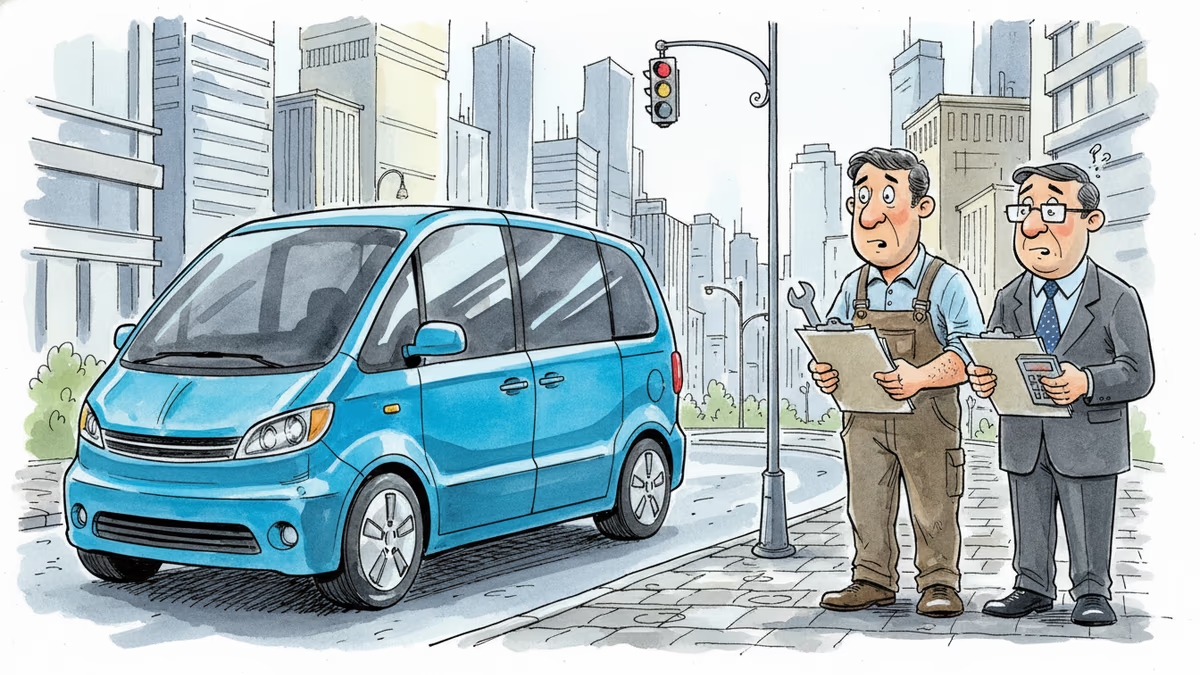
Waymo's new Ojai robotaxi isn't just a vehicle upgrade. It's the company's most serious attempt yet at cracking the cost problem that has kept autonomous vehicles from scaling. Here's what's really at stake.
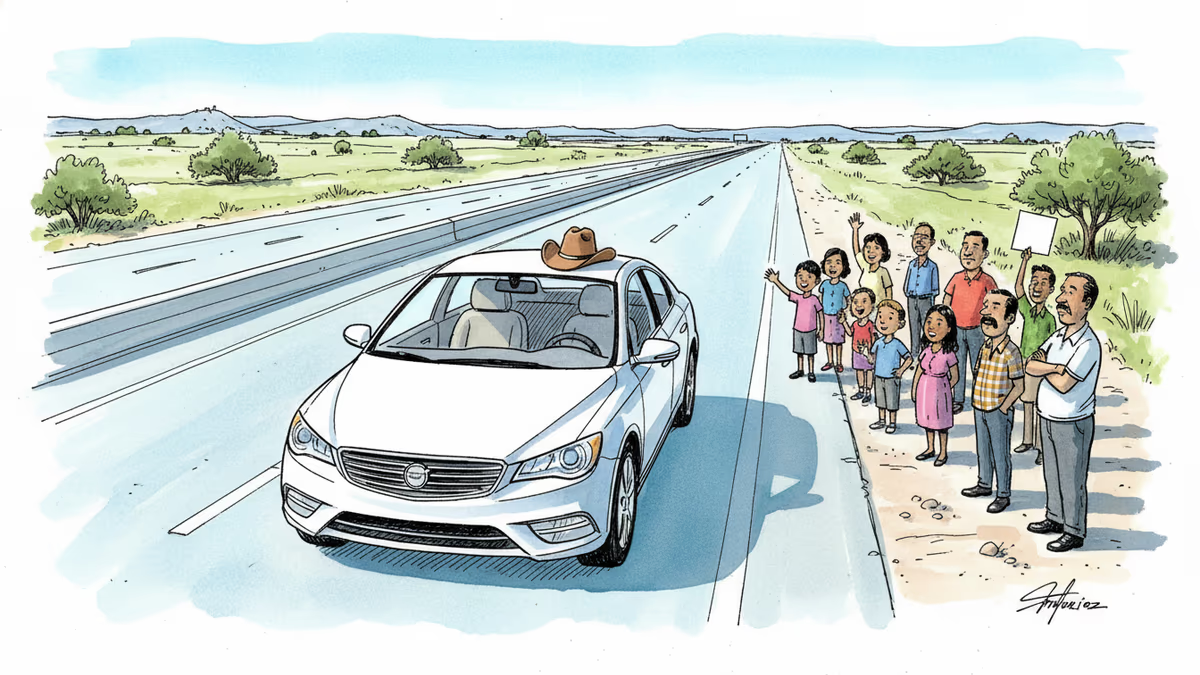
Tesla expanded its driverless robotaxi to Dallas and Houston, even after reporting 14 crashes in Austin. What does this tell us about how autonomous vehicles actually get built?
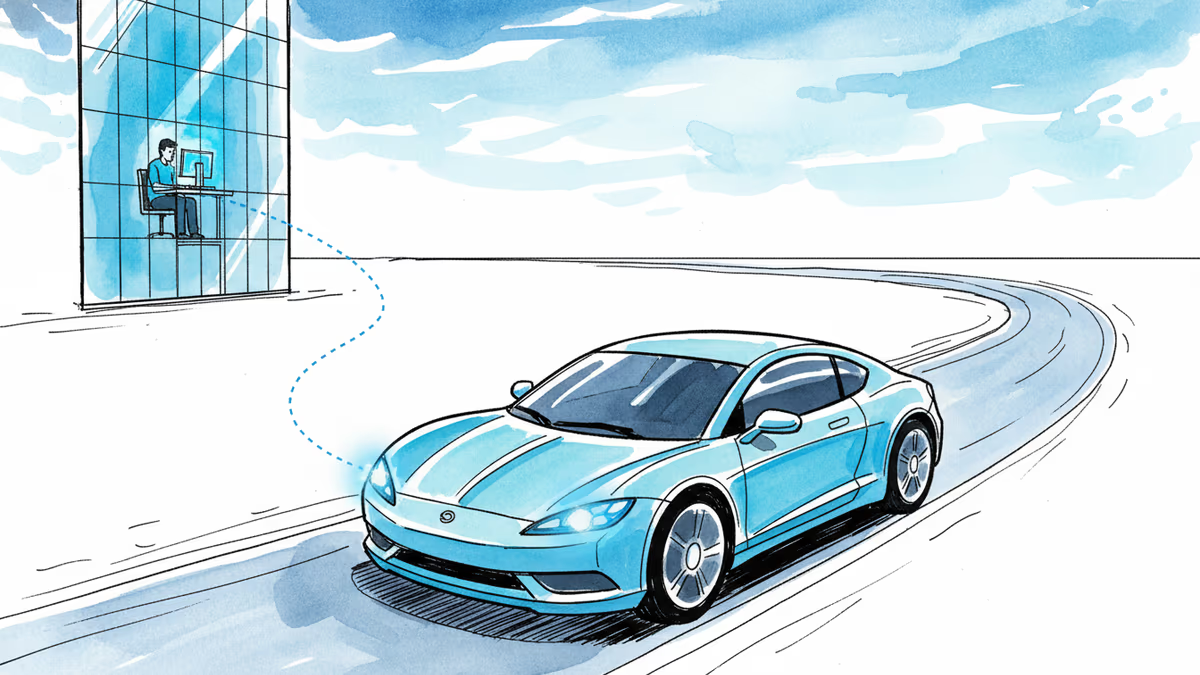
A U.S. Senate investigation found that seven autonomous vehicle companies — including Waymo and Tesla — refused to disclose how often remote operators intervene in their vehicles. Here's why that silence matters.
Uber and WeRide have launched fully driverless robotaxi service in Dubai — no safety operator, real fares. Here's what it means for the global AV race and your next ride.
Waymo's new Ojai robotaxi isn't just a vehicle upgrade. It's the company's most serious attempt yet at cracking the cost problem that has kept autonomous vehicles from scaling. Here's what's really at stake.
Tesla expanded its driverless robotaxi to Dallas and Houston, even after reporting 14 crashes in Austin. What does this tell us about how autonomous vehicles actually get built?
A U.S. Senate investigation found that seven autonomous vehicle companies — including Waymo and Tesla — refused to disclose how often remote operators intervene in their vehicles. Here's why that silence matters.
Uber and WeRide have launched fully driverless robotaxi service in Dubai — no safety operator, real fares. Here's what it means for the global AV race and your next ride.
Thoughts
Share your thoughts on this article
Sign in to join the conversation