
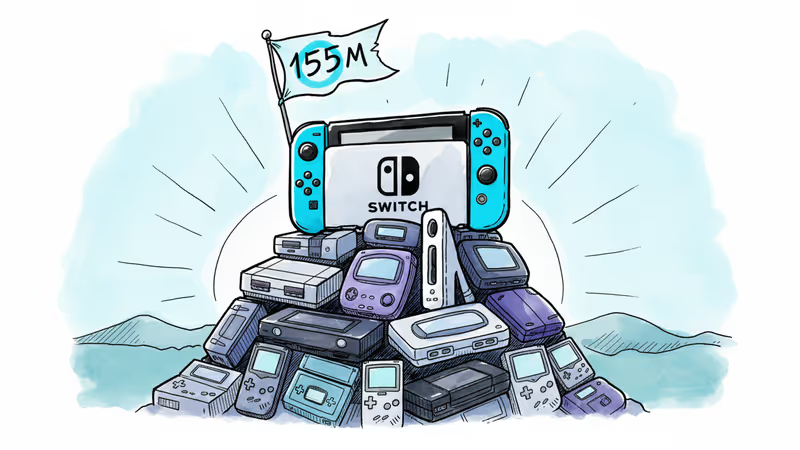
Nintendo Switch Breaks Records with 155M Units, Redefining Console Success
Nintendo Switch surpasses DS to become Nintendo's best-selling console ever with 155 million units sold, transforming the company's boom-bust cycle into sustained growth.
155 million units sold. That's the milestone Nintendo Switch has reached since its 2017 debut, officially making it Nintendo's best-selling console ever and surpassing the previous record holder, the DS, by a narrow margin.
Breaking the Boom-Bust Cycle
Nintendo's history reads like a rollercoaster of extremes. The Wii sold 100 million units, revolutionizing gaming with motion controls. Its successor, the Wii U, managed barely 13 million—not even a quarter of its predecessor's success. This boom-bust pattern seemed baked into Nintendo's DNA.
But the Switch appears to have broken this cycle. Seven years after launch, it continues selling steadily, transforming Nintendo from a company that lurched between triumph and disaster into something more sustainable. The question isn't whether Nintendo will stumble again, but whether this represents a fundamental shift in how the company operates.
The Hybrid Revolution
The Switch's success stems from a deceptively simple insight: players want flexibility. The ability to seamlessly transition from playing Zelda on a big screen at home to continuing the same save file on a train commute solved a problem many didn't realize they had.

This hybrid approach challenged industry assumptions about dedicated gaming hardware. While Sony and Microsoft pushed for more powerful home consoles, Nintendo zigged where others zagged, prioritizing convenience over raw processing power. The market verdict is clear—sometimes innovation means doing less, but doing it better.
Market Implications Beyond Gaming
The Switch's triumph extends beyond gaming metrics. It's validated the "good enough" technology philosophy that many tech companies struggle with. Instead of competing on specs, Nintendo focused on user experience—a lesson that resonates across industries.
For investors, the Switch represents something more valuable than a hit product: proof of concept for sustainable growth. Nintendo's stock has reflected this stability, moving away from the volatile swings that characterized previous console cycles. The company has built a platform that generates consistent software sales, creating recurring revenue streams that traditional console makers envied.
The Competitive Response
Other gaming companies are taking notice. Valve's Steam Deck and rumors of portable versions from other manufacturers suggest the hybrid concept is being validated industry-wide. But copying the form factor might miss the deeper lesson: understanding what players actually want versus what the industry thinks they should want.
The Switch's success also raises questions about the future of traditional consoles. If portability matters more than cutting-edge graphics, what does that mean for the next generation of PlayStation and Xbox hardware?
Authors
Related Articles
Sony is pulling its major single-player PlayStation games from PC. After six years of multiplatform expansion, the reversal raises hard questions about exclusivity, hardware sales, and who really controls gaming's future.
Xbox hardware revenue dropped 33% in Q1 2026, yet Microsoft posted $82.9B in total revenue. What this tells us about the future of gaming—and who actually loses.
Pokémon Champions launched on Switch with bugs breaking core battle mechanics. But the deeper issue isn't the bugs — it's whether a game trying to please all players can satisfy any of them.
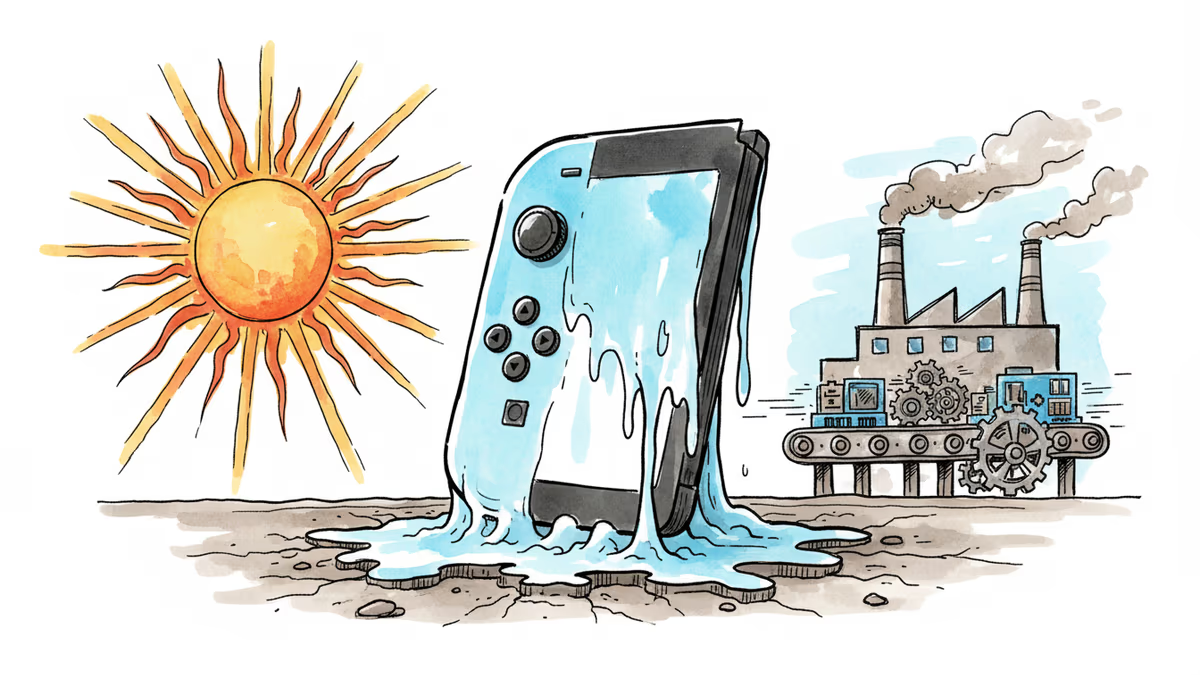
Nine months after a record-breaking launch, Nintendo is cutting Switch 2 production from 6 million to 4 million units per quarter. What went wrong, and what does it signal for the console market?
Sony is pulling its major single-player PlayStation games from PC. After six years of multiplatform expansion, the reversal raises hard questions about exclusivity, hardware sales, and who really controls gaming's future.
Xbox hardware revenue dropped 33% in Q1 2026, yet Microsoft posted $82.9B in total revenue. What this tells us about the future of gaming—and who actually loses.
Pokémon Champions launched on Switch with bugs breaking core battle mechanics. But the deeper issue isn't the bugs — it's whether a game trying to please all players can satisfy any of them.
Nine months after a record-breaking launch, Nintendo is cutting Switch 2 production from 6 million to 4 million units per quarter. What went wrong, and what does it signal for the console market?
Thoughts
Share your thoughts on this article
Sign in to join the conversation