
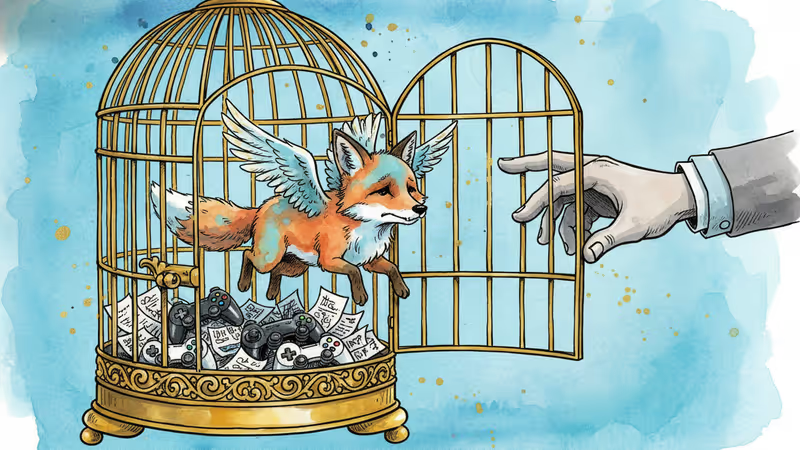
Netflix Sold Its Game Studio Back – What Went Wrong?
Netflix acquired cozy game developer Spry Fox in 2022 but sold it back after just 3 years. What does this mean for streaming platforms' gaming ambitions?
When Netflix acquired cozy puzzle game maker Spry Fox in 2022, it seemed like a perfect match. But three years later, the studio is independent again. What does this tell us about streaming giants' gaming dreams?
The Money Problem That Wasn't Solved
Spry Fox co-founder David Edery was refreshingly honest about their struggle: "We just never were that good at making money from our games." Despite running for over a decade and creating hits like Triple Town and Alphabear, monetization remained their Achilles' heel.
Netflix's acquisition seemed like salvation. No more worrying about in-app purchases, ads, or complex monetization schemes. Just pure game development funded by subscription revenue. For Netflix, Spry Fox's approachable puzzle games fit perfectly into their mobile-first gaming strategy.
So why did they part ways?
The Streaming-Gaming Culture Clash
Netflix entered gaming in 2021 as subscriber growth slowed and competition intensified. But games aren't just another content category – they're a fundamentally different beast.

Viewers passively consume shows and movies. Gamers actively engage, invest time, and develop deep loyalty to specific titles. The consumption patterns, development cycles, and audience expectations are worlds apart from traditional streaming content.
Moreover, indie studios like Spry Fox thrive on creative autonomy. The corporate structure and processes that work for film and TV production might feel constraining to small, agile game development teams. The cultural DNA of streaming platforms and indie game studios may simply be incompatible.
What This Means for the Industry
This buyback signals broader challenges in the gaming industry's consolidation trend. If Netflix – with its $15 billion annual content budget and 260 million global subscribers – couldn't make this work, what does that say about other tech giants' gaming ambitions?
Apple Arcade, Google Play Pass, and Amazon Luna all represent different approaches to subscription gaming. But they're all grappling with the same fundamental question: How do you create sustainable revenue streams for developers while maintaining creative freedom?
For indie developers, Spry Fox's journey offers both hope and caution. The promise of "development without monetization pressure" proved unsustainable, but the studio's ability to buy itself back suggests there are alternative paths to independence.
The Bigger Picture
This isn't just about one studio or one streaming service. It's about the limits of platform consolidation in creative industries. While Netflix succeeded in transforming television production, gaming requires different skills, different relationships, and different approaches to talent retention.
The gaming industry's future might lie not in acquisition by tech giants, but in new models of partnership that preserve creative independence while providing financial stability. Epic Games' approach with Unreal Engine revenue sharing, or Valve's hands-off approach with Steam, might offer better templates than traditional corporate acquisitions.
Authors
Related Articles
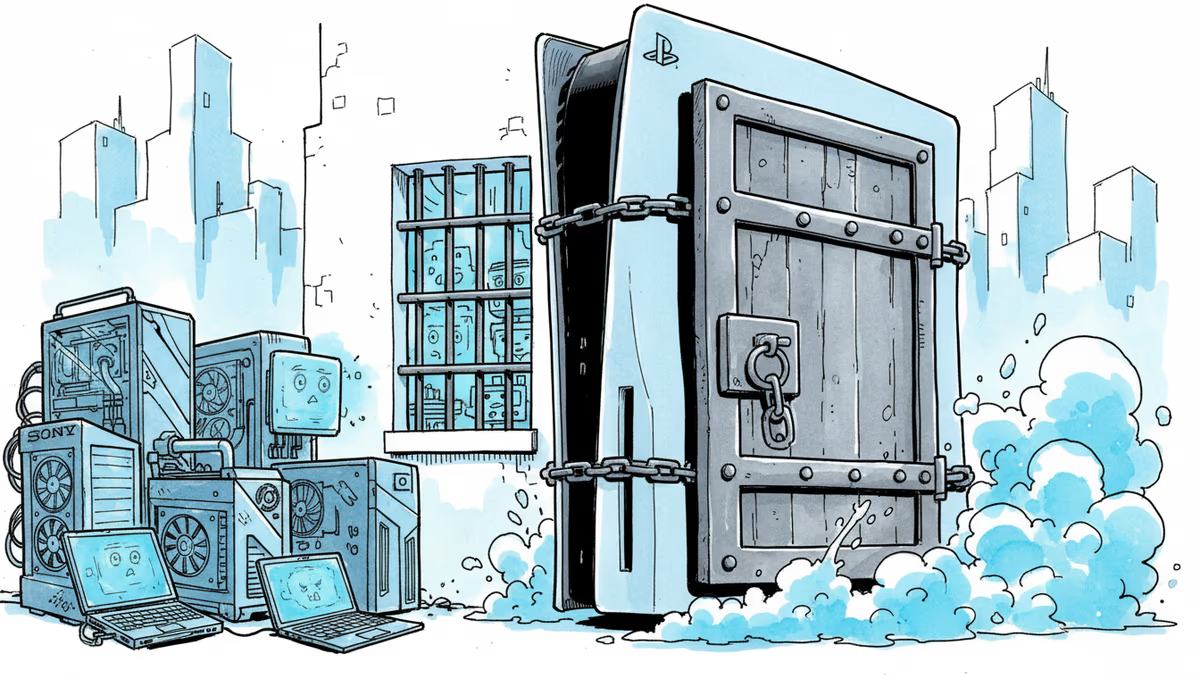
Sony is pulling its major single-player PlayStation games from PC. After six years of multiplatform expansion, the reversal raises hard questions about exclusivity, hardware sales, and who really controls gaming's future.
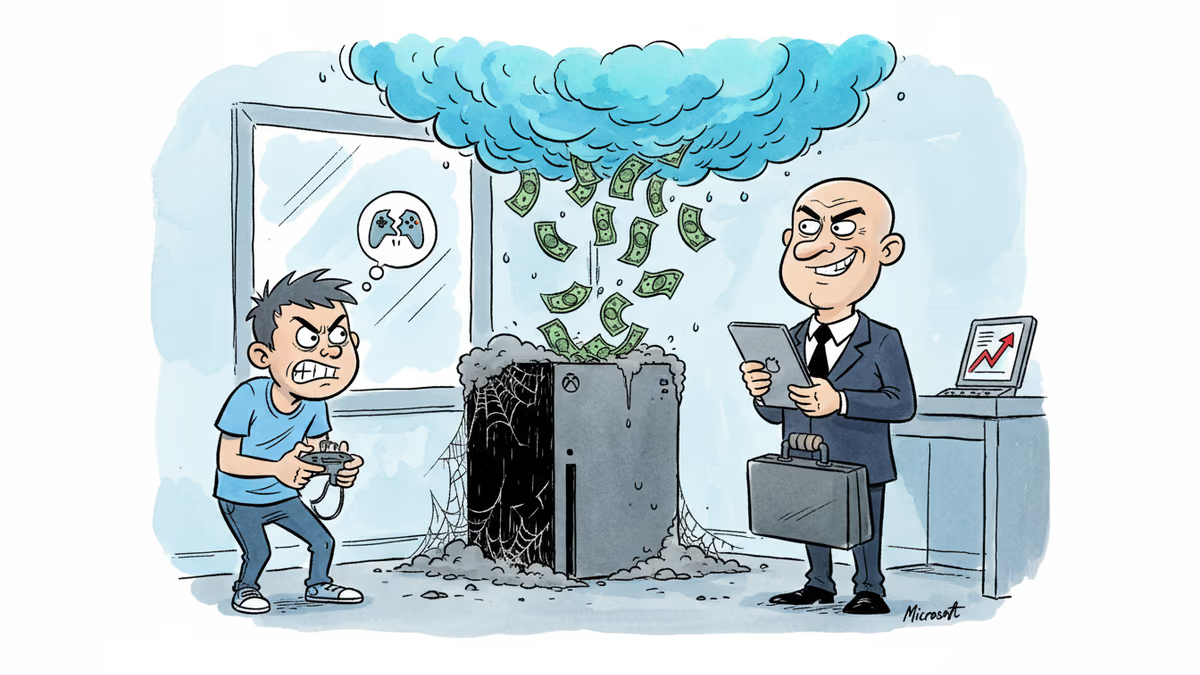
Xbox hardware revenue dropped 33% in Q1 2026, yet Microsoft posted $82.9B in total revenue. What this tells us about the future of gaming—and who actually loses.
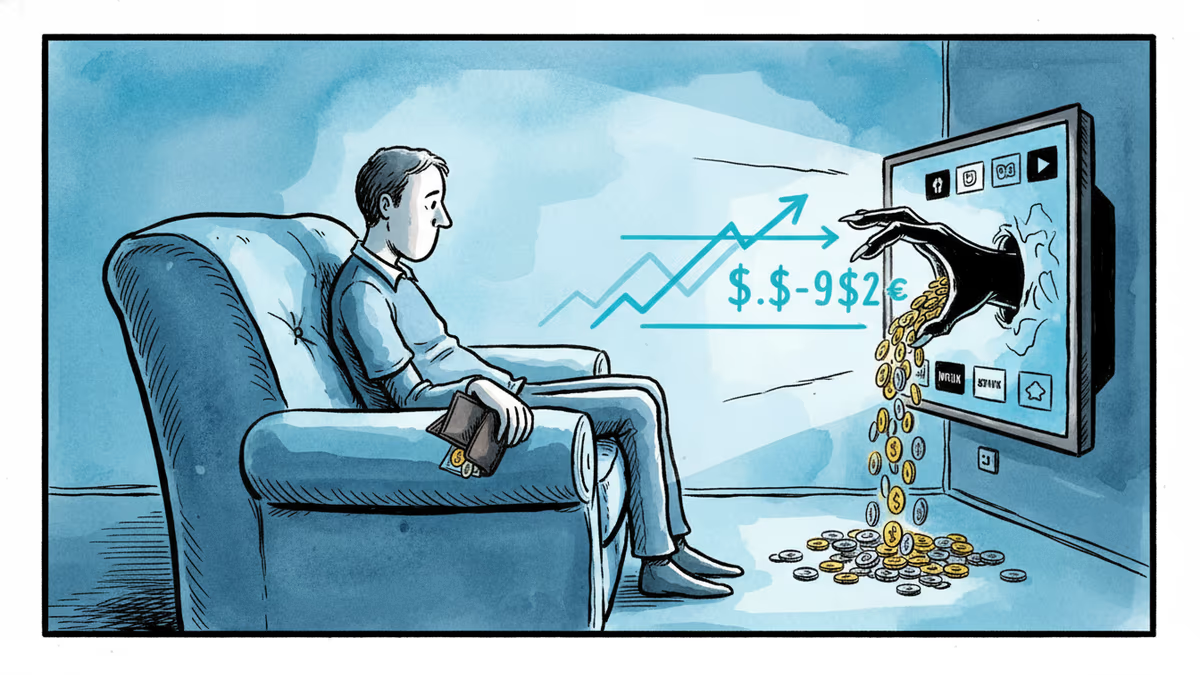
Netflix has hiked prices across all plans, including its ad-supported tier, just 14 months after its last increase. What this means for subscribers, competitors, and the future of streaming economics.
Streaming prices have doubled in a decade. Netflix, Disney, HBO Max — every platform is charging more and adding ads. Here's why, and what it means for you.
Sony is pulling its major single-player PlayStation games from PC. After six years of multiplatform expansion, the reversal raises hard questions about exclusivity, hardware sales, and who really controls gaming's future.
Xbox hardware revenue dropped 33% in Q1 2026, yet Microsoft posted $82.9B in total revenue. What this tells us about the future of gaming—and who actually loses.
Netflix has hiked prices across all plans, including its ad-supported tier, just 14 months after its last increase. What this means for subscribers, competitors, and the future of streaming economics.
Streaming prices have doubled in a decade. Netflix, Disney, HBO Max — every platform is charging more and adding ads. Here's why, and what it means for you.
Thoughts
Share your thoughts on this article
Sign in to join the conversation