
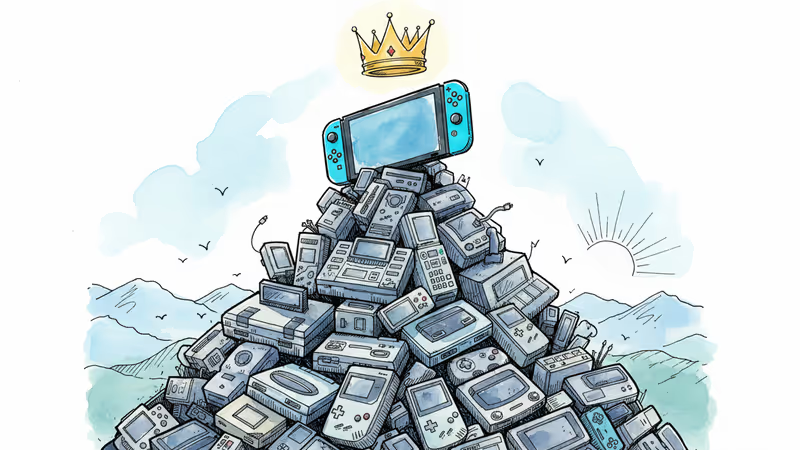
Nintendo Switch Becomes Best-Selling Console Ever
Nintendo Switch surpasses DS with 155.37 million units sold, becoming Nintendo's best-selling console. What this milestone means for gaming's future as Switch 2 approaches.
155.37 million units. That's how many Nintendo Switch consoles have found their way into homes worldwide as of December 31, 2025. This milestone officially crowns the Switch as Nintendo's best-selling console ever, surpassing the beloved DS handheld which sold 154.02 million units over its decade-long run.
Eight Years to Gaming Immortality
The Switch achieved this record in just eight years since its 2017 launch—two years faster than the DS. Back in November, Nintendo reported the two consoles were neck and neck, making the holiday season the decisive battleground. Despite Nintendo announcing its focus had shifted to developing the Switch 2, the original console continued its remarkable sales momentum.
This timing makes the achievement even more impressive. Typically, when companies announce successor products, sales of current models slow as consumers wait for the next generation. The Switch defied this conventional wisdom, proving its staying power even in the shadow of its own replacement.
The Hybrid Revolution That Changed Everything
The Switch's success stems from a deceptively simple innovation: true portability without compromise. By seamlessly transforming from a home console connected to your TV into a handheld device for on-the-go gaming, Nintendo eliminated the artificial boundary between living room and mobile gaming experiences.

This wasn't just a hardware gimmick—it fundamentally changed how people think about gaming. Commuters could continue their Zelda adventure on the train. Parents could game after putting kids to bed without monopolizing the family TV. The pandemic amplified this appeal, with Animal Crossing: New Horizons becoming a cultural phenomenon that transcended traditional gaming demographics.
Market Disruption Beyond Numbers
The Switch's dominance reshaped the entire gaming landscape. While competitors focused on raw processing power and 4K graphics, Nintendo proved that convenience and creativity could trump technical specifications. This forced Sony and Microsoft to reconsider their strategies, leading to innovations like the Steam Deck and renewed interest in handheld gaming.
For game developers, the Switch created new opportunities and challenges. Its lower processing power compared to PlayStation and Xbox meant studios had to optimize differently, but its massive install base made it impossible to ignore. Indie developers particularly benefited from Nintendo's welcoming platform policies and the console's perfect fit for smaller, creative games.
The Transition Question
As Nintendo prepares the Switch 2, a critical question emerges: can lightning strike twice? The original Switch succeeded partly because it solved real problems—the forced choice between home and portable gaming, the complexity of modern consoles, the lack of local multiplayer options.
The Switch 2 faces different challenges. It must improve performance while maintaining the hybrid concept's elegance. It needs backward compatibility to preserve the massive game library that makes the original Switch valuable. Most importantly, it must find new ways to surprise and delight in a market that now expects Nintendo's innovative approach.
Authors
Related Articles
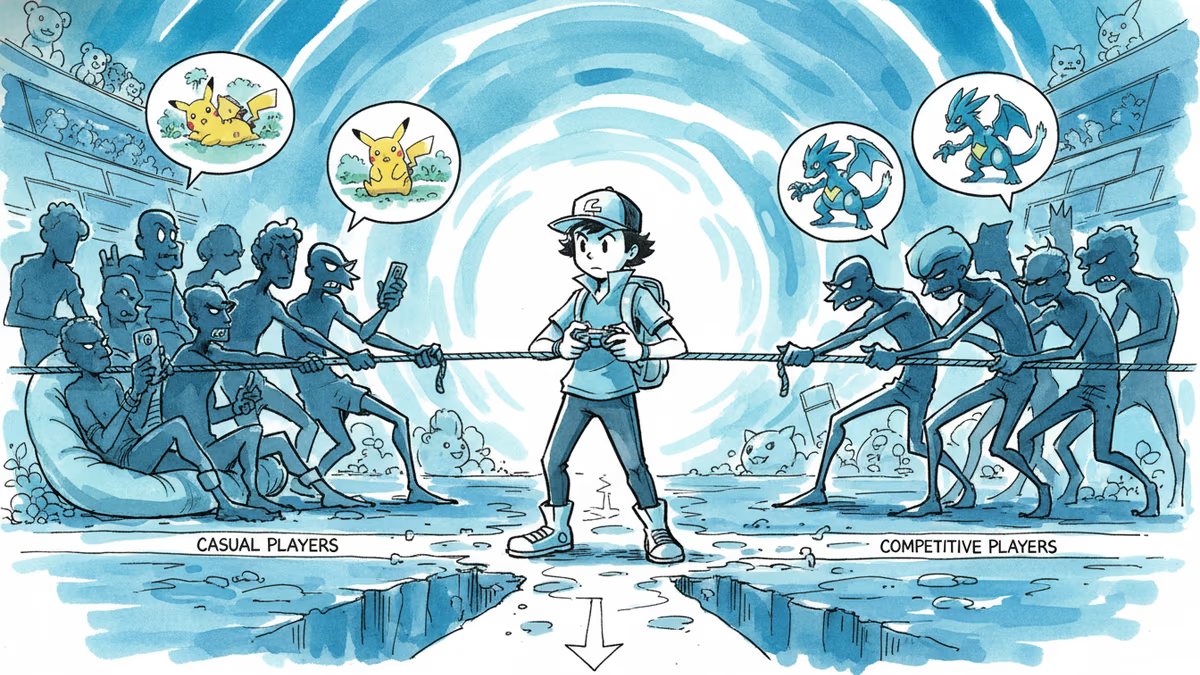
Pokémon Champions launched on Switch with bugs breaking core battle mechanics. But the deeper issue isn't the bugs — it's whether a game trying to please all players can satisfy any of them.
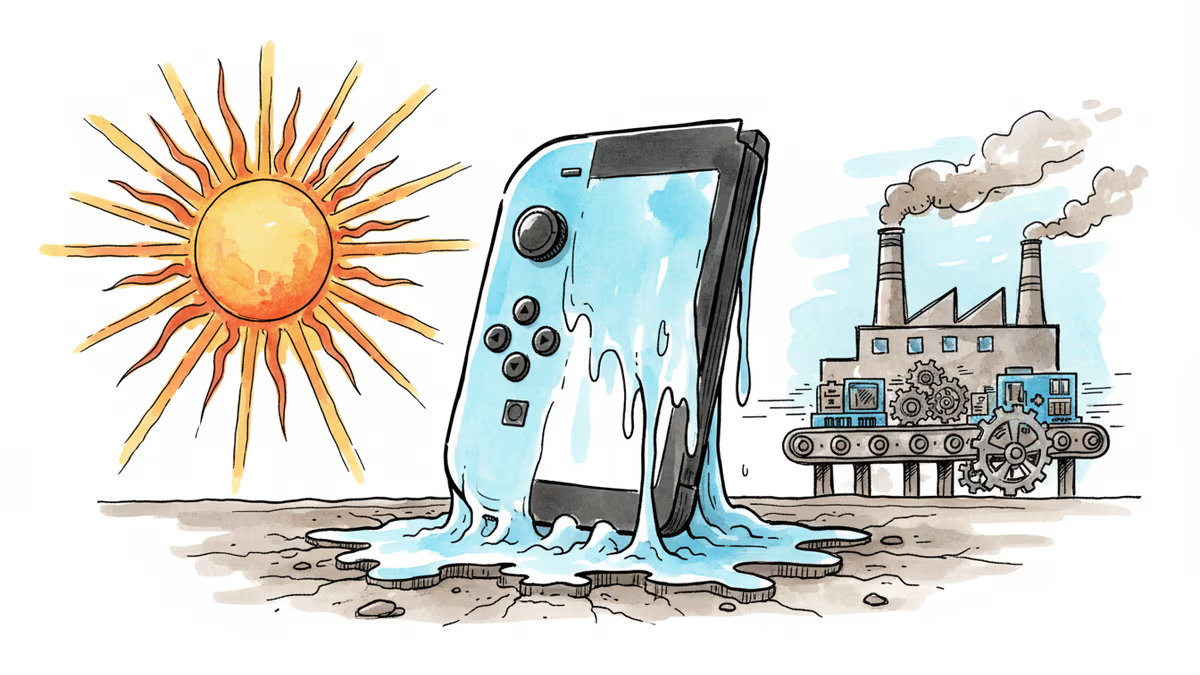
Nine months after a record-breaking launch, Nintendo is cutting Switch 2 production from 6 million to 4 million units per quarter. What went wrong, and what does it signal for the console market?
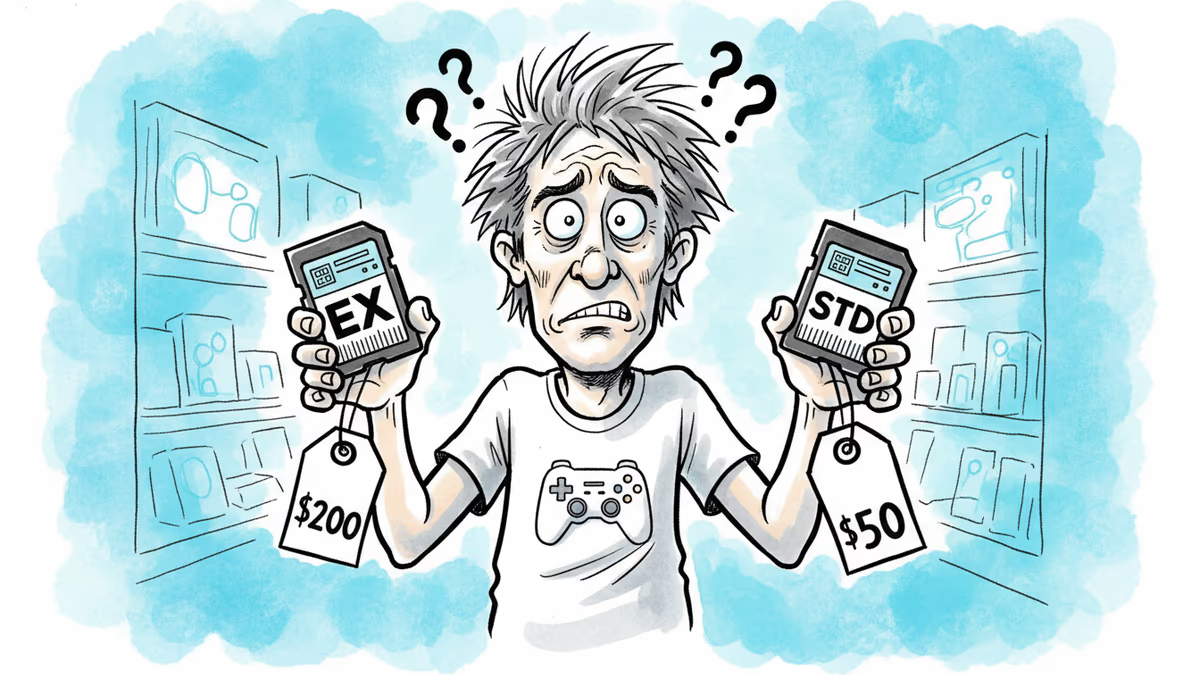
Nintendo Switch 2 requires expensive microSD Express cards instead of regular microSD. 4.4x faster speeds come with 2x higher prices - what this means for gamers and the industry.
Nintendo joins 1,000+ companies suing the US government for tariff refunds after Supreme Court ruling. The legal battle reveals deeper tensions over presidential trade powers.
Pokémon Champions launched on Switch with bugs breaking core battle mechanics. But the deeper issue isn't the bugs — it's whether a game trying to please all players can satisfy any of them.
Nine months after a record-breaking launch, Nintendo is cutting Switch 2 production from 6 million to 4 million units per quarter. What went wrong, and what does it signal for the console market?
Nintendo Switch 2 requires expensive microSD Express cards instead of regular microSD. 4.4x faster speeds come with 2x higher prices - what this means for gamers and the industry.
Nintendo joins 1,000+ companies suing the US government for tariff refunds after Supreme Court ruling. The legal battle reveals deeper tensions over presidential trade powers.
Thoughts
Share your thoughts on this article
Sign in to join the conversation