
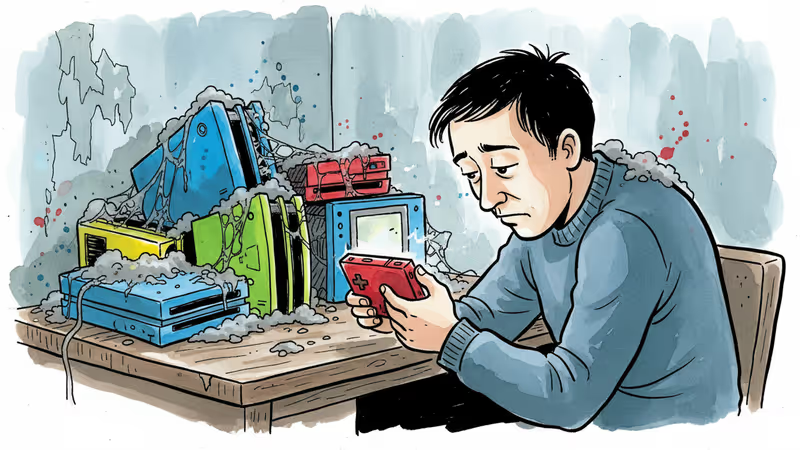
Why Nintendo Is Betting on a 30-Year-Old Flop Again
Nintendo's Virtual Boy returns as a Switch 2 accessory. We explore why the company is reviving its biggest hardware failure and what it means for retro gaming.
In 1995, Nintendo released what many consider its strangest gaming contraption ever. The Virtual Boy lasted less than a year before being discontinued. Now, 30 years later, it's making a comeback as a Switch 2 accessory.
WIRED's hands-on preview reveals that the new Virtual Boy isn't a standalone console but a $100 accessory that transforms your Switch 2 (or original Switch) into a stereoscopic 3D gaming device. The signature red wireframe graphics remain unchanged, but the experience is enhanced by the Switch 2's high-resolution display and improved lens clarity.
From Failure to Curiosity
The original Virtual Boy was a commercial disaster. Priced at $649 in today's money, it caused neck strain, offered only red monochrome graphics, and was discontinued after selling just 770,000 units. So why bring it back?
The gaming landscape has fundamentally shifted. VR headsets have normalized the concept of looking into devices for immersive experiences. What seemed awkward in 1995 feels familiar to a generation raised on Oculus and PlayStation VR.
More importantly, Nintendo has learned from its mistakes. The $100 price point makes it accessible, while a $25 cardboard version opens it up to curious kids and budget-conscious gamers. The company is positioning this as a historical curiosity rather than a serious gaming platform.
The Retro Gaming Renaissance

This revival taps into a broader trend: the monetization of nostalgia. Nintendo has mastered this with its NES and SNES Classic consoles, proving that gamers will pay for curated experiences from gaming history.
The Virtual Boy offers something unique—a glimpse into an alternate timeline where 3D gaming evolved differently. The seven launch titles, expanding to 16 throughout the year, include both original games like Virtual Boy Wario Land and previously unreleased titles that never saw the light of day.
Limited Appeal, Strategic Intent
Let's be honest: this isn't going to be a mass-market hit. The requirement for a Nintendo Switch Online + Expansion Pack subscription adds another barrier, and the limited supply suggests Nintendo knows exactly who this is for—collectors, enthusiasts, and gaming historians.
The real genius lies in the accessibility options. The $25 cardboard version democratizes the experience, allowing curious players to try something genuinely unique without a major investment. It's educational gaming disguised as nostalgia.
Beyond the Gimmick
What makes this interesting isn't just the hardware—it's Nintendo's willingness to embrace its failures. While other tech companies bury their mistakes, Nintendo is turning the Virtual Boy into a teaching moment about the evolution of gaming.
The timing is perfect. As VR struggles to find mainstream adoption and AR remains largely unfulfilled, the Virtual Boy offers a simpler, more focused 3D experience. No complex setup, no motion sickness concerns—just straightforward stereoscopic gaming.
Authors
Related Articles
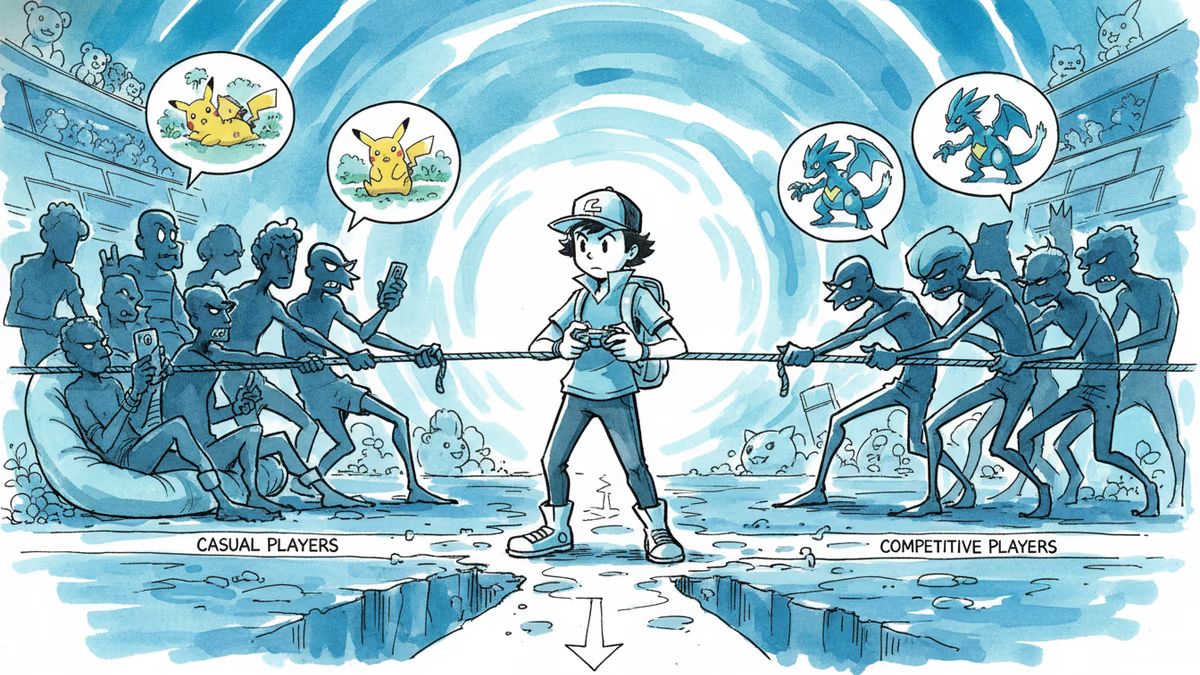
Pokémon Champions launched on Switch with bugs breaking core battle mechanics. But the deeper issue isn't the bugs — it's whether a game trying to please all players can satisfy any of them.
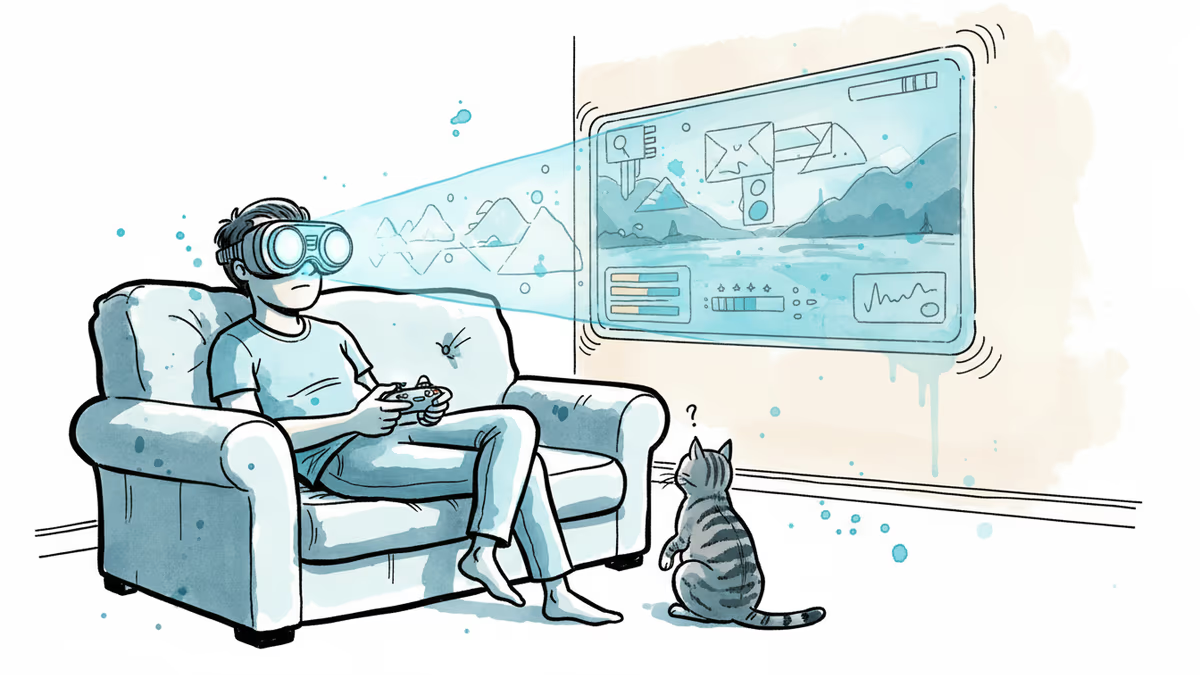
Xreal and Viture's latest AR glasses all do a few things well and a few things poorly. Here's what the best pair would look like — and why none of them are there yet.
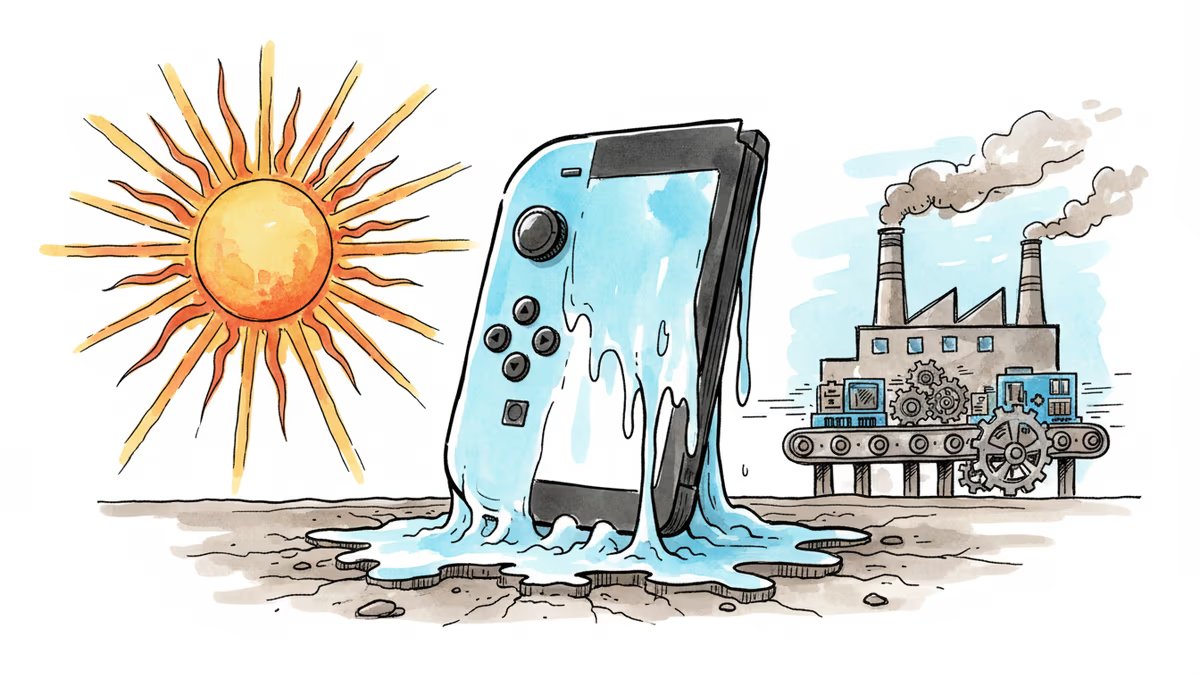
Nine months after a record-breaking launch, Nintendo is cutting Switch 2 production from 6 million to 4 million units per quarter. What went wrong, and what does it signal for the console market?
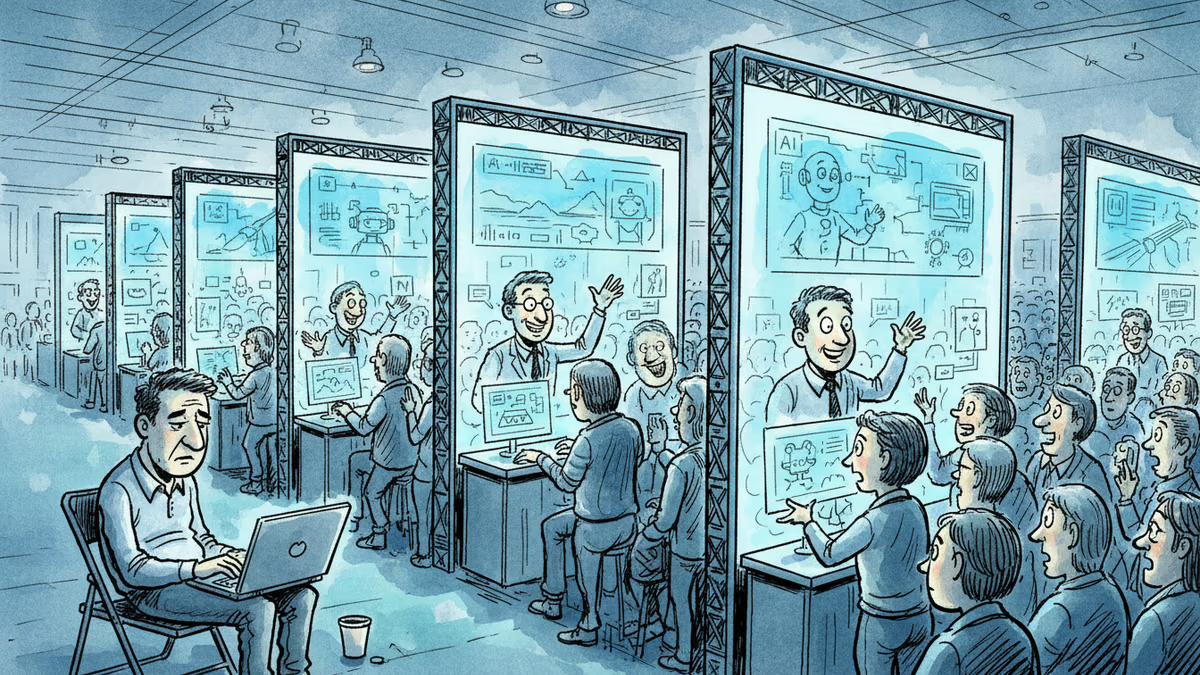
Generative AI tools dominated GDC 2026 — but most developers aren't shipping them in real games. What's holding the industry back, and what does that gap reveal?
Pokémon Champions launched on Switch with bugs breaking core battle mechanics. But the deeper issue isn't the bugs — it's whether a game trying to please all players can satisfy any of them.
Xreal and Viture's latest AR glasses all do a few things well and a few things poorly. Here's what the best pair would look like — and why none of them are there yet.
Nine months after a record-breaking launch, Nintendo is cutting Switch 2 production from 6 million to 4 million units per quarter. What went wrong, and what does it signal for the console market?
Generative AI tools dominated GDC 2026 — but most developers aren't shipping them in real games. What's holding the industry back, and what does that gap reveal?
Thoughts
Share your thoughts on this article
Sign in to join the conversation