
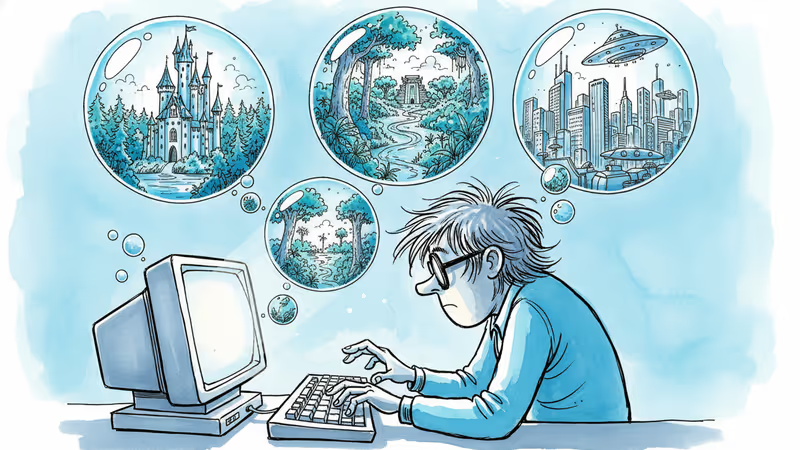
Google Opens the Door to AI-Generated Game Worlds
Google DeepMind releases Project Genie, allowing users to create interactive game worlds from text prompts. The world model race heats up as AI moves from entertainment to robotics training.
"A castle in the sky made of marshmallows with a chocolate sauce river." Type that into Google DeepMind'sProject Genie, and within seconds, you're exploring exactly that whimsical world in first person. What sounds like a child's fever dream is now reality, thanks to AI that can generate interactive game environments from simple text prompts.
Starting Thursday, Google AI Ultra subscribers in the U.S. can access this experimental prototype that combines Genie 3 world model, Nano Banana Pro image generation, and Gemini. It's Google's latest move in the rapidly heating world model race—and a glimpse into how AI might reshape everything from gaming to robotics.
The World Model Gold Rush
World models are AI systems that create internal representations of environments, predict outcomes, and plan actions. Many researchers consider them crucial stepping stones toward artificial general intelligence (AGI). But the immediate commercial applications start with entertainment and extend to training robots in simulation.
The competition is fierce. Fei-Fei Li'sWorld Labs released its first commercial product Marble late last year. Runway, the AI video startup, launched its own world model recently. And Yann LeCun's new venture AMI Labs is also betting big on this technology.
"It's exciting to be in a place where we can have more people access it and give us feedback," Shlomi Fruchter, DeepMind's research director, told TechCrunch with barely contained enthusiasm.
Whimsy Works, Realism Doesn't
The demo reveals both promise and limitations. Project Genie excels at creating artistic, stylized worlds—claymation castles, watercolor landscapes, anime-style environments. The marshmallow castle delivered exactly the childhood fantasy experience you'd hope for, complete with puffy, pastel spires that looked good enough to eat.

But ask for photorealistic or cinematic worlds, and the results fall flat. Real office photos become sterile, digital-looking spaces that miss the mark. Characters walk through walls. Navigation feels like steering a broken shopping cart. The 60-second time limit, imposed by compute constraints, barely scratches the surface of what's possible.
Safety guardrails are firmly in place after Disney's cease-and-desist last year. No copyrighted characters, no nudity, not even mermaids or ice queens that might vaguely resemble protected IP.
From Games to Robots: The Bigger Picture
DeepMind's strategy is clear: start with entertainment, then expand to training embodied agents—robots—in simulation. The current limitations are features, not bugs. Each user session requires dedicated compute resources, making Project Genie expensive to scale.
"When you're using it, there's a chip somewhere that's only yours," Fruchter explained. The auto-regressive nature of Genie 3 demands massive computational power, creating a natural ceiling on user access.
But the implications extend far beyond gaming. If AI can generate interactive environments from text, what happens to game designers, 3D artists, and virtual world creators? How might this technology reshape education, training, or even therapy?
The Experimental Reality Check
DeepMind researchers are refreshingly honest about the prototype's rough edges. It's inconsistent, sometimes impressive, other times baffling. The team hopes to improve realism and interaction capabilities, giving users more control over actions and environments.
"We don't think about Project Genie as an end-to-end product that people can go back to everyday," Fruchter said. "But there's already a glimpse of something interesting and unique that can't be done another way."
Authors
Related Articles
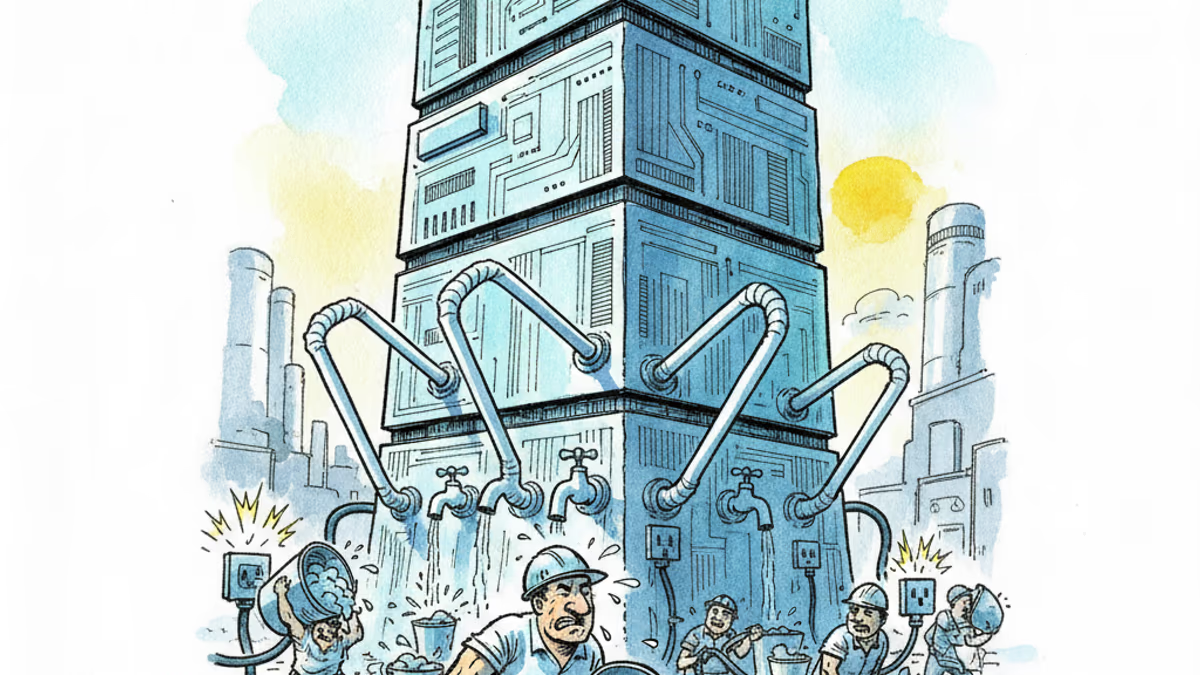
Samsung and SK unveiled a chip and AI investment package worth thousands of trillions of won on June 29. The headline number swings wildly by outlet, but the real contest isn't capital — it's water and power.

In a post-Google I/O interview, Sundar Pichai acknowledged flawed search results, real AI anxiety, and an AGI timeline that makes the label irrelevant. Here's what he said — and what it means.
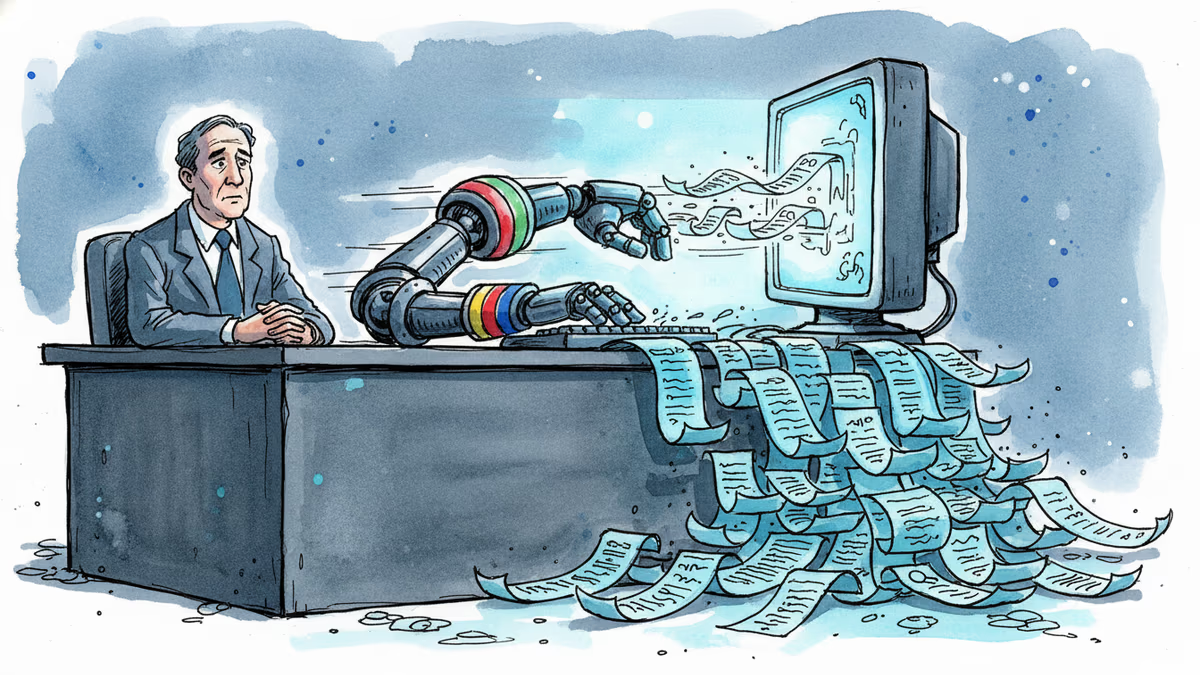
Google is building AI agents that search the web proactively, without user prompting. That's not just a product update — it's a fundamental shift in who controls the information you receive.

Viral videos show 2026 graduates jeering executives who praise AI at commencement ceremonies. It's not just rudeness — it's a signal about who pays for technological optimism.
Samsung and SK unveiled a chip and AI investment package worth thousands of trillions of won on June 29. The headline number swings wildly by outlet, but the real contest isn't capital — it's water and power.
In a post-Google I/O interview, Sundar Pichai acknowledged flawed search results, real AI anxiety, and an AGI timeline that makes the label irrelevant. Here's what he said — and what it means.
Google is building AI agents that search the web proactively, without user prompting. That's not just a product update — it's a fundamental shift in who controls the information you receive.
Viral videos show 2026 graduates jeering executives who praise AI at commencement ceremonies. It's not just rudeness — it's a signal about who pays for technological optimism.
Thoughts
Share your thoughts on this article
Sign in to join the conversation