
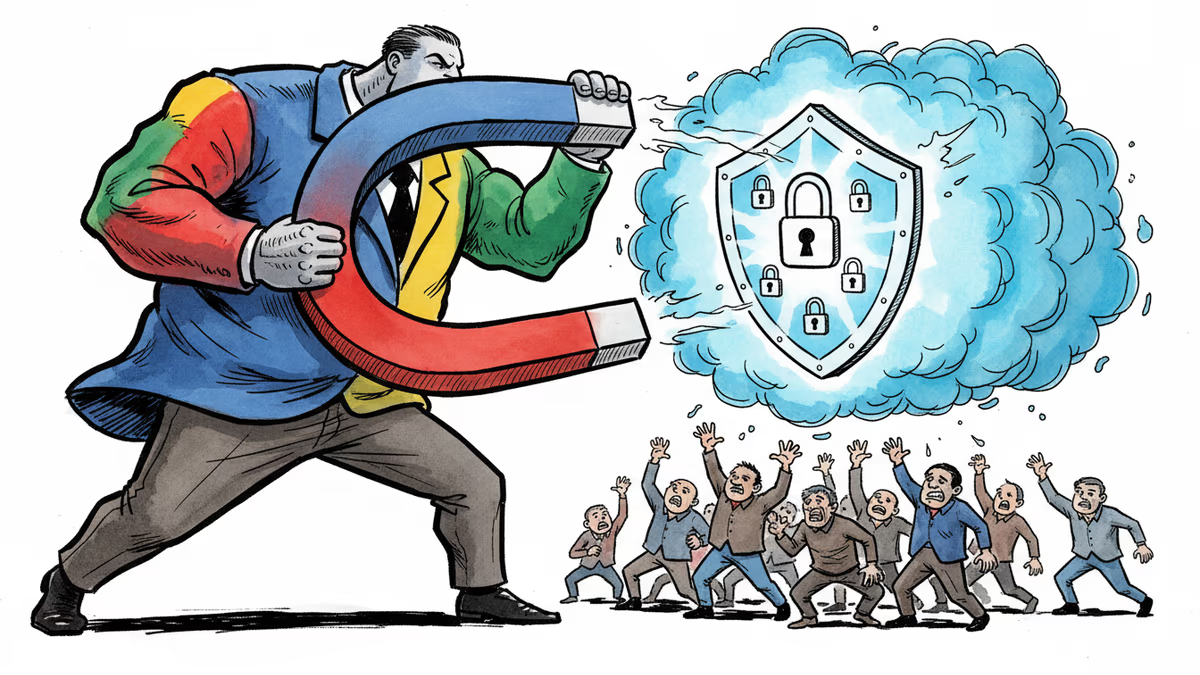
Google Paid $32B for a Company You've Never Heard Of
Google's $32 billion acquisition of Wiz is the largest venture-backed startup deal in history. Here's why the cybersecurity firm was worth every penny — and what it signals for the cloud wars ahead.
The Company That Said No to Google — Twice
Two years ago, Wiz CEO Assaf Rappaport turned down $23 billion from Google. This week, he accepted $32 billion. That's a $9 billion difference for saying no at the right moment — and it's now the largest acquisition of a venture-backed startup in history.
For most people, Wiz is an unfamiliar name. It doesn't make a consumer app. It doesn't have a Super Bowl ad. But inside the IT departments of the world's largest enterprises, it's become something close to indispensable. And Google just bet the equivalent of OpenAI's entire valuation on that fact.
What Wiz Actually Does
Strip away the jargon and Wiz does one thing: it tells companies what's actually dangerous in their cloud environment, and what isn't.
That sounds simple. It isn't. As enterprises run thousands of workloads across cloud infrastructure — increasingly written and managed by AI — the number of potential security vulnerabilities has exploded. Most security tools respond by generating thousands of alerts. Wiz responds by telling you which three actually matter.
Its core customers belong to what the company calls the "Zero Critical Club" — organizations that have used Wiz to reach a state where there are no unaddressed critical vulnerabilities in their cloud stack. In an era where a single misconfigured AI pipeline can expose sensitive data, that capability is no longer a nice-to-have.
Shardul Shah, a partner at Index Ventures — Wiz's largest shareholder — put it plainly: "Wiz is at the center of three tailwinds: AI, cloud, and security spend. Every single workload needs to be secured."
A Decade-Long Bet Pays Off
The story behind this deal starts long before Wiz existed. Shah first backed Assaf Rappaport and his co-founders — Ami Luttwak and Roy Reznik — at their previous company, Adallom, roughly 10 years ago. That company was eventually acquired by Microsoft.
When Rappaport called Shah on his birthday to pitch Wiz, Shah joined the board at the seed round. His conviction wasn't just financial. "I believe in them more than I believe in themselves," he said.
That conviction compounded into a return that will reshape careers, fund new companies, and almost certainly mint a new generation of Israeli-American founders with ambitions to match.

Why Google Needed This — Badly
This acquisition isn't about Google buying a product. It's about Google buying a position.
Google Cloud is in a three-way war with AWS and Microsoft Azure for enterprise dominance. Microsoft has a structural advantage: its security portfolio, built partly on the Adallom acquisition, is deeply embedded in enterprise workflows. AWS leads on raw infrastructure scale.
Google's gap has been security credibility at the enterprise level. Wiz closes that gap — and then some. With Wiz integrated, Google Cloud can make a pitch that neither rival can easily replicate: bring your AI workloads here, and we'll secure them natively, at every layer, in real time.
Shah framed it this way: "Google's resources, the infrastructure, the AI talent they have, allows Wiz to extend that recognition while retaining this culture of trust."
The Rejection That Added $9 Billion
The subplot here is worth examining. When Rappaport walked away from Google's first offer in 2024, the reaction in venture circles was a mix of awe and anxiety. Walking away from $23 billion is not a move most founders — or their investors — would make.
Shah's response to that moment is instructive: "You trust the inputs — how they make decisions. You don't concentrate on the outputs and the luck that goes into whether it's validated or not."
This isn't just founder mythology. It's a real tension in the venture-startup relationship. Investors need exits. Founders want to build. The $9 billion gap between the two offers suggests that in this case, the founder's instinct was right. But the same logic applied in a down market could have ended very differently.
What This Means for the Security Industry
The implications ripple outward in several directions.
For enterprise security vendors, the message is uncomfortable: the cloud hyperscalers are moving to bundle security into the platform itself. Palo Alto Networks, CrowdStrike, and others now face a world where their largest competitor isn't another security company — it's the cloud provider their customers already pay.
For startups and founders, this deal resets expectations. Shah called it "inspiration" — a new imagination for what's possible. The practical effect: expect a wave of cloud-native security startups, many likely founded by Wiz alumni, over the next three to five years.
For regulators, the deal raises familiar questions. The FTC and DOJ have been increasingly aggressive about big tech acquisitions. That Google was able to close this deal at all — after its earlier attempt drew regulatory scrutiny — suggests the current administration's posture toward tech M&A has shifted meaningfully.
For investors, the message is about patience and conviction. Index Ventures held through a rejected acquisition offer, a period of uncertainty, and came out with the largest venture exit in history.
Authors
Related Articles
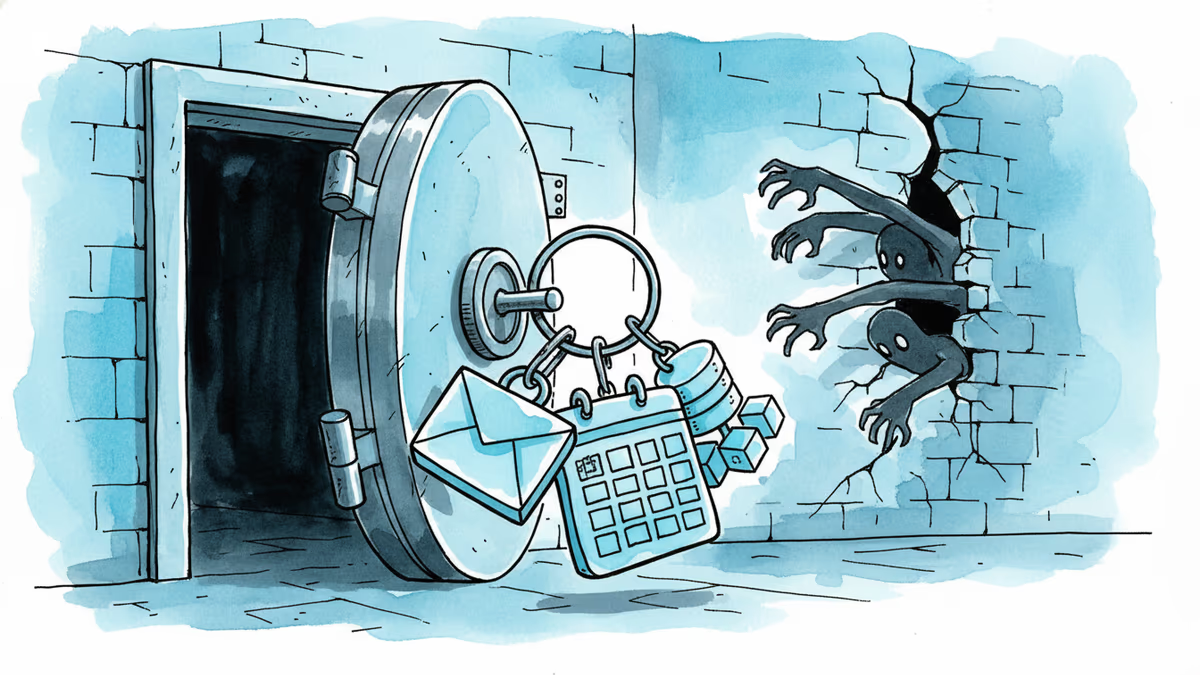
A critical vulnerability in Starlette—downloaded 325 million times per week—puts millions of AI agent servers at risk, exposing stored credentials for email, databases, and third-party services.
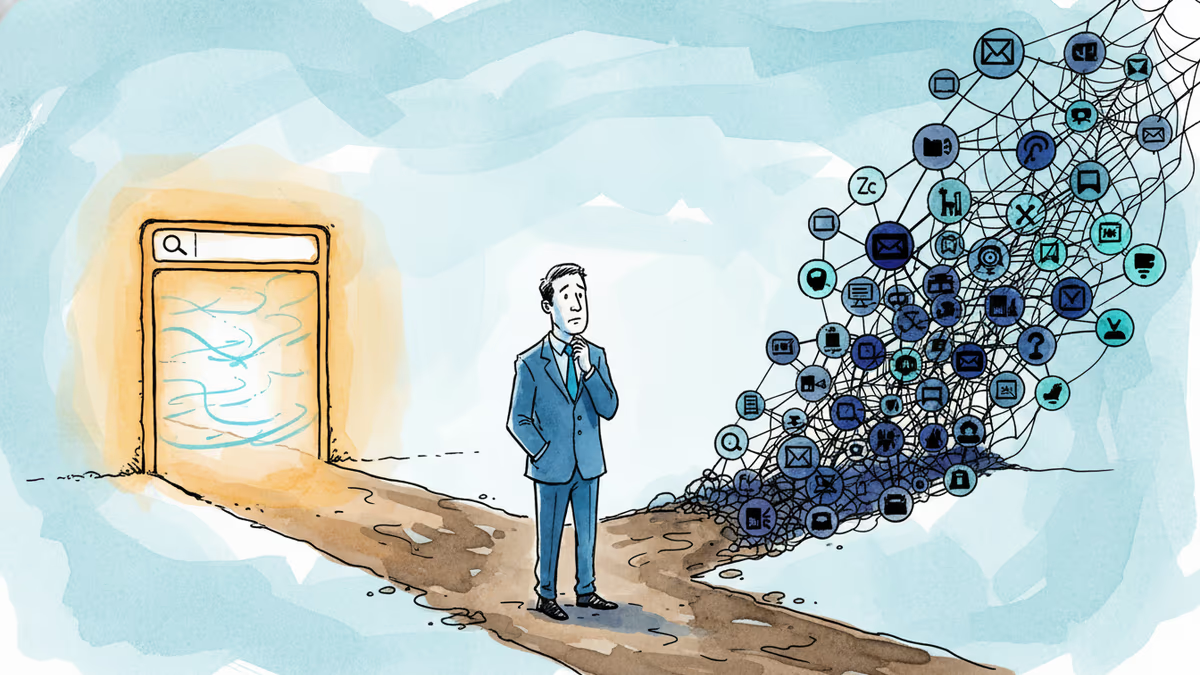
In a post-Google I/O interview, Sundar Pichai acknowledged flawed search results, real AI anxiety, and an AGI timeline that makes the label irrelevant. Here's what he said — and what it means.
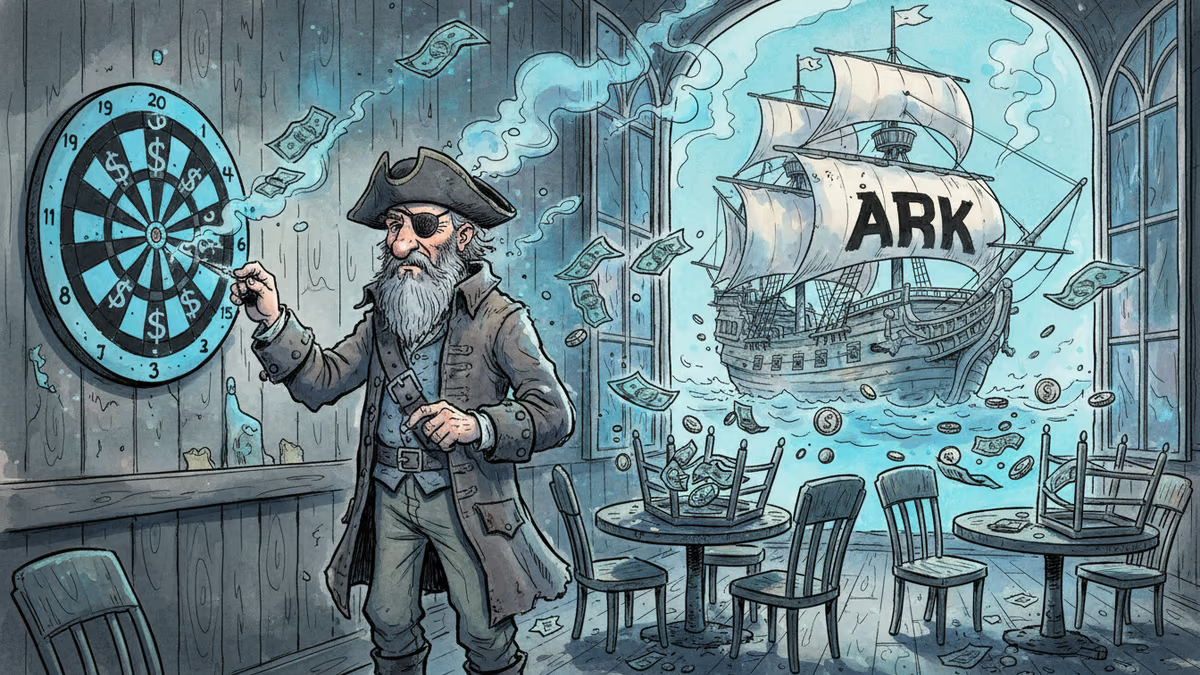
Lucra Sports CEO Dylan Robbins landed Cathie Wood's ARK Invest as a Series B lead without building AI. The story behind his unconventional fundraising playbook.

SolarSquare is raising $55-60M at a $450-500M valuation, more than doubling its worth in 18 months. Here's what's driving investor conviction in India's residential solar market.
A critical vulnerability in Starlette—downloaded 325 million times per week—puts millions of AI agent servers at risk, exposing stored credentials for email, databases, and third-party services.
In a post-Google I/O interview, Sundar Pichai acknowledged flawed search results, real AI anxiety, and an AGI timeline that makes the label irrelevant. Here's what he said — and what it means.
Lucra Sports CEO Dylan Robbins landed Cathie Wood's ARK Invest as a Series B lead without building AI. The story behind his unconventional fundraising playbook.
SolarSquare is raising $55-60M at a $450-500M valuation, more than doubling its worth in 18 months. Here's what's driving investor conviction in India's residential solar market.
Thoughts
Share your thoughts on this article
Sign in to join the conversation