

The Controller Wars Are Over. Choice Won.
Xbox controller market explodes with options from Hall effect joysticks to wireless dongles. What this abundance means for gamers and the industry's future direction.
Remember the days when your little sibling got stuck with the "Player 2" controller? That janky, off-brand gamepad that looked cool but barely registered button presses? Those days are dead and buried. Today's Xbox controller market offers an embarrassment of riches that would make any gamer's head spin.
We're living through what might be called the golden age of controllers. The standard Xbox Wireless Controller still reigns supreme at $65, but it now competes with dozens of high-quality alternatives that each excel in different ways. Some boast drift-resistant Hall effect joysticks. Others offer wireless connectivity via USB dongles. A few even let you swap out components like Lego blocks.
The New Standard Bearer
The irony isn't lost that Microsoft's own controller remains the best choice for most people. But that's not because the competition is weak—quite the opposite. The Xbox Wireless Controller succeeds because it strikes the perfect balance between quality, comfort, and price. At $65 (often less), it delivers Microsoft's proprietary wireless protocol, solid build quality, and the flexibility of AA batteries that you can swap out when they die.
Yet even this "standard" controller reflects how much the bar has risen. Twenty years of Xbox gamepad evolution have culminated in a device that feels premium without the premium price tag. The sunken D-pad clicks with satisfying precision. The triggers provide just the right amount of resistance. It's the distillation of two decades of iterative design.
The Democratization of Pro Features
What's truly remarkable is how features once reserved for professional esports players have trickled down to budget options. The 8BitDo Ultimate Wired Controller delivers Hall effect joysticks and programmable rear buttons for just $30-45. Hall effect technology uses magnetic fields instead of physical contacts, virtually eliminating the dreaded stick drift that has plagued gamers for years.
Meanwhile, GameSir's G7 Pro offers TMR (Tunneling Magnetoresistance) joysticks and customizable trigger locks for under $100. These aren't compromise products—they're legitimate alternatives that often surpass the official controller in specific areas.

The Premium Paradox
At the high end, Microsoft's Xbox Elite Wireless Controller Series 2 commands $200 despite being six years old and lacking modern innovations like Hall effect joysticks. Its appeal lies not in cutting-edge technology but in refinement and modularity. You can swap joysticks, customize button mapping, and enjoy 40-hour battery life.
But here's the catch: the Elite Series 2 has developed a reputation for quality control issues. Some users report going through multiple replacements under warranty. It's a reminder that expensive doesn't always mean reliable—and that the controller market has matured beyond simple price tiers.
Choice Overload
This abundance creates its own problems. Do you want wireless connectivity but hate charging batteries? The standard Xbox controller uses replaceable AAs. Prefer built-in rechargeable? That's the Elite Series 2. Want Hall effect joysticks? Choose from 8BitDo, GameSir, or Razer. Need PlayStation-style layout? Hyperkin's Competitor has you covered.
Each option involves trade-offs. The Razer Wolverine V3 Pro offers excellent build quality and mouse-like trigger clicks, but requires a USB dongle for wireless connectivity and costs $200. The 8BitDo Ultimate provides great value but lacks trigger stops. No single controller checks every box.
What This Really Means
The controller explosion reflects broader shifts in gaming culture. Players no longer accept one-size-fits-all solutions. They want tools that match their specific needs, whether that's competitive online gaming, casual couch co-op, or multi-platform compatibility.
This trend extends beyond hardware to software customization. Most modern controllers now offer button remapping, sensitivity adjustments, and profile switching. Gaming has become personal in ways that would have seemed absurd a decade ago.
The market has also grown sophisticated enough to support niche products. Hyperkin's Competitor exists specifically for gamers who prefer PlayStation-style layouts but want Xbox compatibility. That such a specific product can find commercial success speaks to how diverse gaming preferences have become.
Authors
Related Articles
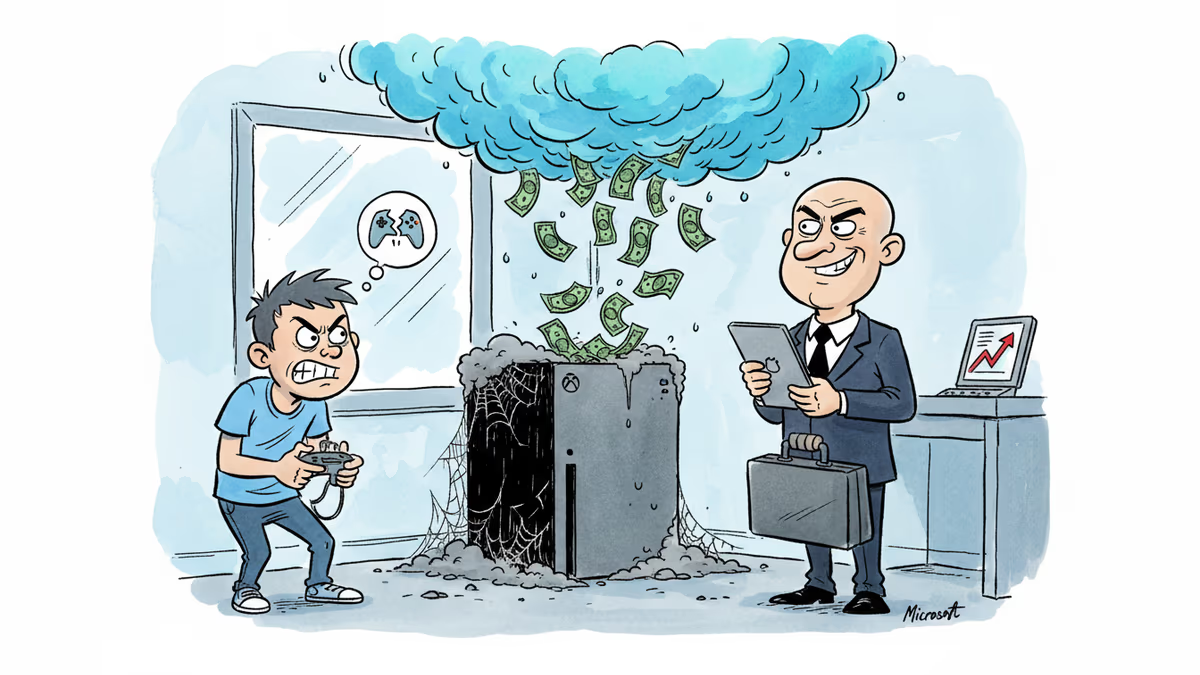
Xbox hardware revenue dropped 33% in Q1 2026, yet Microsoft posted $82.9B in total revenue. What this tells us about the future of gaming—and who actually loses.

Pokémon Champions launched on Switch with bugs breaking core battle mechanics. But the deeper issue isn't the bugs — it's whether a game trying to please all players can satisfy any of them.

Xreal and Viture's latest AR glasses all do a few things well and a few things poorly. Here's what the best pair would look like — and why none of them are there yet.
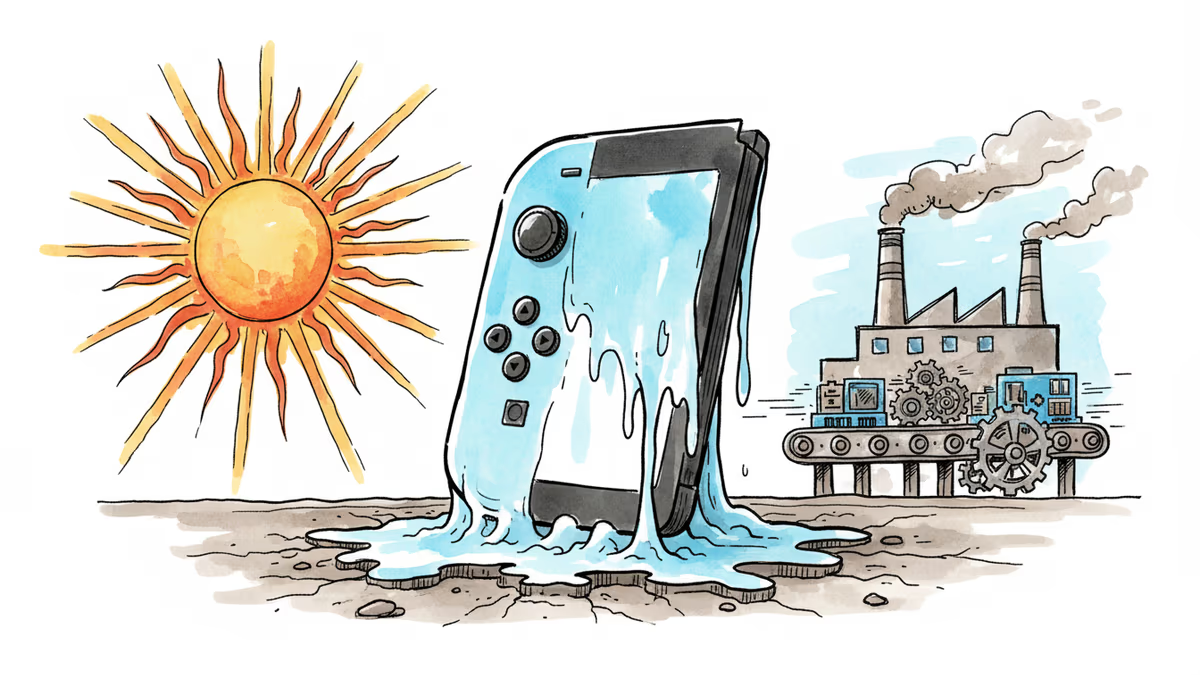
Nine months after a record-breaking launch, Nintendo is cutting Switch 2 production from 6 million to 4 million units per quarter. What went wrong, and what does it signal for the console market?
Xbox hardware revenue dropped 33% in Q1 2026, yet Microsoft posted $82.9B in total revenue. What this tells us about the future of gaming—and who actually loses.
Pokémon Champions launched on Switch with bugs breaking core battle mechanics. But the deeper issue isn't the bugs — it's whether a game trying to please all players can satisfy any of them.
Xreal and Viture's latest AR glasses all do a few things well and a few things poorly. Here's what the best pair would look like — and why none of them are there yet.
Nine months after a record-breaking launch, Nintendo is cutting Switch 2 production from 6 million to 4 million units per quarter. What went wrong, and what does it signal for the console market?
Thoughts
Share your thoughts on this article
Sign in to join the conversation