
AI Takes Center Stage at Super Bowl 2026: The Ad War That Changes Everything
From AI-generated commercials to public feuds between tech giants, the 2026 Super Bowl marked a turning point where AI became both creator and star of advertising's biggest stage.
$7 million per 30-second spot, and this year's biggest star wasn't throwing touchdowns—it was generating pixels.
The 2026 Super Bowl didn't just feature AI in advertisements; it marked the moment AI became both the creator and the product being sold. From the first "primarily" AI-generated national spot to public feuds between tech CEOs, this year's Big Game revealed how deeply artificial intelligence has penetrated advertising's most expensive real estate.
The $7 Million AI Experiment
Svedka vodka made history with what it claims as the first "primarily" AI-generated Super Bowl commercial. The 30-second "Shake Your Bots Off" spot featured the brand's robot mascot Fembot and new companion Brobot dancing at a human party—a scene that took four months to create using AI training for facial expressions and body movements.
The partnership with Silverside AI—the same team behind controversial Coca-Cola AI commercials—represents a seismic shift in how major brands approach creative production. While humans still handled storyline development, the heavy lifting of animation and character performance fell to algorithms.
For an event known for celebrity cameos and Hollywood-level production values, debuting AI-generated content was either brilliant or reckless. The move certainly achieved its goal: getting people talking about both the technology and the brand.
When AI Companies Go to War
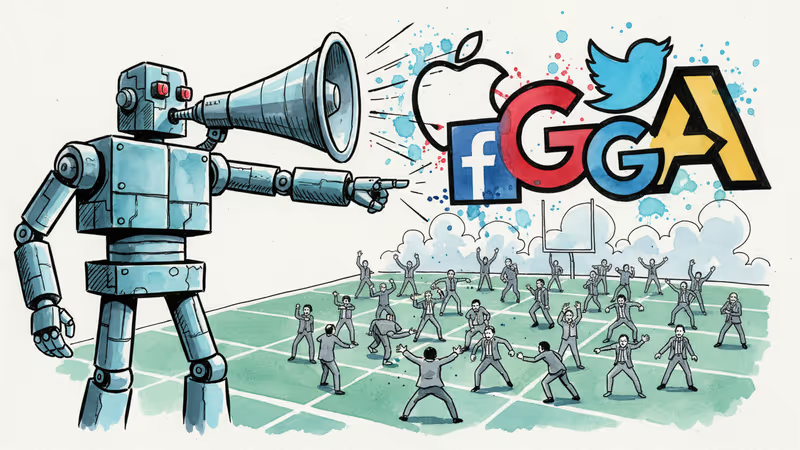
Anthropic turned its Super Bowl spot into a direct attack on OpenAI, with the tagline: "Ads are coming to AI. But not to Claude." The commercial mocked the idea of helpful AI assistants suddenly becoming salespeople for random products like "Step Boost Maxx" insoles.
OpenAI's Sam Altman fired back on social media, calling the ad "clearly dishonest." The public spat revealed how competitive the AI space has become—and how willing companies are to use the Super Bowl's massive platform for corporate warfare.

Meanwhile, Meta showcased its Oakley-branded AI glasses through extreme sports scenarios, Amazon introduced Alexa+ via a darkly comedic "AI is out to get me" storyline starring Chris Hemsworth, and Google demonstrated its Nano Banana Pro image-generation model through home design scenarios.
The Creative Industry's Reckoning
Behind the flashy demonstrations lies a fundamental question about the future of creative work. Traditional advertising involves teams of writers, directors, actors, editors, and producers. Svedka's experiment suggests AI could handle significant portions of this pipeline.
The implications extend beyond cost savings. If AI can generate compelling visuals and performances, what happens to the thousands of people who make their living creating commercials? The technology promises democratization—smaller brands could afford Super Bowl-quality production—but at what cost to human creativity?
Ramp's commercial cleverly addressed this tension by featuring Brian Baumgartner using AI to "multiply" himself, tackling mountains of work through automation. The message: AI as a productivity enhancer, not a replacement.
The Authenticity Question
Consumer reaction to AI-generated advertising remains largely untested at this scale. Will audiences respond emotionally to content they know was created by algorithms? Does knowing a commercial was AI-generated affect brand perception?
Early indicators suggest mixed reactions. Some viewers praised Svedka's innovation, while others felt the technology created an "uncanny valley" effect that felt impersonal. The debate mirrors broader cultural anxieties about AI's role in creative expression.
The Anthropic vs. OpenAI feud also highlights another concern: as AI companies become major advertisers themselves, the line between promoting products and promoting ideologies about AI's role in society becomes increasingly blurred.
Beyond the Spectacle
This year's Super Bowl ads revealed AI's evolution from a futuristic concept to a practical tool reshaping entire industries. Companies like Ring used AI for practical applications (finding lost pets), while Wix promoted AI-powered website building as "easy as chatting with a friend."
The real story isn't just about the technology itself, but about how quickly major brands are willing to bet their biggest marketing moments on AI capabilities. The $7 million price tag for Super Bowl spots means companies don't experiment lightly—they're signaling genuine confidence in AI's commercial viability.
Authors
Related Articles
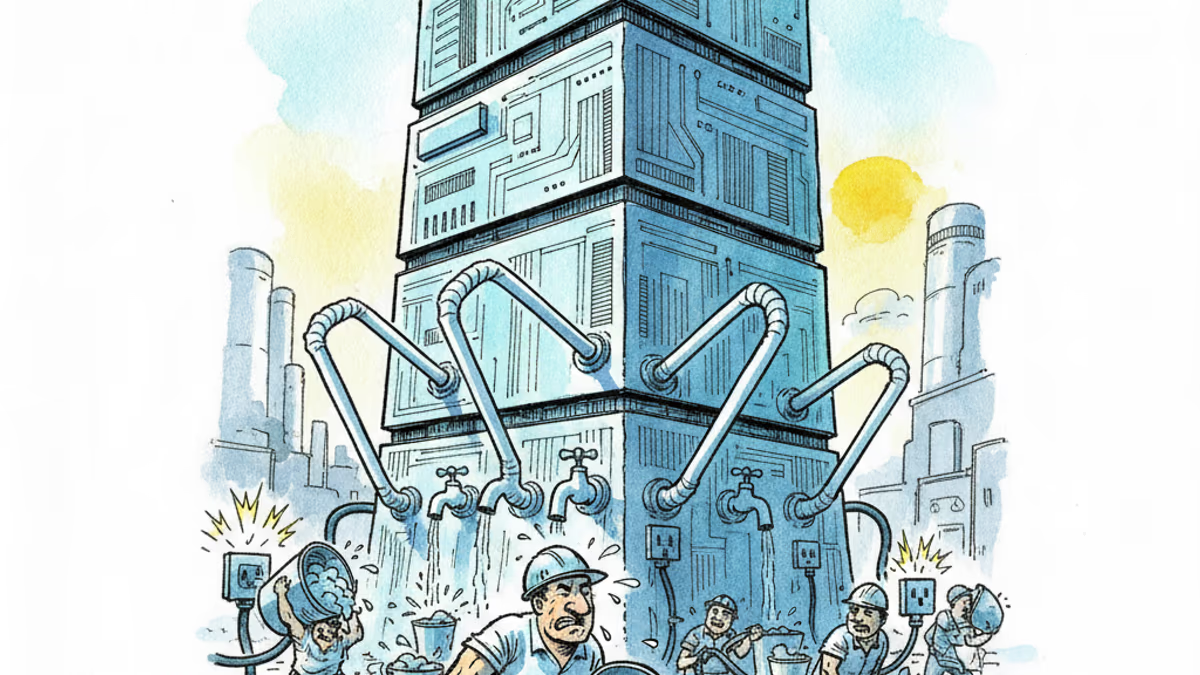
Samsung and SK unveiled a chip and AI investment package worth thousands of trillions of won on June 29. The headline number swings wildly by outlet, but the real contest isn't capital — it's water and power.
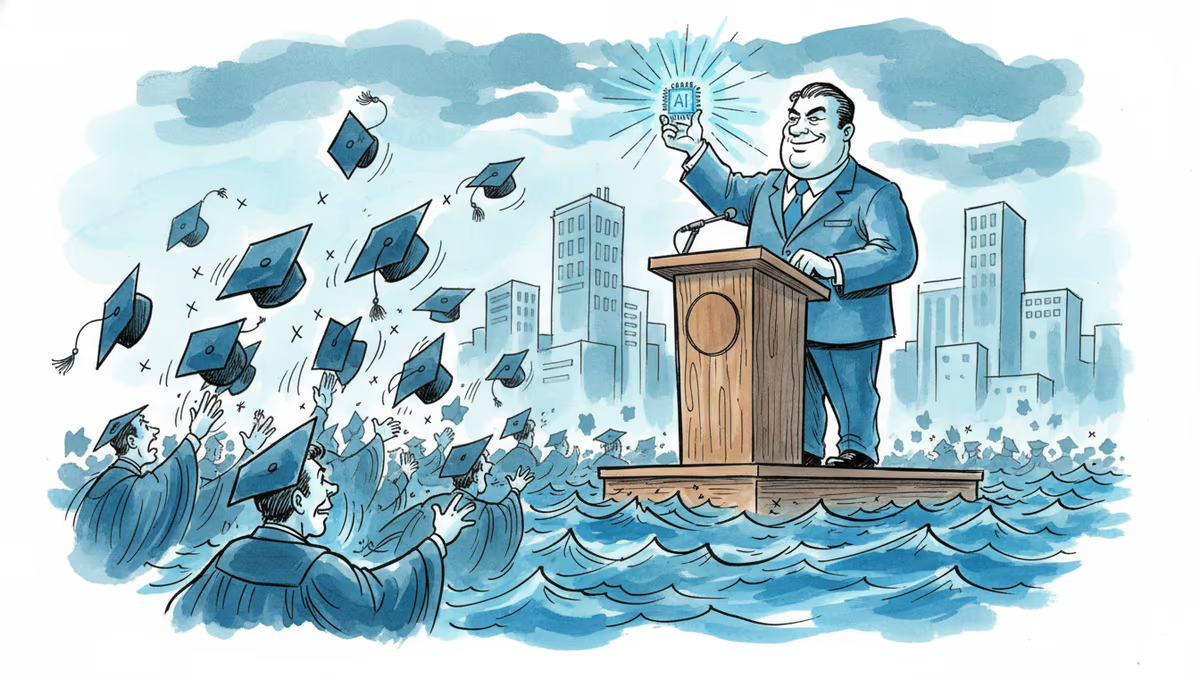
Viral videos show 2026 graduates jeering executives who praise AI at commencement ceremonies. It's not just rudeness — it's a signal about who pays for technological optimism.
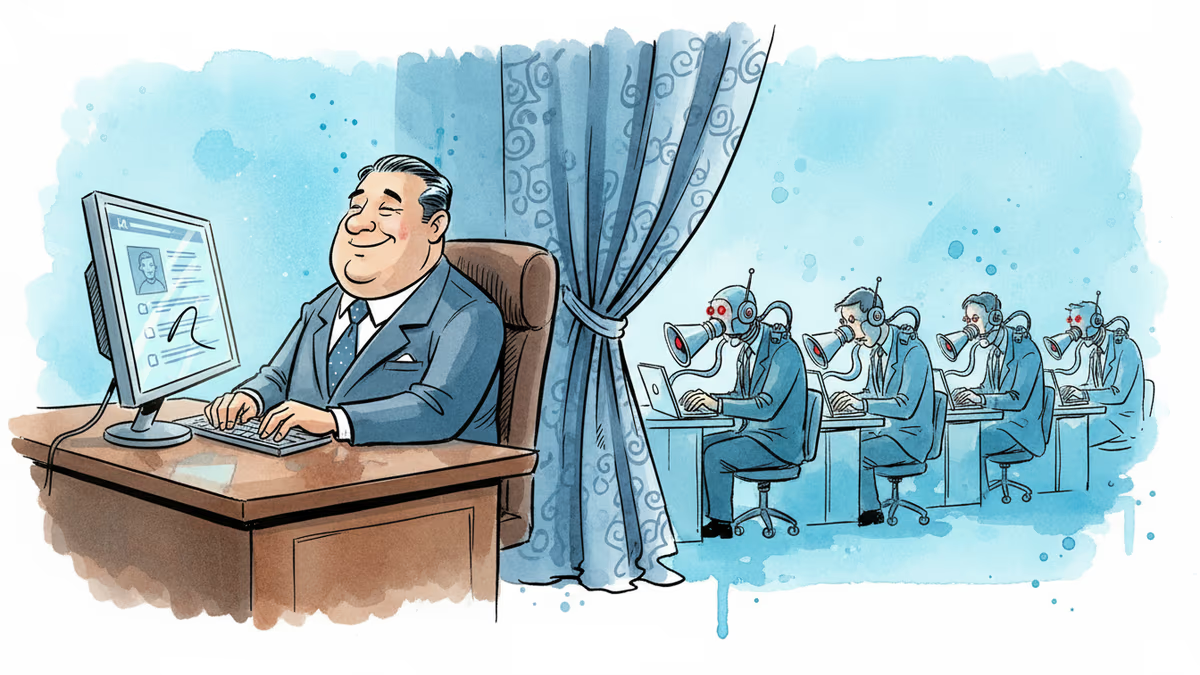
Filipino virtual assistants using AI to ghost-manage LinkedIn profiles for executives is now a structured industry. 30 comments a day, fake engagement rings, and a platform struggling to tell real from fabricated.
Two commencement speakers learned the hard way that AI enthusiasm doesn't land well with today's graduates. The backlash reveals a widening gap between tech optimism and Gen Z's economic reality.
Samsung and SK unveiled a chip and AI investment package worth thousands of trillions of won on June 29. The headline number swings wildly by outlet, but the real contest isn't capital — it's water and power.
Viral videos show 2026 graduates jeering executives who praise AI at commencement ceremonies. It's not just rudeness — it's a signal about who pays for technological optimism.
Filipino virtual assistants using AI to ghost-manage LinkedIn profiles for executives is now a structured industry. 30 comments a day, fake engagement rings, and a platform struggling to tell real from fabricated.
Two commencement speakers learned the hard way that AI enthusiasm doesn't land well with today's graduates. The backlash reveals a widening gap between tech optimism and Gen Z's economic reality.
Thoughts
Share your thoughts on this article
Sign in to join the conversation