
The $20B Reality Check: Why AI Giants Still Use Slack
OpenAI COO reveals the gap between AI hype and enterprise reality. Despite $20B revenue, even AI companies rely on traditional software. What this means for business transformation.
The $20 Billion Paradox
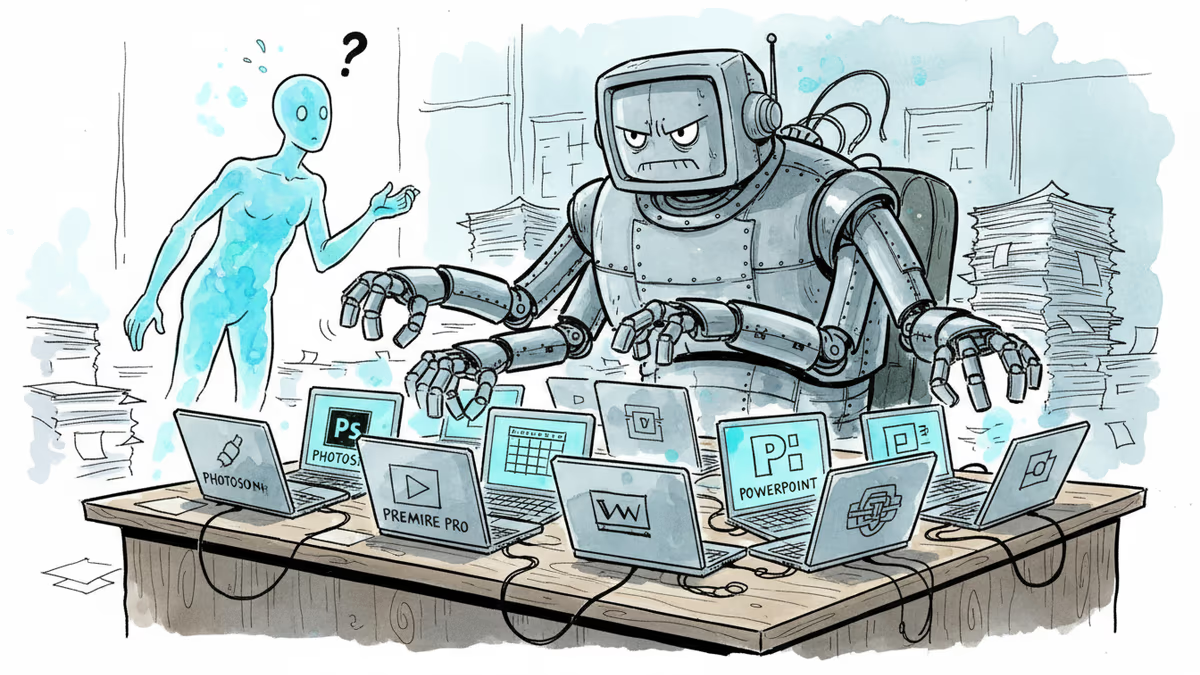
OpenAI just announced $20 billion in annualized revenue, but COO Brad Lightcap dropped a reality bomb at India's AI summit: "We were massive Slack users last year." The irony is striking. The company building the future of work still relies on a 12-year-old messaging app.
This admission reveals the chasm between AI hype and enterprise reality. While OpenAI launched Frontier, a platform for businesses to build AI agents, Lightcap conceded that "we have not yet really seen enterprise AI penetrate enterprise business processes."
The disconnect isn't technical—it's organizational. Individual AI tools like ChatGPT work brilliantly for solo tasks. But enterprises are "highly complex organizations with a lot of people, teams, all having to work together," Lightcap explained.
The "SaaS is Dead" Myth Debunked
Silicon Valley has been buzzing with predictions that AI agents will replace traditional software entirely. Some investors declared "SaaS is dead," causing stock volatility across enterprise software companies. But if OpenAI—the poster child of AI disruption—still depends on Slack, Notion, and other traditional tools, what does that tell us?
The reality is more nuanced. AI isn't replacing existing software; it's augmenting it. Companies like Salesforce, Microsoft, and ServiceNow are integrating AI features rather than being displaced by them. The $300 billion SaaS market isn't disappearing—it's evolving.

This creates opportunities for established players. Slack recently added AI summarization features. Notion integrated AI writing assistants. The winners won't be pure-AI companies but hybrid solutions that blend familiar workflows with intelligent automation.
Measuring Success Beyond Seat Licenses
OpenAI is rethinking how to measure enterprise success. Instead of traditional "seat licenses," Lightcap said they'll focus on "business outcomes." This shift reflects a broader industry trend: moving from usage metrics to impact metrics.
For enterprises, this means AI projects need clear ROI frameworks. It's not enough to deploy AI tools; companies must measure productivity gains, cost savings, and process improvements. This outcome-based approach could reshape enterprise software pricing models across the industry.
The company partnered with consulting giants BCG, McKinsey, Accenture, and Capgemini to help deploy AI in enterprise settings. This consulting-heavy approach suggests that AI adoption requires significant change management—not just technical implementation.
The India Experiment
India offers a fascinating case study. OpenAI claims 100 million weekly users there—the second-largest market after the US. Voice interfaces are particularly popular, enabling access in "low-latency and low-bandwidth environments."
But there's a darker side. Indian IT services stocks have declined as markets price in AI's impact on coding and business process outsourcing. The country that built its economy on handling routine tasks for global companies now faces automation of those same processes.
Lightcap acknowledged this tension: "Jobs will change. We don't yet know where, how, or what, but it seems inevitable that work will look different." His measured response contrasts sharply with the revolutionary rhetoric often heard from AI companies.
Authors
Related Articles

Samsung and SK unveiled a chip and AI investment package worth thousands of trillions of won on June 29. The headline number swings wildly by outlet, but the real contest isn't capital — it's water and power.
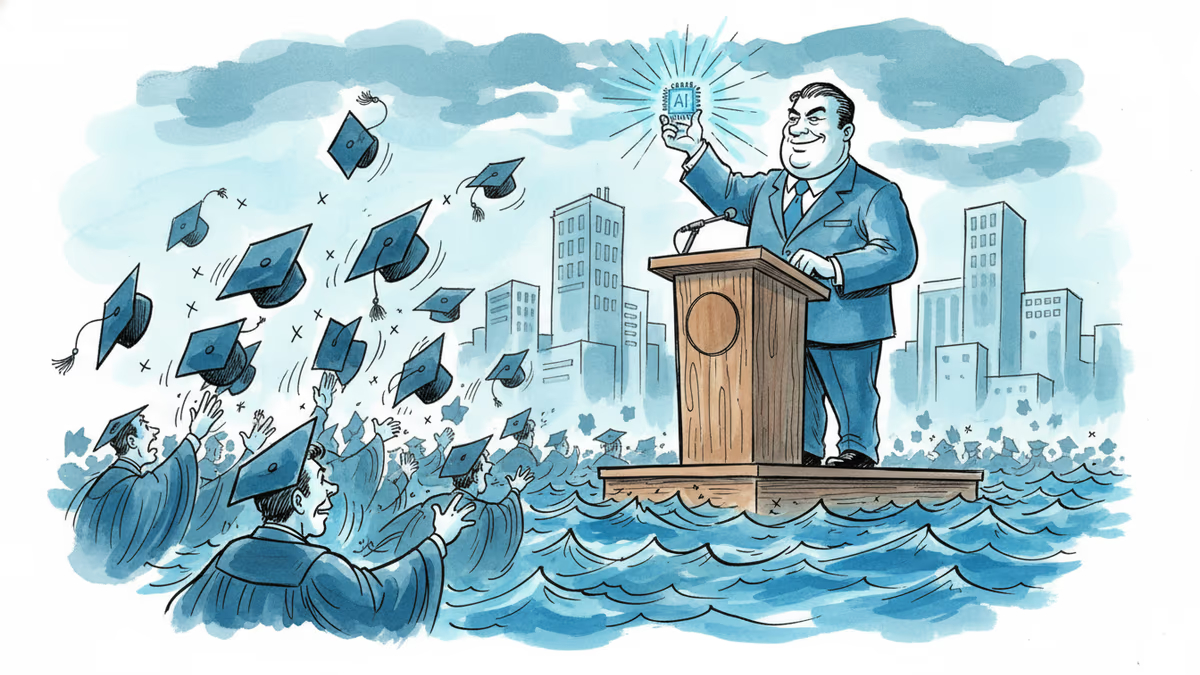
Viral videos show 2026 graduates jeering executives who praise AI at commencement ceremonies. It's not just rudeness — it's a signal about who pays for technological optimism.
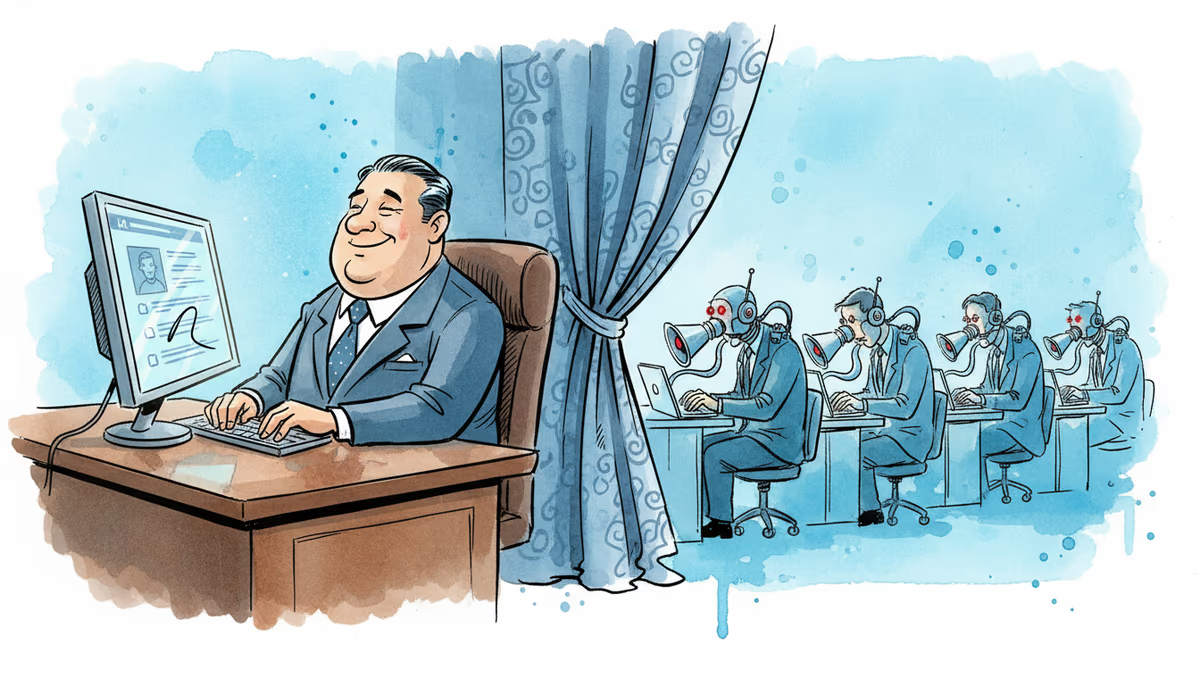
Filipino virtual assistants using AI to ghost-manage LinkedIn profiles for executives is now a structured industry. 30 comments a day, fake engagement rings, and a platform struggling to tell real from fabricated.
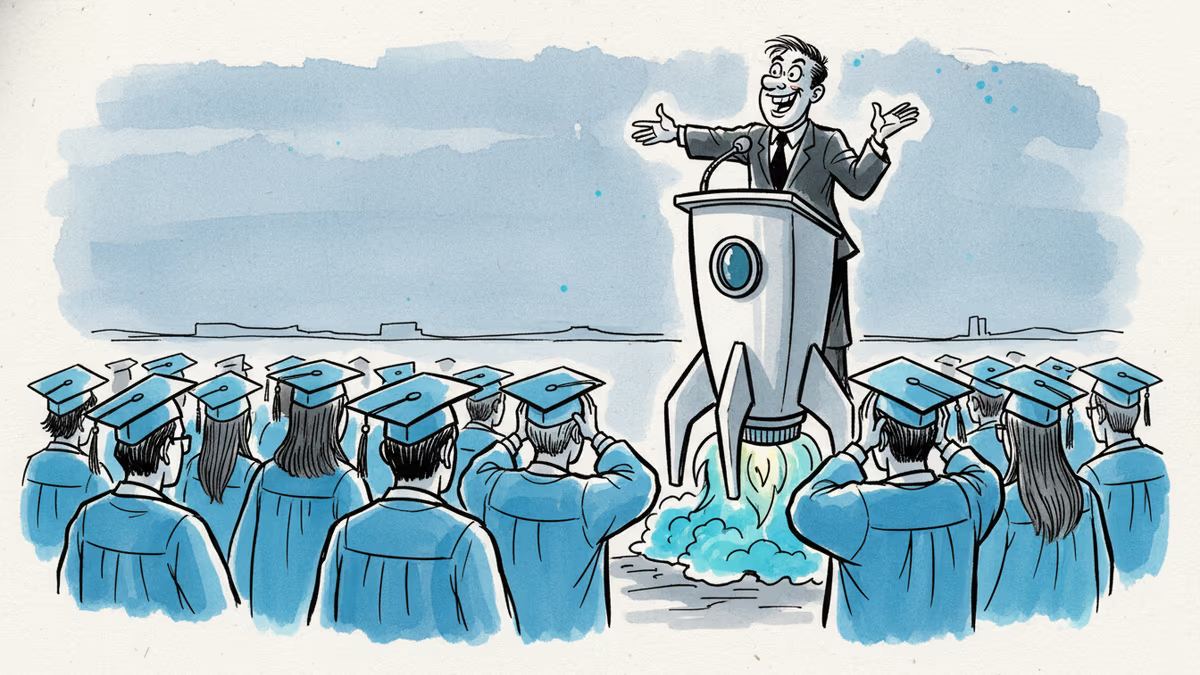
Two commencement speakers learned the hard way that AI enthusiasm doesn't land well with today's graduates. The backlash reveals a widening gap between tech optimism and Gen Z's economic reality.
Samsung and SK unveiled a chip and AI investment package worth thousands of trillions of won on June 29. The headline number swings wildly by outlet, but the real contest isn't capital — it's water and power.
Viral videos show 2026 graduates jeering executives who praise AI at commencement ceremonies. It's not just rudeness — it's a signal about who pays for technological optimism.
Filipino virtual assistants using AI to ghost-manage LinkedIn profiles for executives is now a structured industry. 30 comments a day, fake engagement rings, and a platform struggling to tell real from fabricated.
Two commencement speakers learned the hard way that AI enthusiasm doesn't land well with today's graduates. The backlash reveals a widening gap between tech optimism and Gen Z's economic reality.
Thoughts
Share your thoughts on this article
Sign in to join the conversation