
When Non-Coders Start Coding: How Claude Democratized Programming
Claude Code has found unexpected product-market fit as non-developers across industries discover they can build software. But will we ever escape the terminal?
The Marketer Who Opened a Terminal
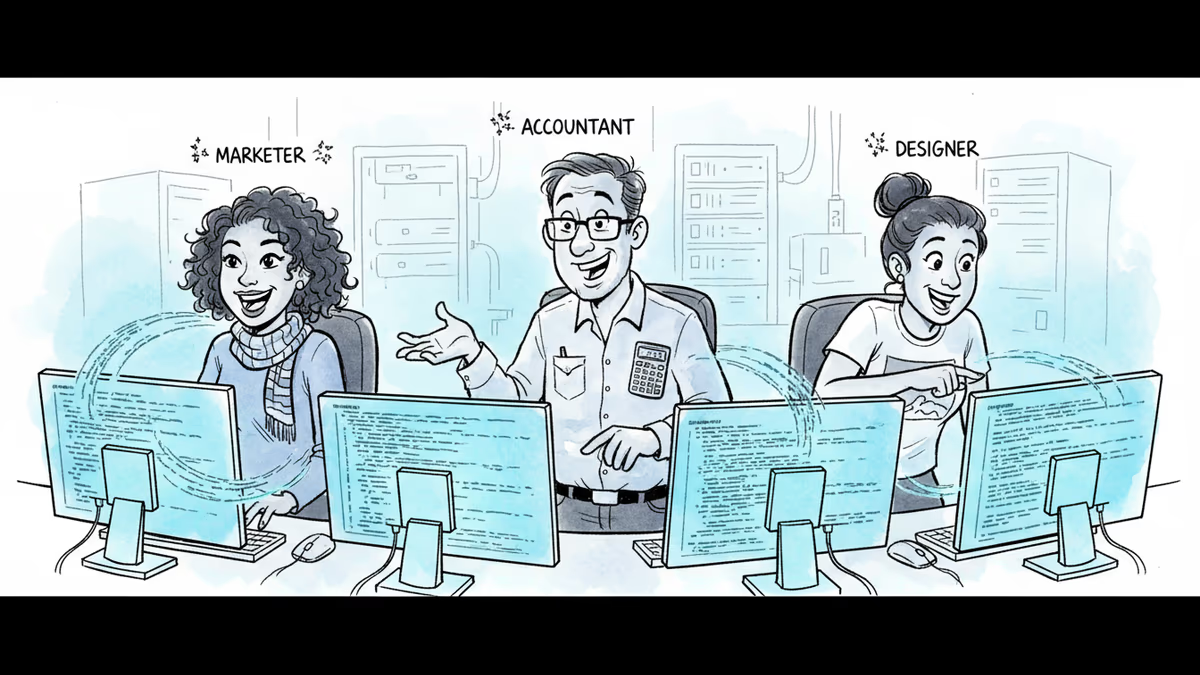
Over the past year, Anthropic's development team witnessed something unexpected. A significant portion of Claude Code users weren't developers at all. Marketers, designers, even accountants were opening terminals and writing code.
Claude Code was originally built for developers. But in recent months, people across industries and disciplines figured out how to access their terminal so they could build new stuff too. Few AI products have found true product-market fit the way Claude Code has.
The Barriers Are Crumbling
Traditionally, programming required years of learning and experience. Claude Code flipped this equation. Non-developers don't need to memorize complex syntax or understand abstract programming concepts. They describe what they want in plain English, and working code appears.
"Read this Excel file and create a graph" becomes a functioning program. "Send me an email when this website updates" becomes automated monitoring. The gap between idea and execution has collapsed to minutes instead of months.
A startup marketer recently shared: "I used to wait weeks for the dev team to build customer analysis tools. Now I build them myself during lunch breaks."
Developers: Threat or Opportunity?

How do professional developers feel about this democratization? The reaction is more nuanced than expected.
Some developers express concern. If anyone can code, what makes their expertise valuable? But many see liberation rather than threat. Claude Code handles routine tasks, freeing them for complex problem-solving and architecture decisions.
A senior engineer at a Fortune 500 company noted: "Prototype development time dropped 70% with Claude Code. I spend less time writing boilerplate and more time solving interesting problems."
The Terminal Bottleneck
Yet one barrier remains: the terminal itself. For non-developers, that black screen with white text feels intimidating. Command-line interfaces haven't evolved much since the 1970s, and they still don't feel intuitive in 2026.
Anthropic's team recognizes this limitation. Future versions of Claude Code will likely offer more visual, accessible interfaces. Imagine drag-and-drop code generation or voice-commanded programming.
Tech giants are paying attention. Microsoft recently announced plans to integrate similar AI coding capabilities directly into Office applications, while Google is exploring voice-to-code features for its Workspace suite.
The Bigger Picture
This shift represents more than just easier coding. It's part of a broader trend toward AI-augmented creativity. Just as Photoshop didn't eliminate graphic designers but changed what design meant, Claude Code isn't replacing developers—it's expanding who can participate in software creation.
The implications ripple across industries. Marketing teams build their own analytics dashboards. HR departments create custom onboarding workflows. Finance teams automate report generation. The $500 billion software industry is being reshaped not by new programming languages, but by removing the need to learn them.
Authors
Related Articles
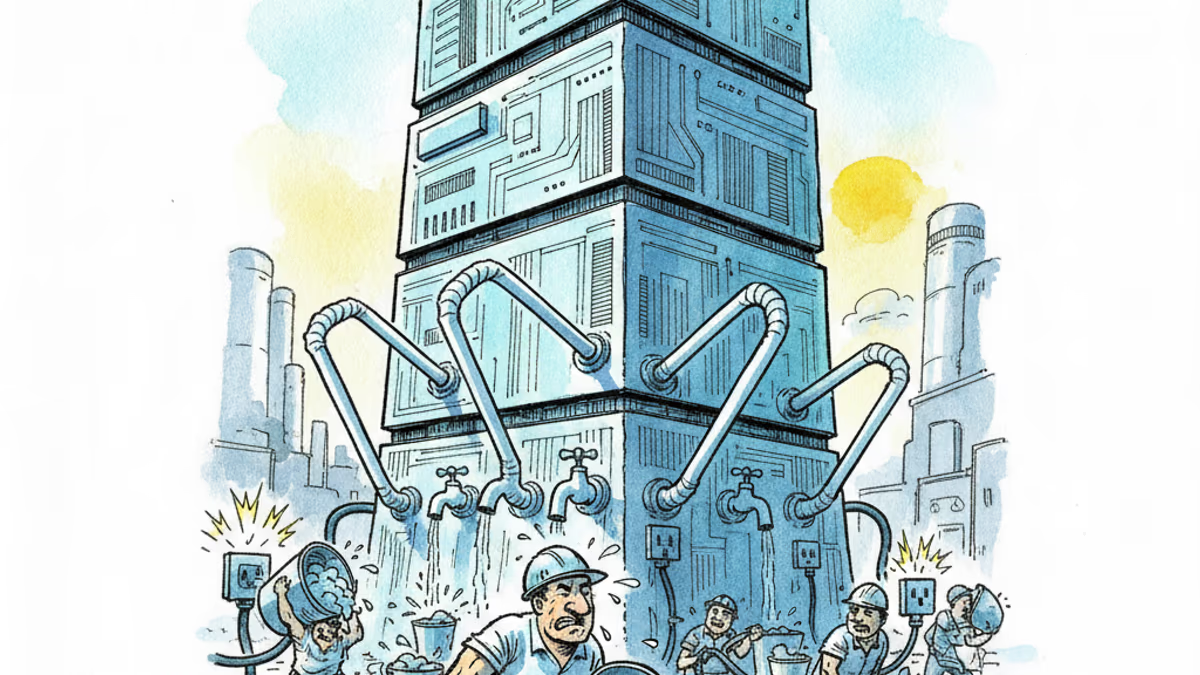
Samsung and SK unveiled a chip and AI investment package worth thousands of trillions of won on June 29. The headline number swings wildly by outlet, but the real contest isn't capital — it's water and power.
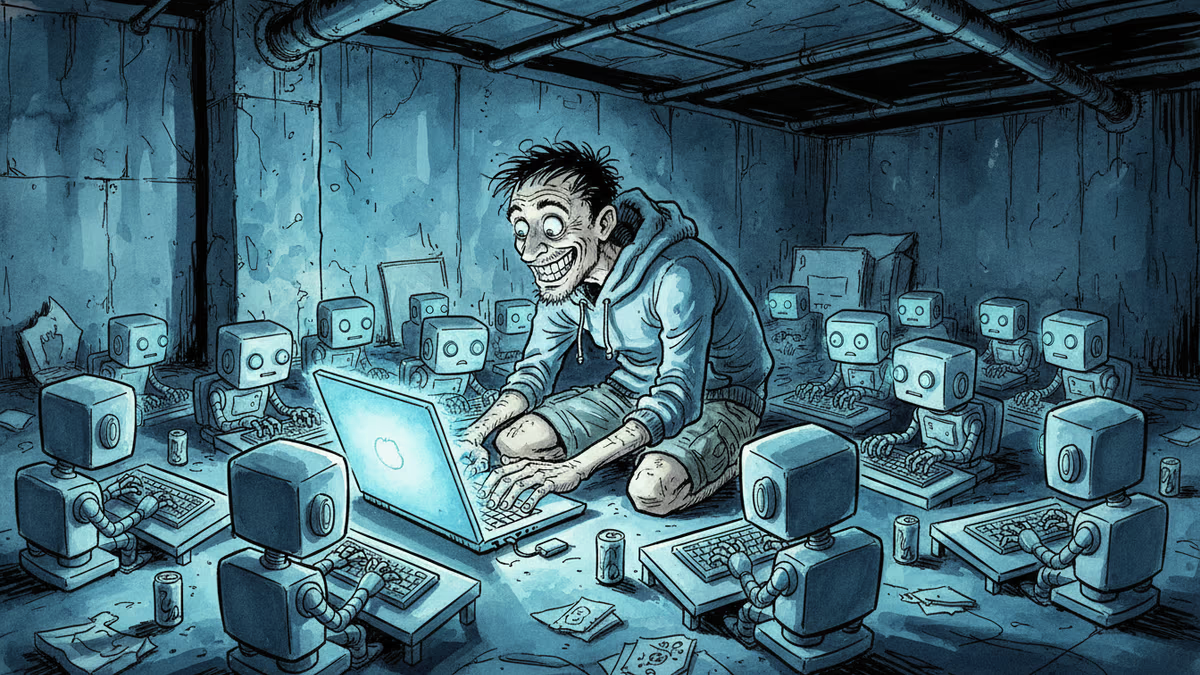
A small but growing group of developers has gone all-in on AI coding agents like Claude Code and OpenClaw. History suggests the rest of us won't be far behind.

Viral videos show 2026 graduates jeering executives who praise AI at commencement ceremonies. It's not just rudeness — it's a signal about who pays for technological optimism.

Filipino virtual assistants using AI to ghost-manage LinkedIn profiles for executives is now a structured industry. 30 comments a day, fake engagement rings, and a platform struggling to tell real from fabricated.
Samsung and SK unveiled a chip and AI investment package worth thousands of trillions of won on June 29. The headline number swings wildly by outlet, but the real contest isn't capital — it's water and power.
A small but growing group of developers has gone all-in on AI coding agents like Claude Code and OpenClaw. History suggests the rest of us won't be far behind.
Viral videos show 2026 graduates jeering executives who praise AI at commencement ceremonies. It's not just rudeness — it's a signal about who pays for technological optimism.
Filipino virtual assistants using AI to ghost-manage LinkedIn profiles for executives is now a structured industry. 30 comments a day, fake engagement rings, and a platform struggling to tell real from fabricated.
Thoughts
Share your thoughts on this article
Sign in to join the conversation