
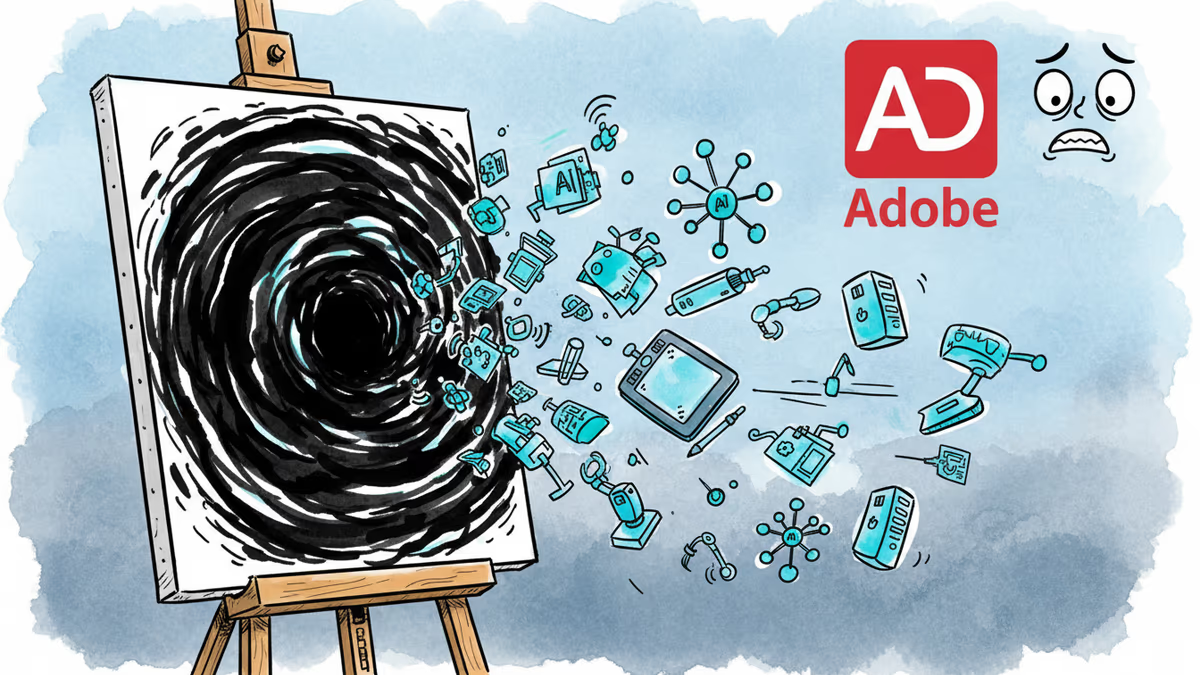
Canva Just Spent $500M on Two Startups You've Never Heard Of
Canva acquires animation tool Cavalry and ad AI MangoAI, building a complete Creative OS to challenge Adobe's dominance. The battle for creative tools heats up.
5 Million Downloads Later, Canva's Master Plan Emerges
When Canva acquired Affinity last year and made it free, most people saw it as another generous gesture from the design platform. But 5 million downloads later, the real strategy is becoming clear. Monday's dual acquisition of animation startup Cavalry and ad AI MangoAI isn't just feature expansion—it's Canva's declaration of war on Adobe.
The question isn't whether Canva can compete with Adobe anymore. It's whether Adobe can keep up with Canva's pace of innovation.
The UK Animation Studio That Caught Canva's Eye
Cavalry might be unfamiliar to most, but in the motion graphics world, it's been quietly building a reputation. The UK-based startup creates 2D animation tools used across advertising, marketing, gaming, and generative art. Their technology will plug directly into Affinity's existing photo, vector, and layout editing capabilities.
"By bringing Cavalry alongside Affinity, we're closing that [motion editing] gap and unlocking a complete professional suite spanning photo, vector, layout, and now motion editing," Canva explained in their announcement.
But here's what makes this interesting: Cavalry isn't just another animation tool. It's designed with the same philosophy that drives Canva—professional capabilities wrapped in accessible interfaces.
The Netflix Veterans Building Ad Intelligence
MangoAI represents Canva's more ambitious play. This stealth startup was building reinforcement learning systems to optimize video ad performance, founded by two Netflix veterans: Nirmal Govind (former VP of Data Science & Engineering) and Vinith Misra (former data scientist at Netflix and Roblox).
Govind becomes Canva's first "Chief Algorithms Officer"—a telling new role that signals where the company is headed. Misra will focus on enhancing Canva's marketing products, particularly the performance measurement side.
Their first product helped clients create, launch, and optimize ad campaigns based on real performance data. Think of it as closing the loop between creative production and marketing effectiveness.

Adobe vs. Canva: Two Completely Different Philosophies
These acquisitions highlight a fundamental philosophical divide in the creative software market:
Adobe's Approach:
- Premium subscription model (Creative Cloud at $60+/month)
- Professional-first, complex interfaces
- Deep, specialized tools for experts
- Protect the moat through complexity
Canva's Approach:
- Freemium accessibility (Affinity now completely free)
- Consumer-friendly, intuitive design
- Integrated "Creative OS" philosophy
- Democratize through simplicity
The numbers tell the story: Canva closed 2025 with $4 billion in annualized revenue, 265 million users, and 31 million paid subscribers. Adobe's Creative Cloud has 26 million subscribers—fewer than Canva's paid users.
Yet Adobe still generates $21 billion annually, more than 5x Canva's revenue. The gap? Adobe charges premium prices for professional workflows.
The Missing Piece: Video and Performance
Canva COO Cliff Obrecht recently revealed that Canva Grow, their marketing intelligence tool, is "doing incredibly well, especially when it comes to creating static content and publishing it to Meta platforms." He added that video creation and multi-platform deployment are coming soon.
With MangoAI's acquisition, Canva now has the AI infrastructure to not just create content, but optimize its performance across platforms. That's the holy grail of marketing technology—creative production tied directly to business outcomes.
The Bigger Picture: Creative Tools Get Smarter
This isn't just about Canva vs. Adobe anymore. It's about the fundamental transformation of creative work itself. When AI can optimize ad performance in real-time, when animation tools become as accessible as PowerPoint, when professional-grade editing is free—what happens to the creative industry?
Consider this: Canva's user base (265 million) is larger than the populations of most countries. These aren't all professional designers—they're small business owners, marketers, students, and entrepreneurs who previously couldn't afford or learn professional creative tools.
Authors
Related Articles
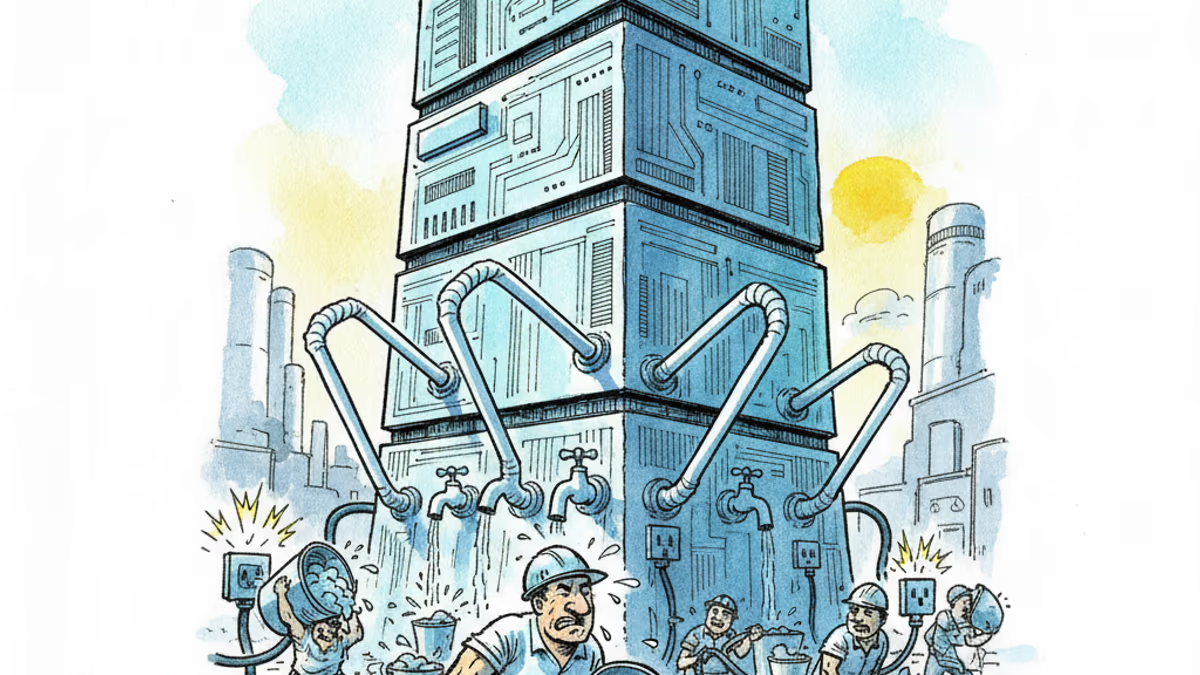
Samsung and SK unveiled a chip and AI investment package worth thousands of trillions of won on June 29. The headline number swings wildly by outlet, but the real contest isn't capital — it's water and power.
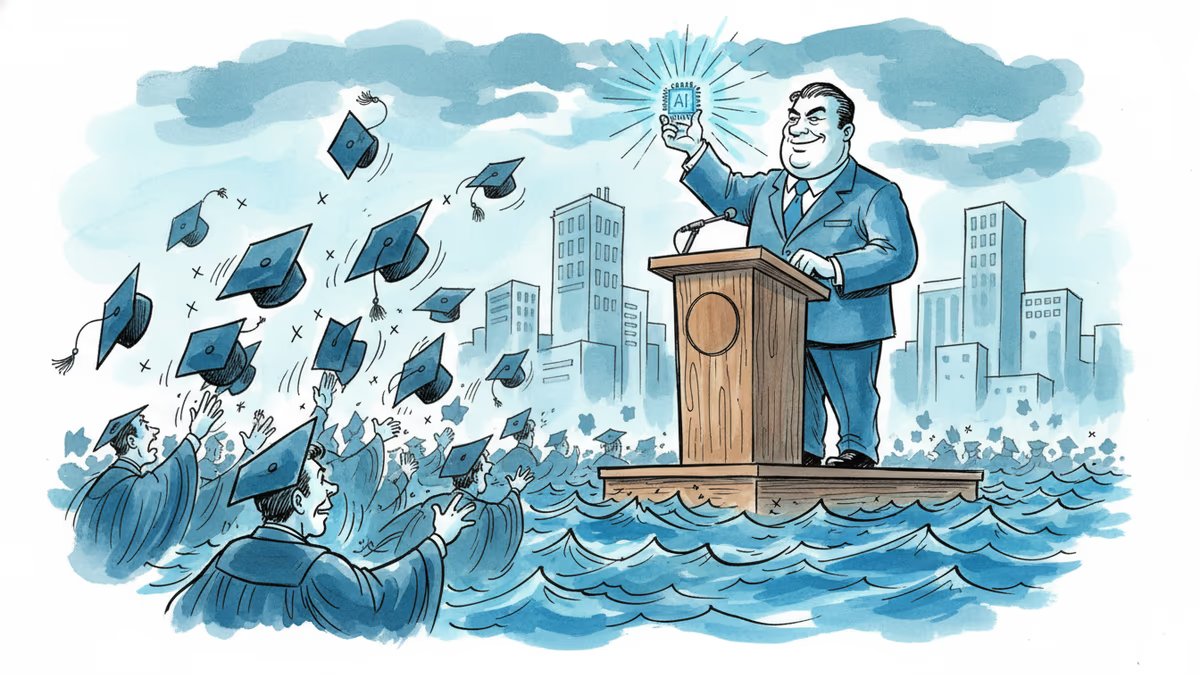
Viral videos show 2026 graduates jeering executives who praise AI at commencement ceremonies. It's not just rudeness — it's a signal about who pays for technological optimism.
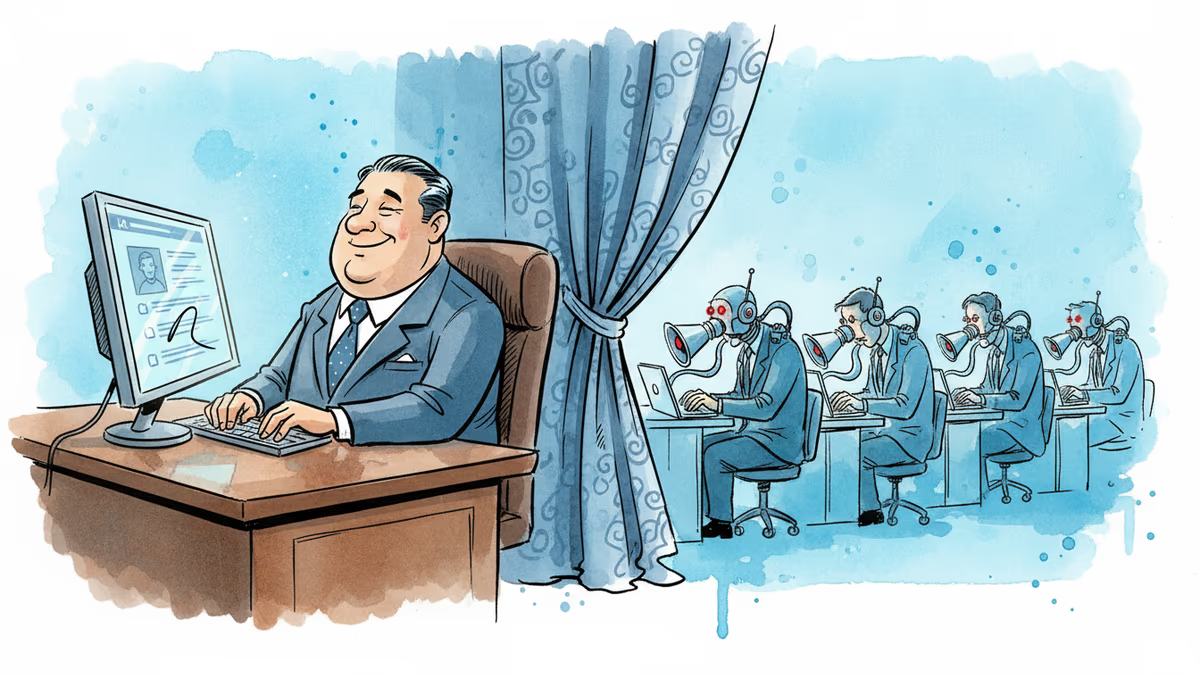
Filipino virtual assistants using AI to ghost-manage LinkedIn profiles for executives is now a structured industry. 30 comments a day, fake engagement rings, and a platform struggling to tell real from fabricated.
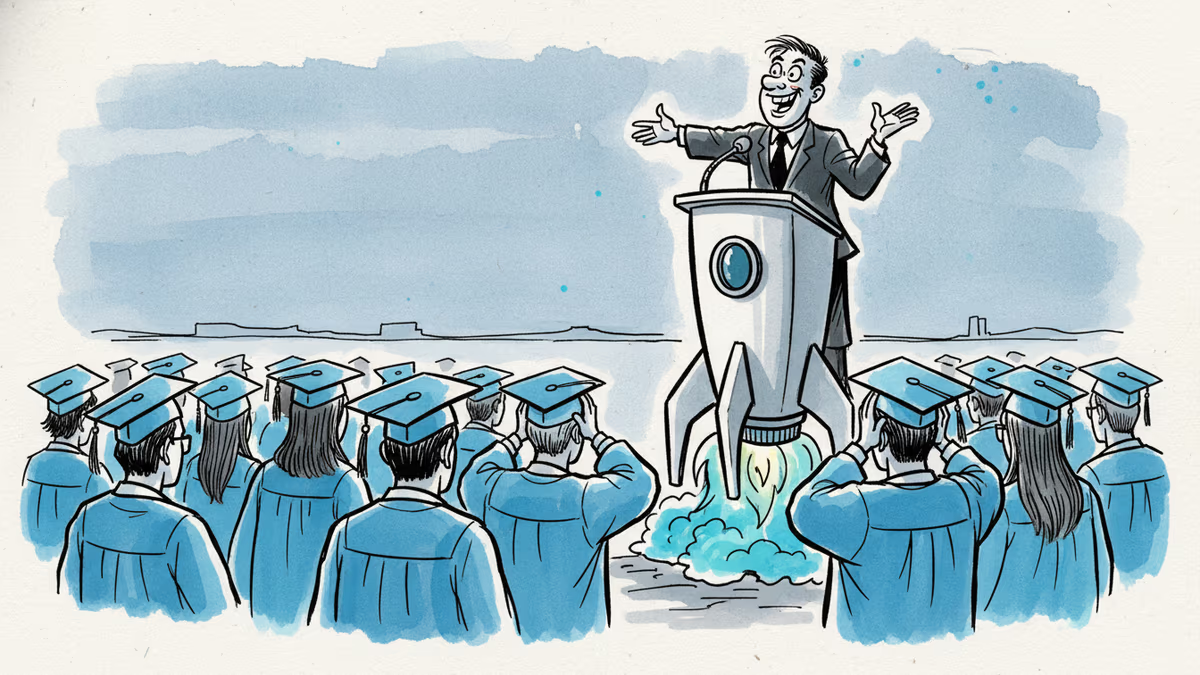
Two commencement speakers learned the hard way that AI enthusiasm doesn't land well with today's graduates. The backlash reveals a widening gap between tech optimism and Gen Z's economic reality.
Samsung and SK unveiled a chip and AI investment package worth thousands of trillions of won on June 29. The headline number swings wildly by outlet, but the real contest isn't capital — it's water and power.
Viral videos show 2026 graduates jeering executives who praise AI at commencement ceremonies. It's not just rudeness — it's a signal about who pays for technological optimism.
Filipino virtual assistants using AI to ghost-manage LinkedIn profiles for executives is now a structured industry. 30 comments a day, fake engagement rings, and a platform struggling to tell real from fabricated.
Two commencement speakers learned the hard way that AI enthusiasm doesn't land well with today's graduates. The backlash reveals a widening gap between tech optimism and Gen Z's economic reality.
Thoughts
Share your thoughts on this article
Sign in to join the conversation