
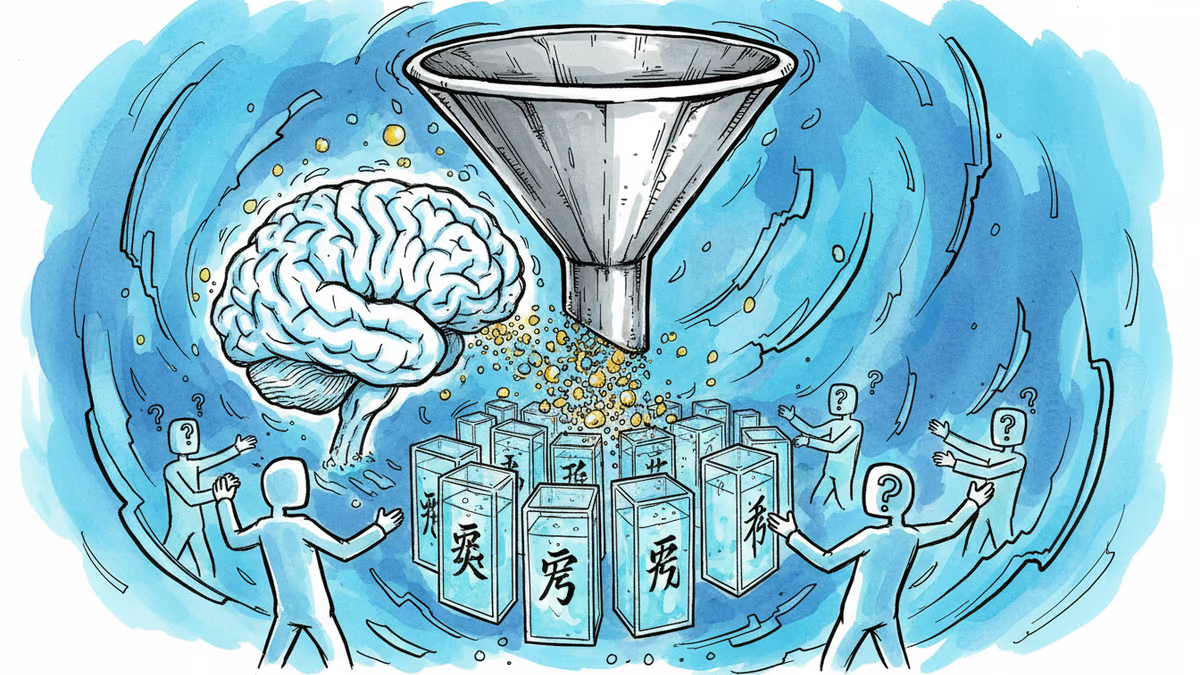
China's AI Companies Didn't Steal Code—They Stole Knowledge
Anthropic accuses DeepSeek and two other Chinese AI firms of using 24,000 fake accounts for 16 million conversations. The goal wasn't hacking—it was distillation.
24,000 Fake Accounts Tell a Story
Anthropic just dropped a bombshell. Three Chinese AI companies created 24,000 fraudulent accounts and engaged in over 16 million conversations with Claude, Anthropic's flagship AI model. This wasn't traditional hacking—it was something far more sophisticated and potentially more concerning.
The accused companies—DeepSeek, MiniMax, and Moonshot—allegedly used a technique called "model distillation." Think of it as having your smaller AI model learn by watching a master at work. They fed Claude millions of queries and used the responses to train their own, smaller models to mimic Claude's capabilities.
Anthropic acknowledges that distillation is "a legitimate training method" but adds it "can also be used for illicit purposes." The key word here is scale. A few researchers asking questions is one thing; an industrial-scale operation designed to systematically extract knowledge is another entirely.
Why Surface This Now?
The timing isn't coincidental. DeepSeek's recent R1 model has sent shockwaves through Silicon Valley, with many wondering how Chinese AI companies have advanced so rapidly. Anthropic's revelation provides one potential answer—though it raises more questions than it settles.
But framing this as simple theft misses the complexity. Model distillation happens everywhere in AI. Google distills its large models into smaller ones. The difference here is allegedly doing it with someone else's model without permission and at massive scale.

From the Chinese companies' perspective, there's likely frustration. Western AI companies have freely trained on Chinese-generated data for years. Now, when the tables turn, it's suddenly "theft."
The Distillation Dilemma
This case highlights a fundamental challenge in AI development. How do you distinguish between legitimate learning and illicit copying when the "copying" involves teaching one AI to think like another?
Traditional intellectual property law wasn't designed for this scenario. When you distill knowledge from an AI model, you're not stealing code—you're extracting patterns of reasoning, communication styles, and problem-solving approaches. It's like learning to paint by studying Picasso's technique, except the "painting" is how an AI processes and responds to information.
For smaller AI companies worldwide, this creates a chilling effect. Many rely on distillation techniques to compete with tech giants who can afford to train models from scratch. If distillation becomes legally risky, it could further consolidate AI power among a few well-funded players.
The Geopolitical Dimension
This isn't just about corporate competition—it's about technological sovereignty. As AI becomes critical infrastructure, nations are increasingly protective of their AI capabilities. The U.S. has already restricted AI chip exports to China. Now we're seeing restrictions on AI knowledge transfer.
But here's the paradox: AI development has always been collaborative. Researchers publish papers, share techniques, and build on each other's work. If we start treating AI knowledge as national security assets, where does that leave scientific progress?
The Anthropic case may be just the opening shot in the AI knowledge wars. The real question isn't whether Chinese companies crossed a line—it's whether we can define where that line should be drawn in the first place.
Authors
Related Articles
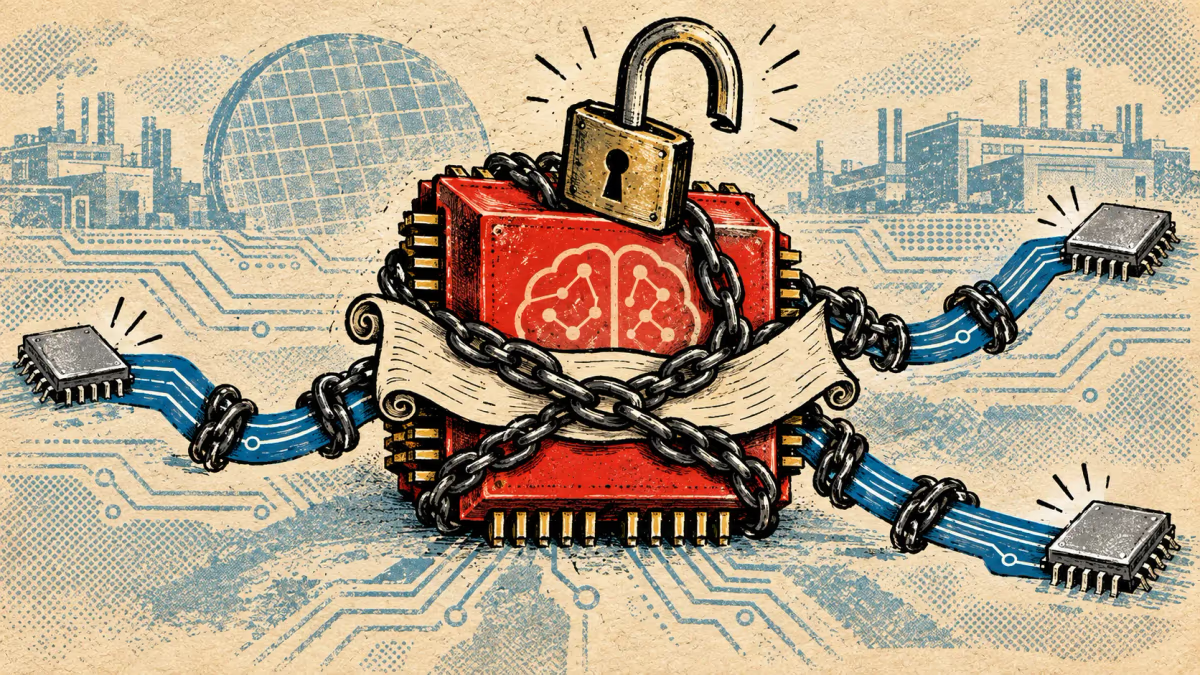
Huawei's CANN is open source under a license barring software for non-Ascend chips. Inside China's second CUDA, and the two links still outside it: pre-training compute and 5nm capacity.
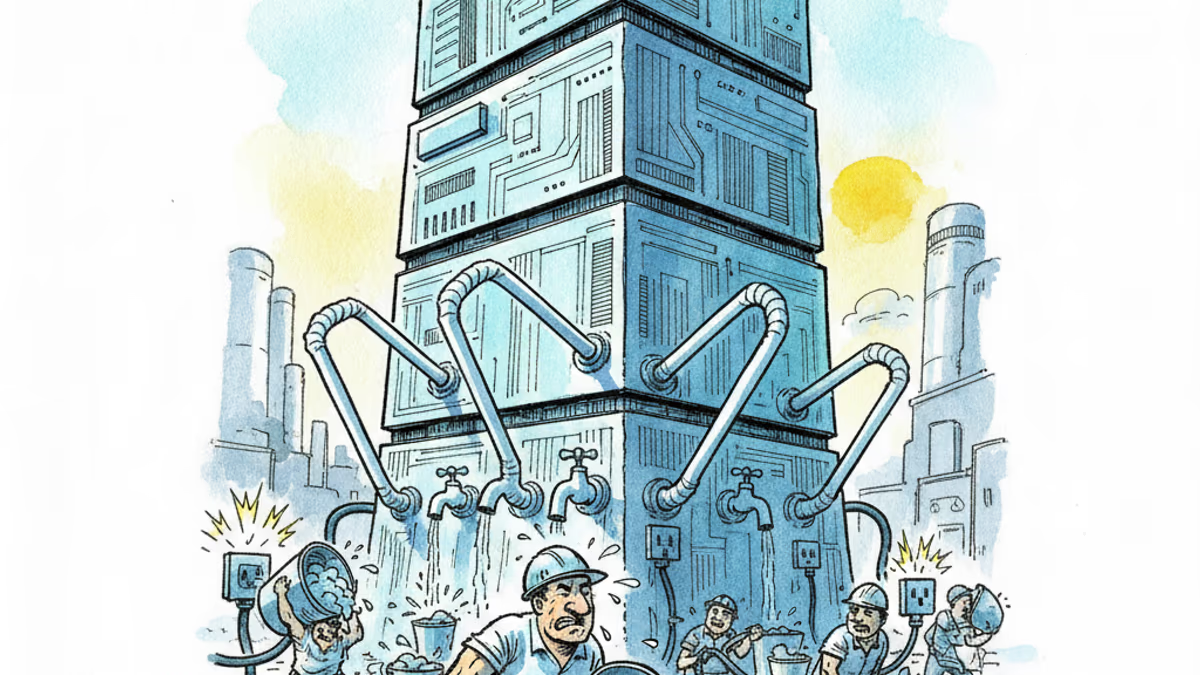
Samsung and SK unveiled a chip and AI investment package worth thousands of trillions of won on June 29. The headline number swings wildly by outlet, but the real contest isn't capital — it's water and power.
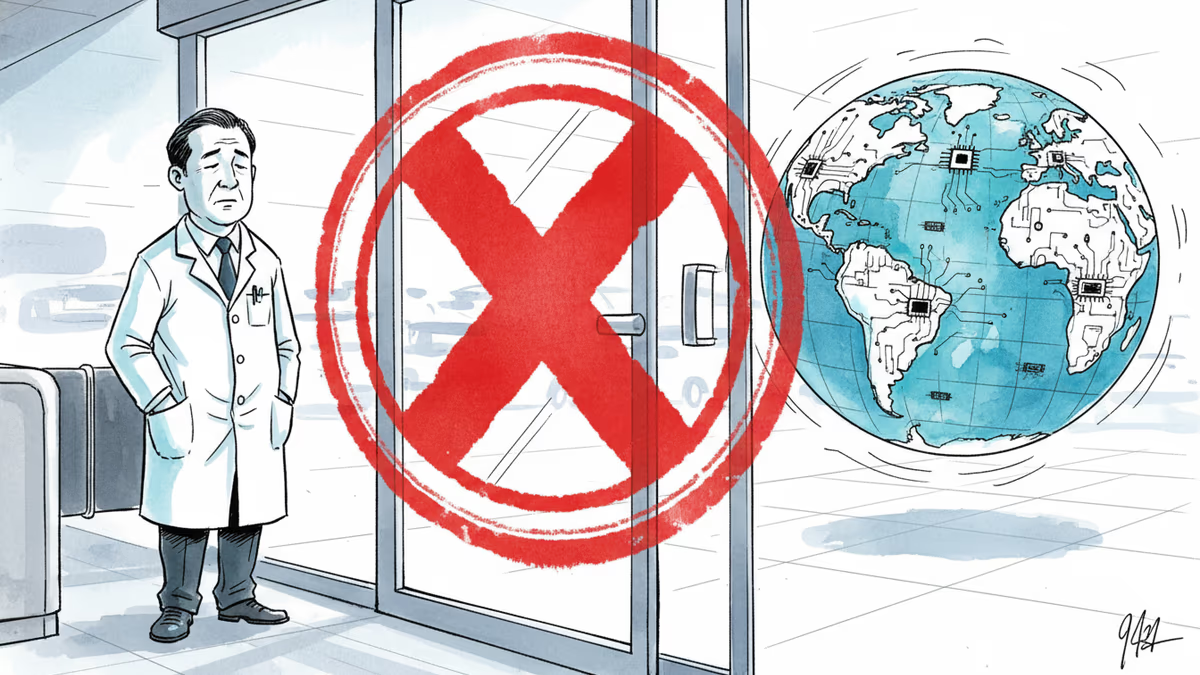
China is restricting AI researchers and startup founders from traveling abroad as the U.S.-China AI performance gap narrows to just 2.7%. What Beijing's talent lockdown means for the global AI race.
Viral videos show 2026 graduates jeering executives who praise AI at commencement ceremonies. It's not just rudeness — it's a signal about who pays for technological optimism.
Huawei's CANN is open source under a license barring software for non-Ascend chips. Inside China's second CUDA, and the two links still outside it: pre-training compute and 5nm capacity.
Samsung and SK unveiled a chip and AI investment package worth thousands of trillions of won on June 29. The headline number swings wildly by outlet, but the real contest isn't capital — it's water and power.
China is restricting AI researchers and startup founders from traveling abroad as the U.S.-China AI performance gap narrows to just 2.7%. What Beijing's talent lockdown means for the global AI race.
Viral videos show 2026 graduates jeering executives who praise AI at commencement ceremonies. It's not just rudeness — it's a signal about who pays for technological optimism.
Thoughts
Share your thoughts on this article
Sign in to join the conversation