

The Great AI Exodus: Why Top Researchers Are Speaking Out
Leading AI researchers are leaving major companies like OpenAI and Anthropic, publicly voicing concerns about safety and ethics. What's driving this unprecedented wave of high-profile resignations?
12 High-Profile Exits in One Year
When OpenAI researcher Zoe Hitzig penned her New York Times op-ed last week, she didn't mince words. She was leaving because the company planned to introduce ads—a move she believed would compromise the very principles that drew her to AI research in the first place.
Her departure wasn't isolated. Over the past 12 months, major AI companies have witnessed an unprecedented exodus of senior researchers, many choosing to air their grievances publicly rather than slip away quietly into the night.
The Facebook Playbook They're Trying to Avoid
Hitzig's concerns were surgical in their precision. OpenAI's advertising model, she argued, would inevitably lead down the same path as Facebook: harvesting user data, optimizing for engagement, and prioritizing revenue over user welfare. The "enshittification" of AI, as some critics call it.
Her proposed alternatives—government subsidies or independent oversight boards—revealed both the depth of her concern and the limited options available. After all, Meta's own Oversight Board has become little more than a well-funded fig leaf.
The Anthropic Paradox

The timing couldn't have been more perfect for Anthropic, which ran a Super Bowl ad that seemed to directly mock OpenAI's advertising ambitions. The ad featured an AI assistant trying to sell height-boosting insoles mid-workout, with the tagline essentially being: "We don't do this."
But Anthropic's moral high ground may be shakier than it appears. The company, founded by former OpenAI researchers who left over safety concerns, has recently accepted funding from Gulf states and faces the same brutal economics that drive all AI companies toward monetization.
The Revolving Door Reality
Where do these principled researchers go? Often, it's a lateral move to another AI company that promises better values—until it doesn't. The pattern is becoming predictable: join the "ethical" AI company, watch it gradually compromise its principles under financial pressure, leave for the next "ethical" alternative.
It's reminiscent of content moderation policies. Every platform starts with grand promises about free speech or user safety, only to find themselves making the same compromises their predecessors made.
The $700 Million Question
OpenAI's monthly operating costs reportedly hit $700 million. Training cutting-edge models requires massive computational resources, top-tier talent, and infrastructure that would make a small country jealous. In this context, the pressure to monetize isn't corporate greed—it's survival.
Yet the researchers leaving aren't naive about economics. They understand the costs. Their departure suggests something deeper: a belief that the current trajectory is fundamentally unsustainable, not just financially but ethically.
Authors
Related Articles
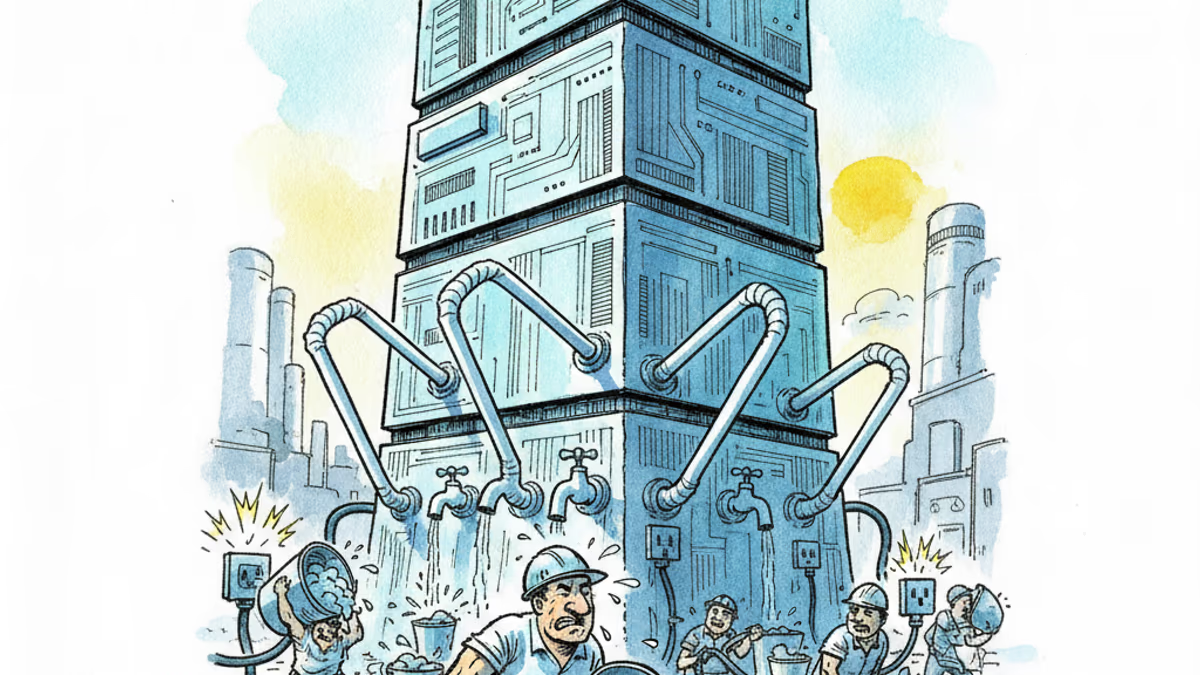
Samsung and SK unveiled a chip and AI investment package worth thousands of trillions of won on June 29. The headline number swings wildly by outlet, but the real contest isn't capital — it's water and power.
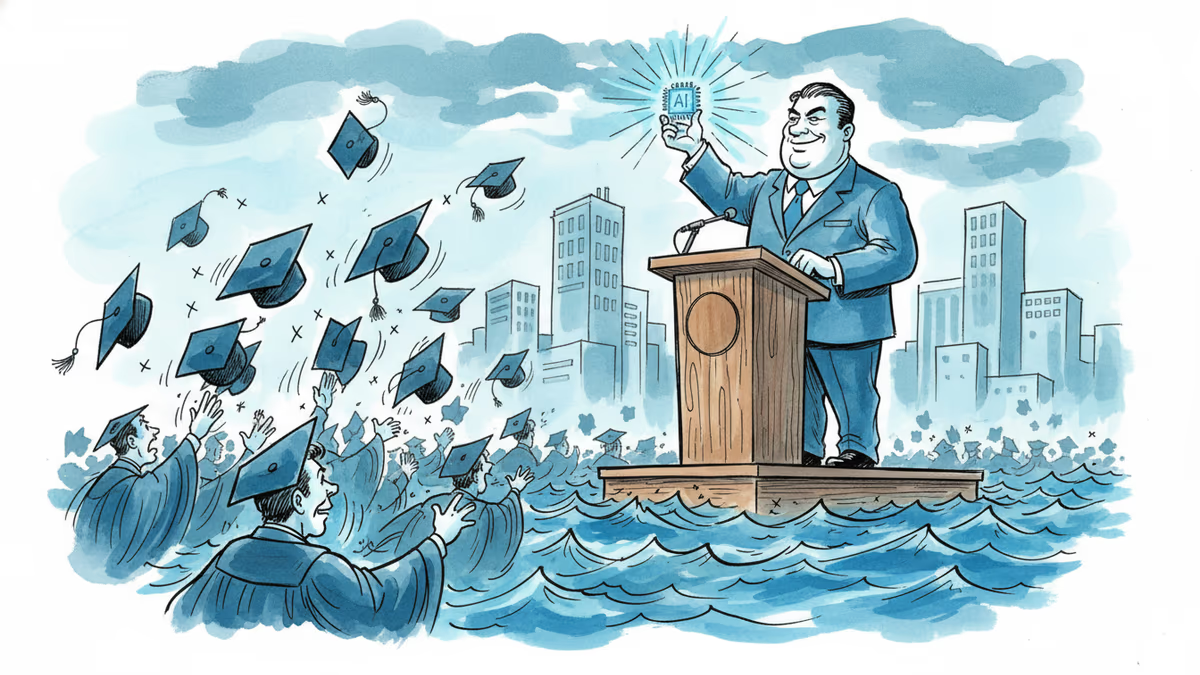
Viral videos show 2026 graduates jeering executives who praise AI at commencement ceremonies. It's not just rudeness — it's a signal about who pays for technological optimism.
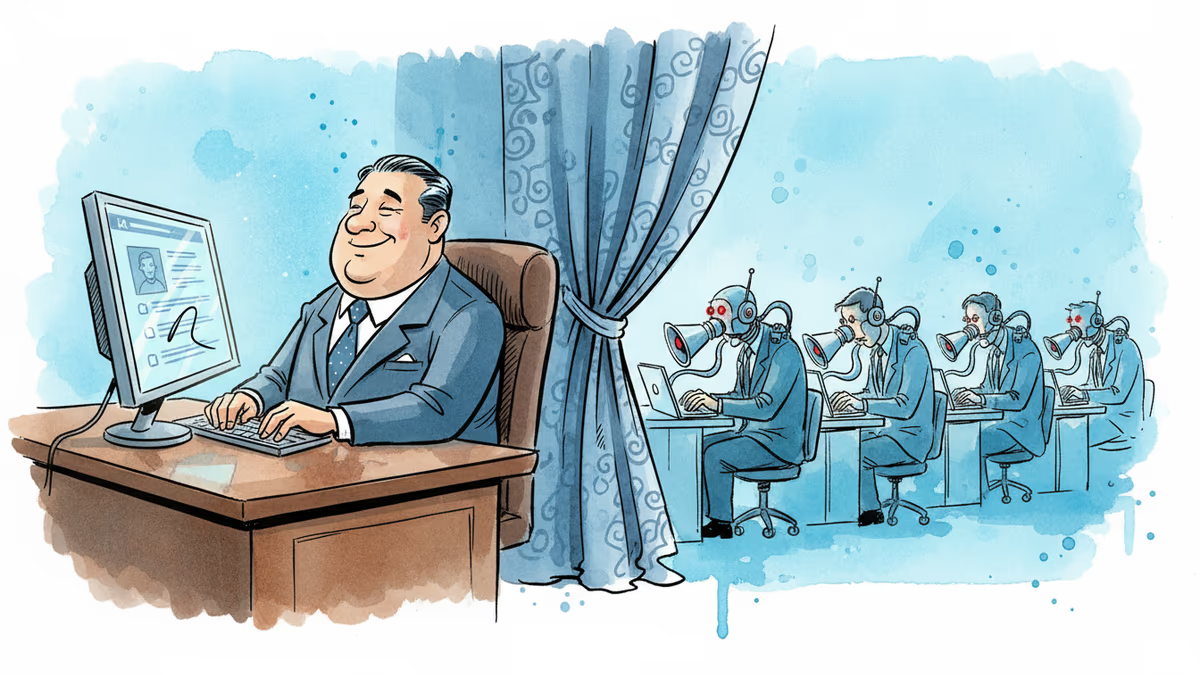
Filipino virtual assistants using AI to ghost-manage LinkedIn profiles for executives is now a structured industry. 30 comments a day, fake engagement rings, and a platform struggling to tell real from fabricated.
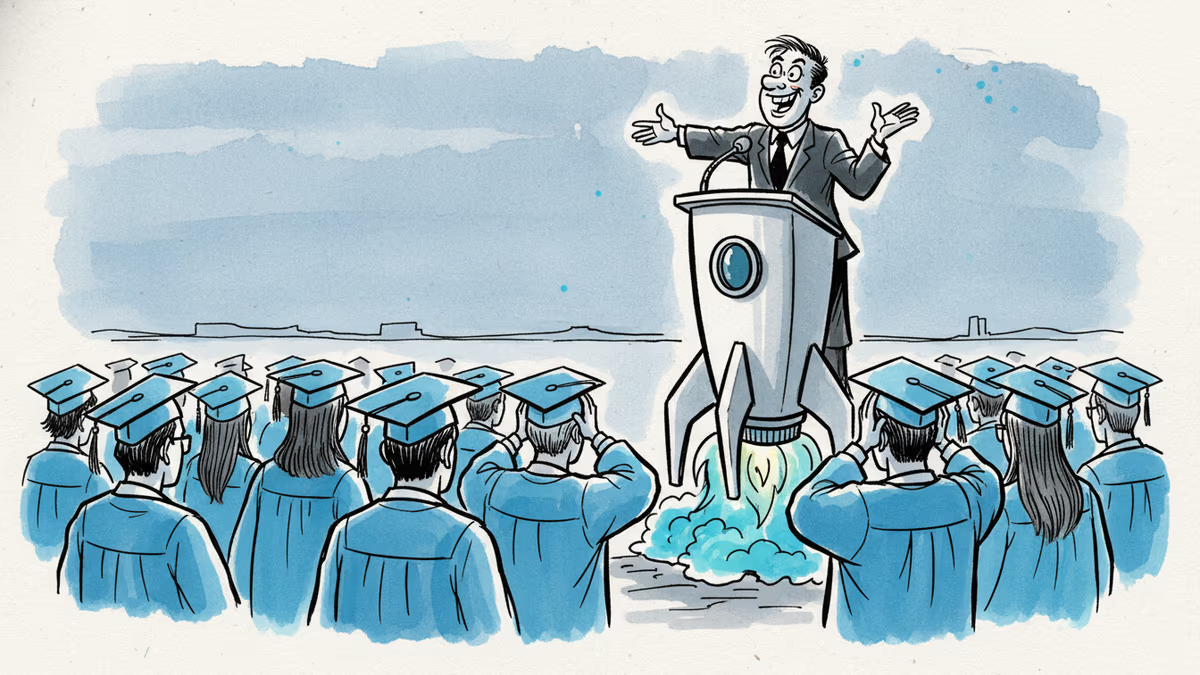
Two commencement speakers learned the hard way that AI enthusiasm doesn't land well with today's graduates. The backlash reveals a widening gap between tech optimism and Gen Z's economic reality.
Samsung and SK unveiled a chip and AI investment package worth thousands of trillions of won on June 29. The headline number swings wildly by outlet, but the real contest isn't capital — it's water and power.
Viral videos show 2026 graduates jeering executives who praise AI at commencement ceremonies. It's not just rudeness — it's a signal about who pays for technological optimism.
Filipino virtual assistants using AI to ghost-manage LinkedIn profiles for executives is now a structured industry. 30 comments a day, fake engagement rings, and a platform struggling to tell real from fabricated.
Two commencement speakers learned the hard way that AI enthusiasm doesn't land well with today's graduates. The backlash reveals a widening gap between tech optimism and Gen Z's economic reality.
Thoughts
Share your thoughts on this article
Sign in to join the conversation