
Stellantis Takes $26B Hit as EV Reality Check Arrives
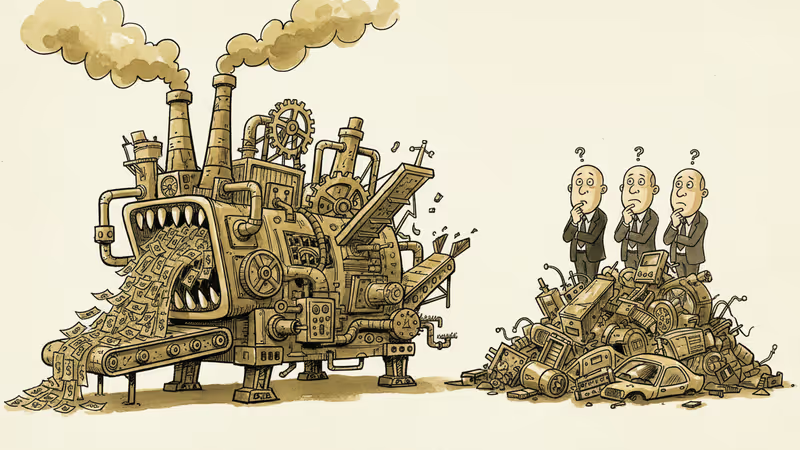
Stellantis writes down $26.2 billion as it resets its EV strategy, reflecting broader challenges in the electric vehicle transition across the automotive industry.
$26.2 billion. That's the staggering amount Stellantis just wrote off as it "reset" its business strategy to match the reality of electric vehicle adoption in America. The parent company of Jeep, Dodge, Fiat, and Peugeot has essentially admitted that the industry's grand EV ambitions were moving faster than consumers were willing to follow.
Just a few years ago, the automotive world was drunk on electric optimism. Everyone seemed convinced that the transition would happen quickly and smoothly.
When the EV Dream Met Reality
The signs of trouble were there for those paying attention. While the US government announced ambitious plans for EV adoption and charging infrastructure, and ten new battery factories were promised, not everyone was on board with the timeline.
Some automakers, finding themselves behind in the battery EV race, began lobbying hard to relax fuel efficiency standards. Car dealers, uncomfortable with investing in new technology and training, joined the chorus. When the Republican Party secured victory in 2024, these voices found a sympathetic ear in Washington.
Stellantis's massive writedown isn't just about one company's miscalculation—it's a reality check for an entire industry that may have gotten ahead of itself. The company is essentially admitting that consumer adoption of EVs is happening more slowly than anticipated, despite years of marketing and government incentives.
The Infrastructure and Psychology Problem

The challenges go beyond politics. American consumers still face practical barriers: charging infrastructure remains patchy outside major metropolitan areas, EVs carry price premiums despite subsidies, and range anxiety persists. These aren't problems that can be solved with marketing campaigns or government mandates alone.
What's particularly telling is how different regions are experiencing this transition. While Tesla continues to dominate and Chinese EV manufacturers are surging in their home market, traditional Western automakers are struggling to find their footing. The assumption that all companies could transition at the same pace appears to have been overly optimistic.
Winners and Losers in the Reset
This reshuffling creates opportunities for some players while exposing the vulnerabilities of others. Companies that maintained diverse powertrains—including hybrids and efficient internal combustion engines—may find themselves better positioned than those who went all-in on pure electric strategies.
The battery supply chain, which saw massive investment based on aggressive EV adoption forecasts, now faces potential overcapacity in some segments while still struggling with supply constraints in others. This mismatch between expectation and reality is exactly what Stellantis's writedown represents on a company level.
The Long View on Electrification
None of this means the electric vehicle transition is over—far from it. What it does mean is that the transition will be messier, longer, and more uneven than many predicted. Some markets will electrify rapidly while others lag. Some companies will thrive while others struggle.
Stellantis's "reset" might actually position it better for this more realistic timeline. By acknowledging current market conditions rather than chasing an overly optimistic forecast, the company can allocate resources more effectively and avoid further costly missteps.
Authors
Related Articles
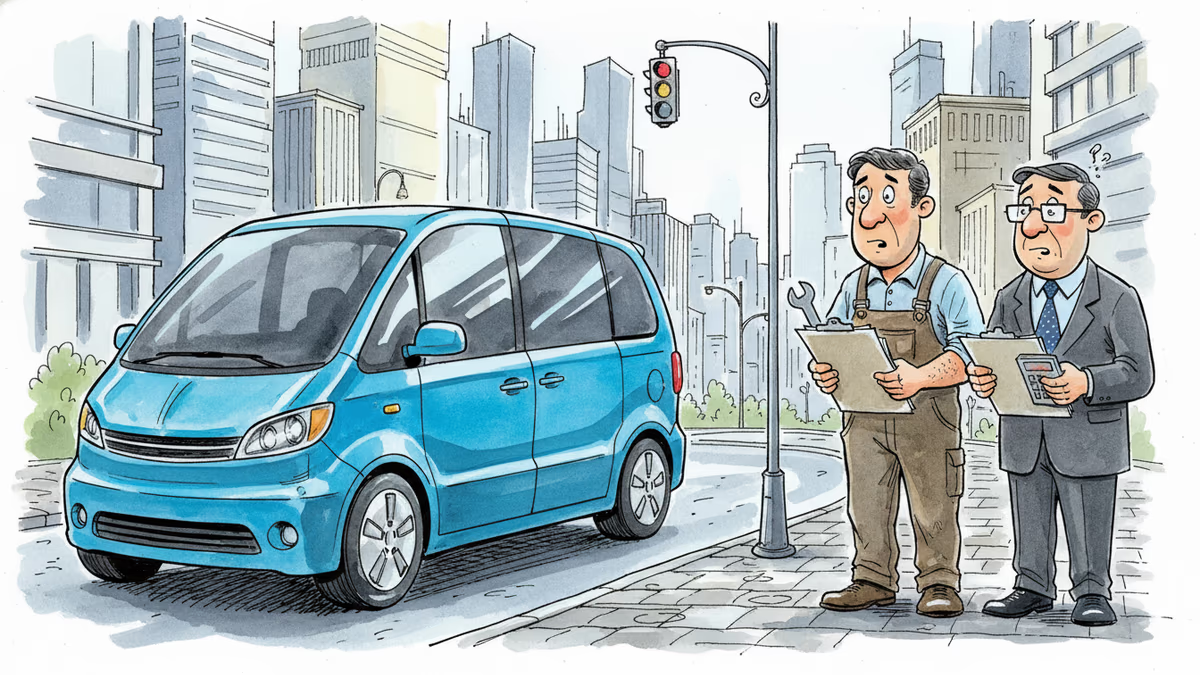
Waymo's new Ojai robotaxi isn't just a vehicle upgrade. It's the company's most serious attempt yet at cracking the cost problem that has kept autonomous vehicles from scaling. Here's what's really at stake.
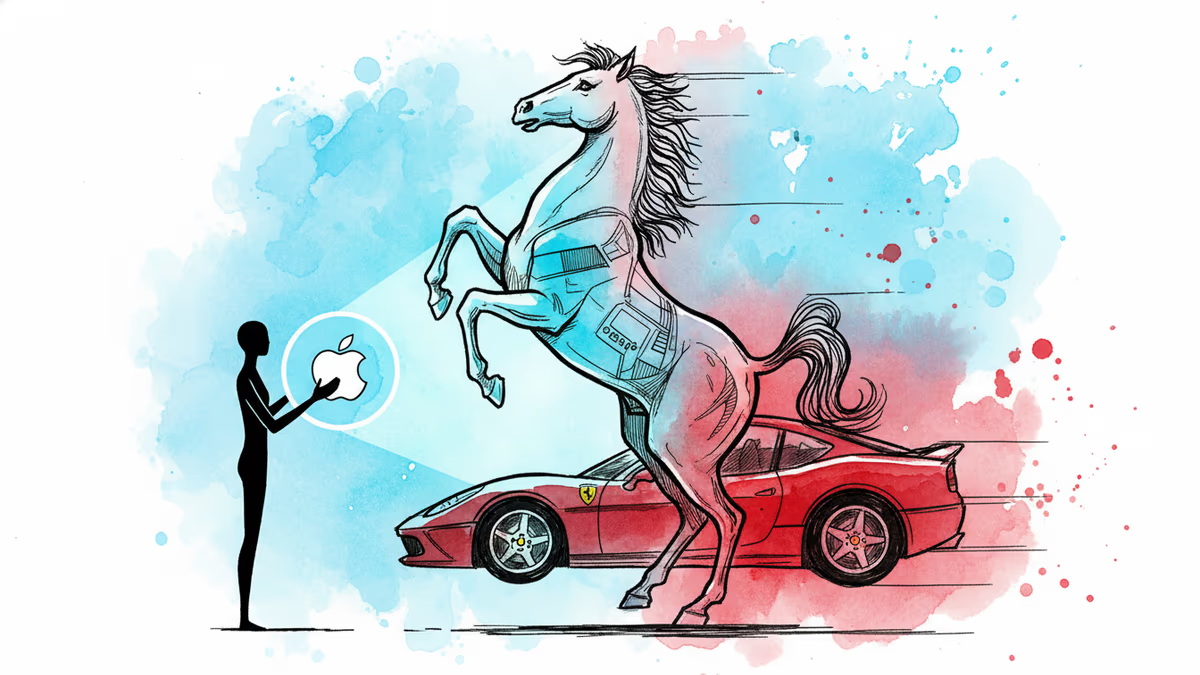
The Ferrari Luce is finally here — 1,000 hp, a 122 kWh battery, and an interior designed by the team behind the iPhone. But the real story is what Ferrari risked to build it.
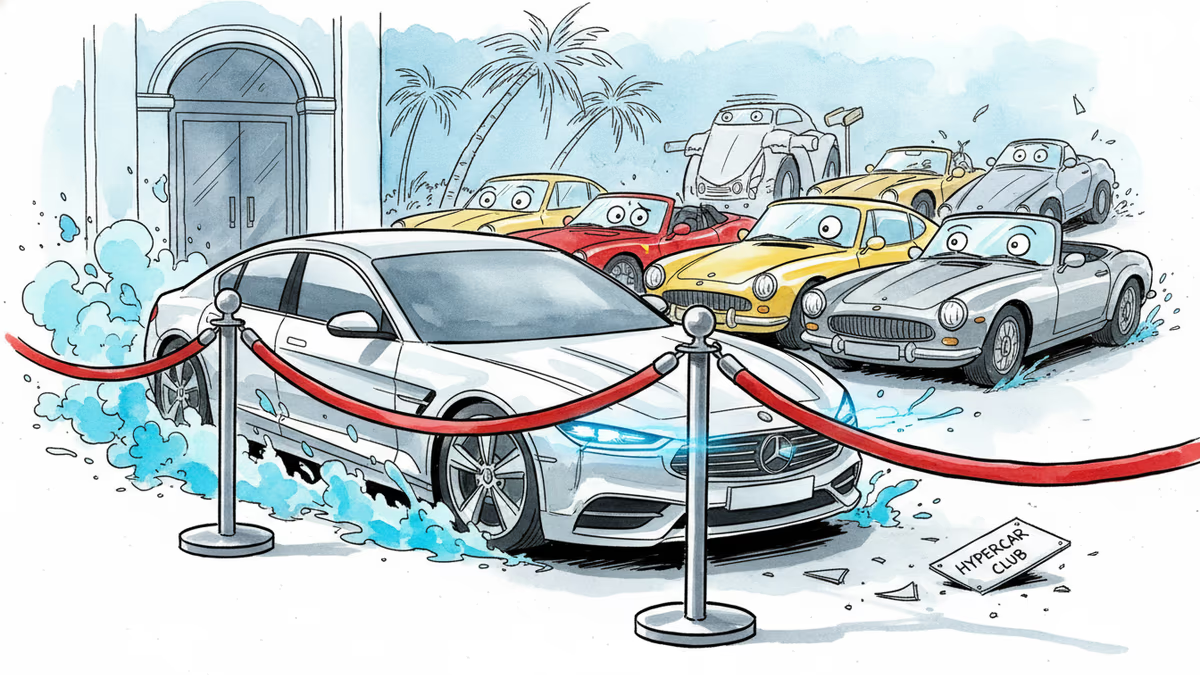
Mercedes-AMG's new GT 4-door coupe packs three YASA axial flux motors producing 1,153 hp and 1,475 lb-ft of torque. Here's what it means for the EV performance race—and who actually wins.
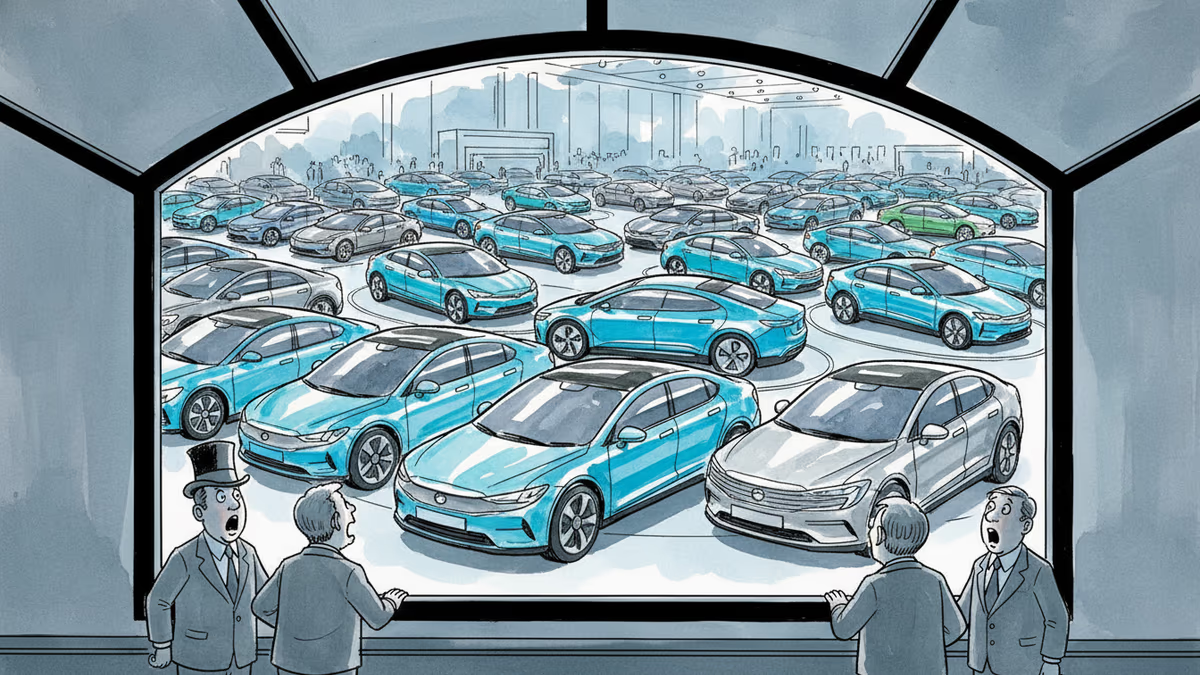
Auto China 2026 set records with 1,451 vehicles and 181 world premieres. But the real story isn't the size—it's how Chinese automakers stopped competing on price and started competing on brains.
Waymo's new Ojai robotaxi isn't just a vehicle upgrade. It's the company's most serious attempt yet at cracking the cost problem that has kept autonomous vehicles from scaling. Here's what's really at stake.
The Ferrari Luce is finally here — 1,000 hp, a 122 kWh battery, and an interior designed by the team behind the iPhone. But the real story is what Ferrari risked to build it.
Mercedes-AMG's new GT 4-door coupe packs three YASA axial flux motors producing 1,153 hp and 1,475 lb-ft of torque. Here's what it means for the EV performance race—and who actually wins.
Auto China 2026 set records with 1,451 vehicles and 181 world premieres. But the real story isn't the size—it's how Chinese automakers stopped competing on price and started competing on brains.
Thoughts
Share your thoughts on this article
Sign in to join the conversation