
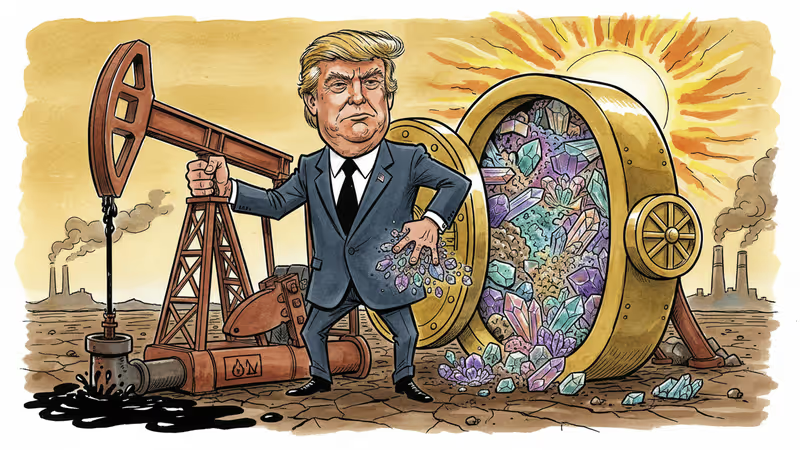
Trump's $11.7B Mineral Stockpile Admits What He Won't Say Out Loud
Trump administration announces massive critical minerals reserve while publicly opposing clean energy. The contradiction reveals markets are stronger than political rhetoric in shaping America's energy future.
$11.7 billion. That's how much the Trump administration is willing to bet on a future it claims to oppose.
This week's announcement of Project Vault—a massive critical minerals stockpile—tells two stories. The official narrative focuses on reducing dependence on China and protecting American industry. The subtext reveals something more intriguing: even an administration hostile to clean energy can't ignore where the world is heading.
The Strategic Petroleum Reserve for the Electric Age
Trump compared the new stockpile to the Strategic Petroleum Reserve, created after the 1970s oil embargo. "Just as we have long had a strategic petroleum reserve," he said, "we're now creating this reserve for American industry, so we don't have any problems."
But the numbers tell a different story about priorities. The administration is investing half the value of the current oil reserve into a market that's just 1% the size of the global oil market. That's either typical Trump hyperbole or an acknowledgment that the critical minerals market is about to explode.
The U.S. Export-Import Bank will provide a $10 billion loan, with private capital covering the rest. The stockpile will likely include gallium and cobalt, with copper and nickel potentially added later—all essential components for electric vehicles, solar panels, and wind turbines.
China's Trump Card
The timing isn't coincidental. Over the past year, China wielded its dominance in critical minerals as a weapon against Trump's tariff threats, restricting exports of rare earth metals and lithium battery materials to the U.S. China eventually relented, but the message was clear: they held the real trump card.

This episode exposed just how integral these materials are to modern economies. Without them, everything from smartphones to fighter jets stops working. The administration's recent equity stakes in USA Rare Earth and MP Materials show this isn't just rhetoric—it's recognition of a strategic vulnerability.
The Clean Energy Contradiction
Here's where it gets interesting. The Trump administration has been vocal about its disdain for clean energy technologies, preferring to bet on fossil fuels. Yet the biggest driver of critical minerals demand comes from exactly those technologies they oppose.
According to the International Energy Agency, more than half of global growth in rare earth element demand is expected from electric vehicles and wind turbines. For cobalt and lithium, the figures are even more skewed—EVs represent the vast majority of growth through 2050.
Meanwhile, solar and wind continue dominating new electric generating capacity, while over 25% of new cars sold worldwide are EVs or plug-in hybrids. The rest of the world is moving toward clean energy, driving up demand for these minerals whether Trump likes it or not.
Markets Don't Care About Politics
This creates a fascinating paradox. An administration that publicly opposes the clean energy transition is privately preparing for it. The mineral stockpile isn't just about national security—it's an admission that the future runs on electric technologies.
For investors and businesses, this sends a clear signal: regardless of political rhetoric, the economic fundamentals favor clean energy. Companies betting on this transition may find unexpected support from an administration that claims to oppose it.
The oil reserve isn't disappearing, but its importance is diminishing as productive U.S. oil wells reduce import dependence and renewable energy takes market share. The new mineral reserve represents the infrastructure of tomorrow's economy.
Authors
Related Articles

Waymo's new Ojai robotaxi isn't just a vehicle upgrade. It's the company's most serious attempt yet at cracking the cost problem that has kept autonomous vehicles from scaling. Here's what's really at stake.
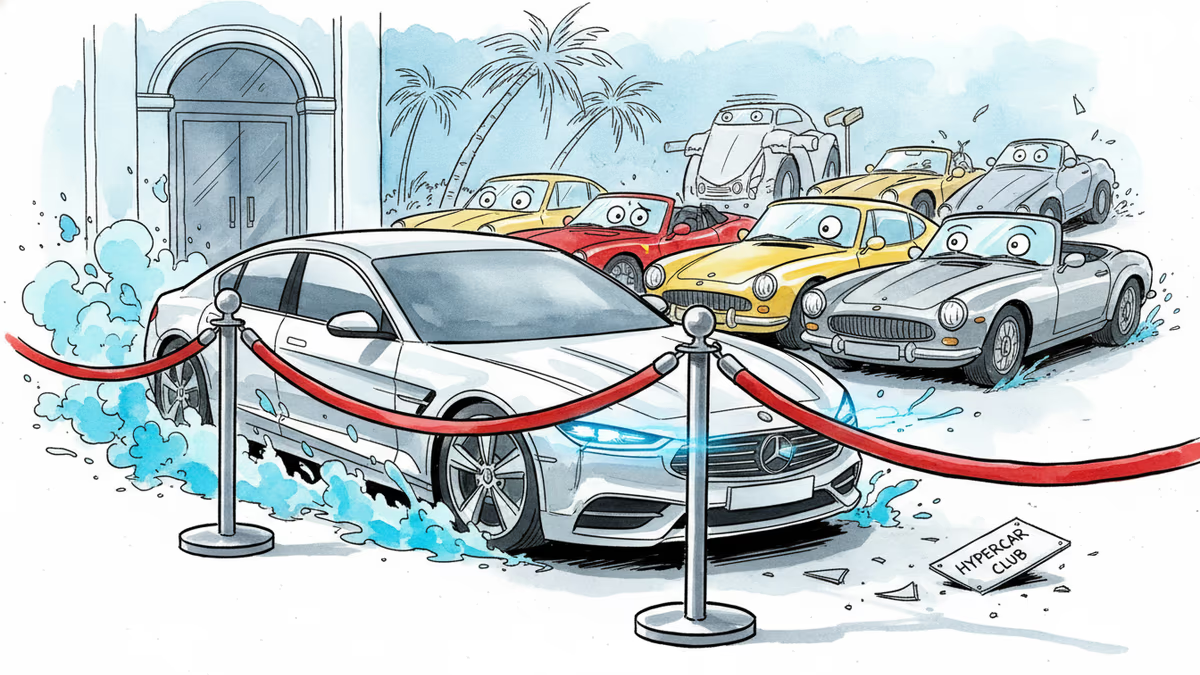
Mercedes-AMG's new GT 4-door coupe packs three YASA axial flux motors producing 1,153 hp and 1,475 lb-ft of torque. Here's what it means for the EV performance race—and who actually wins.
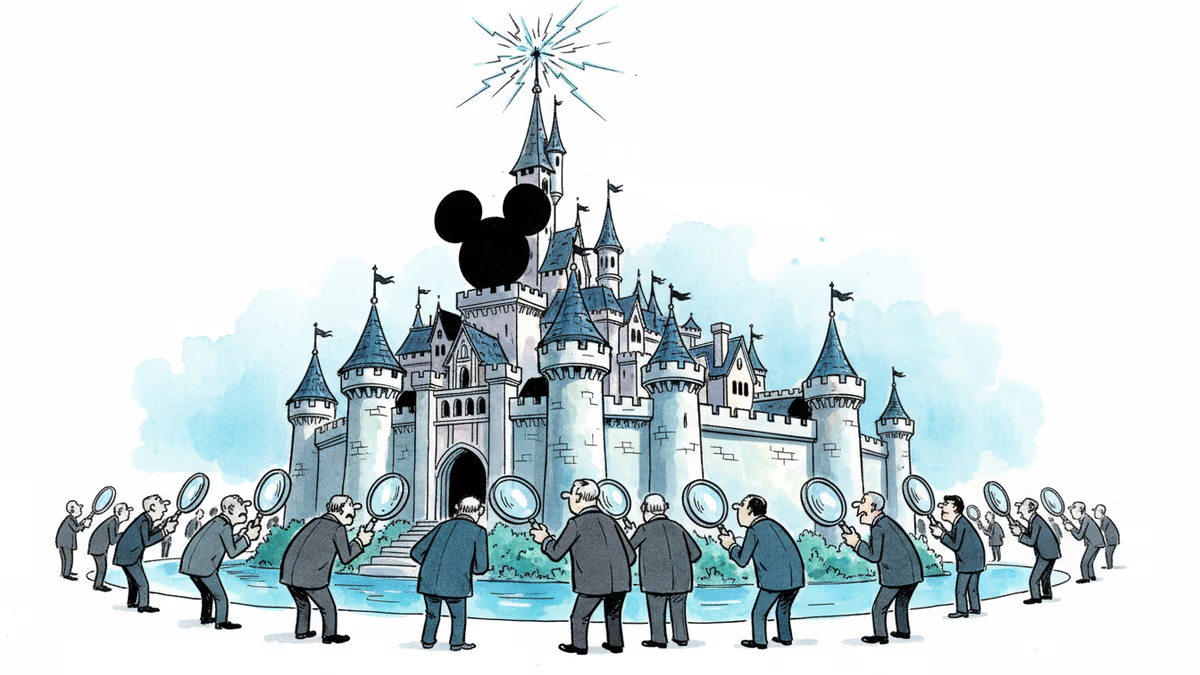
Josh D'Amaro took over Disney with a bold Disney Plus vision. Days later, he's in a First Amendment fight with the Trump administration over The View. What does this mean for media freedom?
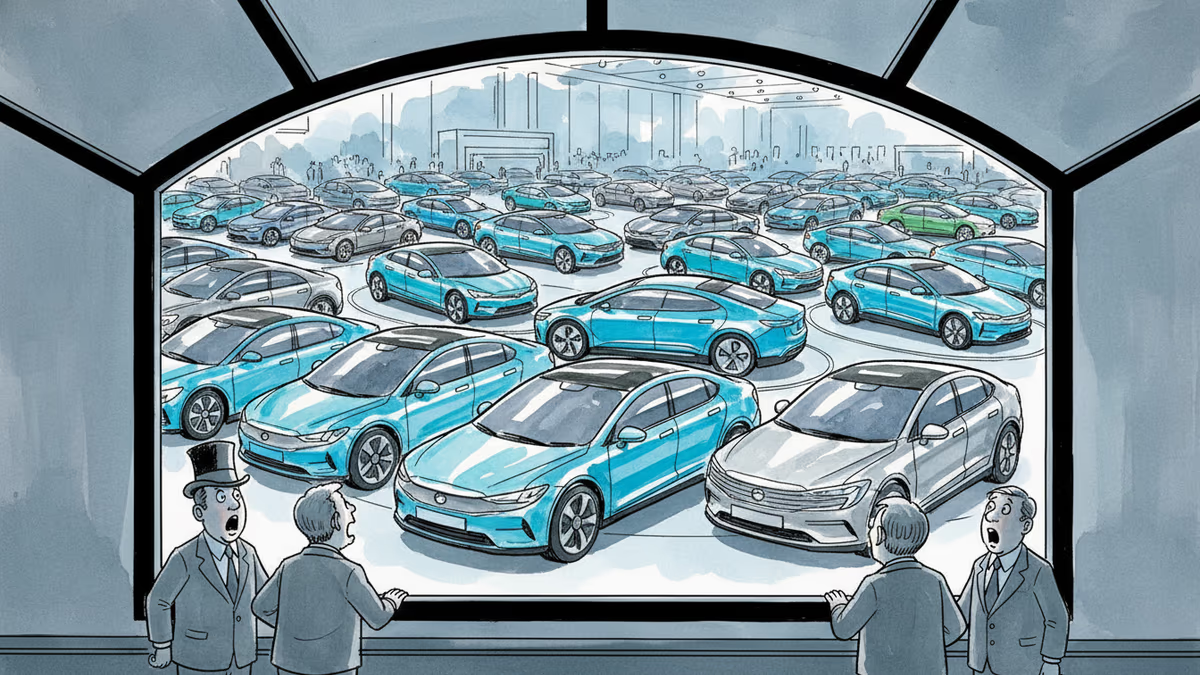
Auto China 2026 set records with 1,451 vehicles and 181 world premieres. But the real story isn't the size—it's how Chinese automakers stopped competing on price and started competing on brains.
Waymo's new Ojai robotaxi isn't just a vehicle upgrade. It's the company's most serious attempt yet at cracking the cost problem that has kept autonomous vehicles from scaling. Here's what's really at stake.
Mercedes-AMG's new GT 4-door coupe packs three YASA axial flux motors producing 1,153 hp and 1,475 lb-ft of torque. Here's what it means for the EV performance race—and who actually wins.
Josh D'Amaro took over Disney with a bold Disney Plus vision. Days later, he's in a First Amendment fight with the Trump administration over The View. What does this mean for media freedom?
Auto China 2026 set records with 1,451 vehicles and 181 world premieres. But the real story isn't the size—it's how Chinese automakers stopped competing on price and started competing on brains.
Thoughts
Share your thoughts on this article
Sign in to join the conversation