
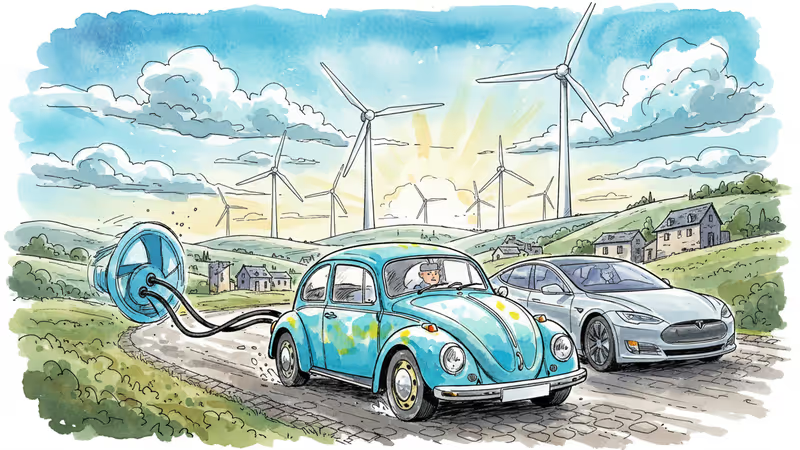
How Volkswagen Beat Tesla at Its Own Game
Volkswagen outsold Tesla in Europe's EV market for the first time, marking a dramatic turnaround from the Dieselgate scandal. Here's what changed the game.
Ten years after the Dieselgate scandal nearly destroyed its reputation, Volkswagen has achieved something many thought impossible: outselling Tesla in Europe's electric vehicle market. The numbers tell a story of remarkable corporate redemption.
The Numbers Don't Lie
Volkswagen sold 274,278 electric vehicles in Europe last year, compared to Tesla's236,357 units—marking the first time the German automaker has topped the American EV pioneer. Even more striking is the trajectory: VW's EV sales surged 56 percent while Tesla's dropped 27 percent.
This happened despite Europe's overall car market struggling to recover from pandemic impacts, with total vehicle sales growing just 2.2 percent. Electric vehicles, however, bucked the trend with 29 percent growth, capturing an impressive 19.5 percent market share—nearly one in five cars sold.
The victory becomes even more commanding when considering VW's broader portfolio. The Volkswagen Group dominates the top rankings with Skoda in 4th place (171,703 sales), Audi in 5th (153,845), Cupra in 15th (79,269), and Porsche in 21st (32,715). Together, they've created an EV ecosystem that Tesla can't match alone.
From Scandal to Success
The transformation is nothing short of extraordinary. In 2015, Volkswagen faced its darkest hour when the diesel emissions scandal broke, resulting in $33 billion in fines and devastating brand damage. But crisis became catalyst.

VW's response was systematic and patient. The company launched its ID series in 2019, starting with the ID.3 and ID.4 models that offered European consumers a credible Tesla alternative. Unlike Tesla's premium positioning, VW provided familiar brand reliability at multiple price points.
Meanwhile, Tesla's early-mover advantage has been eroding. Elon Musk's political controversies, quality concerns, and the limits of aggressive price-cutting have dimmed the brand's luster in Europe. The company that once seemed unstoppable now faces the reality that innovation alone doesn't guarantee market dominance.
What This Means for the Industry
VW's success reveals three critical insights about today's EV market. First, brand trust still matters enormously—even a scandal-tainted brand can rebuild credibility through consistent execution. Second, having a diverse portfolio beats relying on a single model, no matter how innovative. Third, understanding local preferences trumps global one-size-fits-all strategies.
For other automakers, this shift signals opportunity. Companies like Hyundai-Kia, Stellantis, and even traditional luxury brands now see that Tesla isn't invincible. The EV market is maturing from a tech novelty into a mainstream automotive category where traditional strengths—manufacturing scale, dealer networks, brand heritage—matter again.
Investors should take note too. Tesla's stock has long been priced for perfection, assuming the company would maintain its first-mover advantage indefinitely. VW's European success suggests that assumption may need recalibrating.
The Broader European Context
Europe's EV adoption continues despite economic headwinds, supported by government incentives and increasingly strict emissions regulations. Unlike the U.S., where EV enthusiasm has cooled, European consumers seem committed to electrification. This creates a more predictable market for automakers willing to invest in the transition.
The regulatory environment also favors established players who can navigate complex compliance requirements across multiple countries. VW's experience with European regulations, built over decades, gives it advantages that newer entrants struggle to match.
Authors
Related Articles
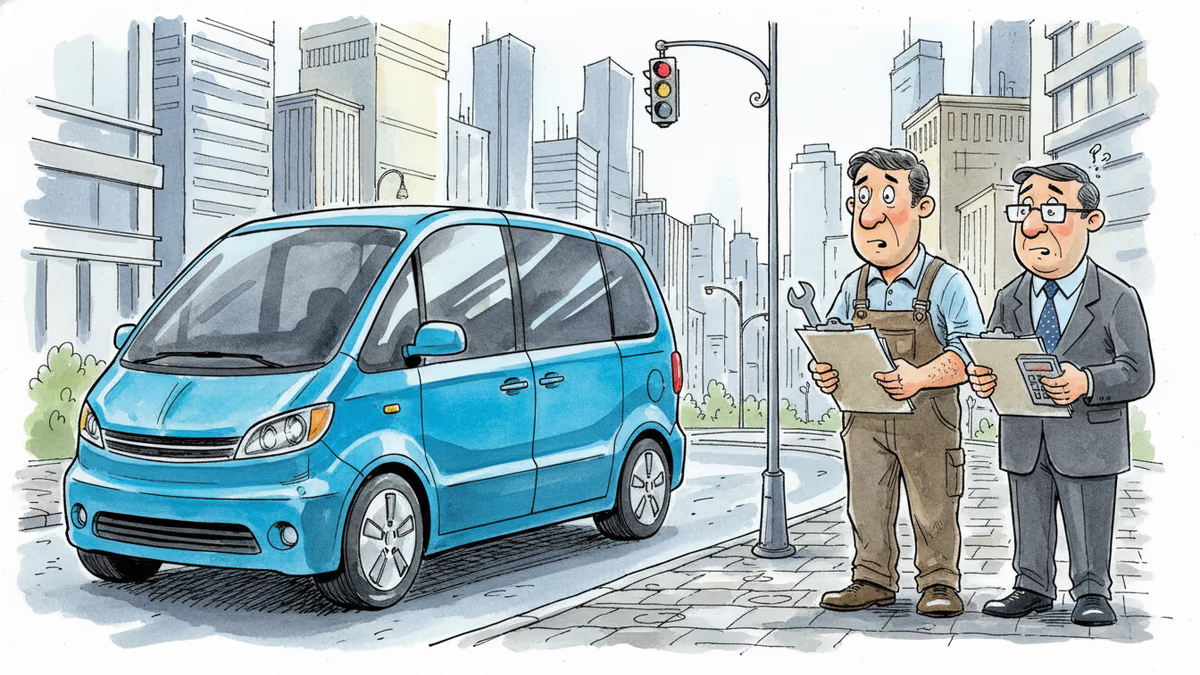
Waymo's new Ojai robotaxi isn't just a vehicle upgrade. It's the company's most serious attempt yet at cracking the cost problem that has kept autonomous vehicles from scaling. Here's what's really at stake.
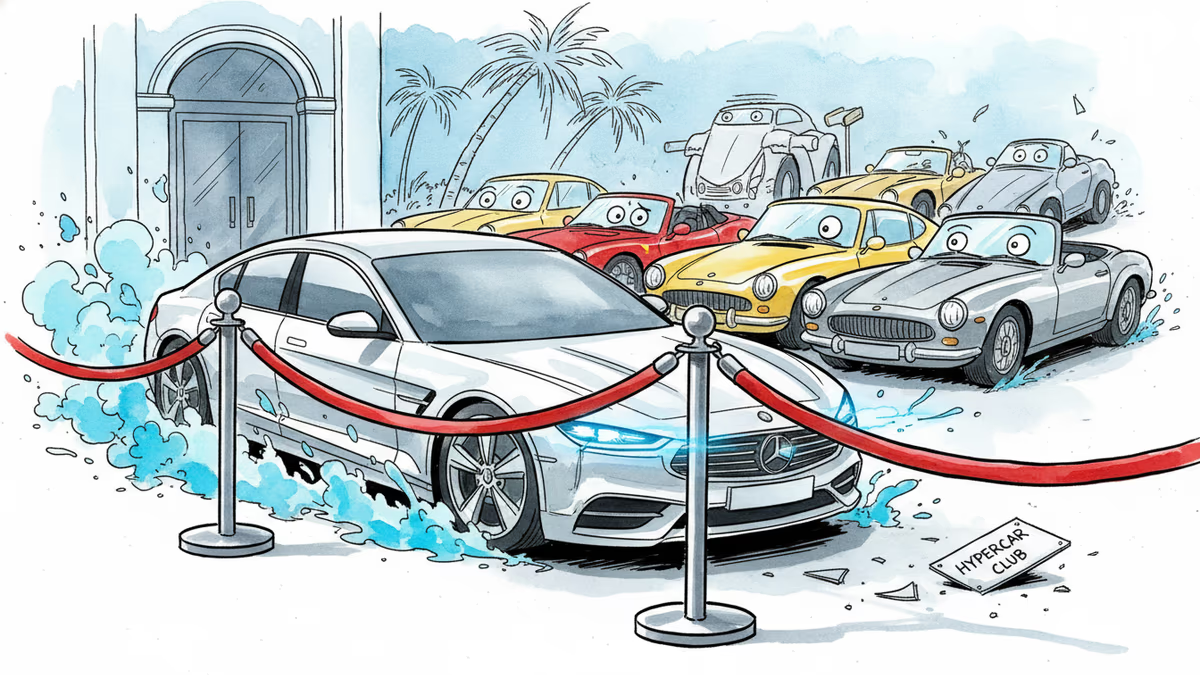
Mercedes-AMG's new GT 4-door coupe packs three YASA axial flux motors producing 1,153 hp and 1,475 lb-ft of torque. Here's what it means for the EV performance race—and who actually wins.
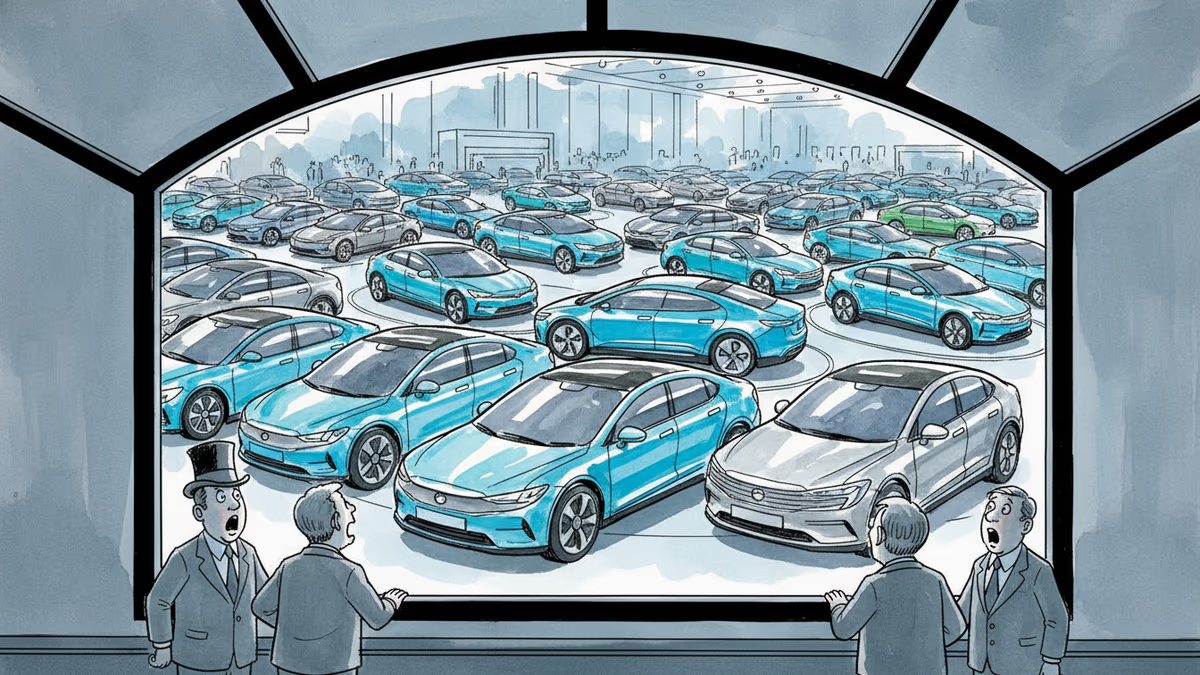
Auto China 2026 set records with 1,451 vehicles and 181 world premieres. But the real story isn't the size—it's how Chinese automakers stopped competing on price and started competing on brains.
Expiring leases will flood the US used car market with over a million electric vehicles by 2028. Could this do what subsidies couldn't — make EVs genuinely affordable?
Waymo's new Ojai robotaxi isn't just a vehicle upgrade. It's the company's most serious attempt yet at cracking the cost problem that has kept autonomous vehicles from scaling. Here's what's really at stake.
Mercedes-AMG's new GT 4-door coupe packs three YASA axial flux motors producing 1,153 hp and 1,475 lb-ft of torque. Here's what it means for the EV performance race—and who actually wins.
Auto China 2026 set records with 1,451 vehicles and 181 world premieres. But the real story isn't the size—it's how Chinese automakers stopped competing on price and started competing on brains.
Expiring leases will flood the US used car market with over a million electric vehicles by 2028. Could this do what subsidies couldn't — make EVs genuinely affordable?
Thoughts
Share your thoughts on this article
Sign in to join the conversation