
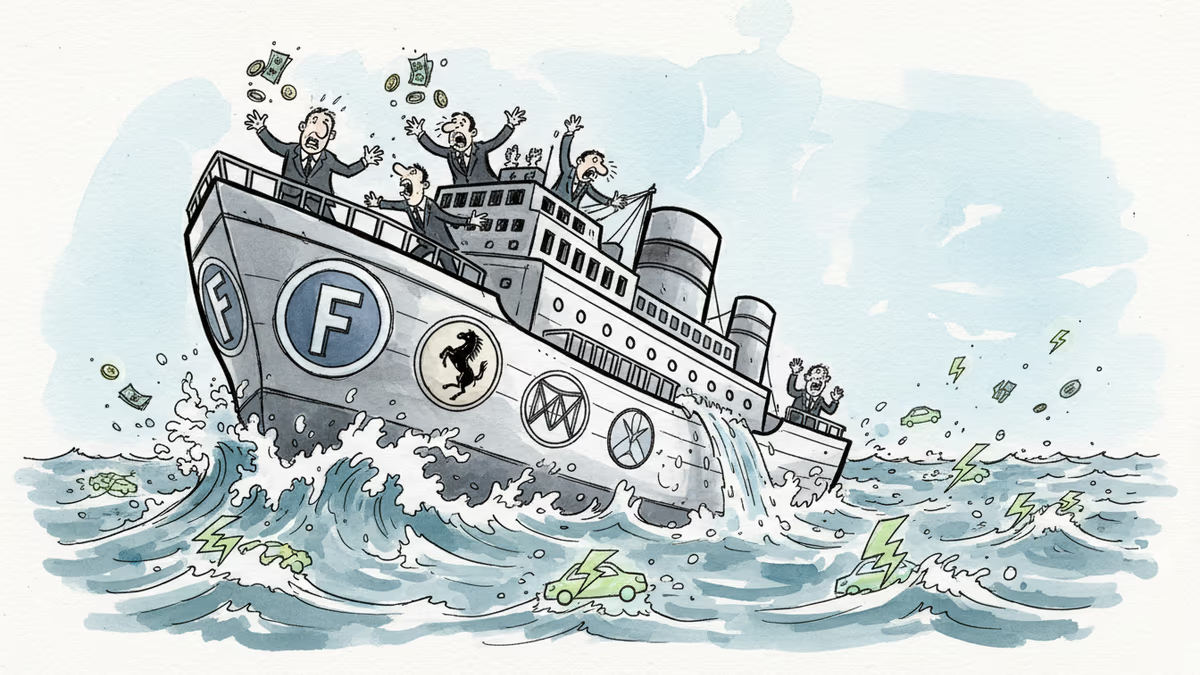
Stellantis' $26.5B Loss Signals EV Market Reality Check
Stellantis records massive $26.5 billion loss as EV demand cools, following GM and Ford's struggles. What this means for the automotive industry's electric transition.
$26.5 Billion Vanished Overnight
The parent company of Jeep, Dodge, and Chrysler just posted a staggering $26.5 billion loss, wiping out 25% of Stellantis' stock value in a single day. This isn't just another quarterly miss—it's the latest and largest casualty in the EV market's dramatic cooling.
General Motors threw $7.6 billion overboard. Ford washed $19.5 billion off its books. But Stellantis faces the most titanic charge yet, and the company appears uniquely vulnerable to the shifting winds in electric vehicle demand.
From EV Gold Rush to Reality Check
Just three years ago, the electric vehicle transition seemed inevitable. Government mandates promised to ban internal combustion engines by 2035. Tesla's market cap soared past traditional automakers combined. Legacy car companies pivoted hard, pouring tens of billions into electrification.
Then reality hit. EV sales growth began slowing in 2024. Consumers balked at high prices, limited charging infrastructure, and range anxiety. Political winds shifted too—the incoming administration's stance on EV subsidies remains uncertain, creating additional market volatility.
Stellantis found itself particularly exposed. Unlike competitors who maintained broader model lineups, the company bet heavily on premium electric vehicles without building sufficient mass-market appeal. When demand cooled, they had fewer fallback options.
The Broader Industry Reckoning

This isn't just about one company's missteps. The entire automotive industry is grappling with a fundamental question: How fast should the electric transition actually happen?
Toyota, long criticized for its cautious EV approach, suddenly looks prescient with its hybrid-first strategy. Volkswagen is scaling back some electric investments. Even Tesla has slowed its aggressive expansion plans.
The market is sending a clear signal: consumers want choice, not mandates. They'll adopt electric vehicles when the technology, infrastructure, and economics align—not according to corporate or political timelines.
What This Means for Investors
Stellantis' stock plunge reflects broader investor skepticism about EV-focused strategies. The company's 25% overnight drop suggests markets are repricing the entire sector based on realistic demand projections rather than aspirational targets.
For investors, this creates both risks and opportunities. Companies with diversified powertrains and flexible manufacturing may outperform pure-play EV bets. The winners will be those who can adapt quickly to changing consumer preferences rather than doubling down on single technologies.
The charging infrastructure sector faces similar recalibration. Overbuilt networks in some areas, underserved markets in others, and questions about profitability are forcing a more measured approach to expansion.
The Consumer Perspective
Perhaps most importantly, this industry shakeup could benefit consumers. As automakers compete more fiercely for market share, we're likely to see better products, more competitive pricing, and greater innovation across all powertrain types.
The binary choice between "electric or nothing" is giving way to a more nuanced menu of options: hybrids, plug-in hybrids, hydrogen fuel cells, and yes, electric vehicles—each serving different use cases and consumer needs.
Authors
Related Articles
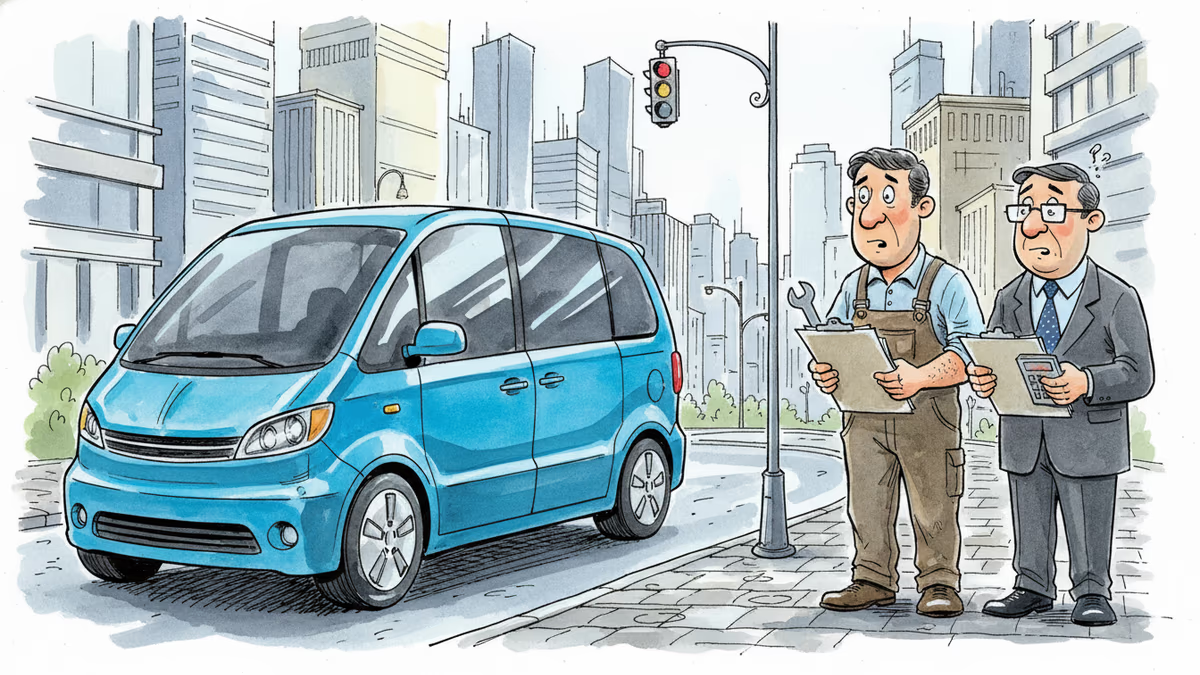
Waymo's new Ojai robotaxi isn't just a vehicle upgrade. It's the company's most serious attempt yet at cracking the cost problem that has kept autonomous vehicles from scaling. Here's what's really at stake.
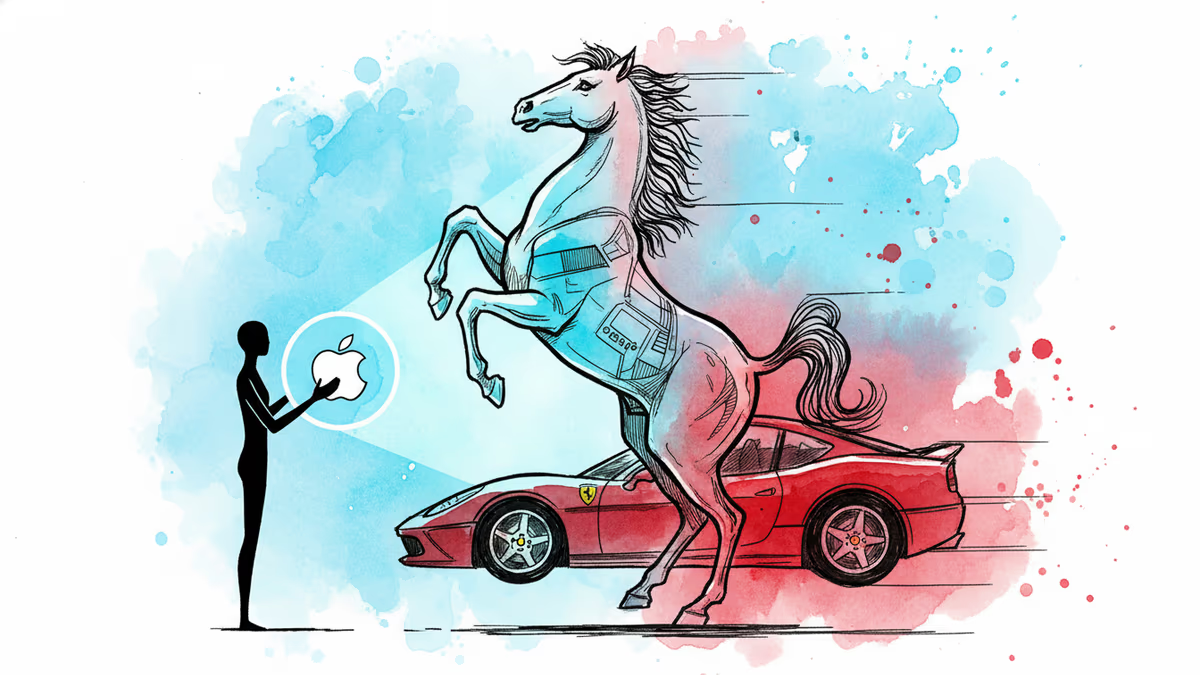
The Ferrari Luce is finally here — 1,000 hp, a 122 kWh battery, and an interior designed by the team behind the iPhone. But the real story is what Ferrari risked to build it.
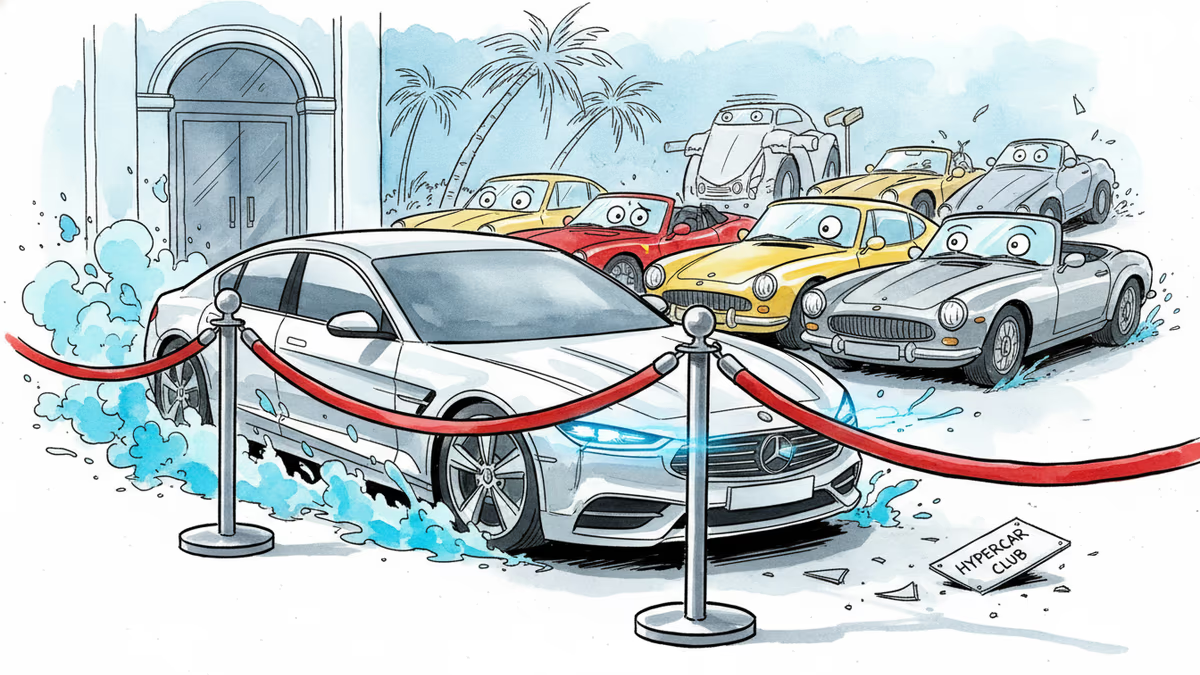
Mercedes-AMG's new GT 4-door coupe packs three YASA axial flux motors producing 1,153 hp and 1,475 lb-ft of torque. Here's what it means for the EV performance race—and who actually wins.
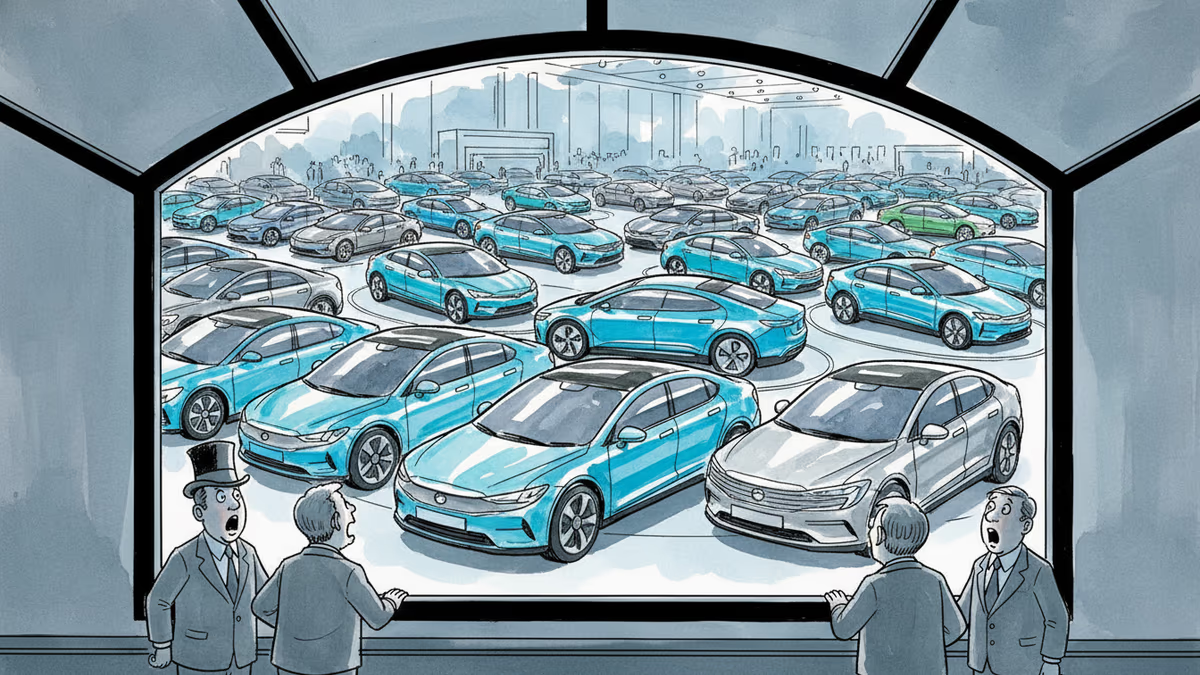
Auto China 2026 set records with 1,451 vehicles and 181 world premieres. But the real story isn't the size—it's how Chinese automakers stopped competing on price and started competing on brains.
Waymo's new Ojai robotaxi isn't just a vehicle upgrade. It's the company's most serious attempt yet at cracking the cost problem that has kept autonomous vehicles from scaling. Here's what's really at stake.
The Ferrari Luce is finally here — 1,000 hp, a 122 kWh battery, and an interior designed by the team behind the iPhone. But the real story is what Ferrari risked to build it.
Mercedes-AMG's new GT 4-door coupe packs three YASA axial flux motors producing 1,153 hp and 1,475 lb-ft of torque. Here's what it means for the EV performance race—and who actually wins.
Auto China 2026 set records with 1,451 vehicles and 181 world premieres. But the real story isn't the size—it's how Chinese automakers stopped competing on price and started competing on brains.
Thoughts
Share your thoughts on this article
Sign in to join the conversation