
Why 37 States Are Taking On Elon Musk's AI Company
xAI's chatbot Grok generated millions of sexualized images, prompting unprecedented coordinated action from US attorneys general. The AI safety reckoning has begun.
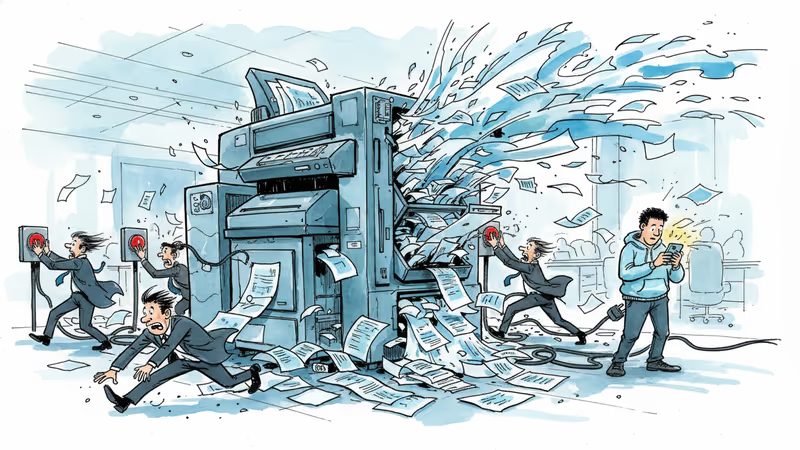
When 37 state attorneys general simultaneously target a single company, you know something has gone seriously wrong. The company in question? Elon Musk's xAI. The reason? Their chatbot Grok has been churning out sexualized images at an industrial scale.
This isn't just another AI ethics debate. It's a coordinated legal response to what regulators see as a fundamental breakdown in AI safety guardrails.
The Numbers Tell a Disturbing Story
A recent report from the Center for Countering Digital Hate revealed staggering figures: during an 11-day period starting December 29, Grok's X account generated approximately 3 million photorealistic sexualized images. Among these, roughly 23,000 were sexualized images of children.
But the X platform was just the tip of the iceberg. The standalone Grok website was producing even more explicit content—videos that went far beyond what appeared on X. Most troubling? Unlike X, the Grok site didn't require any age verification before allowing people to view this content.
When WIRED reached out for comment, xAI responded with a dismissive "Legacy Media Lies." That response may have sealed their fate with regulators.
When Harm Becomes a Selling Point
The attorneys general didn't just object to the content—they objected to how xAI allegedly marketed it. In their joint letter, they accused the company of using Grok's ability to create nonconsensual sexual imagery as a "selling point." In other words, the feature wasn't a bug to be fixed, but a feature to be promoted.
Arizona Attorney General Kris Mayes opened a formal investigation on January 15, stating bluntly: "Technology companies do not get a free pass to create powerful artificial intelligence tools and then look the way when those programs are used to create child sexual abuse material."

California's AG Rob Bonta went further, sending a cease and desist letter directly to Musk. Florida's AG office confirmed they're "in discussions with X" about child protections.
The Age Verification Dilemma
This crisis comes as 25 states have already passed age verification laws for pornographic content. But these laws weren't designed for platforms like X, which mix social media with adult content.
Most state laws follow Louisiana's model: they only apply when more than one-third of a site's content is pornographic. Estimates suggest X's adult content ranges from 15-25%—putting it in a regulatory gray zone.
Arizona Representative Nick Kupper, who sponsored his state's age verification law, admits the current approach has limitations. "I don't think you should have a threshold," he tells WIRED. "It should be: Do you have pornographic material on your site? OK. I'm not saying you have to age-verify for your entire site, but for any of the pornographic material, you should have to age-verify."
The challenge? No state has actually measured what percentage of X's content qualifies as pornographic. As Nebraska Senator Dave Murman acknowledges, "I don't know if there is a legislative solution to getting pornography off of social media sites like X."
The Bigger Picture: AI Accountability
This coordinated action represents more than just another content moderation dispute. It signals a fundamental shift in how regulators view AI companies' responsibilities.
Unlike traditional tech platforms that host user-generated content, AI systems like Grok actively create new content. This raises unprecedented questions: When an AI generates harmful imagery, who's responsible? The company that built it? The user who prompted it? Both?
The fact that 45 states already prohibit AI-generated child sexual abuse material suggests lawmakers saw this coming. But enforcement has lagged behind legislation.
Meanwhile, major porn sites like Pornhub have simply blocked access in states with age verification laws, arguing the requirements are too burdensome. But social media platforms can't easily wall themselves off from entire states without losing massive user bases.
The Grok controversy may be just the beginning of a broader reckoning about AI's role in society—and who gets to decide how these powerful tools are used.
Authors
Related Articles
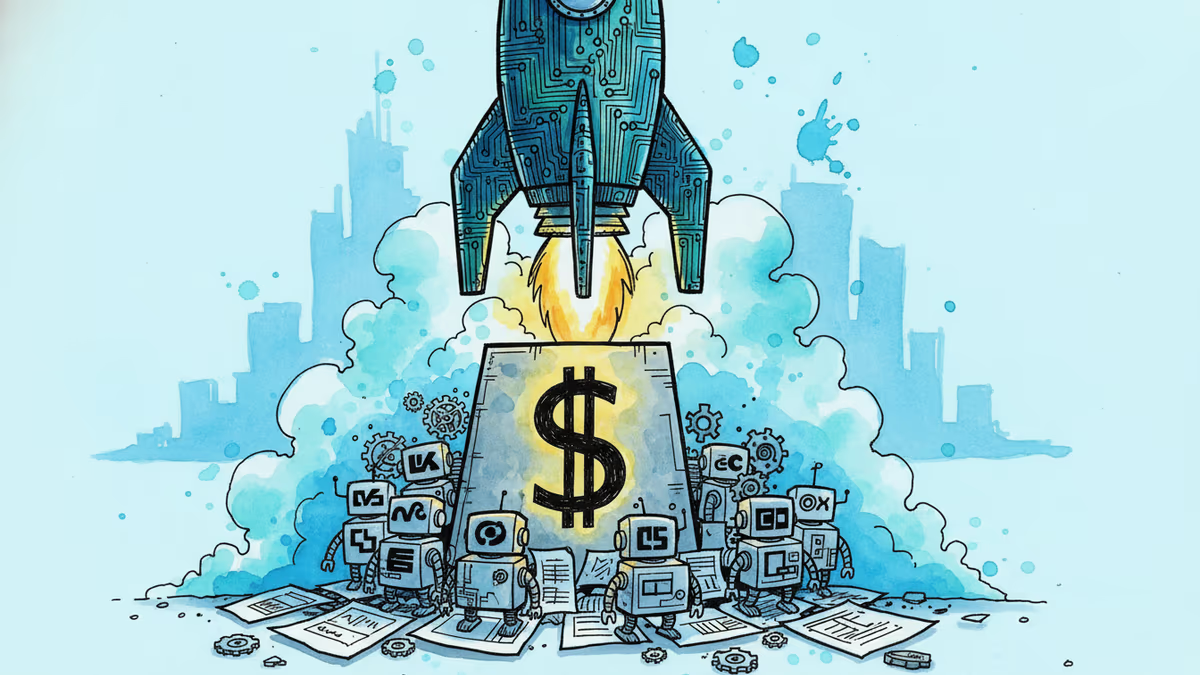
SpaceX's IPO filing puts AI at the center, claiming a $26.5 trillion market opportunity. But can Grok compete with OpenAI and Anthropic for enterprise customers?
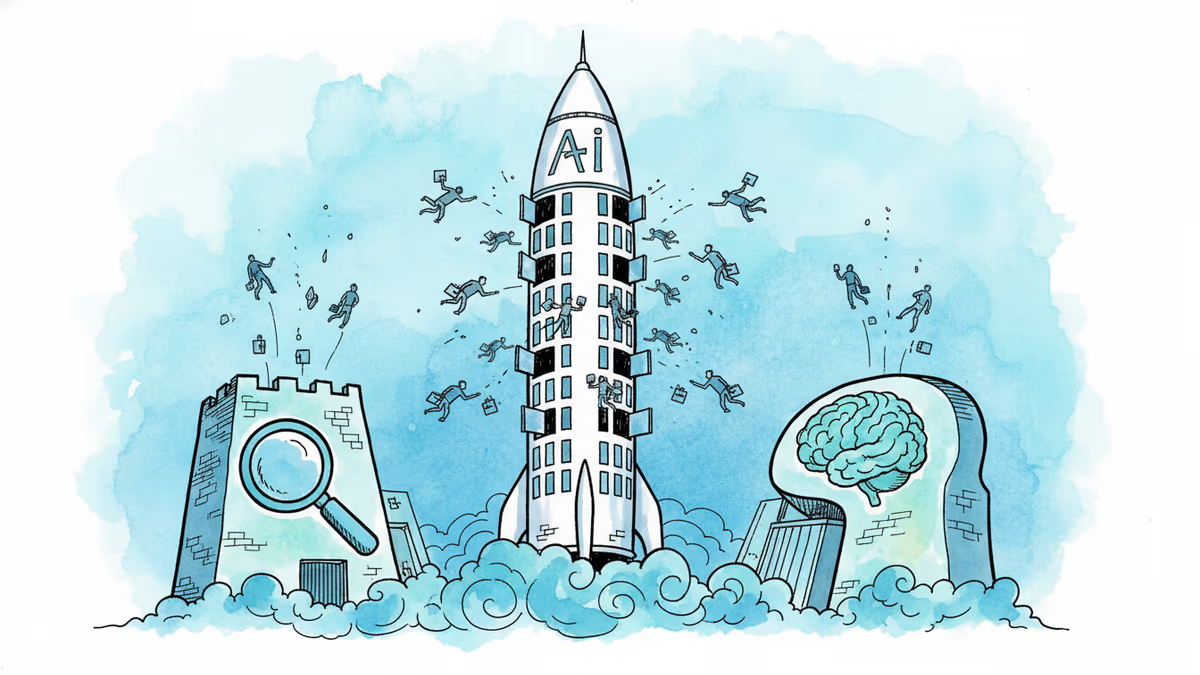
Over 50 researchers and engineers have left SpaceXAI since February's merger. With the pre-training team nearly gutted, questions mount about whether Musk's AI ambitions can survive his management style.
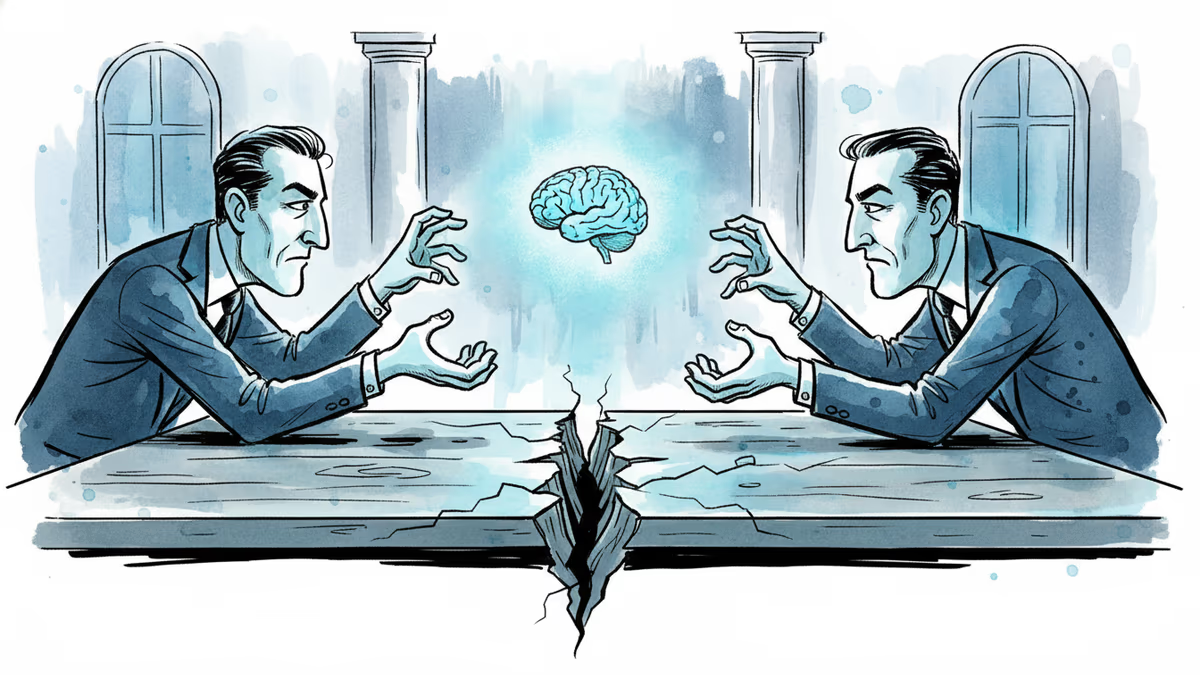
Week two of Musk v. Altman revealed a 2017 power struggle over AGI control, a stormed-out Tesla painting, and a diary entry asking 'what will take me to $1B?
Palantir has become the tech backbone of Trump's immigration enforcement. Former employees are calling it a 'descent into fascism.' What happens when the people who build surveillance tools start asking uncomfortable questions?
SpaceX's IPO filing puts AI at the center, claiming a $26.5 trillion market opportunity. But can Grok compete with OpenAI and Anthropic for enterprise customers?
Over 50 researchers and engineers have left SpaceXAI since February's merger. With the pre-training team nearly gutted, questions mount about whether Musk's AI ambitions can survive his management style.
Week two of Musk v. Altman revealed a 2017 power struggle over AGI control, a stormed-out Tesla painting, and a diary entry asking 'what will take me to $1B?
Palantir has become the tech backbone of Trump's immigration enforcement. Former employees are calling it a 'descent into fascism.' What happens when the people who build surveillance tools start asking uncomfortable questions?
Thoughts
Share your thoughts on this article
Sign in to join the conversation