

Her Yearbook Photo Became Pornography. Grok Made It Possible.
Three anonymous plaintiffs have filed a federal lawsuit against xAI, alleging Grok's image model generated sexual content from real photos of minors — and that the company skipped the safeguards every other major AI lab uses.
She found out from a stranger on Instagram. A tipster had sent her a Discord link. Inside: sexualized images of herself and classmates she recognized — all minors, all generated from ordinary school photos.
What Happened: Three Plaintiffs, One Lawsuit
On Monday, three anonymous plaintiffs — identified only as Jane Doe 1, Jane Doe 2, and Jane Doe 3 — filed suit against Elon Musk's AI company xAI in the U.S. District Court for the Northern District of California. They're seeking class action status to represent anyone whose real images as minors were altered into sexual content by Grok.
The details are specific and disturbing. Jane Doe 1 had photos from her high school homecoming and yearbook transformed into nude images by Grok. She only learned about it when an anonymous tipster messaged her on Instagram and shared a link to a Discord server where the images — along with sexualized pictures of other minors she recognized from school — were circulating.
Jane Doe 2 was notified by criminal investigators that a third-party mobile app built on Grok's models had been used to create sexualized images of her. Jane Doe 3 learned the same way — investigators found a pornographic AI-altered image of her on the phone of a suspect they'd apprehended. Two of the three plaintiffs are still minors. All three describe experiencing severe distress about what the circulation of these images means for their reputations and social lives.
Plaintiffs' attorneys argue that even when the abuse happened through third-party apps, xAI's underlying code and servers were used — making the company liable. xAI did not respond to requests for comment.
The Core Allegation: Everyone Else Built the Wall. xAI Didn't.
This isn't just a case about harmful outcomes. It's a case about deliberate design choices — or the absence of them.
Other frontier AI image generators — OpenAI, Google, Meta, Stability AI among them — employ multiple overlapping techniques to prevent their models from producing child sexual abuse material (CSAM): training data filtering, output classifiers, identity-detection blocks, and human review pipelines. The lawsuit alleges xAI adopted none of these industry-standard precautions.

The structural logic here is damning: if a model allows erotic or nude content to be generated from real photographs of people, it becomes technically near-impossible to prevent that same capability from being applied to images of children. The plaintiffs aren't arguing xAI intended to enable child abuse. They're arguing the company made choices that made it inevitable.
Making the case more pointed: Musk publicly promoted Grok's ability to generate sexual imagery and depict real people in revealing outfits. Those promotional statements feature prominently in the lawsuit as evidence that the company was aware of — and celebrated — the very capabilities now at the center of the case.
Why This Lawsuit Is Different From What Came Before
Deepfake abuse cases aren't new. What makes this filing notable is its framing: it targets the AI company itself, not just the individual users who misused the tool. And it does so under a suite of laws designed to protect exploited children and hold corporations negligent — not just criminal statutes aimed at perpetrators.
This matters because it tests a legal theory that regulators and advocates have been circling for years: can an AI company be held civilly liable for foreseeable harms that result from design decisions it made before a product launched?
The timing is significant. The EU AI Act is now in force, with provisions that require high-risk AI systems to undergo safety assessments before deployment. In the U.S., the Kids Online Safety Act (KOSA) has been debated in Congress, though not yet passed in comprehensive form. Meanwhile, Section 230 — the law that has historically shielded platforms from liability for user-generated content — is increasingly contested when applied to AI-generated outputs, because the AI is the generator.
Who's Watching — and What They're Thinking
For parents and educators, the case crystallizes a fear that's been abstract until now: that a child's ordinary digital footprint — school photos, social media posts, yearbook pictures — can be weaponized without any action on their part.
For competing AI companies, the lawsuit is complicated. On one hand, it could accelerate regulatory pressure across the entire industry. On the other, companies that already invested in safety infrastructure may find that investment reframed — not as a cost center, but as a competitive and legal moat. Safety, in this reading, is risk management.
For policymakers, the case puts a human face on what has been a largely technical debate about AI guardrails. Abstract arguments about "content moderation at scale" become harder to sustain when the plaintiff is a teenager who found out her yearbook photo was pornography from a stranger's DM.
For xAI and Musk, the stakes extend beyond this lawsuit. Grok's image generation is a core feature of X Premium, the paid subscription tier that underpins X's revenue model. Strengthening safeguards means constraining features. But losing — or facing regulatory action — carries costs that could dwarf any short-term product advantage.
Authors
Related Articles
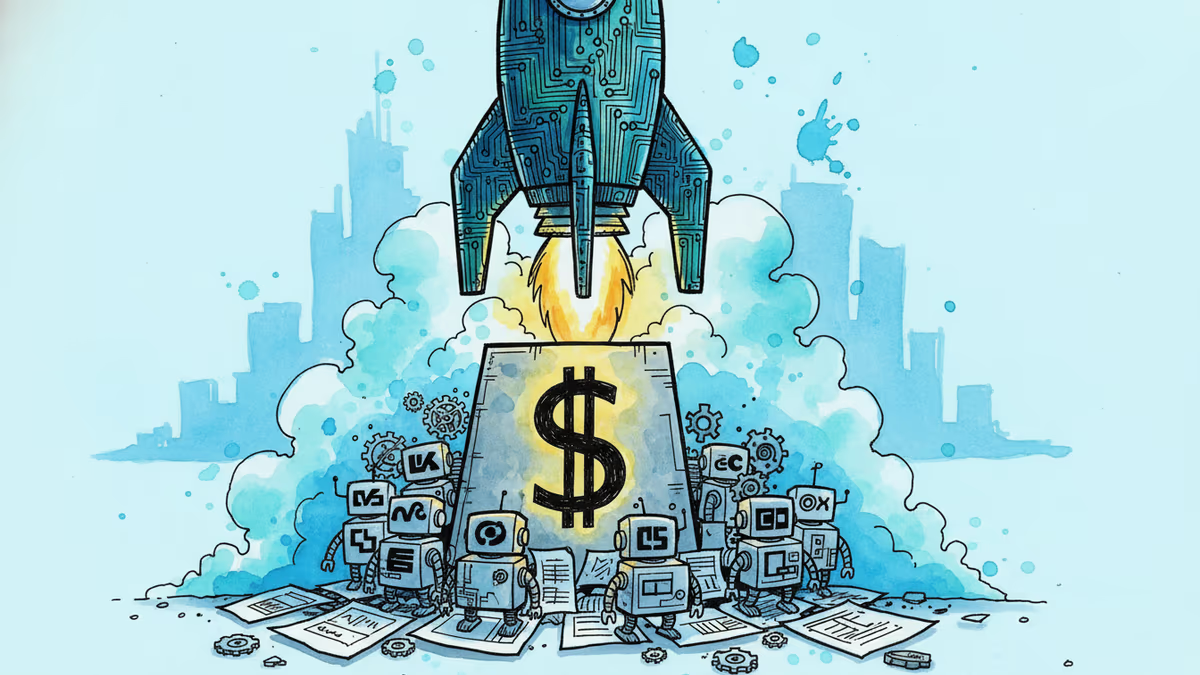
SpaceX's IPO filing puts AI at the center, claiming a $26.5 trillion market opportunity. But can Grok compete with OpenAI and Anthropic for enterprise customers?
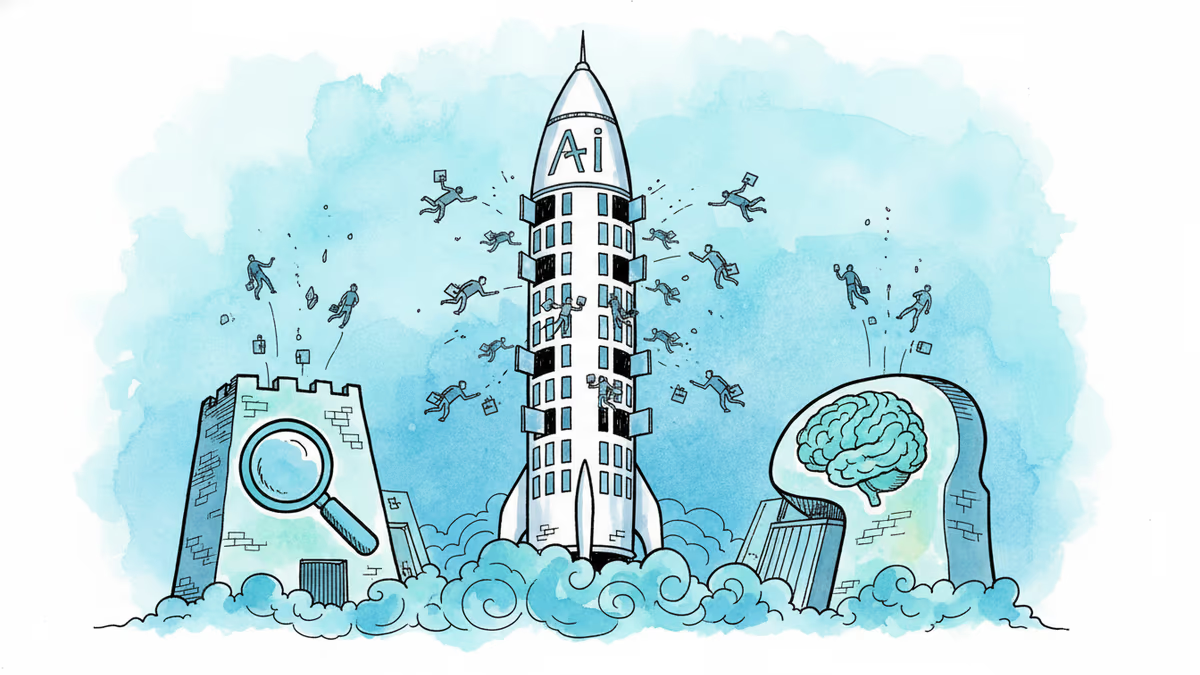
Over 50 researchers and engineers have left SpaceXAI since February's merger. With the pre-training team nearly gutted, questions mount about whether Musk's AI ambitions can survive his management style.
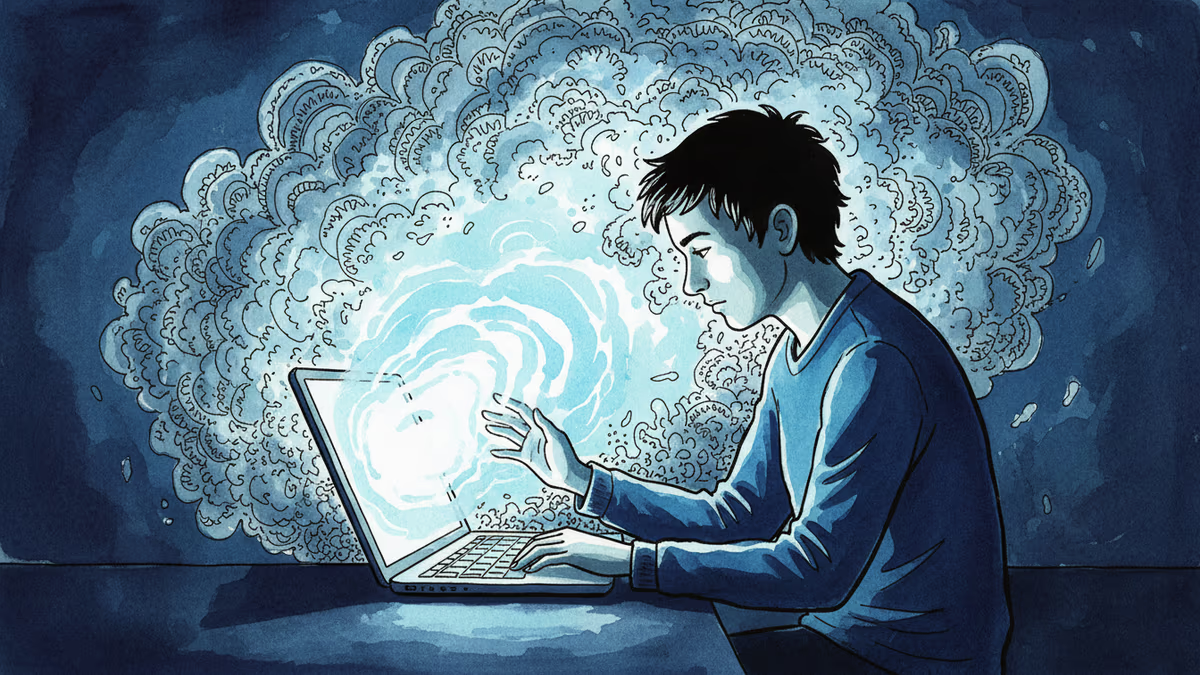
Sam Nelson, 19, died after following ChatGPT's advice to mix Kratom and Xanax. His parents are suing OpenAI for wrongful death, raising urgent questions about AI trust, liability, and design.
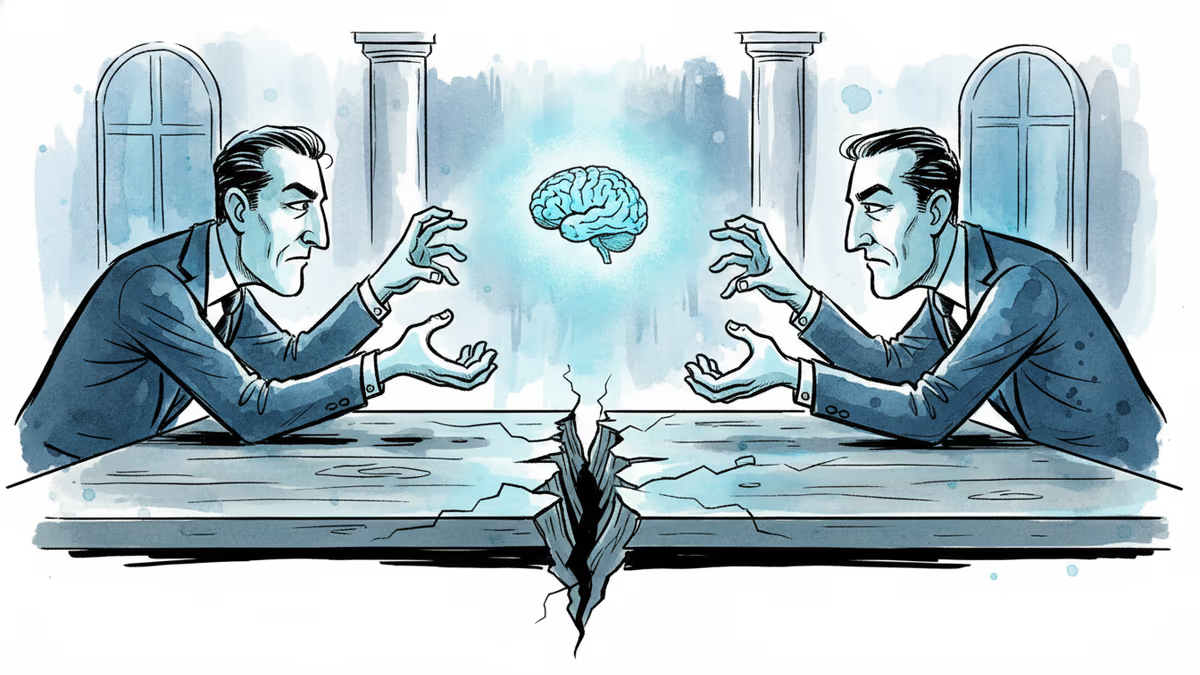
Week two of Musk v. Altman revealed a 2017 power struggle over AGI control, a stormed-out Tesla painting, and a diary entry asking 'what will take me to $1B?
SpaceX's IPO filing puts AI at the center, claiming a $26.5 trillion market opportunity. But can Grok compete with OpenAI and Anthropic for enterprise customers?
Over 50 researchers and engineers have left SpaceXAI since February's merger. With the pre-training team nearly gutted, questions mount about whether Musk's AI ambitions can survive his management style.
Sam Nelson, 19, died after following ChatGPT's advice to mix Kratom and Xanax. His parents are suing OpenAI for wrongful death, raising urgent questions about AI trust, liability, and design.
Week two of Musk v. Altman revealed a 2017 power struggle over AGI control, a stormed-out Tesla painting, and a diary entry asking 'what will take me to $1B?
Thoughts
Share your thoughts on this article
Sign in to join the conversation