
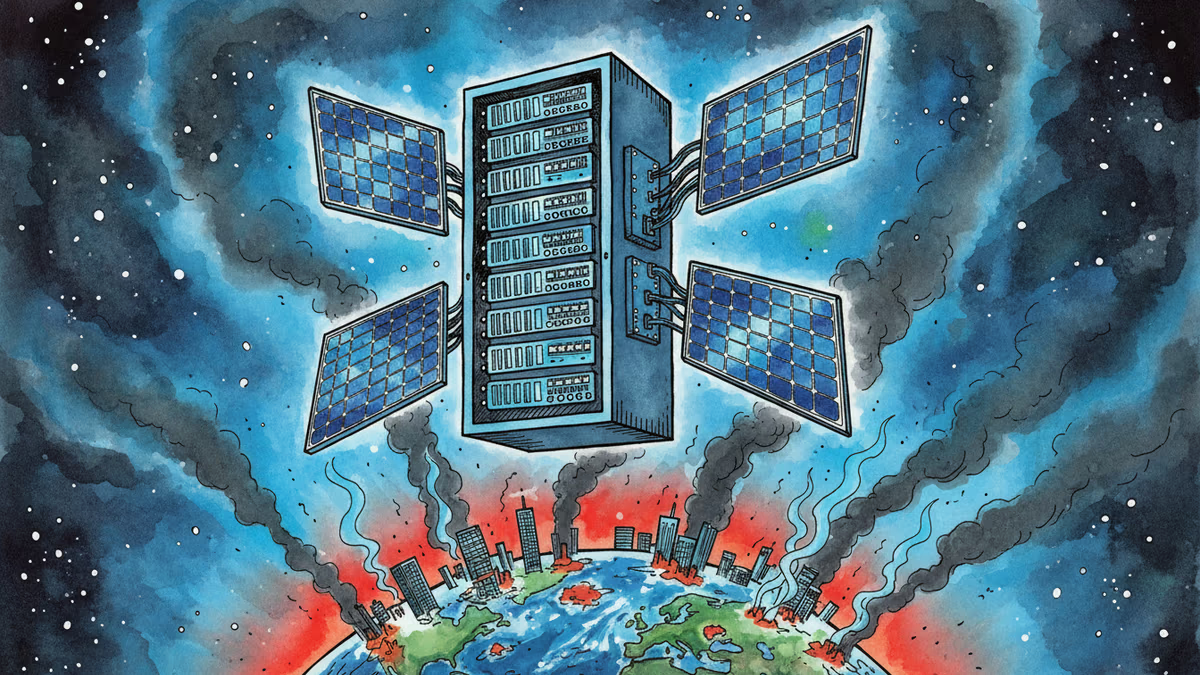
Space Data Centers: Physics vs. Fantasy
As AI drives massive energy demands, some propose building data centers in space. But does the physics actually work, or is this just sci-fi dreaming?
22% of US Household Energy—That's What AI Will Consume by 2028
That's the staggering projection driving a desperate search for solutions. AI servers alone may gobble up as much electricity as 22% of American households by 2028. Higher energy bills for everyone. More power plants. More global warming.
Then there's the water crisis. High-density AI chips run so hot that air cooling isn't enough anymore. New facilities are switching to water cooling, specifically evaporation cooling—the most efficient method. But a large data center using this technique consumes millions of gallons of water daily, draining local supplies.
No wonder towns are pushing back on data center projects. When everyone goes NIMBY (Not In My Backyard), we get NOMPY—Not On My Planet, You Bastards.
The Space Solution: Too Good to Be True?
Enter the space data center proposal. The logic seems elegant: 24/7 solar power (it's always sunny in space), natural cooling from the cold vacuum, heavy processing in orbit, and results beamed back like satellite internet.
Google's AI Overview confidently declares: "Yes, data centers can be built in space." But can they really?
What Physics Actually Says
Let's start with energy conservation—one of science's fundamental laws. Energy input equals energy stored plus energy output. Your desktop PC with a 300-watt power supply? All 300 watts eventually become heat that must be removed. Your computer is essentially a 300-watt space heater that happens to play video games.
On Earth, fans move hot air away through conduction—direct contact between hot components and cooler air. It's fast and efficient.

But in space? No air means no conduction cooling. Fans become useless. The only heat transfer mechanism is radiation—and radiation is painfully slow.
The Cold Truth About "Cold" Space
Here's where most people get it wrong: space isn't actually "cold." Temperature measures molecular motion, and space is mostly vacuum. With no molecules to vibrate, space has no intrinsic temperature.
Objects in space cool down through radiation alone, following the Stefan-Boltzmann law. The math is complex, but the key insight is simple: cooling rate depends on temperature and surface area. Hot objects with large surfaces cool faster.
Computer chips are small, dense, and generate massive heat per square inch. Even on Earth, cooling high-performance processors is a nightmare. In space, it's exponentially worse.
NASA's Reality Check
Look at the International Space Station. Even this relatively low-power facility needs enormous radiator panels to dump waste heat. A space data center might need radiators larger than the computers themselves.
SpaceX and Blue Origin are making space access cheaper, but we're talking about launching massive infrastructure, not just sending up a few servers. The economics don't add up—yet.
Industry Perspectives: Skepticism Rules
Silicon Valley's reaction is mixed. Startups love the sci-fi appeal, but veteran engineers are skeptical. Amazon Web Services and Microsoft Azure are investing billions in terrestrial cooling solutions. Why gamble on unproven space technology?
Semiconductor companies like Intel and NVIDIA see potential specialized markets but remain focused on Earth-based efficiency improvements. The regulatory hurdles alone—FCC licensing, international space law—would take years.
Environmentalists are divided. Some see space data centers as Earth-saving, others as resource-wasting escapism that avoids addressing consumption patterns.
The physics works. The economics don't. But history shows that impossible often becomes inevitable when the alternative is unthinkable.
Authors
Related Articles

Google is committing up to $40 billion to Anthropic, a direct AI competitor. The deal reveals how the real AI arms race isn't about models — it's about who controls the infrastructure beneath them.
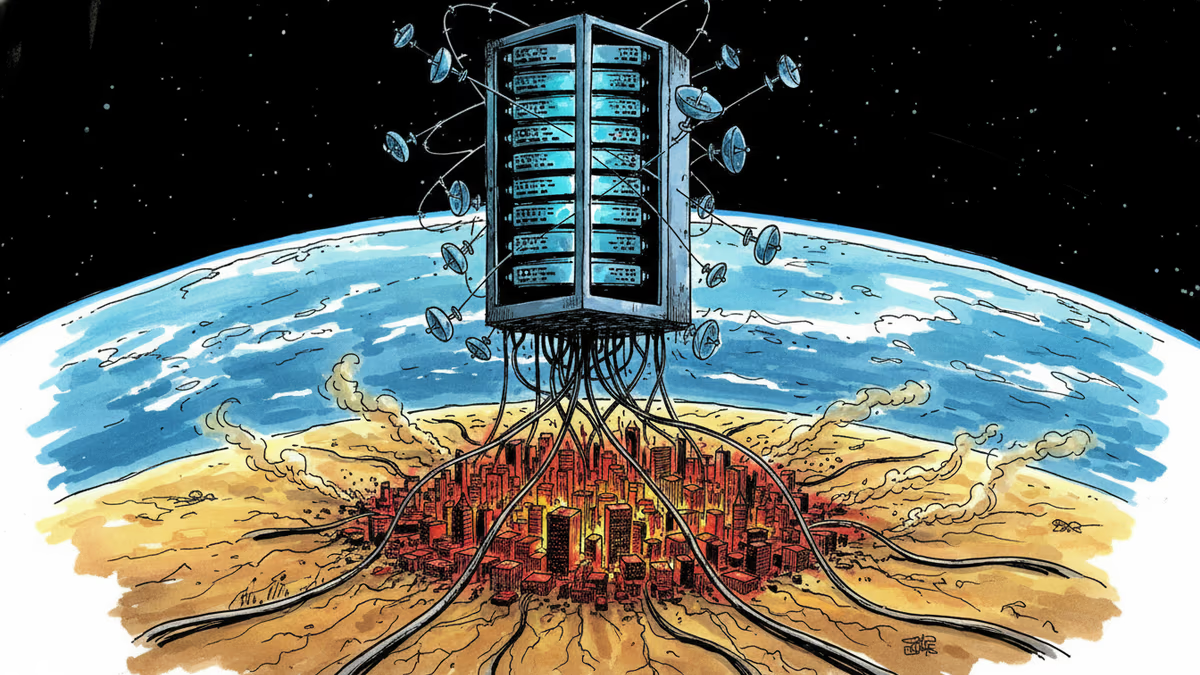
SpaceX wants to launch a million orbital data centers to power AI without draining Earth. The vision is compelling. The physics, economics, and debris math are not.
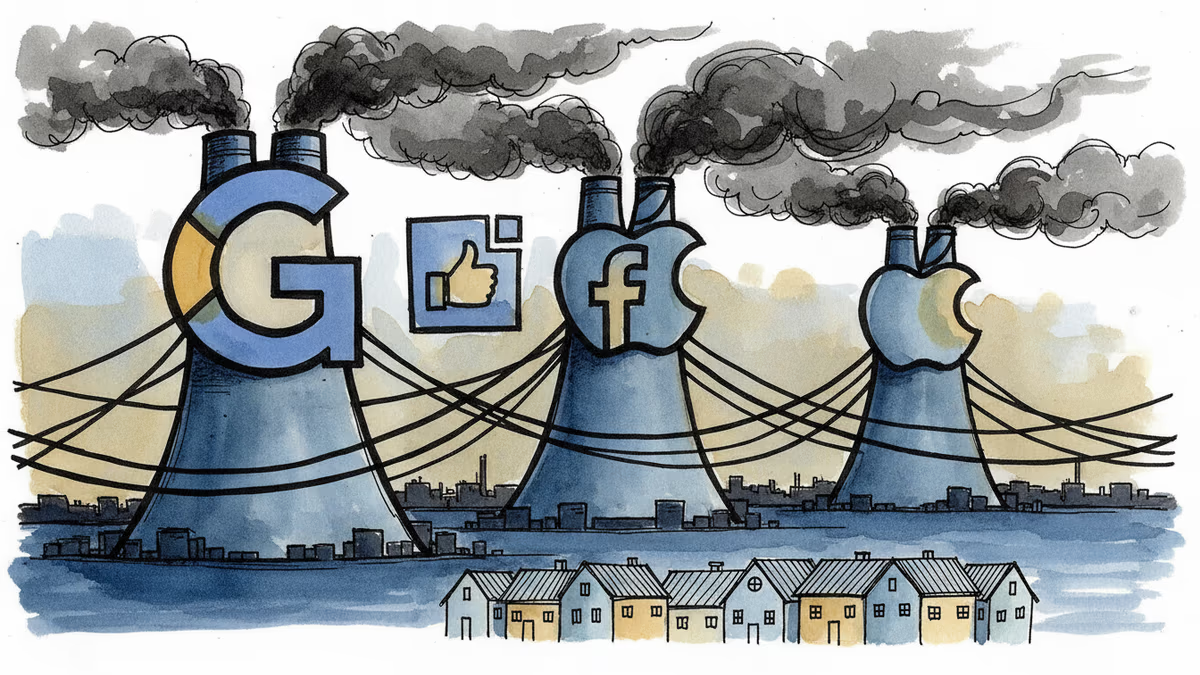
Amazon, Google, Meta and others pledge to pay for their data centers' power infrastructure, but the agreement lacks enforcement and ignores basic economics
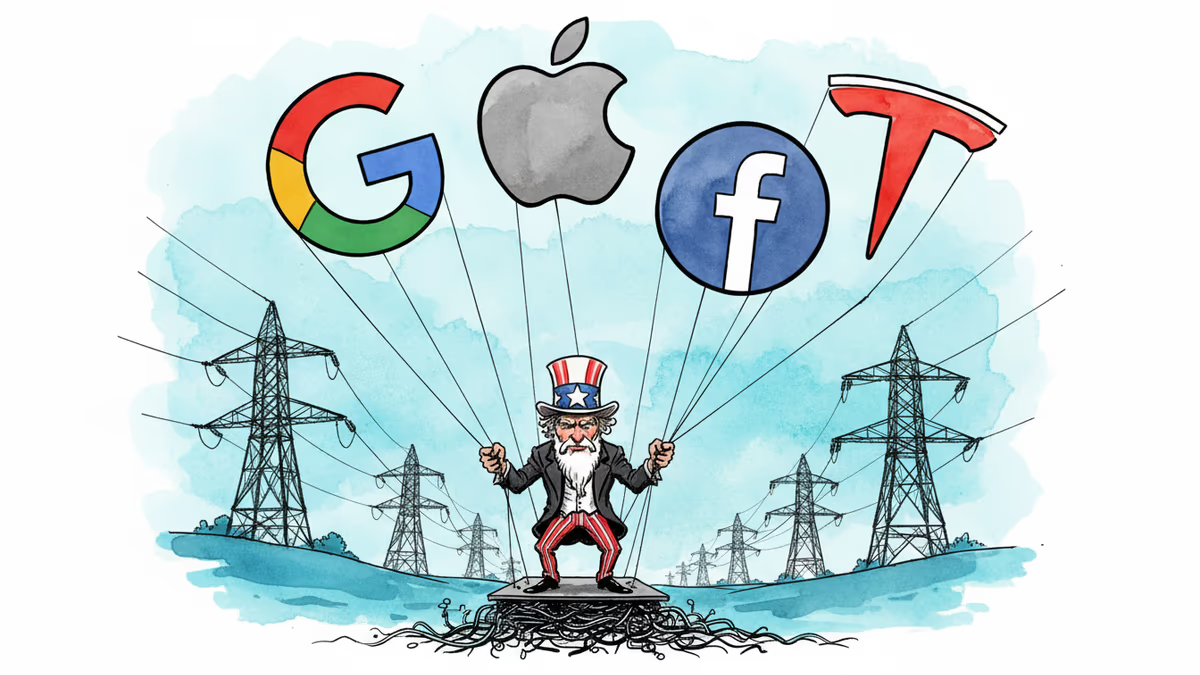
Trump administration secures nonbinding pledge from tech giants to protect consumers from data center electricity costs, but experts doubt meaningful impact
Google is committing up to $40 billion to Anthropic, a direct AI competitor. The deal reveals how the real AI arms race isn't about models — it's about who controls the infrastructure beneath them.
SpaceX wants to launch a million orbital data centers to power AI without draining Earth. The vision is compelling. The physics, economics, and debris math are not.
Amazon, Google, Meta and others pledge to pay for their data centers' power infrastructure, but the agreement lacks enforcement and ignores basic economics
Trump administration secures nonbinding pledge from tech giants to protect consumers from data center electricity costs, but experts doubt meaningful impact
Thoughts
Share your thoughts on this article
Sign in to join the conversation