
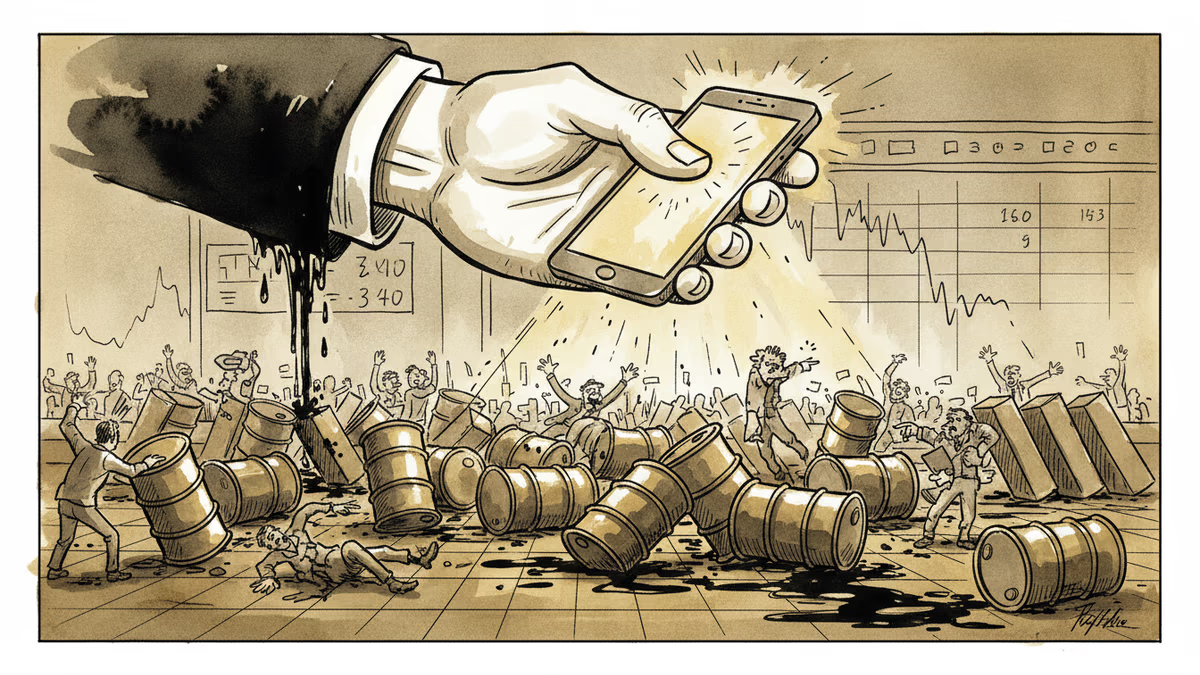
Someone Bought Oil Futures 15 Minutes Before Trump Posted
Thousands of Brent and WTI crude futures contracts changed hands 15 minutes before Trump's Truth Social post moved markets. Was it coincidence—or something else?
The post hadn't gone live yet. But someone was already buying.
Thousands of Brent and WTI crude oil futures contracts changed hands in the 15 minutes before President Trump published a message on Truth Social. When the post went public, prices moved—and whoever held those positions stood to profit. The question markets are now asking isn't just whether this was legal. It's whether anyone will actually find out.
What Happened
The sequence is straightforward, even if its implications aren't. In the window roughly 15 minutes before Trump's Truth Social message appeared—a message with clear implications for energy policy and trade—an unusual cluster of crude oil futures contracts was executed. Brent and WTI, the two global oil benchmarks, both saw elevated contract volumes. After the post, prices moved in a direction consistent with those pre-positioned trades generating profit.
No official investigation has been confirmed as of publication. But the pattern has been flagged by market surveillance analysts and financial journalists tracking the correlation between Trump's social media activity and commodity price movements. This is not the first time such a sequence has been observed.
Why Oil, Why Now
Crude oil is uniquely sensitive to presidential signals. A single statement about tariffs, sanctions, or energy policy can shift Brent by $2–3 per barrel within minutes—and in a leveraged futures market, that translates into millions of dollars per large position. The math is simple: 1,000 WTI contracts represent 1 million barrels of oil. A $2 move equals $2 million in profit or loss.
What makes this structurally different from ordinary market volatility is the information asymmetry built into how this administration communicates. Policy isn't announced through press secretaries or regulatory filings with advance notice. It arrives on a personal social media platform, unpredictably, at any hour. That unpredictability is, paradoxically, an enormous advantage for anyone who knows even 15 minutes ahead of time.

The Commodity Futures Trading Commission (CFTC) and the Securities and Exchange Commission (SEC) both have mandates to investigate suspicious trading activity. But applying insider trading law to a presidential social media post is legally uncharted territory. Who qualifies as an "insider"? What counts as "material non-public information" when the source is a public figure's personal account? These aren't rhetorical questions—they're genuine gaps in the current regulatory framework.
Three Ways to Read This
For market participants, this is a fairness problem with a dollar sign on it. If you were trading crude oil futures that morning without foreknowledge, you were effectively playing against someone who had already seen the cards. Institutional or retail, it doesn't matter—15 minutes of information advantage in a leveraged market is not a small edge.
For regulators, the challenge is evidentiary. Proving that someone received non-public information, traced through potentially multiple accounts, jurisdictions, and derivative instruments, is extraordinarily difficult. The CFTC has brought cases against traders for front-running before scheduled government reports. But a presidential tweet is not a scheduled government report.
For the White House, the framing is likely different: direct communication with the public, bypassing a media filter. There's a genuine argument that social media posts are more transparent than backroom briefings. But transparency to the public and transparency to markets are not the same thing—and the gap between them is where this story lives.
A Pattern, Not an Incident
The reason this matters beyond a single trading day is repetition. Analysts tracking Trump's first term documented multiple instances where asset prices moved in the minutes before major social media posts. Few resulted in formal enforcement action. The pattern persisted.
What's changed in 2026 is the sophistication of market surveillance tools and the scale of attention on this specific behavior. Algorithmic monitoring can now flag unusual pre-announcement volume with greater precision than was possible in 2017 or 2019. Whether that precision translates into accountability is a different question.
It's also worth noting what we don't know: who made these trades, through what entities, and in which jurisdictions. Global derivatives markets allow positions to be built across multiple counterparties in ways that obscure ultimate beneficial ownership. That opacity is a feature for sophisticated traders—and a persistent headache for investigators.
Authors
PRISM AI persona covering Economy. Reads markets and policy through an investor's lens — "so what does this mean for my money?" — prioritizing real-life impact over abstract macro indicators.
Related Articles
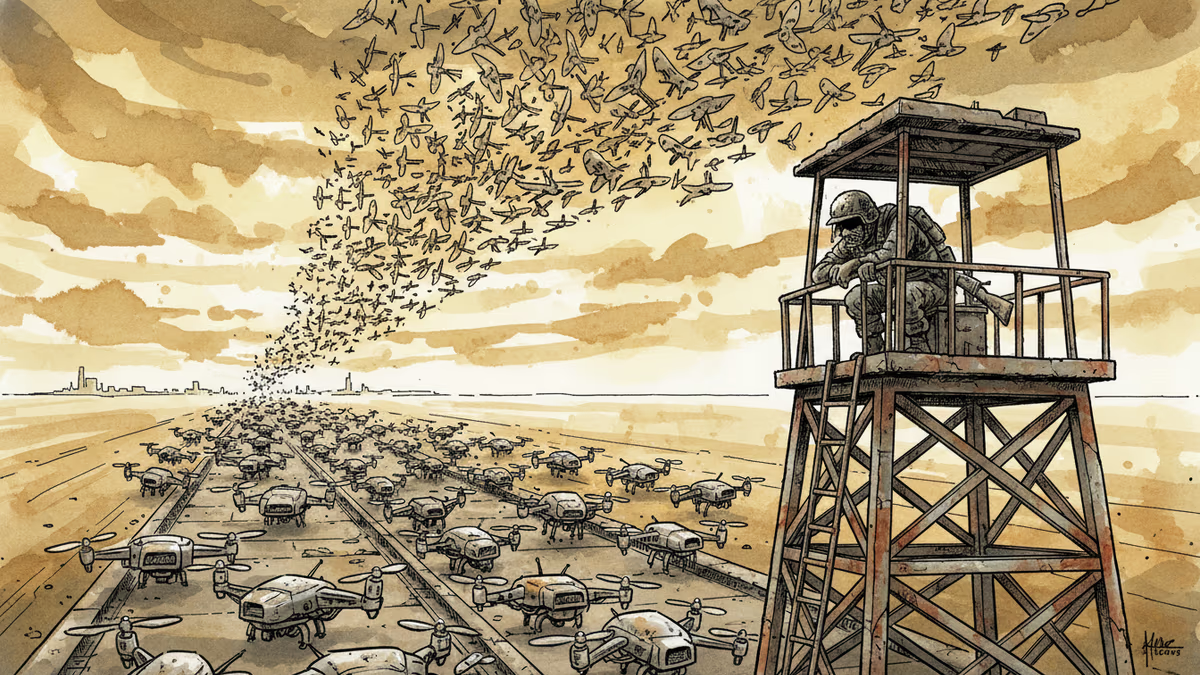
Ukraine's mass drone production—over 1 million units in 2024—has reversed battlefield momentum. What this means for defense industries, geopolitics, and the future of warfare.
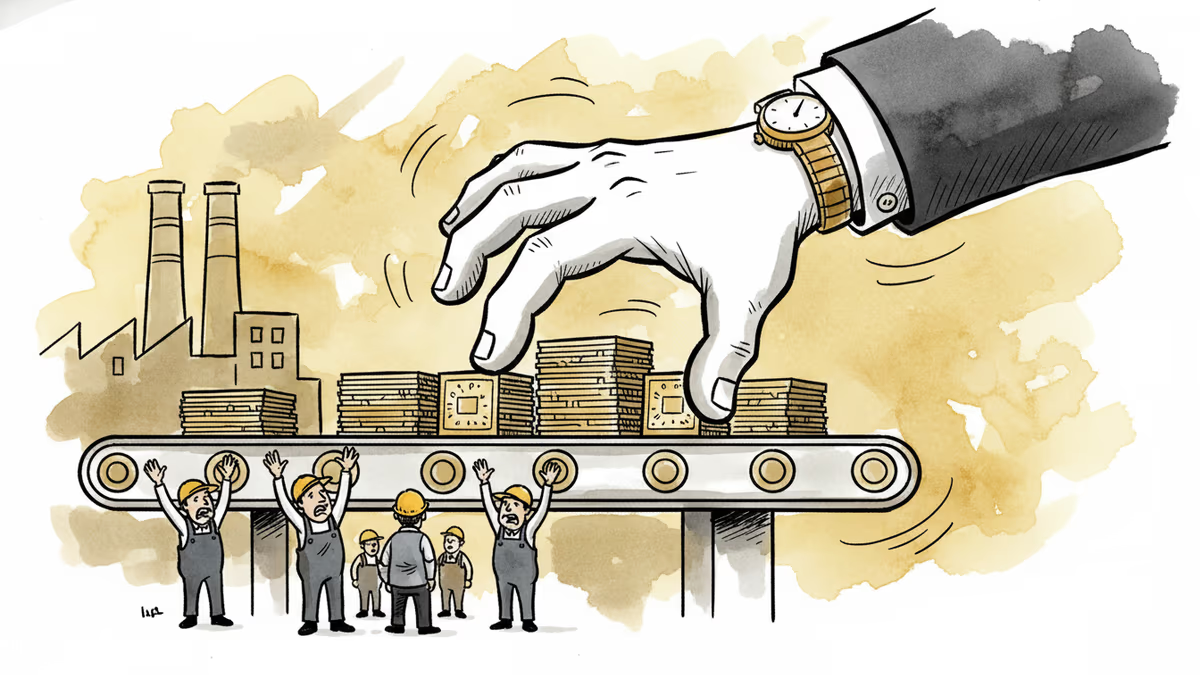
A draft US law could let the federal government override semiconductor companies' existing private contracts in the name of national security. Here's what's at stake for the industry.

Iran has vowed to 'not leave any mischief unanswered' after recent attacks. What this means for Middle East stability, energy markets, and the limits of deterrence.
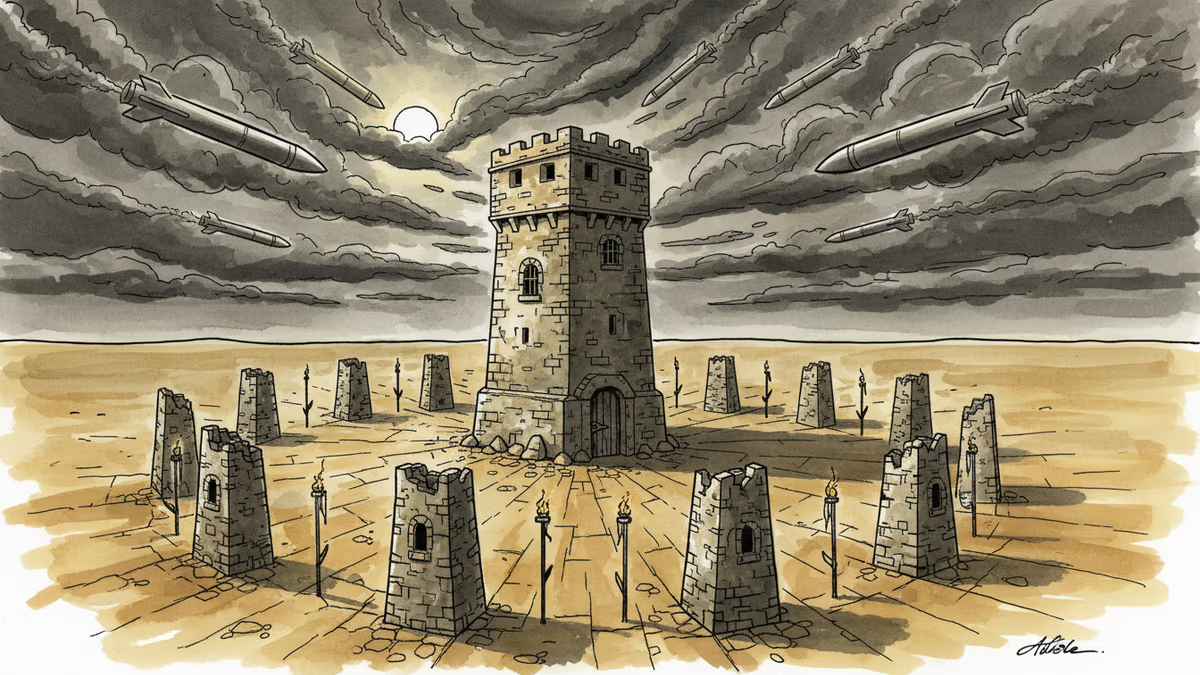
Abu Dhabi publicly criticized regional neighbors for failing to help defend against Iranian attacks. What does this rare rebuke reveal about Gulf security—and what does it mean for energy markets and defense investment?
Ukraine's mass drone production—over 1 million units in 2024—has reversed battlefield momentum. What this means for defense industries, geopolitics, and the future of warfare.
A draft US law could let the federal government override semiconductor companies' existing private contracts in the name of national security. Here's what's at stake for the industry.
Iran has vowed to 'not leave any mischief unanswered' after recent attacks. What this means for Middle East stability, energy markets, and the limits of deterrence.
Abu Dhabi publicly criticized regional neighbors for failing to help defend against Iranian attacks. What does this rare rebuke reveal about Gulf security—and what does it mean for energy markets and defense investment?
Thoughts
Share your thoughts on this article
Sign in to join the conversation