
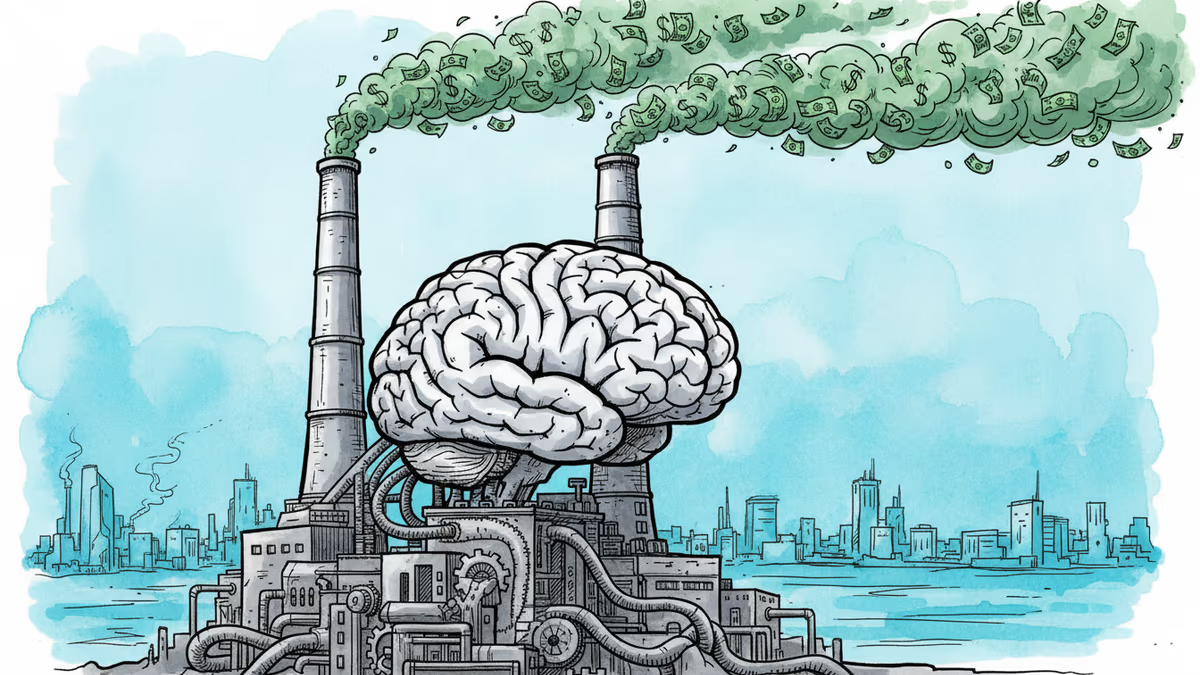
SoftBank's $33B Power Plant Bet Reveals AI's Massive Energy Appetite
SoftBank plans America's largest gas power plant to fuel AI data centers. The $33 billion project signals how artificial intelligence is reshaping the entire energy landscape.
$33 Billion for a Single Power Plant? Here's Why
SoftBank just announced plans to build America's largest power plant—a $33 billion natural gas facility on the Ohio-Kentucky border. At 9.2 gigawatts, it could power 7.5 million homes. That's bigger than most small countries' entire electrical grids.
But here's the real story: This isn't just about electricity. It's about feeding an AI revolution that's consuming power at unprecedented rates.
The timing isn't coincidental. SoftBank is partnering with OpenAI on the Stargate project, building a "proof of concept" data center at GM's former Lordstown plant. While SoftBank hasn't explicitly said this power plant will feed data centers, the math tells the story.
The AI Power Hunger Crisis
AI's appetite for electricity is staggering. A single ChatGPT query uses 10 times more power than a Google search—2.9Wh versus 0.3Wh. That might seem small, but multiply it by billions of daily interactions.
Microsoft's data center power consumption jumped 23% in 2023. Meta's surged 50%. Google's emissions rose 13% despite its 2030 carbon-neutral pledge, largely due to AI expansion.
Training GPT-4 reportedly consumed as much electricity as 2,500 American homes use in a year. The next generation of models could require 100 times more power.
The Infrastructure Reality Check
Here's the problem: The existing power grid wasn't built for this. Traditional power plants take 5-10 years to build. AI development moves in 6-month cycles.

Data center developers are scrambling. Some are buying old power plants directly. Others are partnering with utilities for dedicated generation. Amazon invested $500 million in nuclear startups. Microsoft is reviving shuttered nuclear plants.
The bottleneck isn't just generation—it's transmission. Getting power from rural plants to urban data centers requires massive grid upgrades that take decades.
The Carbon Contradiction
SoftBank's plant will emit roughly 15 million metric tons of CO2 annually—equivalent to adding 3.3 million cars to the road. Include methane leaks from the natural gas supply chain, and the climate impact grows larger.
This creates a paradox for tech companies. They've made ambitious climate pledges while simultaneously driving unprecedented energy demand. Google's emissions have risen for three straight years. Microsoft's carbon footprint is 30% higher than in 2020.
Environmentalists are calling it "AI washing"—using efficiency gains to justify massive absolute increases in energy consumption.
Winners and Losers in the New Energy Game
This shift is creating new power dynamics (literally). Energy companies are suddenly hot investment targets. Utilities with excess capacity are commanding premium valuations. States with cheap, abundant power are attracting data center investments.
Traditional ratepayers might foot the bill. Most utility regulations allow companies to pass infrastructure costs to consumers, meaning your electricity bill could subsidize AI development.
Meanwhile, smaller AI companies face a harsh reality: Without massive capital for power infrastructure, they're locked out of the race. This could accelerate consolidation around tech giants who can afford their own power plants.
The Global Implications
SoftBank's move signals a broader trend. China is building dedicated nuclear reactors for AI data centers. The EU is fast-tracking renewable projects for tech companies. The Middle East is leveraging cheap gas to become an AI hub.
Countries without abundant energy resources face a new digital divide. AI leadership increasingly depends on energy abundance, not just technical talent.
Authors
Related Articles
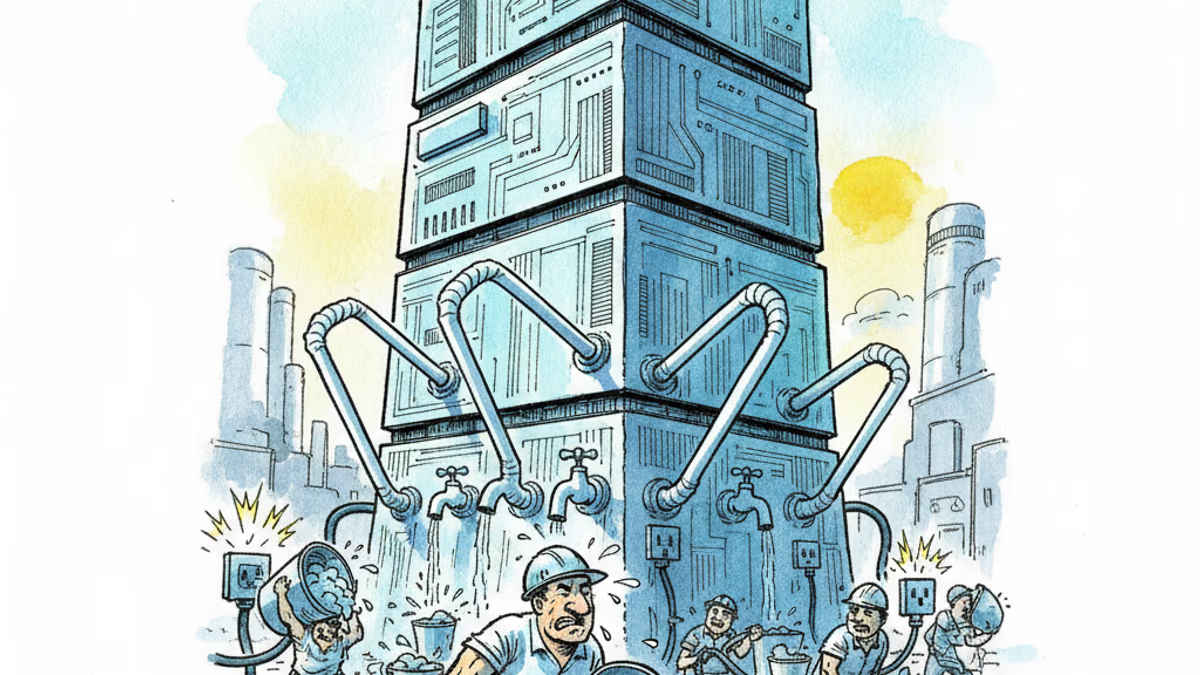
Samsung and SK unveiled a chip and AI investment package worth thousands of trillions of won on June 29. The headline number swings wildly by outlet, but the real contest isn't capital — it's water and power.
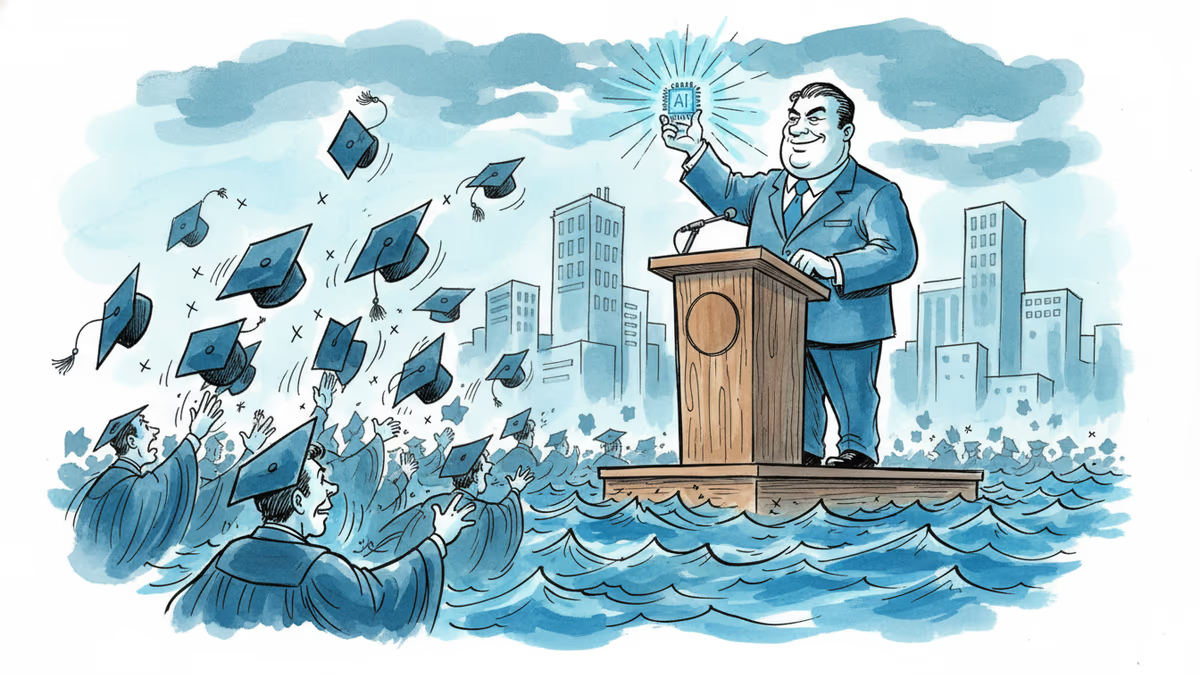
Viral videos show 2026 graduates jeering executives who praise AI at commencement ceremonies. It's not just rudeness — it's a signal about who pays for technological optimism.
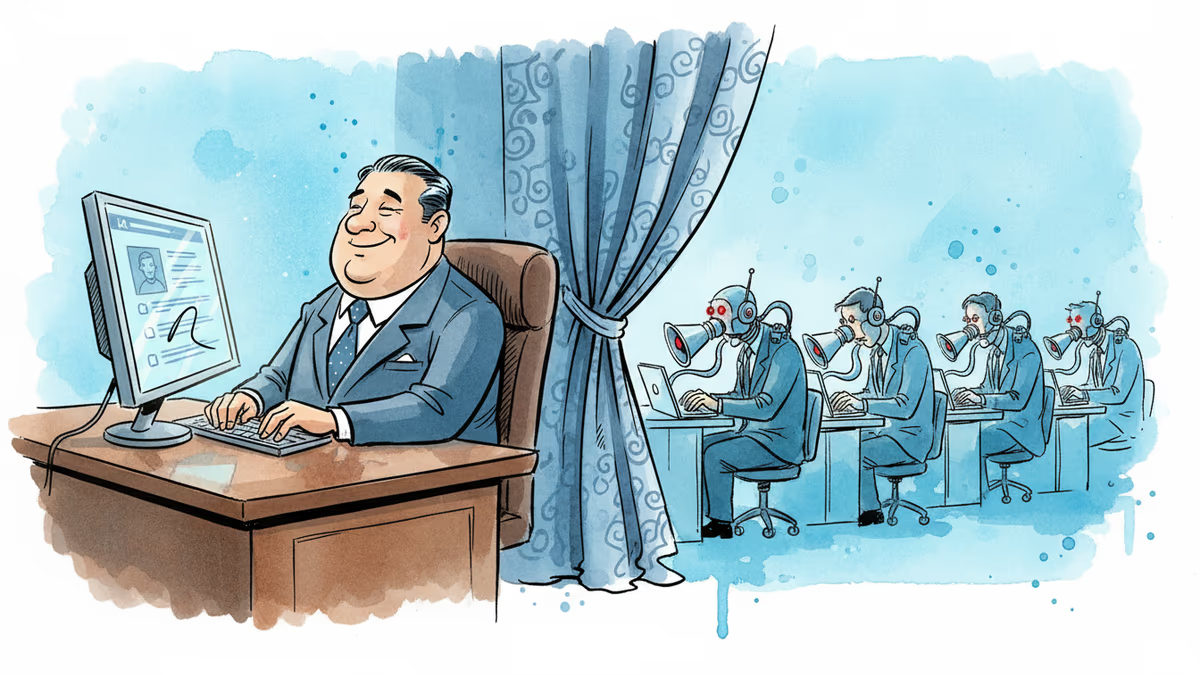
Filipino virtual assistants using AI to ghost-manage LinkedIn profiles for executives is now a structured industry. 30 comments a day, fake engagement rings, and a platform struggling to tell real from fabricated.
Two commencement speakers learned the hard way that AI enthusiasm doesn't land well with today's graduates. The backlash reveals a widening gap between tech optimism and Gen Z's economic reality.
Samsung and SK unveiled a chip and AI investment package worth thousands of trillions of won on June 29. The headline number swings wildly by outlet, but the real contest isn't capital — it's water and power.
Viral videos show 2026 graduates jeering executives who praise AI at commencement ceremonies. It's not just rudeness — it's a signal about who pays for technological optimism.
Filipino virtual assistants using AI to ghost-manage LinkedIn profiles for executives is now a structured industry. 30 comments a day, fake engagement rings, and a platform struggling to tell real from fabricated.
Two commencement speakers learned the hard way that AI enthusiasm doesn't land well with today's graduates. The backlash reveals a widening gap between tech optimism and Gen Z's economic reality.
Thoughts
Share your thoughts on this article
Sign in to join the conversation