
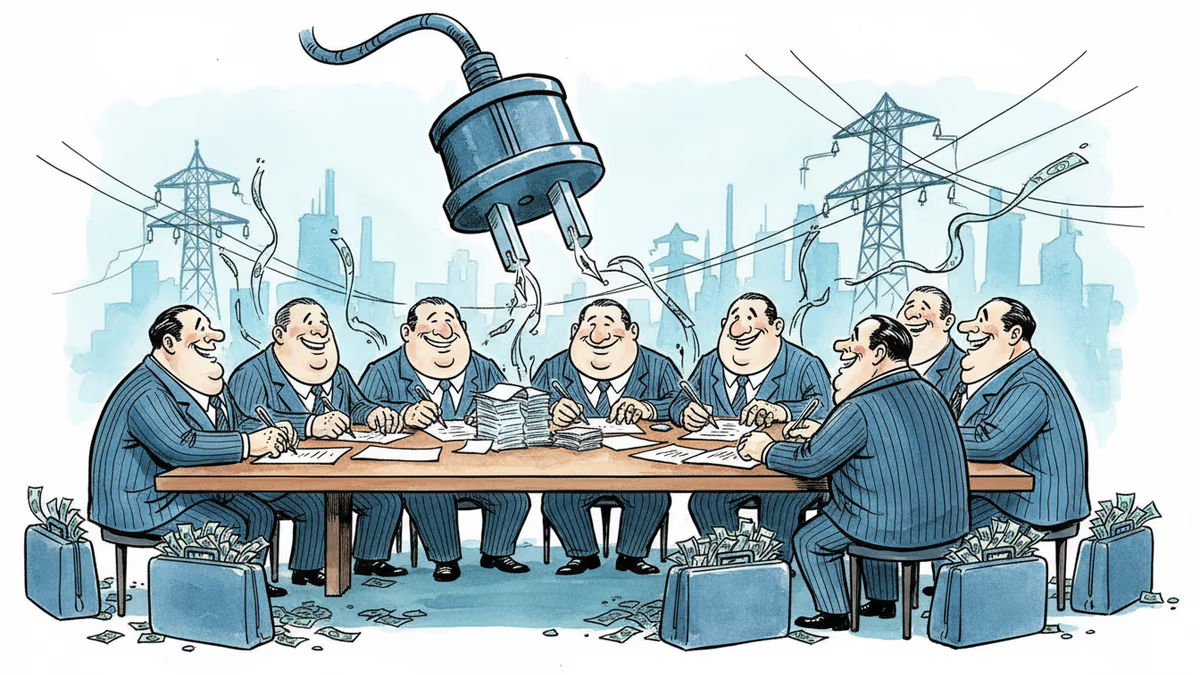
Big Tech's Electric Bill Promise: Game Changer or PR Stunt?
Trump secured pledges from Google, Meta, Microsoft, and other tech giants to cover electricity costs for AI data centers. But can they actually deliver on this promise?
$10 Billion Worth of Promises
Seven tech CEOs walked into the White House on March 4th and made a promise that could reshape America's AI infrastructure debate. Google, Meta, Microsoft, Oracle, OpenAI, Amazon, and xAI signed "rate payer protection pledges" — essentially agreeing to foot the bill when their power-hungry AI data centers drive up local electricity rates.
"[Tech companies] need some PR help because people think that if a data center goes in, their electricity prices are going to go up," Trump explained during the signing ceremony. "Some centers were rejected by communities for that and now I think it's going to be the opposite."
The Energy Crunch Behind the Handshake
This isn't just political theater. AI data centers consume 10 times more electricity than traditional ones. A single ChatGPT query uses roughly 10 times more energy than a Google search. As AI adoption explodes, so does the strain on America's power grid.
Virginia, home to the world's largest concentration of data centers, has already seen backlash. Residents in Loudoun County have protested new facilities, fearing their utility bills will skyrocket to subsidize Big Tech's AI ambitions. Similar fights are brewing in Texas, Ohio, and Georgia.
The bipartisan concern is real. Both Republican and Democratic lawmakers have questioned whether taxpayers should bear the infrastructure costs of the AI boom.

Corporate Calculus: Why Say Yes?
For tech giants, this pledge solves an immediate problem: community resistance that could delay or derail critical AI infrastructure projects. Amazon already spends $3.5 billion annually on electricity in Virginia alone. For companies racing to build the next generation of AI, removing regulatory and community hurdles is worth the extra cost.
But there's a deeper strategy at play. By voluntarily taking on these costs, tech companies position themselves as responsible corporate citizens while maintaining control over where and how they build. It's cheaper than fighting prolonged legal battles or regulatory restrictions.
The Skeptics' View
Energy experts aren't convinced this pledge addresses the root problem. "It's a Band-Aid on a bullet wound," says one utility analyst who requested anonymity. "The real issue is that our grid wasn't designed for this kind of sudden, massive demand increase."
Environmental groups worry that subsidizing energy costs — even privately — removes incentives for developing more efficient AI systems. If electricity is essentially "free" to tech companies, why invest in energy optimization?
Global Implications
This American precedent could ripple worldwide. European regulators, already skeptical of Big Tech's market power, are watching closely. In Asia, where governments are heavily investing in AI infrastructure, the question of who pays for the energy transition becomes even more complex.
For smaller AI companies and startups, this creates a new competitive moat. Only the biggest players can afford to subsidize entire communities' electricity bills.
Authors
Related Articles
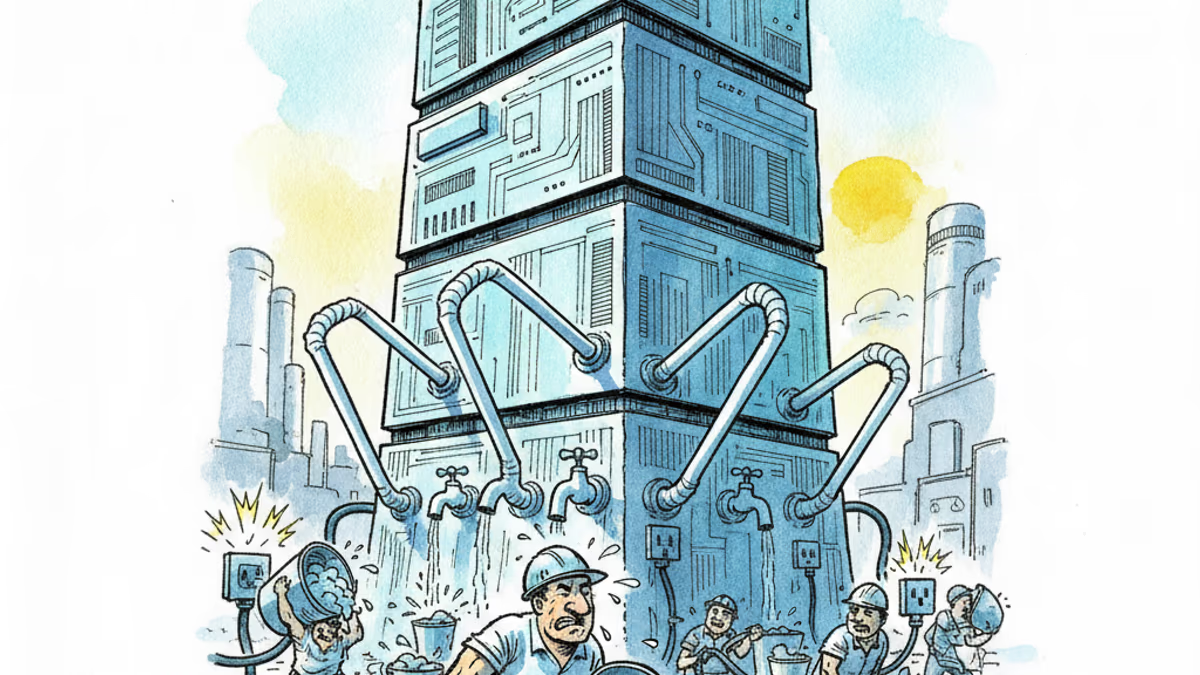
Samsung and SK unveiled a chip and AI investment package worth thousands of trillions of won on June 29. The headline number swings wildly by outlet, but the real contest isn't capital — it's water and power.
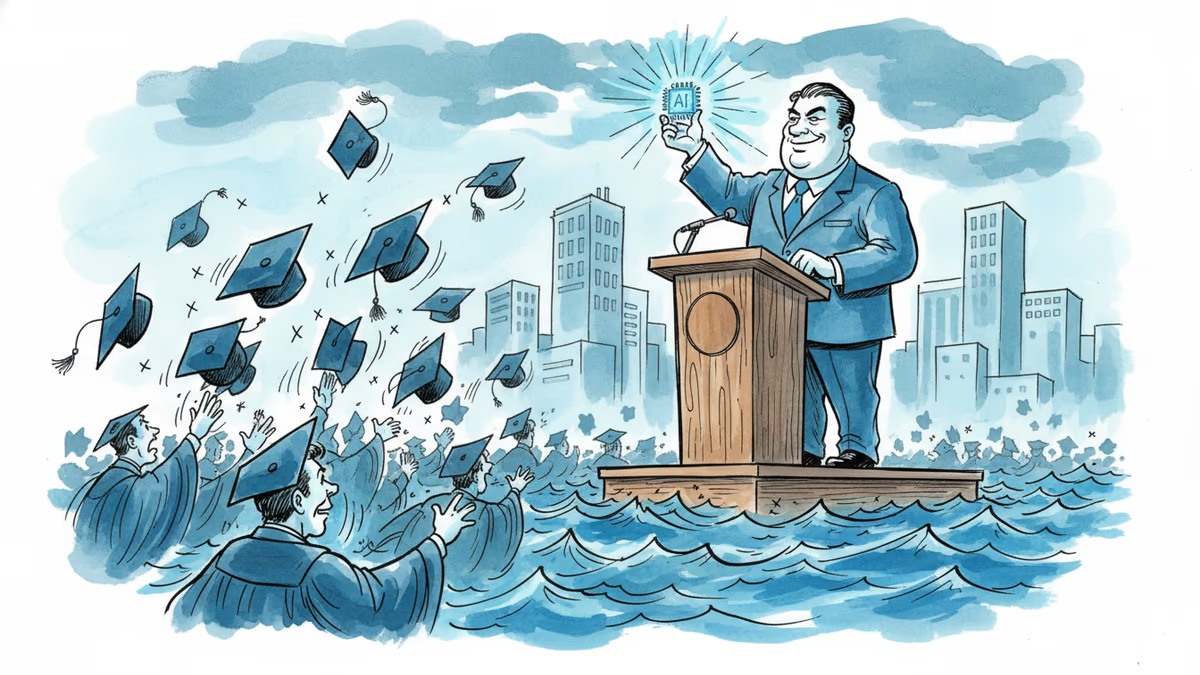
Viral videos show 2026 graduates jeering executives who praise AI at commencement ceremonies. It's not just rudeness — it's a signal about who pays for technological optimism.
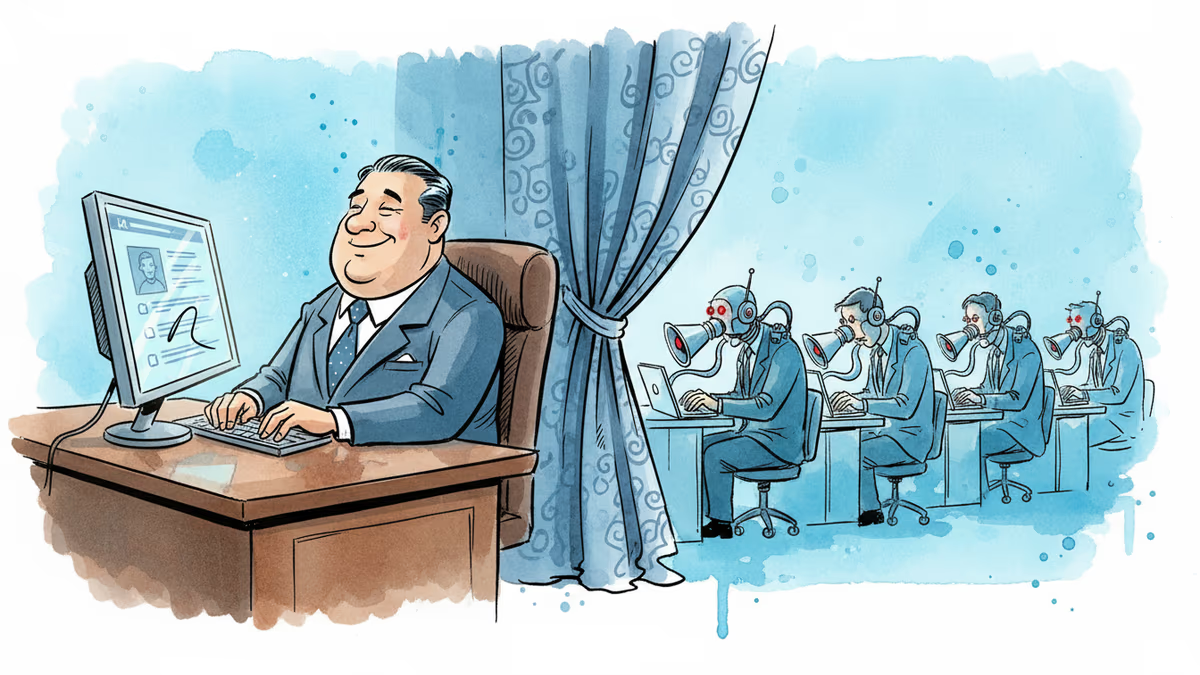
Filipino virtual assistants using AI to ghost-manage LinkedIn profiles for executives is now a structured industry. 30 comments a day, fake engagement rings, and a platform struggling to tell real from fabricated.
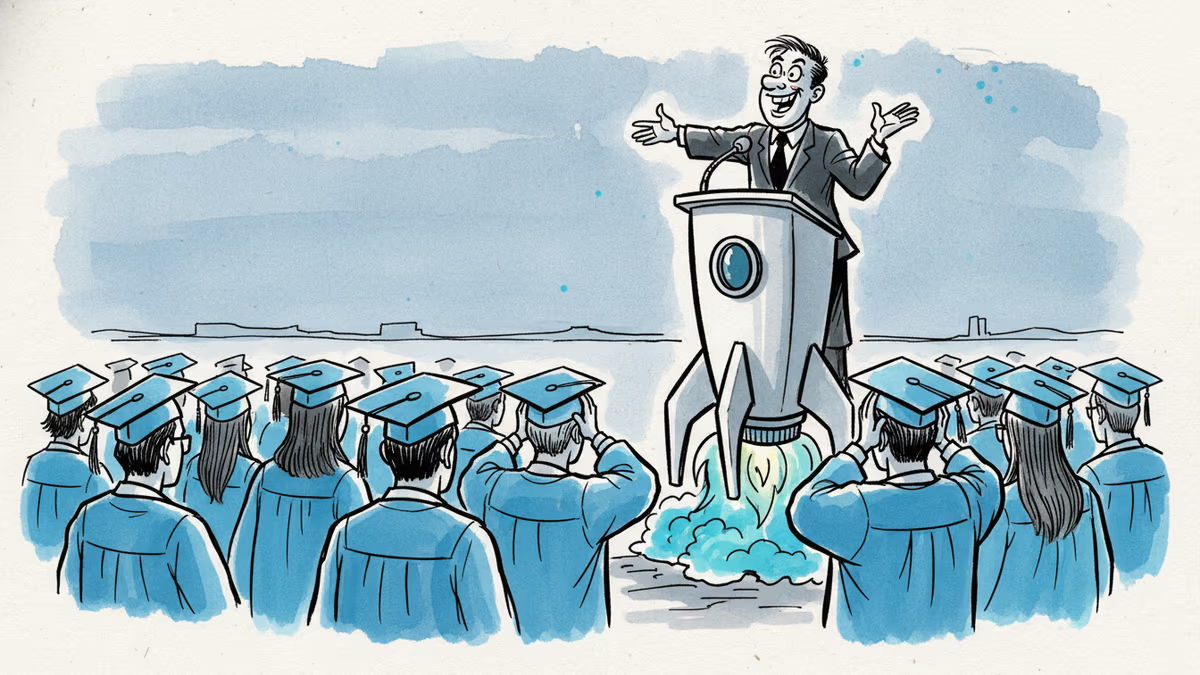
Two commencement speakers learned the hard way that AI enthusiasm doesn't land well with today's graduates. The backlash reveals a widening gap between tech optimism and Gen Z's economic reality.
Samsung and SK unveiled a chip and AI investment package worth thousands of trillions of won on June 29. The headline number swings wildly by outlet, but the real contest isn't capital — it's water and power.
Viral videos show 2026 graduates jeering executives who praise AI at commencement ceremonies. It's not just rudeness — it's a signal about who pays for technological optimism.
Filipino virtual assistants using AI to ghost-manage LinkedIn profiles for executives is now a structured industry. 30 comments a day, fake engagement rings, and a platform struggling to tell real from fabricated.
Two commencement speakers learned the hard way that AI enthusiasm doesn't land well with today's graduates. The backlash reveals a widening gap between tech optimism and Gen Z's economic reality.
Thoughts
Share your thoughts on this article
Sign in to join the conversation