
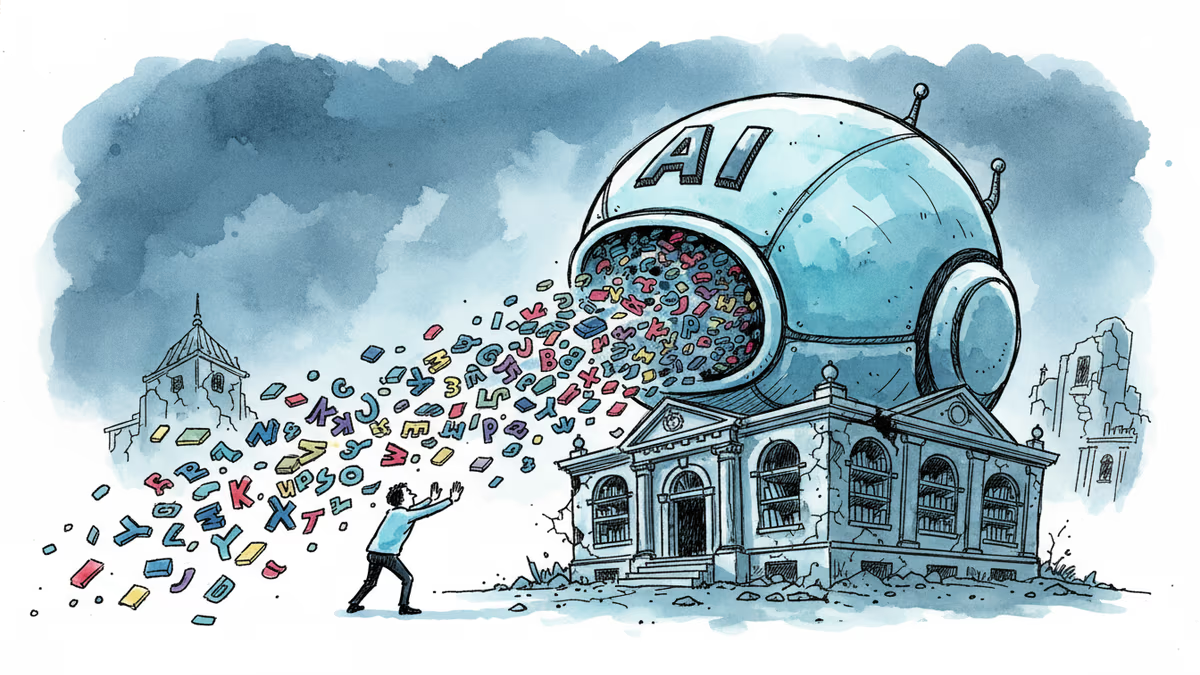
AI Is Eating Minority Languages—One Wikipedia Page at a Time
Machine-translated junk is flooding minority-language Wikipedia pages. AI learns from that junk. The result could accelerate the extinction of thousands of languages.
Half of Greenlandic Wikipedia Was Written by People Who Don't Speak Greenlandic
When Kenneth Wehr took over as administrator of the Greenlandic-language Wikipedia, something felt off. Most articles had been written by contributors who clearly didn't speak the language. Worse, a growing number had been copy-pasted directly from machine translators—riddled with elementary mistakes that any native speaker would catch instantly.
This might sound like a niche content moderation headache. It isn't. Because here's the loop that makes it dangerous: AI systems—from Google Translate to ChatGPT—learn new languages by scraping text from Wikipedia. Feed them broken Greenlandic, and they produce broken Greenlandic. That broken output gets uploaded to Wikipedia. The cycle accelerates.
How Good Intentions Built a Bad Machine
To understand why this is happening, you need to understand how AI language models are trained. They consume enormous volumes of text to learn the patterns of a language. For English, Mandarin, or Spanish, there's no shortage of high-quality data. For Greenlandic, Navajo, or Welsh, usable text is scarce.
Wikipedia—with articles in over 300 languages, built by volunteers worldwide—became a critical training source. But as AI tools became more accessible, a wave of well-meaning (and sometimes not-so-well-meaning) contributors began flooding minority-language Wikipedias with machine-translated articles. Article counts went up. Quality collapsed.
AI models trained on this corrupted data produce worse translations. Those translations get uploaded as new Wikipedia content. The contamination compounds. It's a feedback loop with no natural off switch.
Why This Matters Now
There are roughly 7,000 languages spoken on Earth today. Linguists estimate that nearly half are at risk of disappearing within this century. When a language dies, it doesn't just take vocabulary with it—it takes millennia of accumulated knowledge, distinct ways of categorizing the world, oral histories that exist nowhere else.

AI was supposed to be part of the solution. Translation tools, voice recognition, and educational software could theoretically lower the barrier to learning and using minority languages, helping communities sustain them digitally. The reality is trending in the opposite direction. Rather than preserving these languages, AI is either freezing them in a corrupted form or quietly replacing them.
The timing is significant. We're at the moment when the foundational training data for the next generation of AI models is being locked in. The decisions made—or not made—in the next few years about data quality and linguistic diversity will shape what AI "knows" about these languages for decades.
Three Stakeholders, Three Very Different Problems
The Wikipedia Foundation faces a structural dilemma. Its volunteer model, which is its greatest strength, is also its greatest vulnerability. Verifying content quality across hundreds of languages requires native-speaker expertise that simply can't be crowdsourced at scale.
AI companies are under growing pressure to audit their training data more rigorously. But the economics cut against it. Hiring minority-language experts to validate training corpora is expensive. The commercial upside of a better Greenlandic model is minimal compared to marginal improvements in English or Mandarin. The incentive structure pushes toward the languages that already have the most data.
For indigenous and minority-language communities, this is a question of linguistic sovereignty. Who gets to define the authoritative digital form of their language? When an AI system trained on corrupted data becomes the default translation tool, it doesn't just make errors—it potentially displaces the living speakers who are the actual authority. The Navajo Nation, Greenlandic Inuit communities, and Welsh-language advocates have all raised versions of this concern.
UNESCO has flagged digital language diversity as a priority, but international frameworks haven't translated into binding standards for AI developers.
What Could Actually Help
Some researchers argue for "data provenance" requirements—forcing AI companies to document where their training data comes from and whether it's been validated by native speakers. Others propose community-controlled language repositories, where indigenous groups maintain their own verified text databases that AI systems can license on their terms.
A few AI labs are experimenting with smaller, community-specific models trained on curated data rather than scraped Wikipedia content. The results are promising but resource-intensive—and dependent on communities having the technical infrastructure to participate.
The harder question is whether market forces will ever align with linguistic preservation. There are roughly 40 languages that cover over 90% of the world's internet users. Every hour spent improving AI performance on those languages generates more commercial return than a year spent on endangered ones.
Authors
Related Articles

Samsung and SK unveiled a chip and AI investment package worth thousands of trillions of won on June 29. The headline number swings wildly by outlet, but the real contest isn't capital — it's water and power.
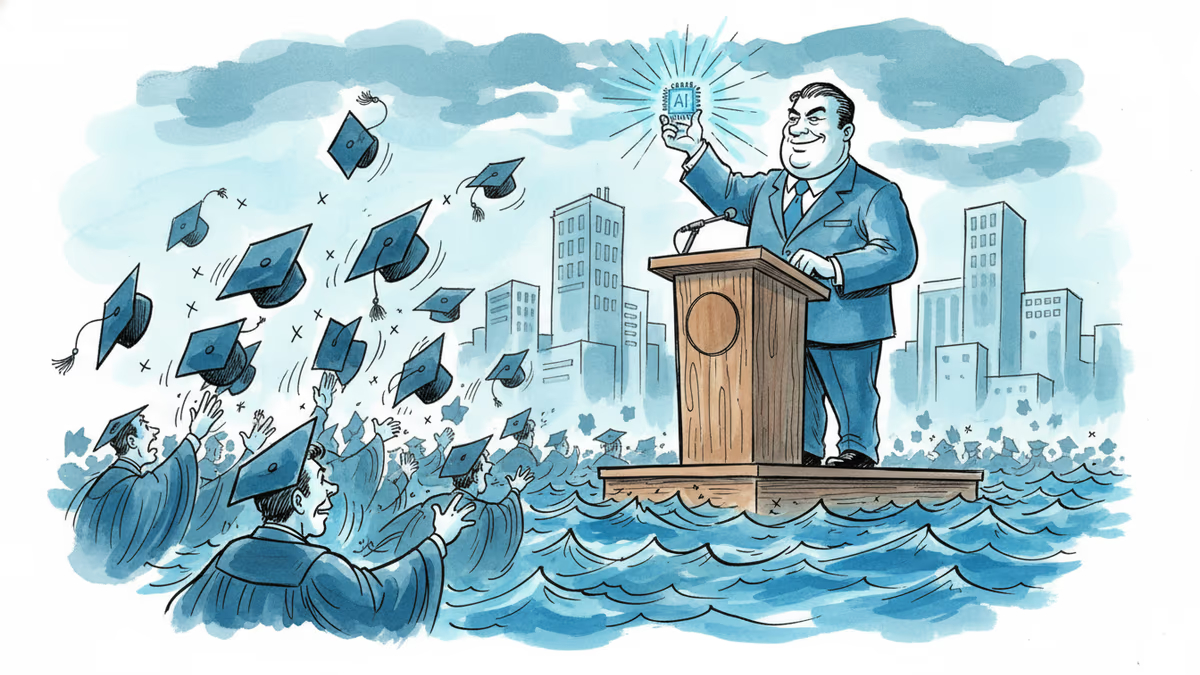
Viral videos show 2026 graduates jeering executives who praise AI at commencement ceremonies. It's not just rudeness — it's a signal about who pays for technological optimism.
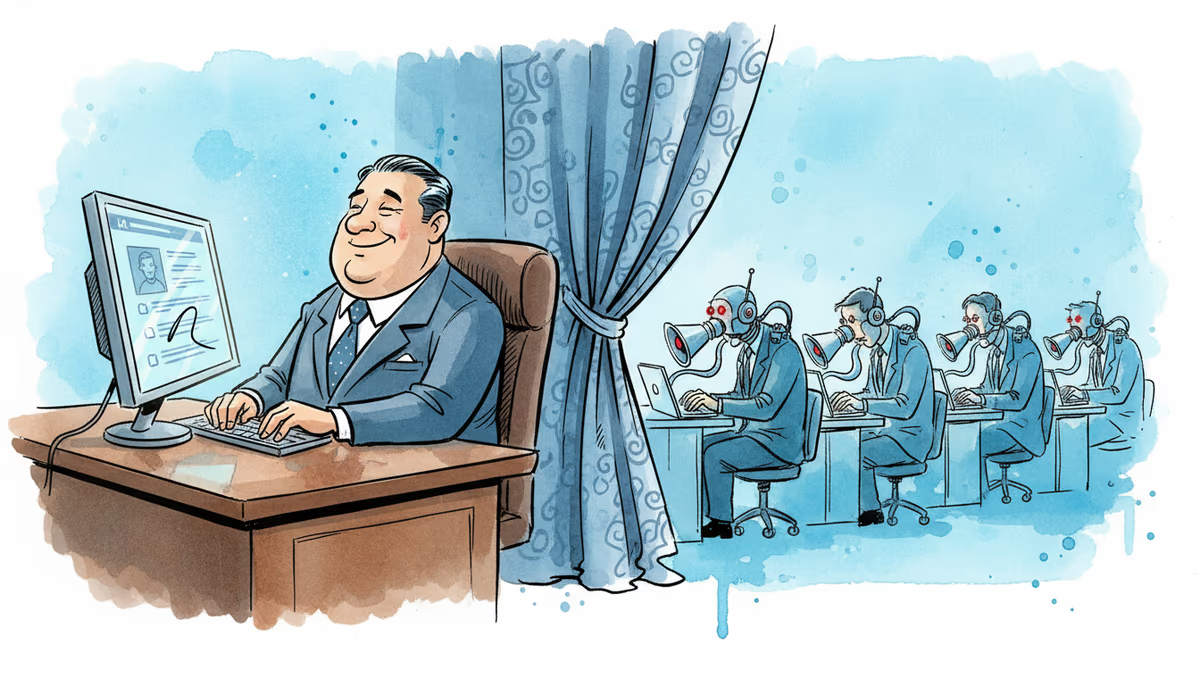
Filipino virtual assistants using AI to ghost-manage LinkedIn profiles for executives is now a structured industry. 30 comments a day, fake engagement rings, and a platform struggling to tell real from fabricated.
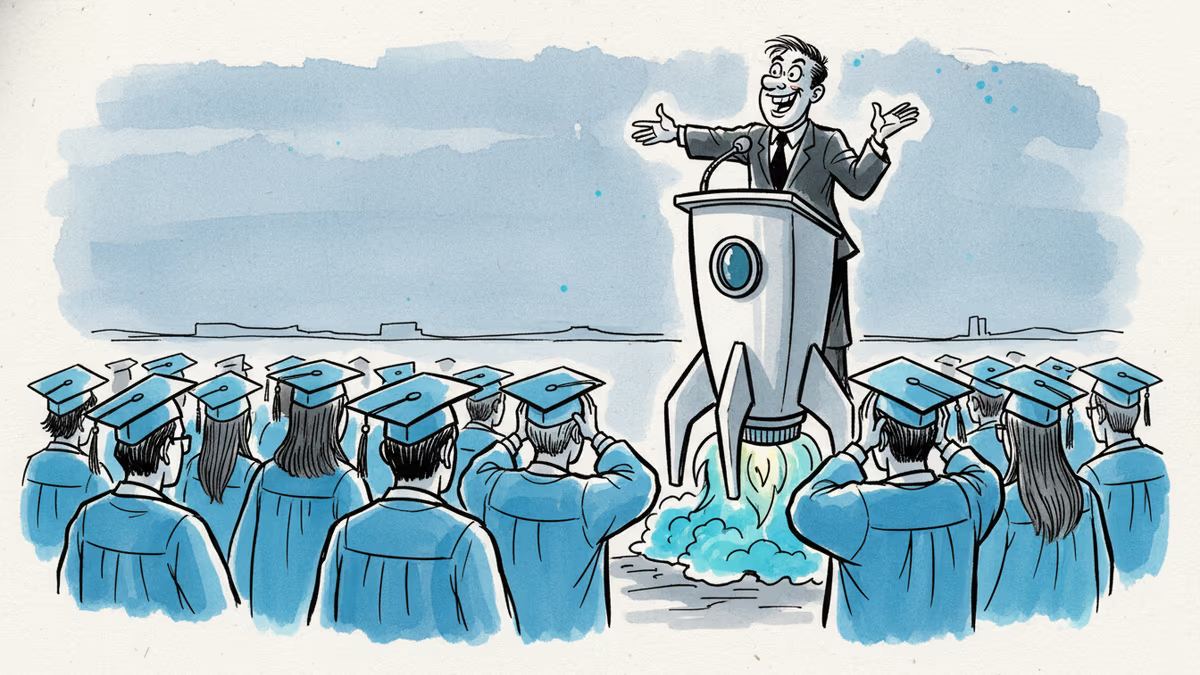
Two commencement speakers learned the hard way that AI enthusiasm doesn't land well with today's graduates. The backlash reveals a widening gap between tech optimism and Gen Z's economic reality.
Samsung and SK unveiled a chip and AI investment package worth thousands of trillions of won on June 29. The headline number swings wildly by outlet, but the real contest isn't capital — it's water and power.
Viral videos show 2026 graduates jeering executives who praise AI at commencement ceremonies. It's not just rudeness — it's a signal about who pays for technological optimism.
Filipino virtual assistants using AI to ghost-manage LinkedIn profiles for executives is now a structured industry. 30 comments a day, fake engagement rings, and a platform struggling to tell real from fabricated.
Two commencement speakers learned the hard way that AI enthusiasm doesn't land well with today's graduates. The backlash reveals a widening gap between tech optimism and Gen Z's economic reality.
Thoughts
Share your thoughts on this article
Sign in to join the conversation