
When the Universe Sends 800,000 Alerts in One Night
The Vera C. Rubin Observatory's automated alert system went live, flooding astronomers with 800,000 alerts about asteroids, supernovas, and black holes on its first night. The age of astronomical big data has begun.
The Night Astronomy Changed Forever
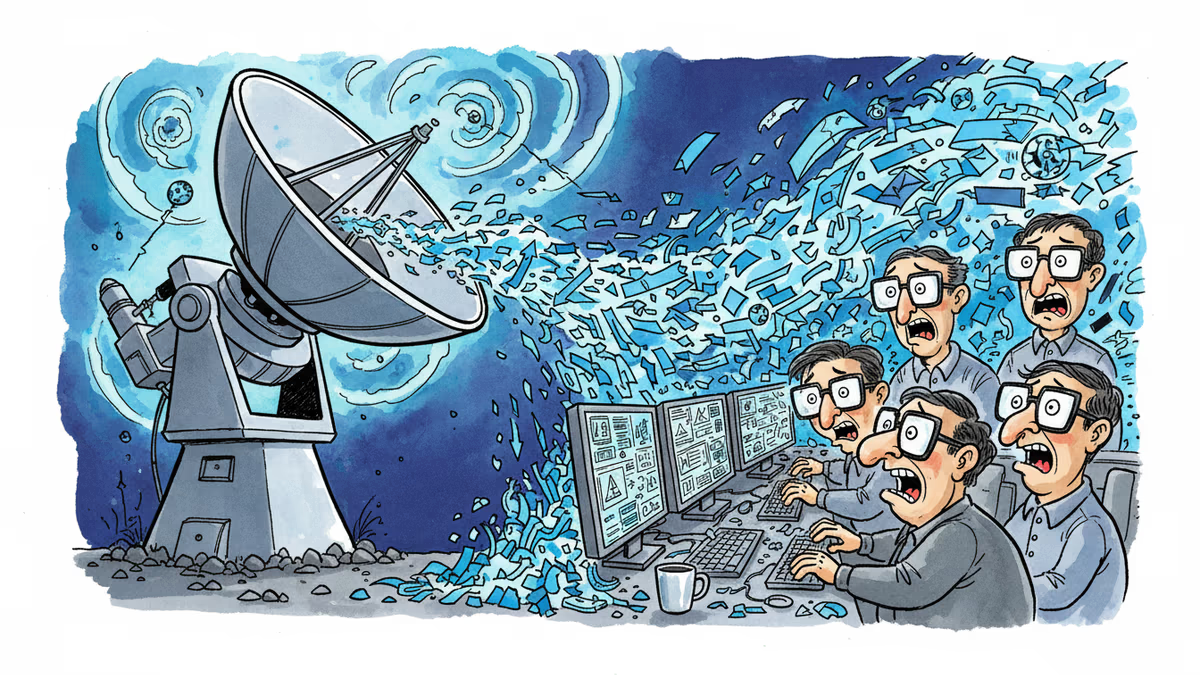
On Tuesday, February 24th, astronomers around the world experienced something unprecedented: their inboxes exploded. The Vera C. Rubin Observatory's automated alert system had gone live, delivering 800,000 alerts in a single night about asteroids, supernovas, and feeding black holes scattered across the cosmos.
This wasn't a system malfunction—it was exactly what the observatory was designed to do. And here's the kicker: this is just the beginning. Once fully operational, the system is expected to generate millions of alerts per night.
The Car-Sized Game Changer
At the heart of this data deluge sits the Legacy Survey of Space and Time (LSST) camera—a car-sized beast that captures 3.2-gigapixel images of the night sky. Since releasing its first images in June 2024, researchers have been eagerly waiting for this moment: the launch of real-time sky surveillance.
Traditional astronomy has always been about planned observations. Point a telescope at a specific star, galaxy, or nebula, and study it for hours or days. The Rubin Observatory flips this approach entirely. Instead of looking at what we choose, it watches everything and tells us what's changing.
Every night, the system scans the sky and compares what it sees to previous images. A star that wasn't there yesterday? Alert. An asteroid changing course? Alert. A distant galaxy suddenly brightening as a supernova explodes? Alert.
The Blessing and Curse of Too Much Data

Here's where things get complicated. Even if every professional astronomer on Earth—roughly 10,000 people—worked around the clock, they couldn't possibly review millions of alerts each night. The first night alone proved this: researchers quickly realized they needed new strategies for filtering signal from noise.
MIT astrophysicists are developing AI algorithms to triage alerts automatically. Critical events like supernovas or gravitational wave sources get immediate attention, while routine asteroid movements get bundled into weekly reports. But this raises a fundamental question: what if the AI misses something extraordinary because it doesn't fit expected patterns?
The history of astronomy is filled with accidental discoveries—from pulsars to dark energy. Will automated filtering systems preserve room for serendipity?
The Democratization of Discovery
There's another twist: all this data is public. Unlike many scientific instruments that restrict access to a select group of researchers, the Rubin Observatory makes its alerts available to anyone with an internet connection.
Amateur astronomers are already building their own analysis tools. Citizen science projects like Galaxy Zoo have shown that motivated volunteers can make genuine discoveries. With millions of alerts flowing daily, we might see the emergence of a new kind of distributed astronomy—where the next major discovery comes not from a university lab, but from someone's home computer.
This democratization isn't without risks. How do you verify discoveries made by non-professionals? How do you coordinate follow-up observations when anyone can spot something interesting?
The Economic Reality
Behind the scientific excitement lies a practical challenge: infrastructure costs. Processing and distributing millions of alerts daily requires massive computing resources. The observatory estimates it will generate 20 terabytes of data each night—equivalent to streaming 4K video continuously for a month.
Tech companies like Amazon and Google are providing cloud computing support, but this creates new dependencies. What happens if commercial partnerships change? Who controls access to this flood of cosmic information?
Authors
Related Articles
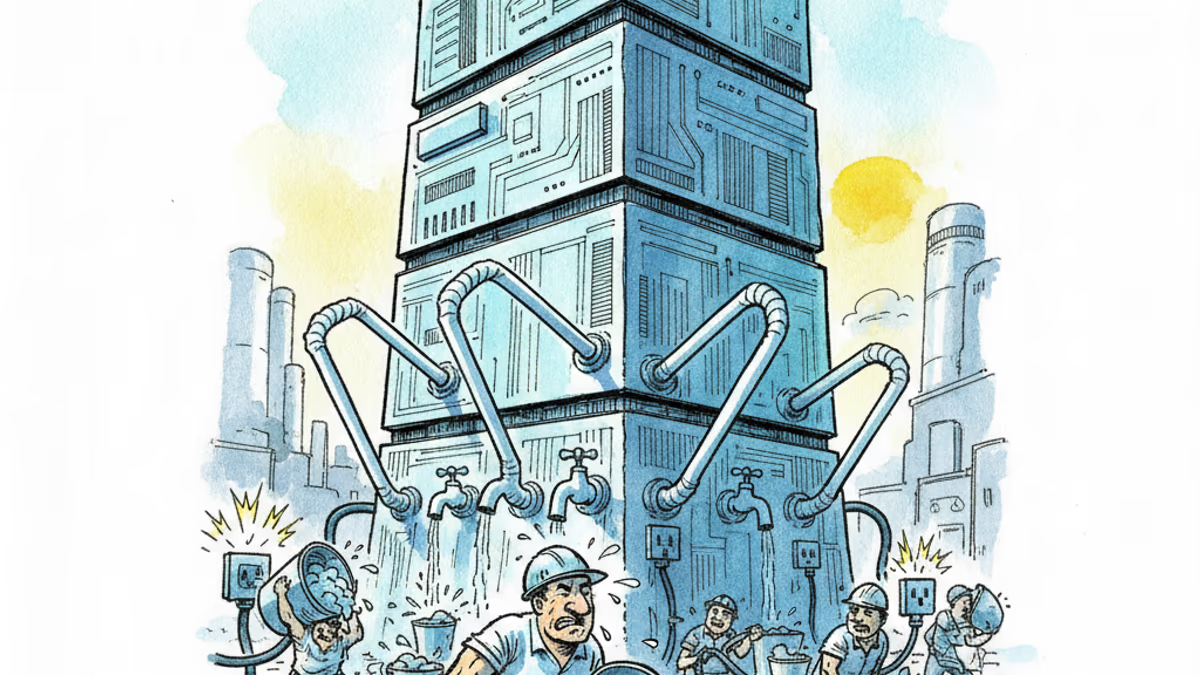
Samsung and SK unveiled a chip and AI investment package worth thousands of trillions of won on June 29. The headline number swings wildly by outlet, but the real contest isn't capital — it's water and power.
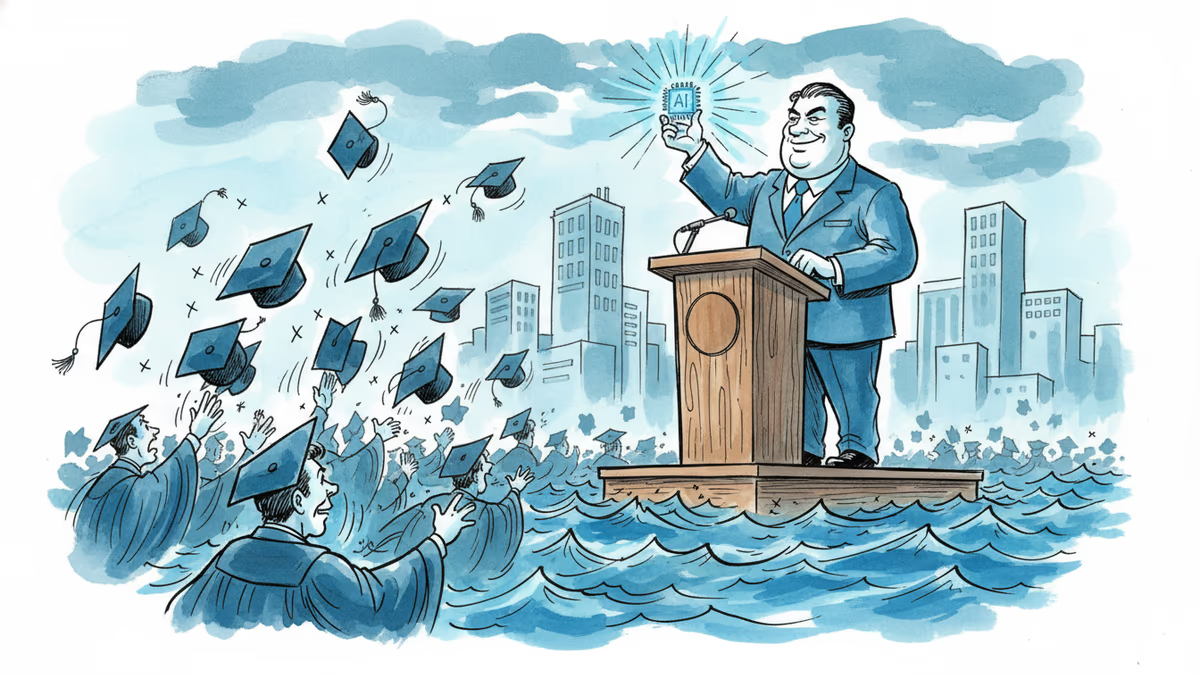
Viral videos show 2026 graduates jeering executives who praise AI at commencement ceremonies. It's not just rudeness — it's a signal about who pays for technological optimism.

Filipino virtual assistants using AI to ghost-manage LinkedIn profiles for executives is now a structured industry. 30 comments a day, fake engagement rings, and a platform struggling to tell real from fabricated.
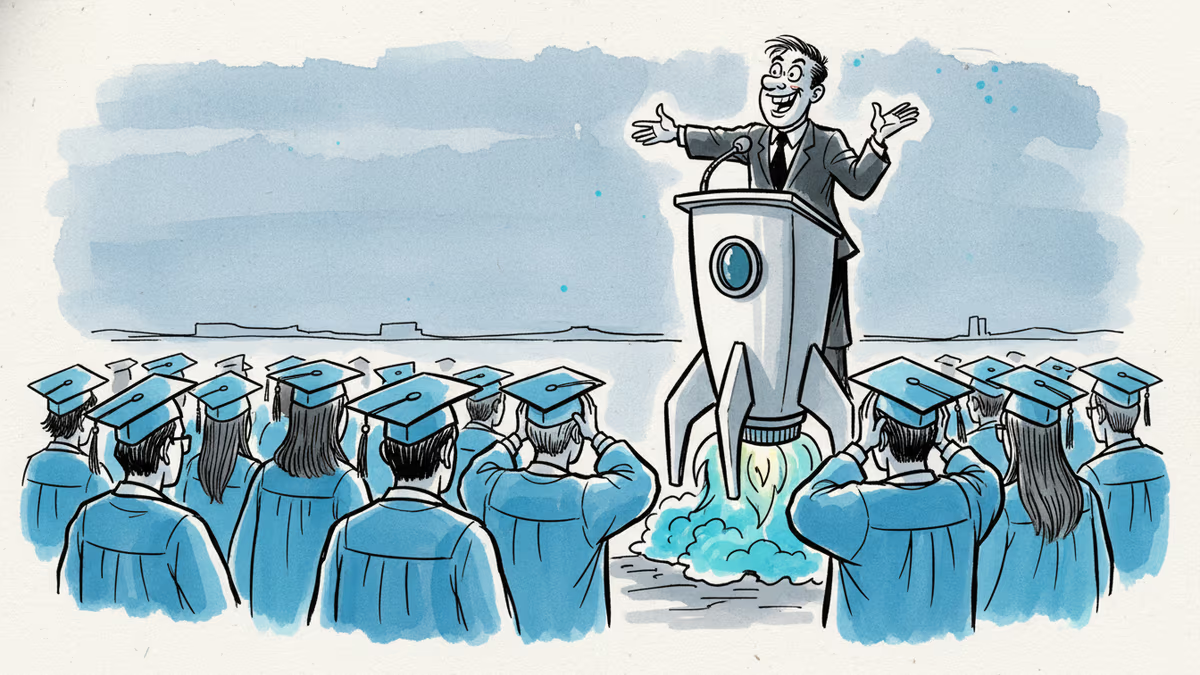
Two commencement speakers learned the hard way that AI enthusiasm doesn't land well with today's graduates. The backlash reveals a widening gap between tech optimism and Gen Z's economic reality.
Samsung and SK unveiled a chip and AI investment package worth thousands of trillions of won on June 29. The headline number swings wildly by outlet, but the real contest isn't capital — it's water and power.
Viral videos show 2026 graduates jeering executives who praise AI at commencement ceremonies. It's not just rudeness — it's a signal about who pays for technological optimism.
Filipino virtual assistants using AI to ghost-manage LinkedIn profiles for executives is now a structured industry. 30 comments a day, fake engagement rings, and a platform struggling to tell real from fabricated.
Two commencement speakers learned the hard way that AI enthusiasm doesn't land well with today's graduates. The backlash reveals a widening gap between tech optimism and Gen Z's economic reality.
Thoughts
Share your thoughts on this article
Sign in to join the conversation