
Rose Seeds and Export Licenses: What Beijing's Summit Actually Resolved
Trump's Beijing visit was a masterclass in diplomatic theater. Warm handshakes, viral selfies, and noodle runs. But Taiwan, Iran, and rare earths remain untouched. Here's what the spectacle obscures.
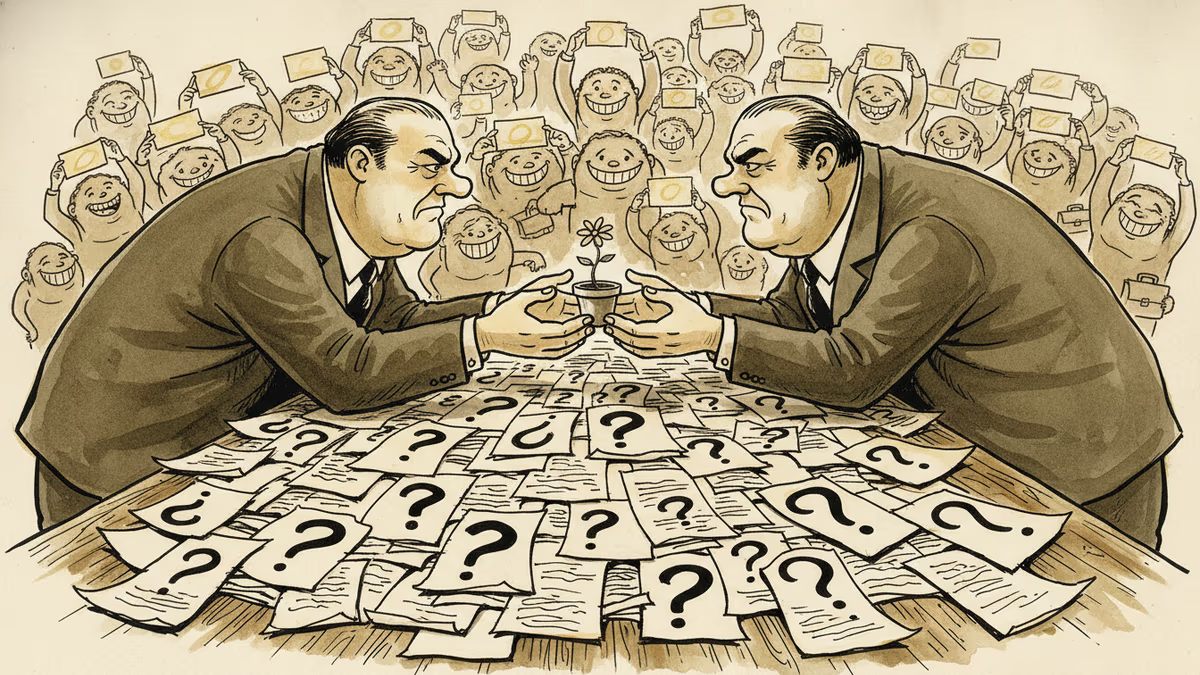
Xi Jinping's parting gift to Donald Trump was a packet of rose seeds. Trump called them "the most beautiful roses anyone's ever seen." Seeds, of course, are not yet roses.
The Spectacle
For two days this week, Beijing turned into something the city rarely becomes: a stage for American celebrity. Trump's visit — the first by a sitting U.S. president to China in nearly a decade — was choreographed to the last detail. Brass bands at the airport. Flower-waving schoolchildren. A state banquet at the Great Hall of the People. A private tour of the Temple of Heaven. And finally, a closing stroll through Zhongnanhai — the walled compound where China's leadership has lived and worked since 1949 — a space almost no foreign leader is ever invited to enter.
The menu at the state banquet was itself a diplomatic document: beef ribs and tiramisu, a nod to Trump's known preferences, alongside Chinese national dishes. When Trump raised his glass in a toast — filled with what appeared to be white wine, though the teetotal president almost certainly had an alternative — Chinese social media lit up with approval. The gesture was read as respect. That's how carefully calibrated the optics were.
"There were unusually long handshakes, back-patting, smiling, and synchronized walking," noted Lyle Morris of the Asia Society Policy Institute. "The interaction was warmer and more relaxed than some previous Trump-Xi encounters."
The Sideshows That Stole the Show
Off the formal schedule, the real viral content was being made elsewhere.

Elon Musk became an unlikely celebrity magnet at the state banquet. Xiaomi CEO Lei Jun — a self-described longtime Musk admirer and one of the first Tesla Model S owners in China — managed to grab a selfie. The catch: Musk visibly raised his eyebrows and huffed before the photo was taken. The moment racked up over 20 million views on Weibo. A separate clip of Musk spinning in a circle while filming a group photo alongside Jensen Huang, Tim Cook, and Defense Secretary Pete Hegseth drew 52 million views. "This scene is unlike anything you'd see in America," one user wrote. They weren't wrong.
Musk also brought his six-year-old son X Æ A-Xii, dressed in a Chinese-style embroidered vest and a tiger-head crossbody bag from a Guangxi artisan brand — retail price roughly 300 yuan ($44). It sold out online within hours of the footage circulating.
Then there was Jensen Huang. The Nvidia CEO wasn't originally on the delegation list. Trump called him personally; Huang boarded Air Force One during a refueling stop in Anchorage. In Beijing, he ditched the motorcades and wandered through Nanluogu Alley, a historic hutong district, in his signature black jacket. He slurped noodles. He tried douzhi — a fermented Beijing drink notorious for its pungent sourness. He stopped for bubble tea at Mixue, a Chinese chain. Crowds formed fast. A 58-year-old local named Pei Lan described "elbowing to the front" for a photo.
Huang's presence wasn't just optics. Reports emerged that Washington may soon grant export licenses for Nvidia's second-most advanced chips to China — a significant policy signal buried beneath the noodle-run footage.
What Was Actually Agreed — and What Wasn't
Strip away the pageantry and the deliverables are modest. Both sides agreed to work toward a framework to stabilize the bilateral relationship for the next three years. China committed to purchasing more Boeing aircraft, American agricultural products, and U.S. oil. Xi told assembled American CEOs that China's door to business would "only open wider."
But Xi also made clear where the floor is. He called Taiwan "the most important issue" in the relationship and warned that mishandling it could lead to "clashes and even conflicts." Export controls, rare earth restrictions, and the unresolved Iran question — the U.S. and China remain on opposite sides — were not resolved. Michael Feller, chief strategist at Geopolitical Strategy, was blunt: "Even the summit's modest expectations were left disappointed. Reading Beijing's signals has been reduced to analysing the menu and orchestration of the official dinner."
The three-year stability framework, if it holds, gives markets a window. U.S. companies with significant China exposure — from Apple to agricultural exporters — get a degree of predictability they haven't had since tariffs escalated. The potential resumption of Nvidia chip sales to China could reshape the AI hardware race in the world's second-largest economy. But "potential" and "framework" are doing a lot of heavy lifting in those sentences.
This content is AI-generated based on source articles. While we strive for accuracy, errors may occur. We recommend verifying with the original source.
Related Articles
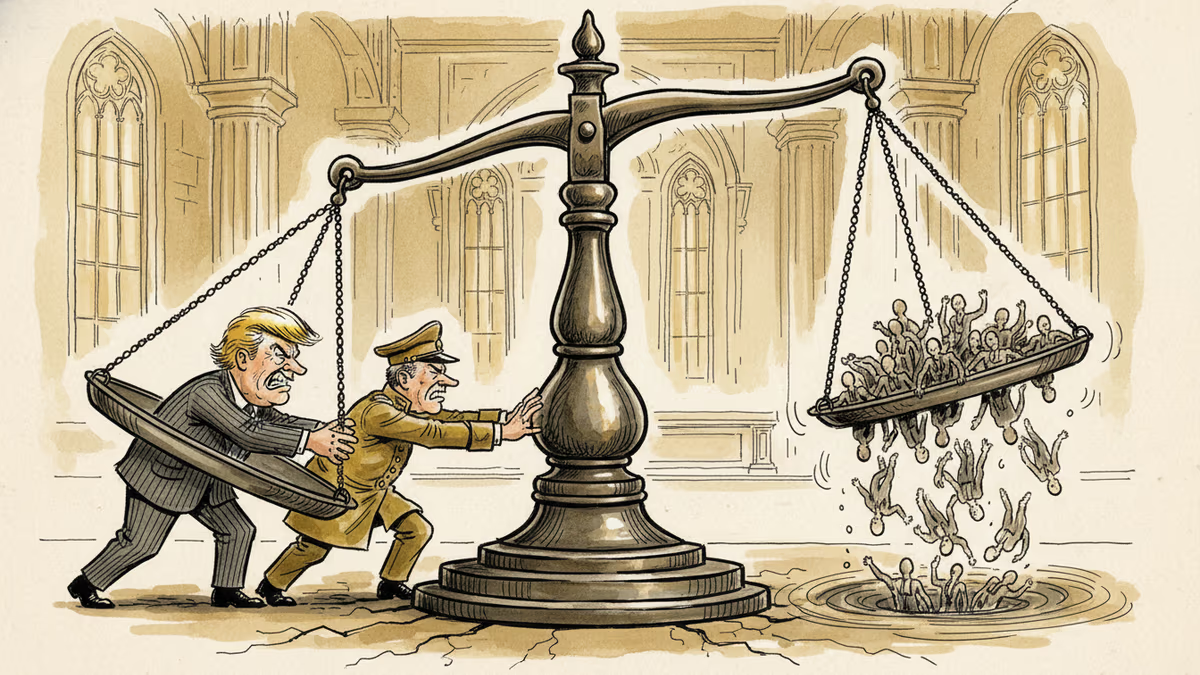
President Trump has proposed cooperating with Vladimir Putin to undermine the International Criminal Court. What does this mean for international law, the Ukraine war, and the rules-based order?
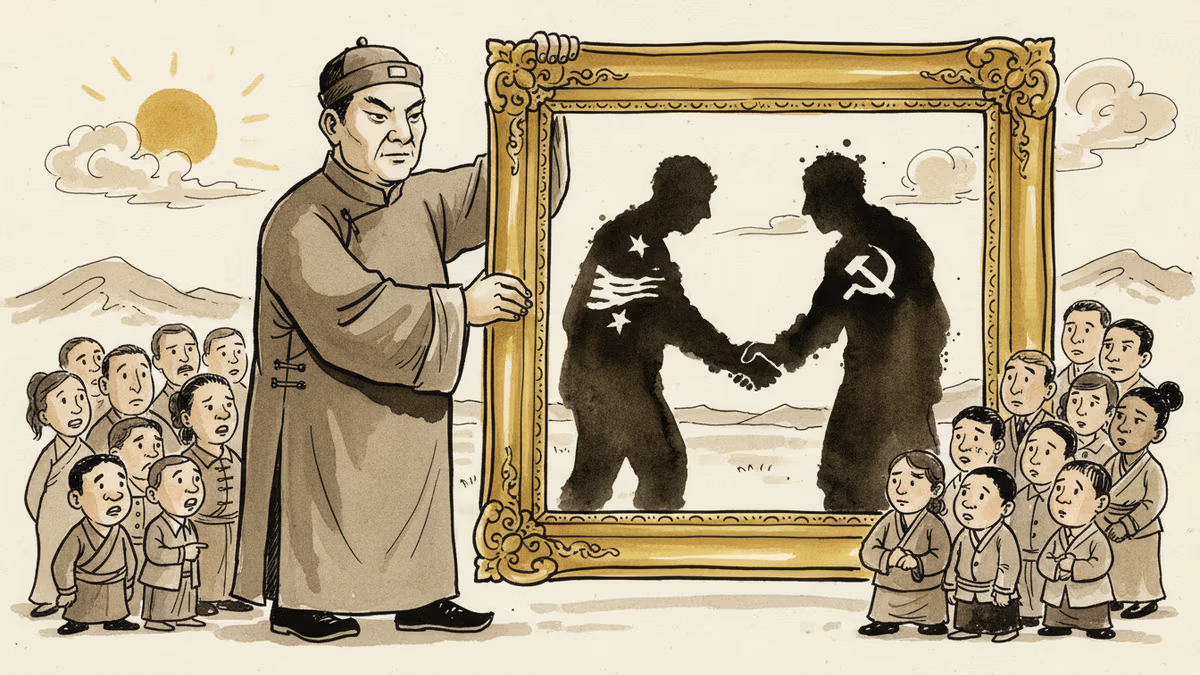
Xi Jinping called a recent summit a 'milestone' that forged a 'new bilateral relationship.' What does this language actually signal—and who stands to gain or lose?
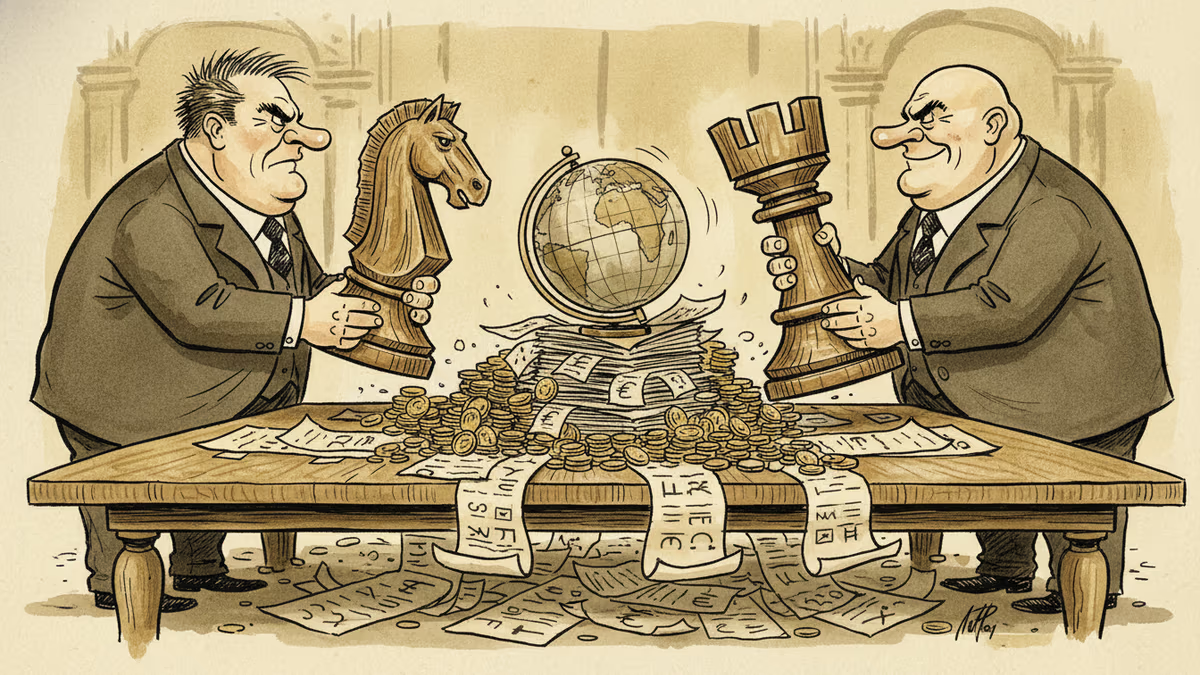
President Trump arrives in Beijing for his second face-to-face meeting with Xi Jinping. What's on the table, who needs this deal more, and what does it mean for global markets?
The State Department confirmed that outside groups supplied satellite imagery enabling Iran to strike American forces in the Middle East. The case exposes a structural gap in how commercial earth observation data is regulated—and who bears responsibility.
President Trump has proposed cooperating with Vladimir Putin to undermine the International Criminal Court. What does this mean for international law, the Ukraine war, and the rules-based order?
Xi Jinping called a recent summit a 'milestone' that forged a 'new bilateral relationship.' What does this language actually signal—and who stands to gain or lose?
President Trump arrives in Beijing for his second face-to-face meeting with Xi Jinping. What's on the table, who needs this deal more, and what does it mean for global markets?
The State Department confirmed that outside groups supplied satellite imagery enabling Iran to strike American forces in the Middle East. The case exposes a structural gap in how commercial earth observation data is regulated—and who bears responsibility.
Thoughts
Share your thoughts on this article
Sign in to join the conversation