
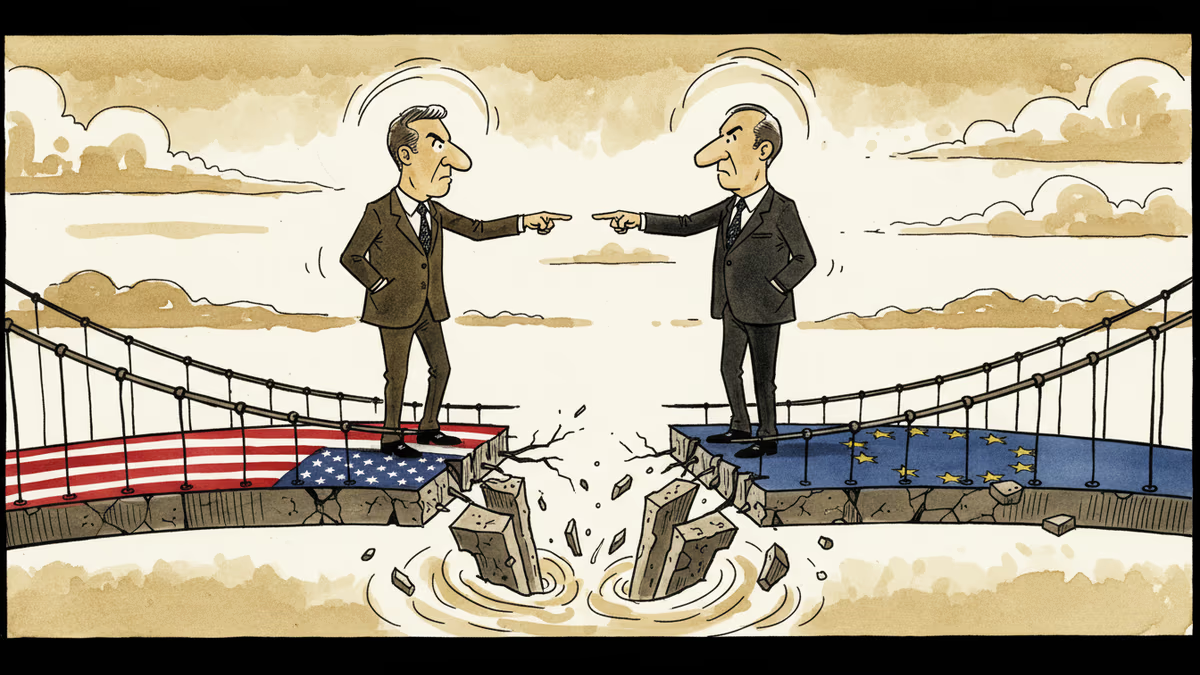
Trump vs. Merz: When Allies Stop Nodding
Trump publicly retaliated against German Chancellor Merz for criticizing US-Israeli war conduct. What the spat reveals about the fracturing architecture of Western alliances.
What happens when a NATO ally openly criticizes American foreign policy? Friedrich Merz found out quickly.
What Happened
German Chancellor Merz broke from the careful diplomatic language his predecessors typically reserved for Washington. He publicly criticized the US-Israeli conduct of the war in Gaza—a pointed rebuke aimed not just at Israel but at the broader American posture enabling it.
Donald Trump didn't use back-channel diplomacy to respond. He never does. The retaliation came publicly, framed in the blunt transactional language that has defined his approach to alliances since his first term: loyalty is expected, and dissent has a price.
The confrontation didn't emerge from nowhere. Merz came to power earlier this year on a platform of German strategic autonomy—pledging to raise defense spending toward 3% of GDP, pushing for a European security posture less dependent on Washington, and signaling that Berlin would no longer reflexively align with US foreign policy. His Gaza criticism was, in that context, less a moral statement and more a declaration of intent.
Why This Moment Matters
The timing is significant. Trump's second administration has systematically tested the load-bearing walls of the transatlantic relationship—on NATO burden-sharing, Ukraine support, and now Middle East policy. Each friction point has been treated not as a problem to manage but as leverage to apply.

What's different now is that the pushback is coming from Germany. France's Emmanuel Macron has long argued for European strategic autonomy; that's expected. But Germany—historically the most cautious, most US-deferential of the major European powers—publicly challenging Washington is a different signal altogether.
The Gaza dispute may be the trigger, but it's not the target. The underlying question is structural: can a European ally exercise independent foreign policy judgment without fracturing the alliance that underwrites its security? Merz is betting the answer is yes. Trump is betting otherwise.
For defense analysts, the practical stakes are real. Germany's €100 billion special defense fund, launched after Russia's invasion of Ukraine, was already reshaping European procurement patterns. If Berlin accelerates toward genuine military self-sufficiency—and political independence to match—the NATO burden-sharing calculus shifts in ways that affect US force posture across the continent.
Competing Interpretations
From Brussels, this episode hands ammunition to advocates of EU strategic autonomy. The argument has always been theoretical; watching Washington punish a member state for a foreign policy disagreement makes it operational.
From Jerusalem's perspective, Merz's criticism carries particular weight. Germany's post-Holocaust relationship with Israel has historically made Berlin one of Tel Aviv's most reliable defenders in European forums. A German chancellor publicly questioning Israeli war conduct isn't just another European voice—it's a signal that even that special relationship has limits.
From Trump's base, the retaliation reads as consistency. Allies who criticize American policy should expect American pushback. That's not instability; that's clarity.
The harder question is what European publics make of it. Polling across France, Germany, and the Netherlands over the past year has shown declining confidence in US reliability as a security guarantor. Merz's willingness to confront Trump publicly may be less a diplomatic miscalculation than a domestic political calculation—his voters increasingly want a Germany that speaks for itself.
This content is AI-generated based on source articles. While we strive for accuracy, errors may occur. We recommend verifying with the original source.
Related Articles
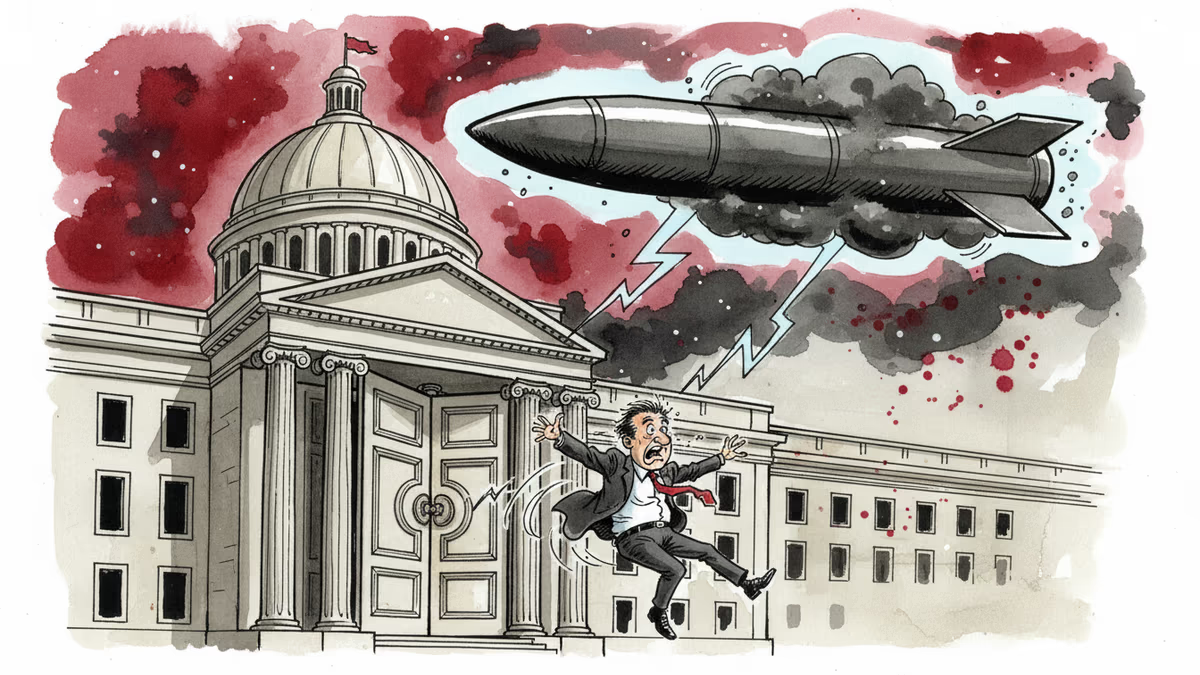
Mike Waltz exits as Trump weighs resuming strikes on Iran. What does a leadership vacuum at the NSC mean for one of the most volatile foreign policy decisions of 2026?
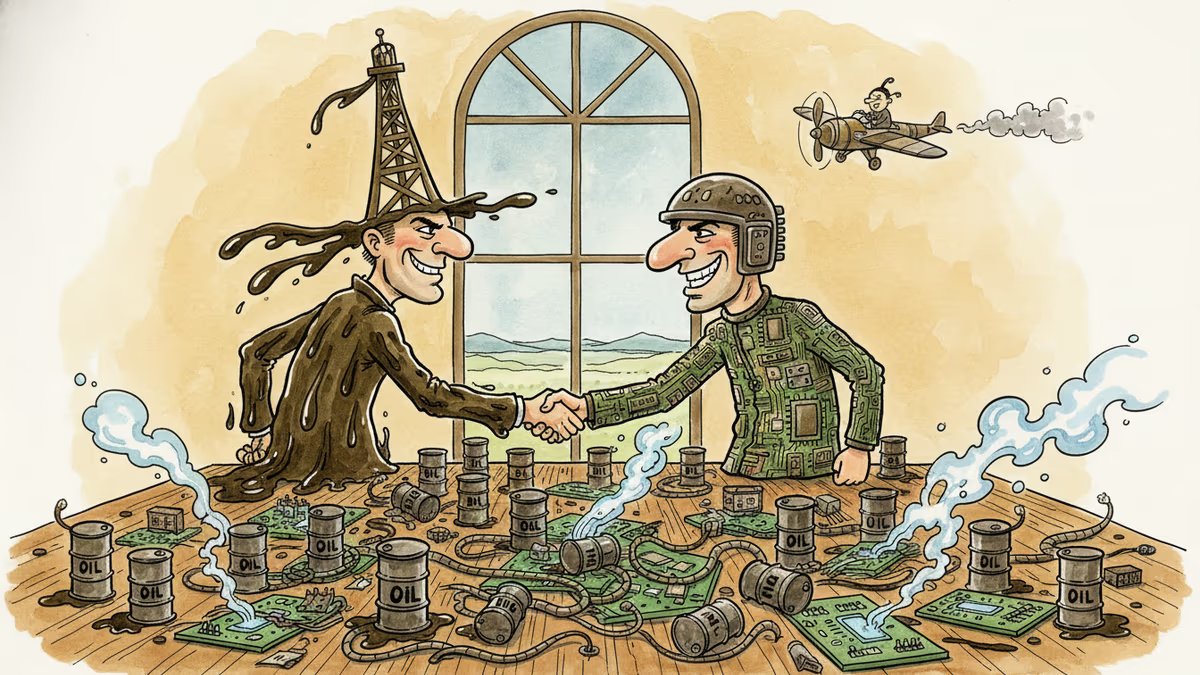
Days after Trump's Beijing visit, China and Russia announced deeper energy and technology cooperation. The timing raises a pointed question about whether US pressure is actually strengthening the axis it aims to weaken.
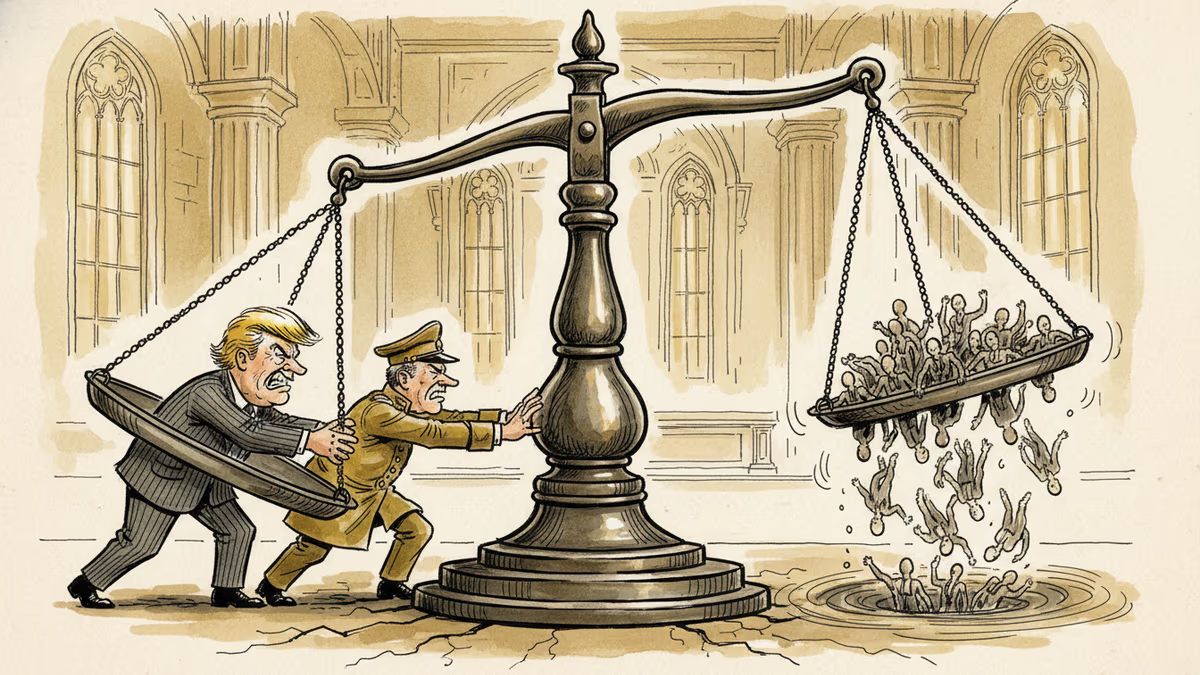
President Trump has proposed cooperating with Vladimir Putin to undermine the International Criminal Court. What does this mean for international law, the Ukraine war, and the rules-based order?

Trump's Beijing visit was a masterclass in diplomatic theater. Warm handshakes, viral selfies, and noodle runs. But Taiwan, Iran, and rare earths remain untouched. Here's what the spectacle obscures.
Mike Waltz exits as Trump weighs resuming strikes on Iran. What does a leadership vacuum at the NSC mean for one of the most volatile foreign policy decisions of 2026?
Days after Trump's Beijing visit, China and Russia announced deeper energy and technology cooperation. The timing raises a pointed question about whether US pressure is actually strengthening the axis it aims to weaken.
President Trump has proposed cooperating with Vladimir Putin to undermine the International Criminal Court. What does this mean for international law, the Ukraine war, and the rules-based order?
Trump's Beijing visit was a masterclass in diplomatic theater. Warm handshakes, viral selfies, and noodle runs. But Taiwan, Iran, and rare earths remain untouched. Here's what the spectacle obscures.
Thoughts
Share your thoughts on this article
Sign in to join the conversation