
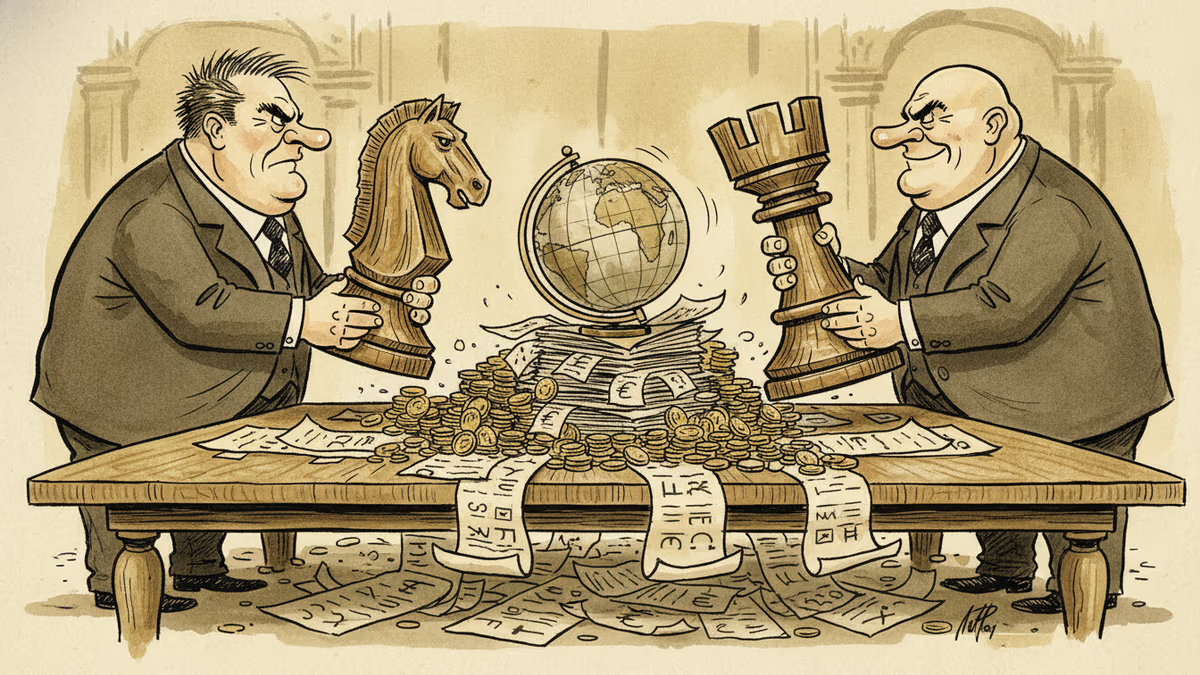
Trump Lands in Beijing—What Does a Truce Actually Cost?
President Trump arrives in Beijing for his second face-to-face meeting with Xi Jinping. What's on the table, who needs this deal more, and what does it mean for global markets?
Months after slapping 145% tariffs on Chinese imports, Donald Trump flew to Beijing on Wednesday for a face-to-face meeting with Xi Jinping—his second. The man who started the trade war is now sitting across the table from the man he started it with.
Why Now, and Why Beijing
The meeting doesn't happen in a vacuum. Earlier this year, the Trump administration imposed triple-digit tariffs on a sweeping range of Chinese goods, triggering retaliatory measures from Beijing that hit American agricultural exports and manufacturing inputs. Both economies absorbed the blows—and both are showing bruises.
The timing matters. In the US, inflation pressures from tariff pass-through costs are becoming a political liability ahead of November's midterm elections. In China, a prolonged property slump and weak domestic consumption have made export revenue more critical than ever. Neither side can afford the fight to go on indefinitely, and both know it. This meeting is less about friendship and more about arithmetic.
What's Actually on the Table
Three clusters of issues are expected to dominate the talks.
First, a phased tariff reduction framework. Washington is believed to favor a selective approach—keeping high-rate tariffs on strategic goods like semiconductors and EV batteries while easing duties on consumer products where American shoppers feel the pinch most directly. Beijing will push back, demanding relief on tech-sector restrictions before agreeing to anything.
Second, fentanyl precursor controls. The Trump administration has consistently demanded that China do more to stop the flow of chemical precursors used to manufacture fentanyl. Beijing has signaled willingness to cooperate—but only in exchange for concessions elsewhere.

Third, military communication channels. After several near-miss incidents in the South China Sea and the Taiwan Strait, both sides have an interest in restoring the hotlines that were suspended during earlier tensions.
Who Needs This Deal More
That question has no clean answer—which is exactly what makes the negotiation so difficult.
Trump needs a visible win. A deal that visibly lowers prices at Walmart would be a potent campaign message. But the US Congress, where hawkish sentiment on China is genuinely bipartisan, could complicate or block any agreement that looks too conciliatory on tech restrictions or Huawei sanctions.
Xi needs stability. China's economy is growing, but not at the pace its leadership prefers. Export markets are a critical pressure valve. But domestically, being seen to capitulate to American pressure carries its own political risks. Xi cannot afford to look weak to his own party.
The asymmetry is real: Trump operates on a shorter political cycle; Xi can, in theory, wait. That gives Beijing a structural negotiating advantage—but only if it's willing to absorb more economic pain in the meantime.
The Skeptics Have a Point
Not everyone believes this summit will produce durable results. After the 2023 San Francisco meeting between the two leaders, relations stabilized briefly—military communication channels were restored, and the tone softened. But the structural tensions never went away. Technology competition, Taiwan, the South China Sea: these are not issues that a joint communiqué can resolve.
Critics argue that summits between the US and China have repeatedly produced optimism followed by backsliding. Each side tends to interpret agreements differently once back home, and domestic political pressures quickly reassert themselves. A photo opportunity is not a policy.
For investors, the calculus is slightly different. Even a partial deal—a tariff pause, a framework agreement—could provide enough certainty for supply chains to stabilize and for markets to exhale. Full resolution is not required for a short-term rally.
This content is AI-generated based on source articles. While we strive for accuracy, errors may occur. We recommend verifying with the original source.
Related Articles
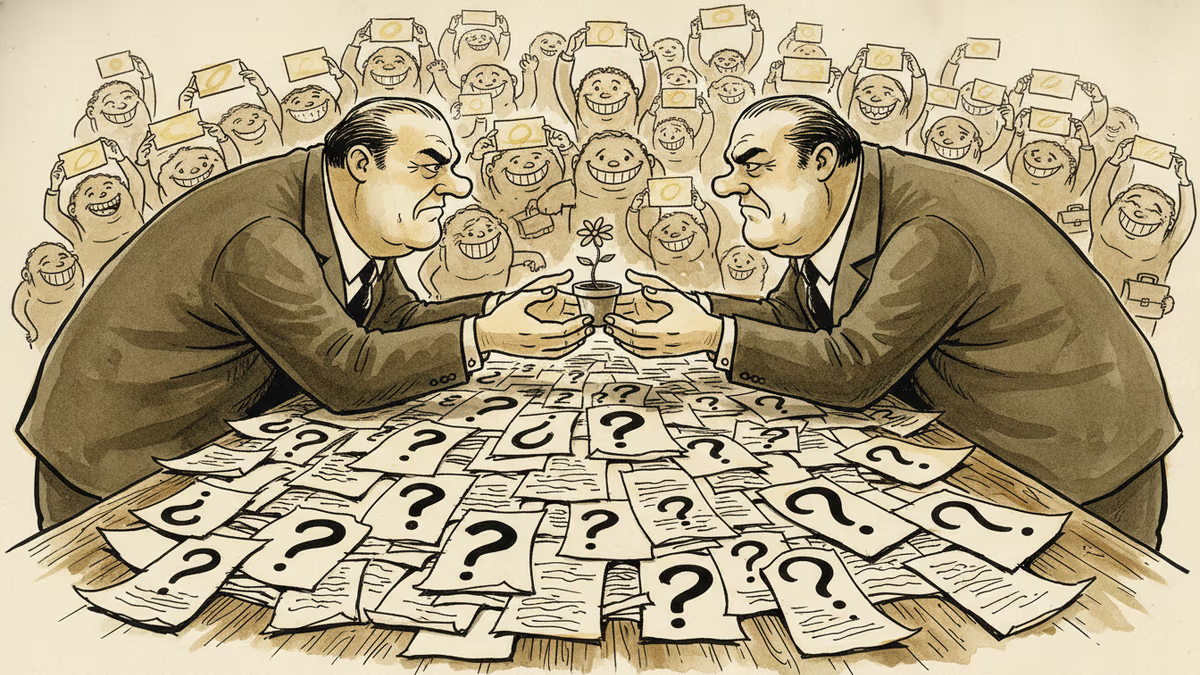
Trump's Beijing visit was a masterclass in diplomatic theater. Warm handshakes, viral selfies, and noodle runs. But Taiwan, Iran, and rare earths remain untouched. Here's what the spectacle obscures.
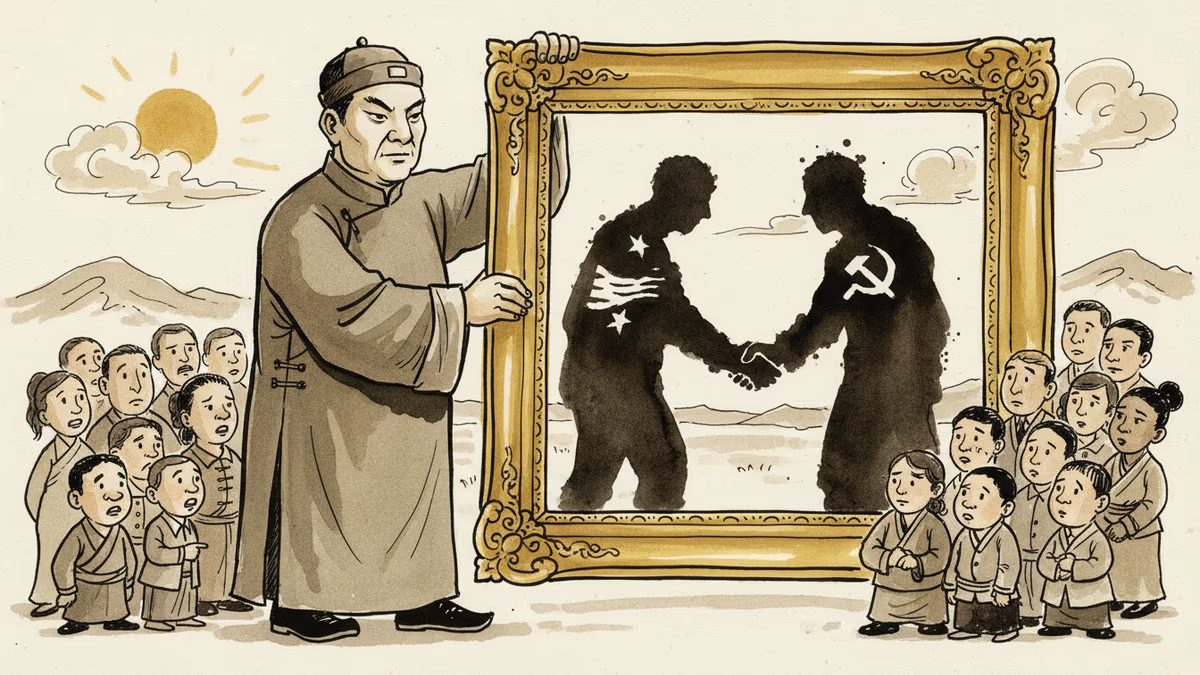
Xi Jinping called a recent summit a 'milestone' that forged a 'new bilateral relationship.' What does this language actually signal—and who stands to gain or lose?
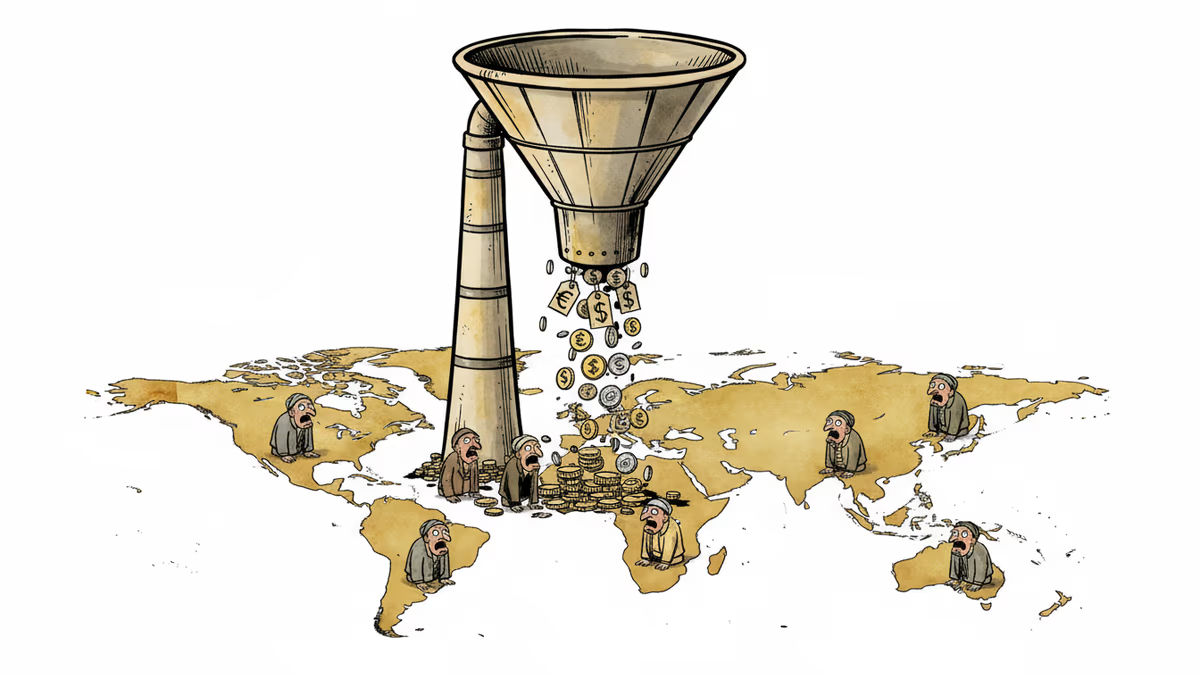
China's consumer prices hit a three-year low in April 2026. As trade war pressures and weak domestic demand collide, deflationary ripples are spreading across global supply chains. Here's what it means for your investments and industries.
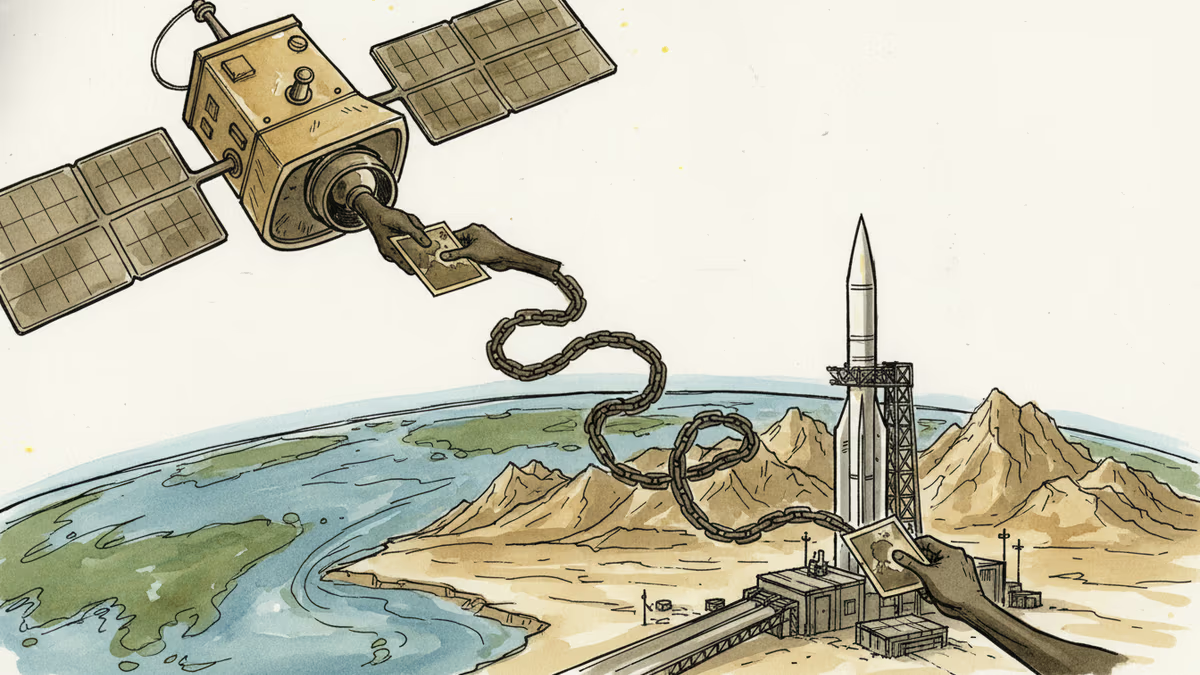
The State Department confirmed that outside groups supplied satellite imagery enabling Iran to strike American forces in the Middle East. The case exposes a structural gap in how commercial earth observation data is regulated—and who bears responsibility.
Trump's Beijing visit was a masterclass in diplomatic theater. Warm handshakes, viral selfies, and noodle runs. But Taiwan, Iran, and rare earths remain untouched. Here's what the spectacle obscures.
Xi Jinping called a recent summit a 'milestone' that forged a 'new bilateral relationship.' What does this language actually signal—and who stands to gain or lose?
China's consumer prices hit a three-year low in April 2026. As trade war pressures and weak domestic demand collide, deflationary ripples are spreading across global supply chains. Here's what it means for your investments and industries.
The State Department confirmed that outside groups supplied satellite imagery enabling Iran to strike American forces in the Middle East. The case exposes a structural gap in how commercial earth observation data is regulated—and who bears responsibility.
Thoughts
Share your thoughts on this article
Sign in to join the conversation