
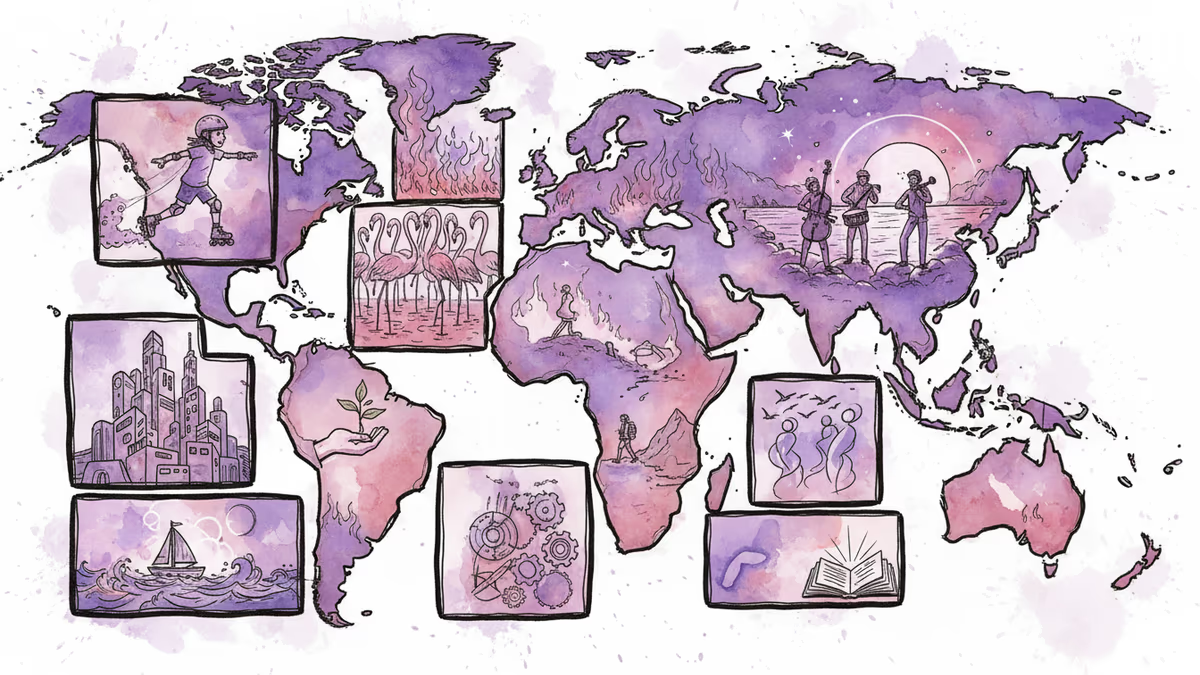
Twelve Frames, One Week: The World in May
From a 13-year-old amputee skating through Gaza's ruins to 450 accordion players on a Slovenian lake—twelve photographs from May 2026 that refuse easy conclusions.
A 13-year-old boy with a prosthetic leg skates through rubble in Gaza. That same week, 450 accordion players gather on the shore of a Slovenian lake and play in unison. Both images were taken within days of each other. That coincidence is not comfort—it's a provocation.
The Boy and the Lake
On May 13, 2026, Akram al-Fayoumi glided past destroyed buildings in Gaza City on inline skates. He lost his right leg and left hand on August 8, 2024, when an Israeli airstrike hit the Abdel Fattah Hammoud School in the Tuffah neighborhood. He received treatment in Egypt and returned to Gaza at the end of April 2026. The photograph doesn't ask for pity. It documents something quieter and harder to name: the persistence of ordinary motion inside extraordinary destruction.
On May 10, in Bled, Slovenia, 450 accordion players performed a mass concert on the lakeside. In Slovenia, the accordion is not merely an instrument—it's a folk identity marker that survived the Communist era and continues to anchor a sense of collective self. The annual gathering is less a concert than a ritual affirmation. We are still here.
The two images sit at opposite ends of almost every spectrum—geography, safety, politics, aesthetics. Yet they share a grammar: people insisting on their own presence in a world that might prefer to look away.
Borders, Machines, and the Pace of Change
On Mother's Day, May 10, children climbed the US-Mexico border wall at Playas de Tijuana, Baja California. The wall is one of the most politically charged structures in the Western Hemisphere. The children treated it as a jungle gym. The discomfort of the photograph comes not from the wall itself, but from the ease with which the children ignore what adults have made it mean.

Meanwhile, at NATO's Sword 26 exercise in Bemowo Piskie, Poland, the Flowcopter FC100 heavy-lift drone hovered with a dummy simulating a wounded soldier. Drone-assisted casualty evacuation is no longer a concept being debated in defense journals—it's being tested in the field. The same week, in Ayutthaya province, Thailand, farmers raced modified agricultural tractors to mark the start of the rice-planting season. The contrast is not ironic so much as structural: technological acceleration and agrarian rhythm have always coexisted, and always will.
In Navi Mumbai, flamingos crowded a pond. On the Baltic coast of Germany's Fehmarn island, a seagull caught a crab mid-flight. Nature, as usual, kept its own schedule.
Flowers, Fire, and Closed Doors
Spain's Girona Flower Festival featured a floral installation shaped like a human face. In Huaibei, Anhui province, Chinese farmers harvested chrysanthemums. In Binzhou, Shandong, peonies bloomed across the fields. Flowers are the most reliable seasonal language on earth.
But in Pembroke Pines, Florida, 7,100 acres burned. The Max Road Miramar fire was approximately 45 percent contained when photographed, driven by a drought described as one of the worst Florida has seen in years. In Two Buttes, Colorado, a leaning shack stood beside a Dust Bowl–era barn. The town's population: 30 people, down from a peak of 2,000. Colorado Governor Jared Polis activated Phase 2 of the state's Drought Response Plan in March 2026. Baca County was ground zero of the catastrophic 1930s Dust Bowl. The visual rhyme between then and now is not metaphor—it's a data point.
At Beijing's Temple of Heaven, the Hall of Prayer for Good Harvests was closed to the public for three days, in preparation for a visit by President Trump and President Xi Jinping. A young girl pressed her eye to the gap in the closed doors. The image is almost too neat a symbol—but symbols become symbols because they keep occurring.
And in Villy-le-Pelloux, France, Lazare—a Continental Toy Spaniel Papillon born in 1995 and said to be the world's oldest living dog—sat for a portrait. He looked entirely unbothered by the week's events.
This content is AI-generated based on source articles. While we strive for accuracy, errors may occur. We recommend verifying with the original source.
Related Articles
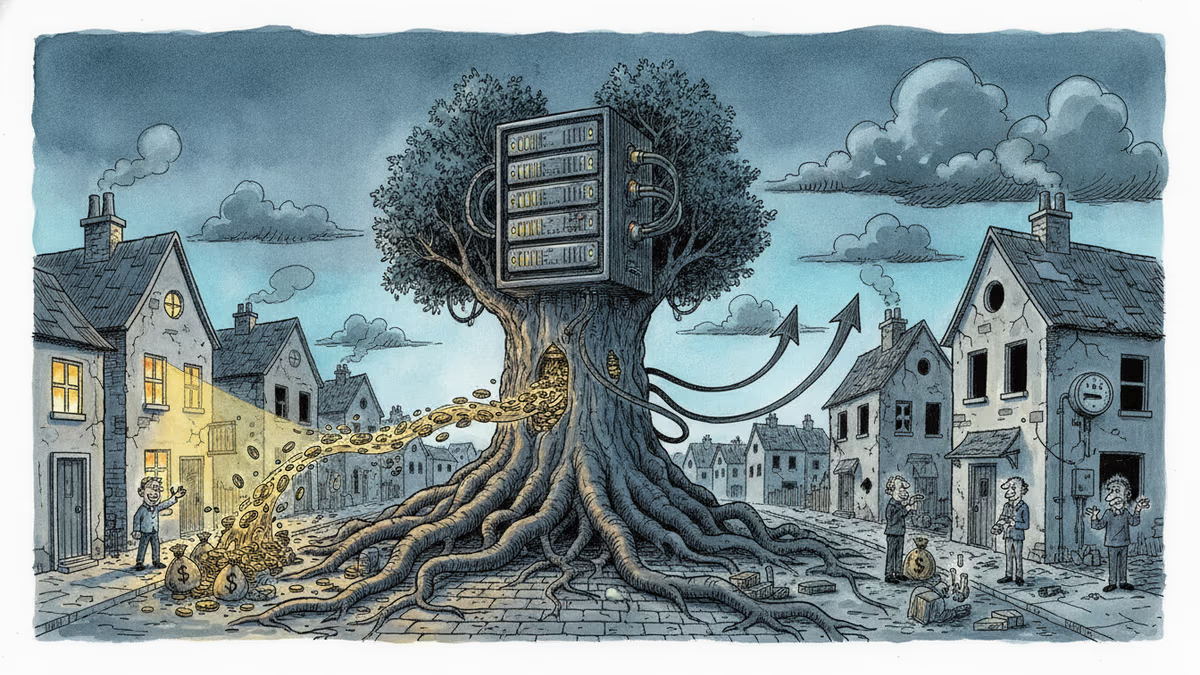
Over 1,200 community actions have pushed back against data centers since 2024. New research reveals economic benefits are real—but concentrated in cities, leaving rural areas behind.
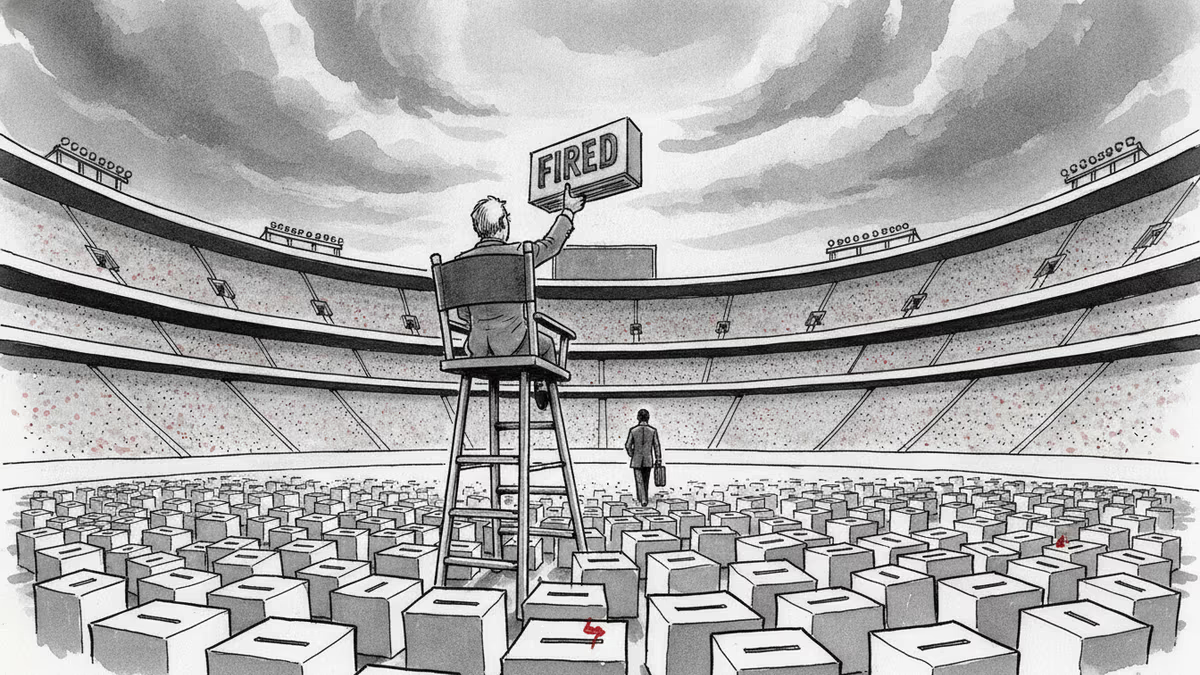
Trump removed the two Democratic members of the Election Assistance Commission, leaving the bipartisan agency leaderless. A Supreme Court ruling made it legal. Here's why a non-crisis can still be a warning sign.
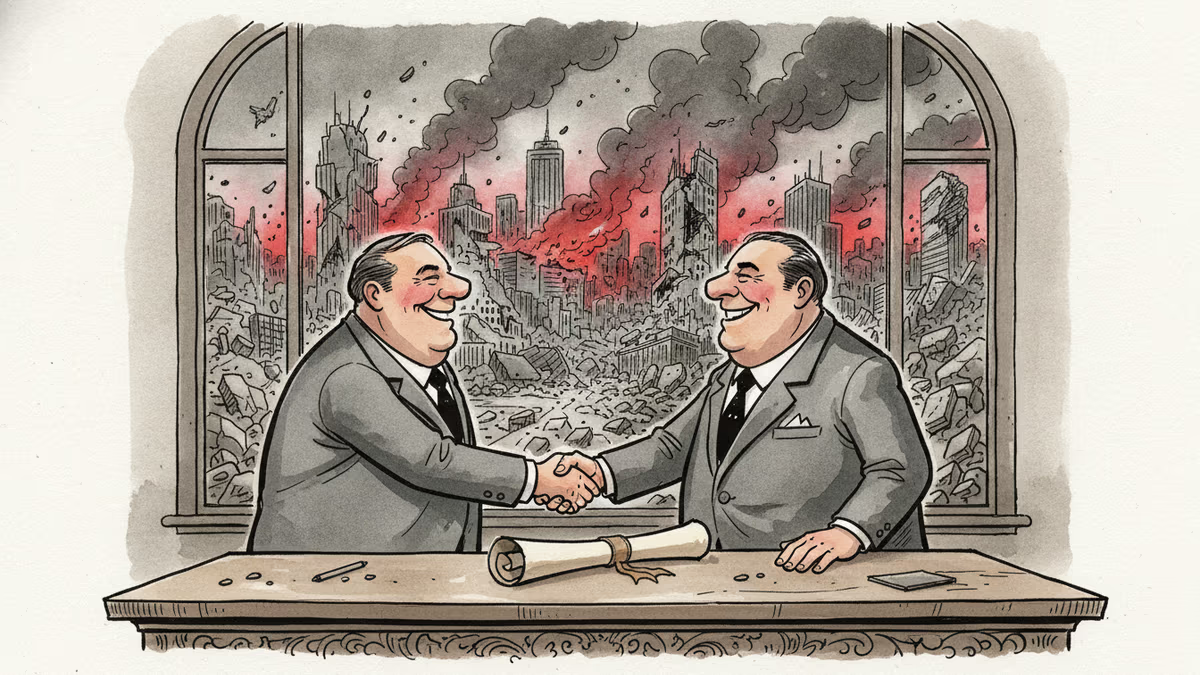
Lebanon and Israel signed a framework agreement in June 2026. Hezbollah rejected it. Israel kept fighting. History suggests this moment is real—and fragile.
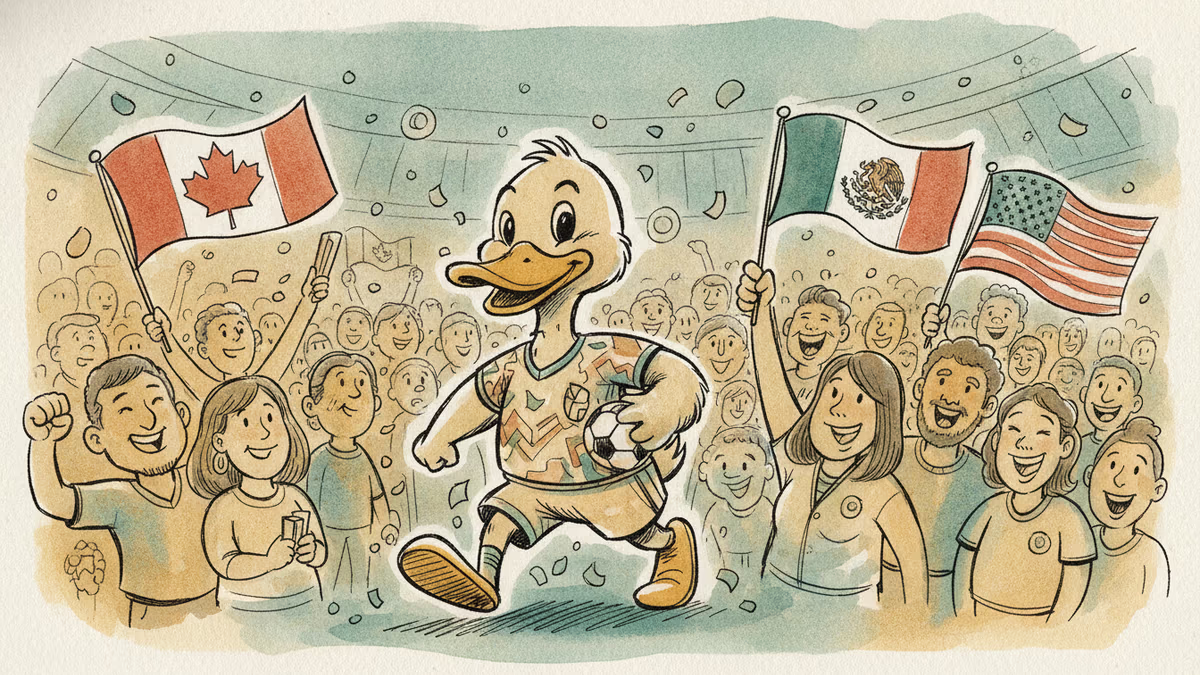
A three-nation World Cup turned fan culture into viral gold — Merlin the duck, Japan's cleanup, and Korea-Mexico bromance top every goal scored.
Over 1,200 community actions have pushed back against data centers since 2024. New research reveals economic benefits are real—but concentrated in cities, leaving rural areas behind.
Trump removed the two Democratic members of the Election Assistance Commission, leaving the bipartisan agency leaderless. A Supreme Court ruling made it legal. Here's why a non-crisis can still be a warning sign.
Lebanon and Israel signed a framework agreement in June 2026. Hezbollah rejected it. Israel kept fighting. History suggests this moment is real—and fragile.
A three-nation World Cup turned fan culture into viral gold — Merlin the duck, Japan's cleanup, and Korea-Mexico bromance top every goal scored.
Thoughts
Share your thoughts on this article
Sign in to join the conversation