
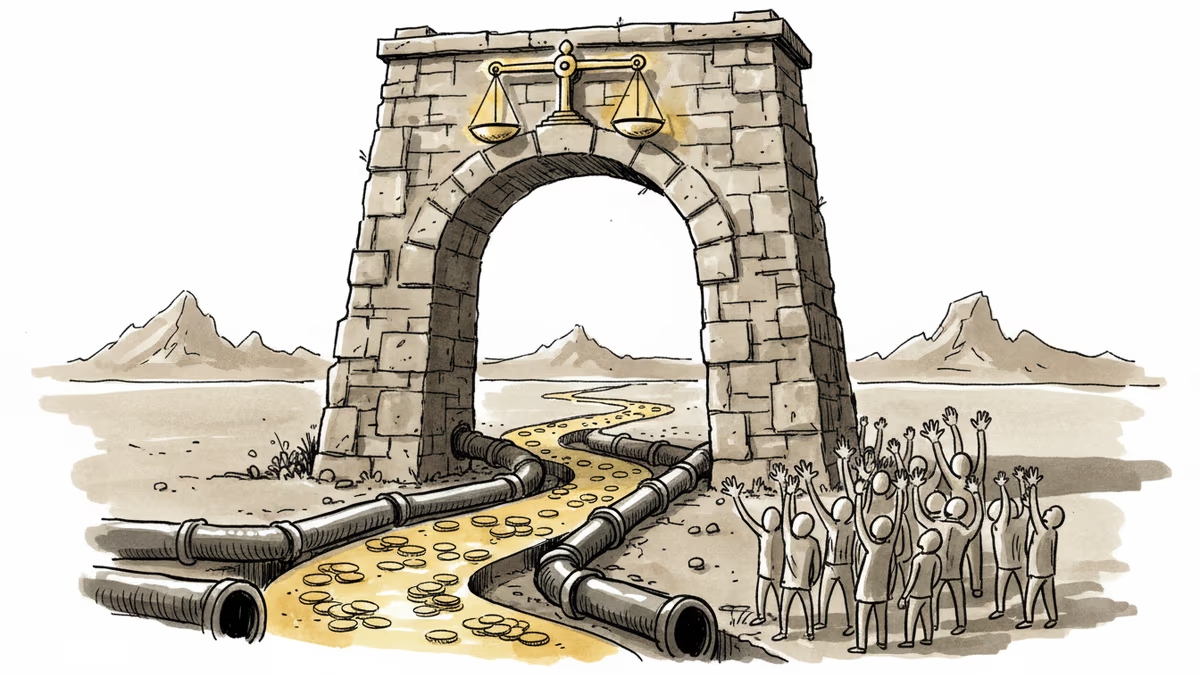
Words Won't Fix It: The Case for Rewiring Global Finance
Attiya Waris argues that human rights progress is structurally blocked by the architecture of global finance—tax treaties, debt traps, and offshore systems built for someone else's benefit.
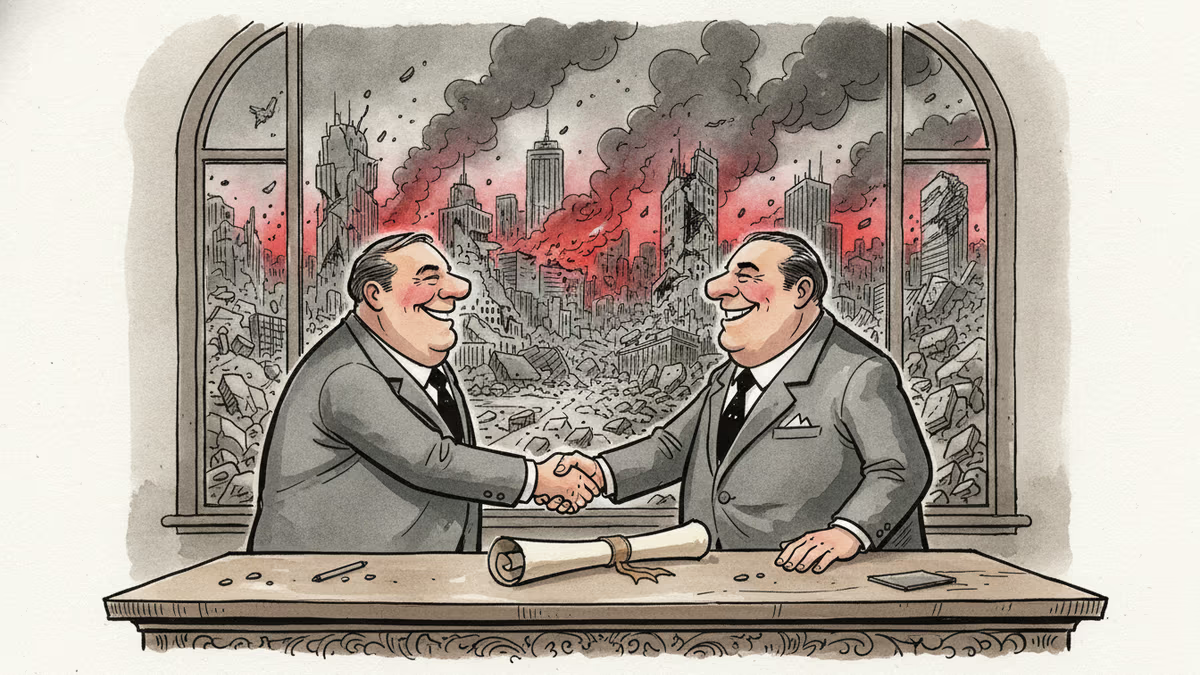
Every year, the United Nations passes hundreds of resolutions affirming human rights. Every year, low-income countries pay more in debt interest than they receive in foreign aid. The words flow one way; the money flows the other.
That contradiction is the starting point for Attiya Waris, a legal scholar and former UN Independent Expert on foreign debt and human rights, in a recent essay published in Aeon. Her argument is straightforward but unsettling: no amount of human rights rhetoric will produce real change until the architecture of global finance is fundamentally reformed.
The System Isn't Broken. It's Working as Designed.
Waris isn't primarily interested in blaming corrupt governments or incompetent bureaucracies. Her target is the underlying structure—the web of tax treaties, offshore financial centers, and debt negotiation frameworks that governs how money moves across borders. Much of this architecture was designed in the mid-20th century, before decolonization reshaped the political map, and it was designed largely by and for wealthy creditor nations.
The numbers are difficult to dismiss. According to the Tax Justice Network, approximately $480 billion in taxes is lost globally each year to corporate tax avoidance and offshore wealth concealment—much of it drained from economies in Africa, South Asia, and Latin America that can least afford the loss. World Bank data shows that debt service payments by low-income countries hit record highs in 2023, with several nations spending more on external debt interest than on healthcare and education combined.
Waris frames this not as an economic inefficiency but as a human rights violation in slow motion. If a government cannot collect sufficient tax revenue, it cannot build schools—and the right to education becomes a hollow promise. If debt repayments consume the health budget, the right to health exists only on paper. Finance and rights, in her analysis, are not separate domains. One determines the other.
Why This Argument Lands Now

The timing of this debate matters. The UN designated 2025 a year of action on development finance, culminating in the Fourth International Conference on Financing for Development (FfD4) in Seville, Spain. Proposals on the table included a global minimum corporate tax, reformed debt restructuring mechanisms, and expanded roles for multilateral development banks. The outcome, by most accounts, fell short of binding commitments.
Meanwhile, the retreat of US multilateral engagement and cuts to foreign aid are pushing developing nations deeper into commercial debt markets—precisely the terrain where Waris's structural critique bites hardest. The more a country depends on private creditors and international capital markets, the more exposed it becomes to the asymmetries built into the system. The irony is acute: human rights discourse is louder than ever, while the material conditions that make rights real are deteriorating for hundreds of millions of people.
The Counterargument Deserves a Hearing
Not everyone finds this framework persuasive, and the objections are worth taking seriously. A significant body of development economics holds that domestic governance failures—corruption, weak rule of law, insecure property rights—explain more of persistent poverty than external financial structures do. On this view, structural reform without institutional strengthening is insufficient at best, and a convenient deflection at worst.
There's also a case that international institutions have evolved. The IMF has shifted its rhetoric on austerity; the OECD's Base Erosion and Profit Shifting (BEPS) framework has narrowed some avenues for corporate tax avoidance; debt relief initiatives like HIPC and the G20's Common Framework have provided some breathing room for distressed economies.
Waris's sharpest response to these points is not to deny progress but to ask who designed it. The OECD's landmark global minimum corporate tax agreement, celebrated as a breakthrough, was negotiated primarily among wealthy nations. Analysis by the South Centre and others suggests that the bulk of resulting tax revenue will accrue to high-income countries, not to the developing economies where much of the underlying economic activity occurs. Reform, in other words, can reinforce the existing hierarchy as easily as it can challenge it.
What Structural Reform Would Actually Require
Waris and scholars in the same tradition point to several concrete shifts: moving international tax negotiations from the OECD to the UN, where developing countries have equal voting representation; creating a standing multilateral debt restructuring mechanism with binding authority; closing the legal loopholes that allow capital to be stripped from productive economies into offshore secrecy jurisdictions; and rethinking conditionality in IMF lending to allow governments fiscal space to invest in rights-fulfilling public services.
None of these is technically impossible. All of them face fierce resistance from the financial interests and powerful states that benefit from the current arrangement. That resistance—not a lack of good ideas—is what Waris identifies as the real obstacle.
This content is AI-generated based on source articles. While we strive for accuracy, errors may occur. We recommend verifying with the original source.
Related Articles
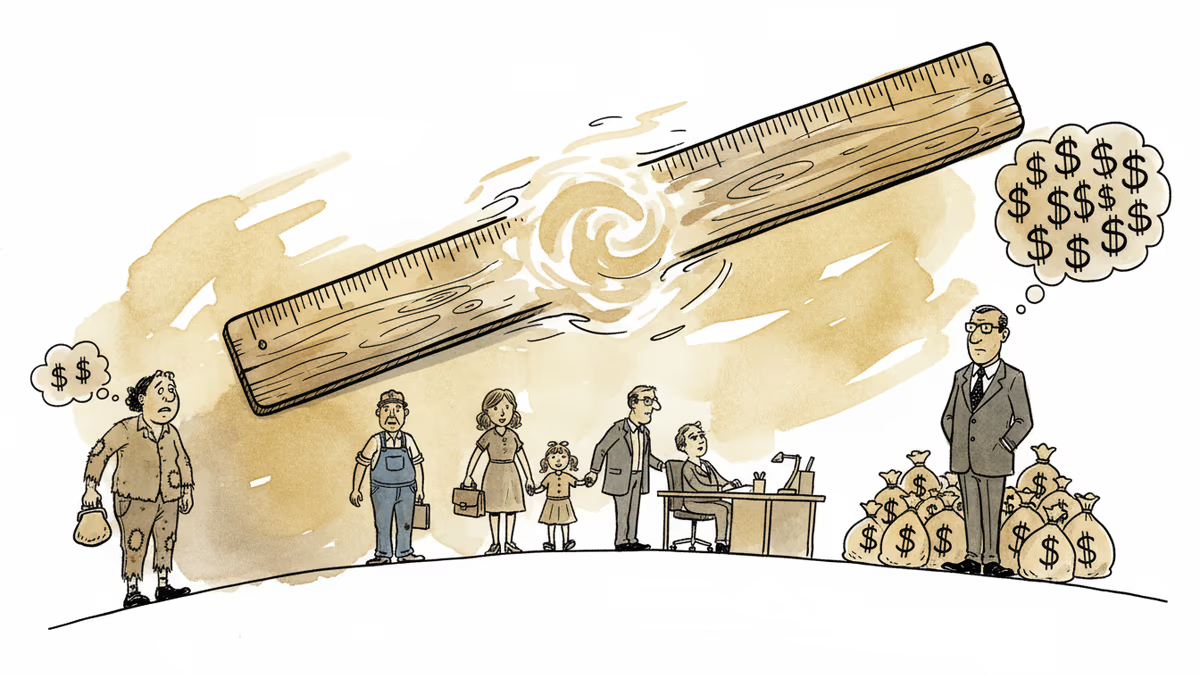
A Wall Street investor sparked debate by proposing a $140,000 poverty line. But an economist argues the real problem isn't where we draw the line—it's drawing one at all. His alternative reveals America's hidden poverty crisis.
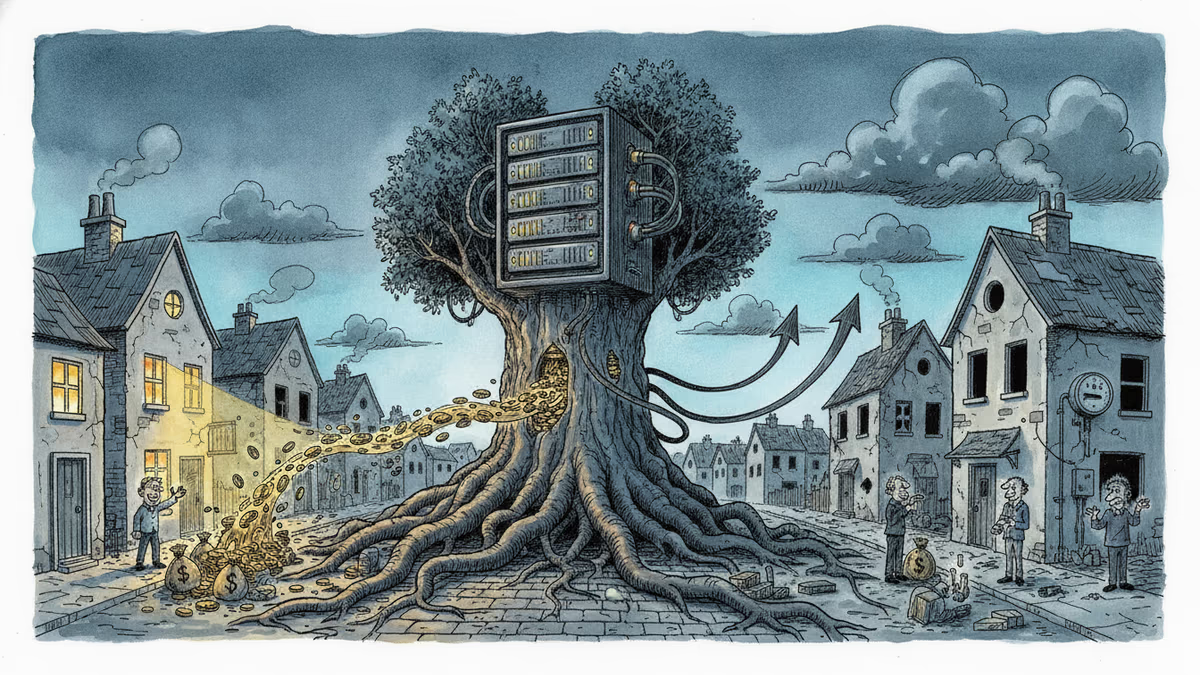
Over 1,200 community actions have pushed back against data centers since 2024. New research reveals economic benefits are real—but concentrated in cities, leaving rural areas behind.
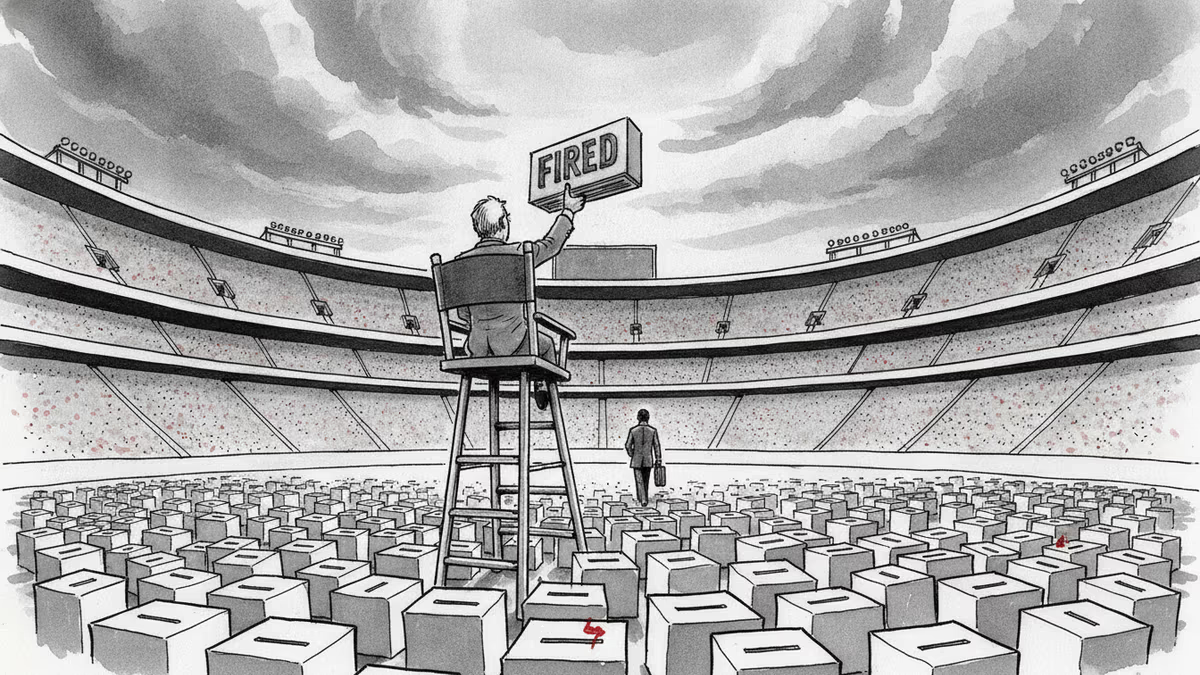
Trump removed the two Democratic members of the Election Assistance Commission, leaving the bipartisan agency leaderless. A Supreme Court ruling made it legal. Here's why a non-crisis can still be a warning sign.
Lebanon and Israel signed a framework agreement in June 2026. Hezbollah rejected it. Israel kept fighting. History suggests this moment is real—and fragile.
A Wall Street investor sparked debate by proposing a $140,000 poverty line. But an economist argues the real problem isn't where we draw the line—it's drawing one at all. His alternative reveals America's hidden poverty crisis.
Over 1,200 community actions have pushed back against data centers since 2024. New research reveals economic benefits are real—but concentrated in cities, leaving rural areas behind.
Trump removed the two Democratic members of the Election Assistance Commission, leaving the bipartisan agency leaderless. A Supreme Court ruling made it legal. Here's why a non-crisis can still be a warning sign.
Lebanon and Israel signed a framework agreement in June 2026. Hezbollah rejected it. Israel kept fighting. History suggests this moment is real—and fragile.
Thoughts
Share your thoughts on this article
Sign in to join the conversation