
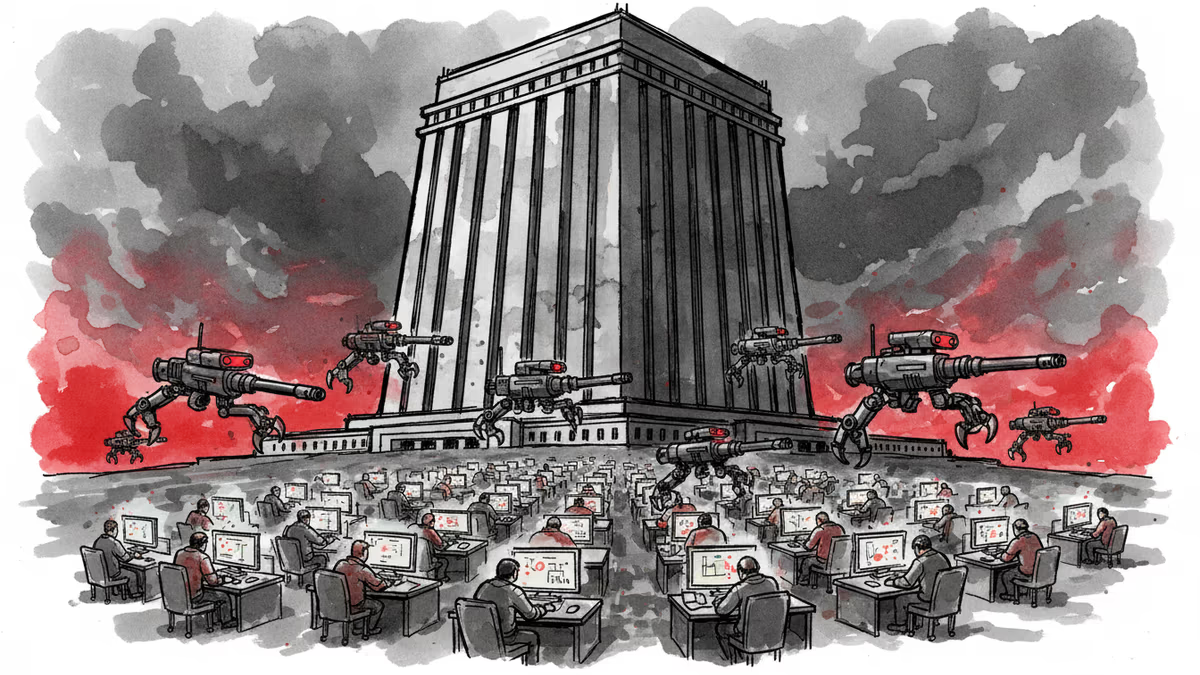
The Pentagon's AI Ultimatum That Has Tech Workers Questioning Everything
The Department of Defense demands unrestricted military access to Anthropic's AI technology, sparking industry-wide ethical dilemmas about autonomous weapons and mass surveillance.
Hundreds of billions of dollars hang in the balance. So does the future of AI warfare.
The Pentagon has delivered an ultimatum to Anthropic that's reverberating across Silicon Valley: grant the US military unchecked access to your AI technology—including for mass surveillance and fully autonomous lethal weapons—or risk being branded a "supply chain risk" and losing massive government contracts.
It's not just about one company anymore. Tech workers across the industry are suddenly scrutinizing their own employers' military contracts, wondering what kind of future they're helping to build.
The Guardrails Under Attack
For weeks, the Department of Defense has been negotiating with Anthropic, pressuring the company to remove the ethical safeguards it built into its AI systems. These "guardrails" were designed to prevent the technology from being used for harmful purposes—exactly the kind of restrictions the military now wants eliminated.
Anthropic has positioned itself as a leader in "constitutional AI," developing systems aligned with human values and safety. But faced with potential exclusion from lucrative government contracts, those principles are being tested like never before.
The pressure isn't subtle. It's a stark binary choice: comply or face economic consequences that could cripple the company.
An Industry-Wide Reckoning
What makes this moment different is how it's forcing uncomfortable questions throughout the tech sector. Engineers at Google, Microsoft, Amazon, and dozens of smaller companies are looking at their own organizations' defense contracts with fresh eyes.

"I got into tech to solve problems, not create weapons," says one software engineer at a major cloud provider, speaking on condition of anonymity. "But when you're working on general-purpose AI systems, the line between helpful and harmful gets really blurry really fast."
The traditional "technology is neutral" defense—that tools themselves aren't good or evil, only their applications—feels increasingly inadequate in an age of autonomous systems that can make life-or-death decisions without human intervention.
The Economics of Ethical Compromise
The financial stakes are enormous. Government contracts represent billions in revenue for major tech companies, and being designated a "supply chain risk" could effectively lock a company out of the most lucrative market segment.
But there's another calculation at play: talent retention. Many of the brightest engineers, particularly younger ones, are increasingly unwilling to work on projects with military applications. Companies that embrace defense work might find themselves struggling to attract top talent.
Anthropic's dilemma encapsulates a broader tension in the industry between commercial success and ethical principles. It's a test case that will likely influence how other AI companies navigate similar pressures.
The Slippery Slope Scenario
Critics worry about precedent. If the Pentagon can pressure one AI company into removing safety measures, what stops it from making similar demands of others? The result could be a race to the bottom, where competitive pressures force companies to abandon ethical safeguards.
Defense officials, meanwhile, argue that national security requires access to cutting-edge technology. They point to adversaries like China and Russia, who they claim face no such ethical constraints in developing military AI.
Beyond the Binary Choice
Some industry observers suggest there might be middle ground—ways to support national defense without completely abandoning AI safety principles. These could include limited partnerships for specific defensive applications, or collaborative development of international AI governance frameworks.
But such nuanced solutions require time and goodwill that may not exist in the current high-pressure environment.
Authors
Related Articles
Samsung and SK unveiled a chip and AI investment package worth thousands of trillions of won on June 29. The headline number swings wildly by outlet, but the real contest isn't capital — it's water and power.
Viral videos show 2026 graduates jeering executives who praise AI at commencement ceremonies. It's not just rudeness — it's a signal about who pays for technological optimism.
Filipino virtual assistants using AI to ghost-manage LinkedIn profiles for executives is now a structured industry. 30 comments a day, fake engagement rings, and a platform struggling to tell real from fabricated.
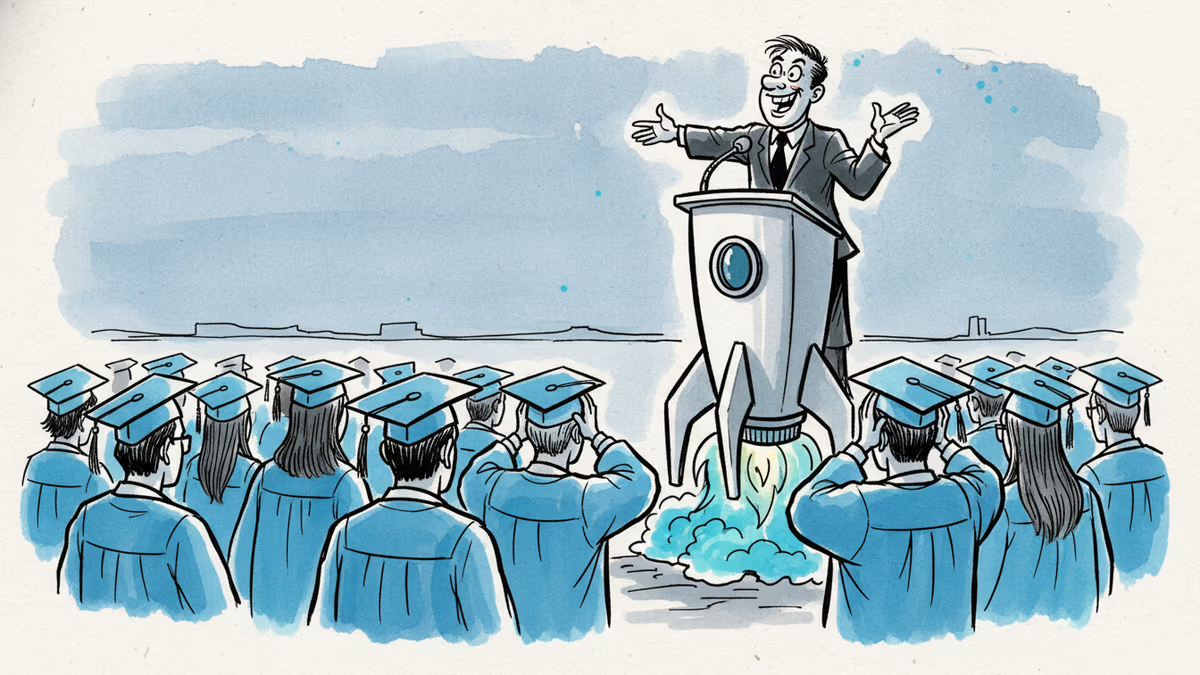
Two commencement speakers learned the hard way that AI enthusiasm doesn't land well with today's graduates. The backlash reveals a widening gap between tech optimism and Gen Z's economic reality.
Samsung and SK unveiled a chip and AI investment package worth thousands of trillions of won on June 29. The headline number swings wildly by outlet, but the real contest isn't capital — it's water and power.
Viral videos show 2026 graduates jeering executives who praise AI at commencement ceremonies. It's not just rudeness — it's a signal about who pays for technological optimism.
Filipino virtual assistants using AI to ghost-manage LinkedIn profiles for executives is now a structured industry. 30 comments a day, fake engagement rings, and a platform struggling to tell real from fabricated.
Two commencement speakers learned the hard way that AI enthusiasm doesn't land well with today's graduates. The backlash reveals a widening gap between tech optimism and Gen Z's economic reality.
Thoughts
Share your thoughts on this article
Sign in to join the conversation