
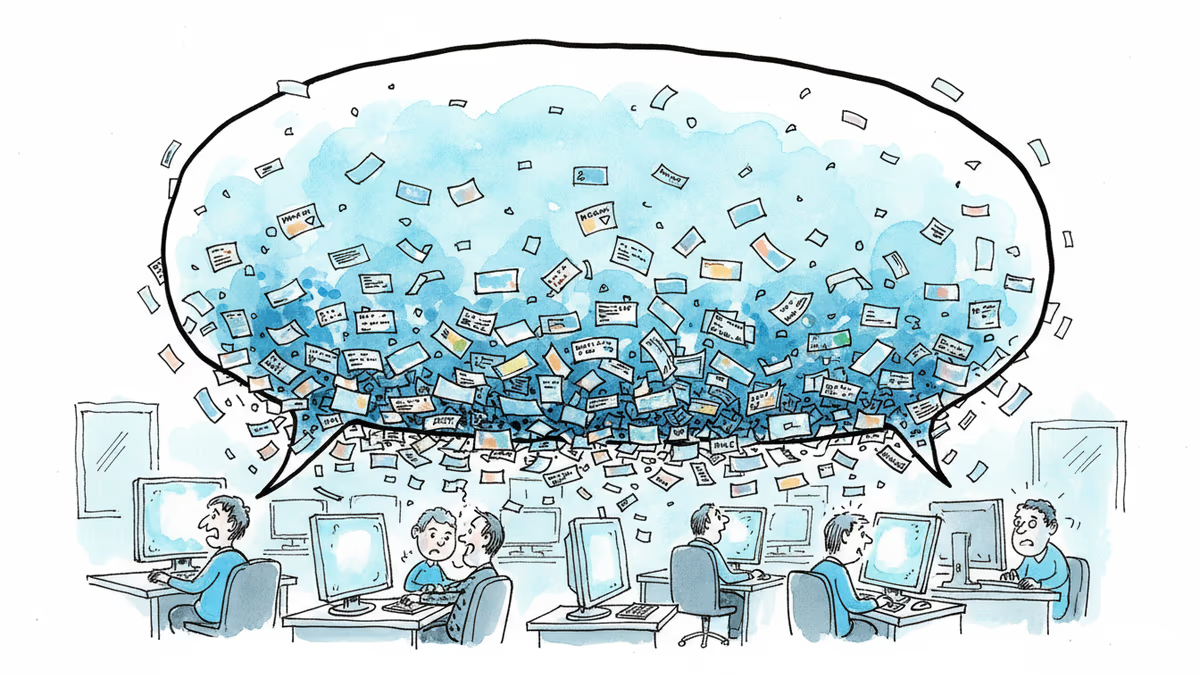
ChatGPT Gets Ads Today. Will You Keep Using It?
OpenAI begins testing ads in ChatGPT today, marking a shift from subscription-only to ad-supported AI. Analyzing the implications for users, competitors, and the future of AI monetization.
200 Million Users Are About to See Something New
Starting today, OpenAI is testing ads in ChatGPT, according to CNBC. These "clearly labeled" advertisements will appear in a separate area beneath your chat conversations—exactly as the company announced last month.
A source close to the situation reveals that OpenAI "expects ads to make up less than half of its revenue long term." The timing is telling. Just last week, competitor Anthropic aired a Super Bowl commercial taking a jab at OpenAI, saying "ads are coming to AI" while emphasizing that its Claude chatbot would remain ad-free.
The Subscription Model Hits a Wall
Why ads, why now? The math is simple but brutal. OpenAI's current revenue streams—ChatGPT Plus at $20/month and enterprise services—can't cover an estimated $11 billion annual operating cost. Training and running AI models at this scale isn't just expensive; it's financially unsustainable without diversified revenue.
The company faces a classic tech dilemma: raise prices and lose users, or find alternative revenue streams. Google solved this puzzle decades ago with search ads. Now OpenAI is betting the same formula works for conversational AI.
Users Face the Attention Economy Trade-off

Here's what's changing: ads will only appear for logged-in users. This creates a new hierarchy in AI access:
Free users: Accept ads for continued access Plus subscribers: Presumably ad-free experience (though OpenAI hasn't confirmed this) Enterprise users: Likely shielded from consumer advertising
The critical question isn't whether ads will appear—it's whether they'll be useful or intrusive. Contextual ads that actually help with your queries? That could work. Random banner ads interrupting your workflow? That's a recipe for user exodus.
Competitors Smell Opportunity
Anthropic is already capitalizing on the moment, positioning Claude as the "ad-free alternative." But this stance might be temporary. Running competing AI models costs just as much, and venture funding won't last forever.
Microsoft's Copilot, integrated into Office 365, has a different advantage—it's bundled into existing enterprise subscriptions. Google's Bard benefits from the company's advertising expertise and infrastructure. Each player is testing different monetization strategies, and OpenAI just became the guinea pig.
The Regulatory Wild Card
European regulators are already scrutinizing AI companies over data usage and market dominance. Ads in AI conversations raise new questions: How will user data be used for targeting? Will conversations become training data for advertising algorithms? The EU's Digital Services Act might have something to say about AI advertising practices.
In the US, the FTC is watching how AI companies handle consumer data. Advertising-supported AI could trigger new regulatory attention, especially around transparency and user consent.
Authors
Related Articles
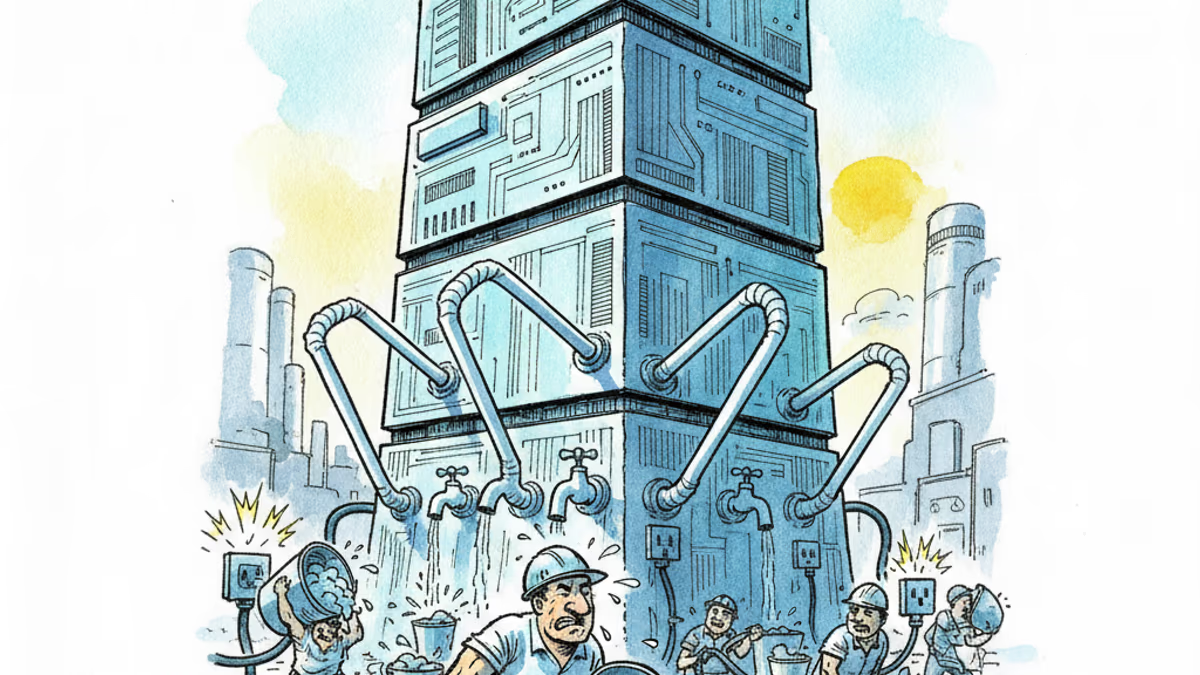
Samsung and SK unveiled a chip and AI investment package worth thousands of trillions of won on June 29. The headline number swings wildly by outlet, but the real contest isn't capital — it's water and power.
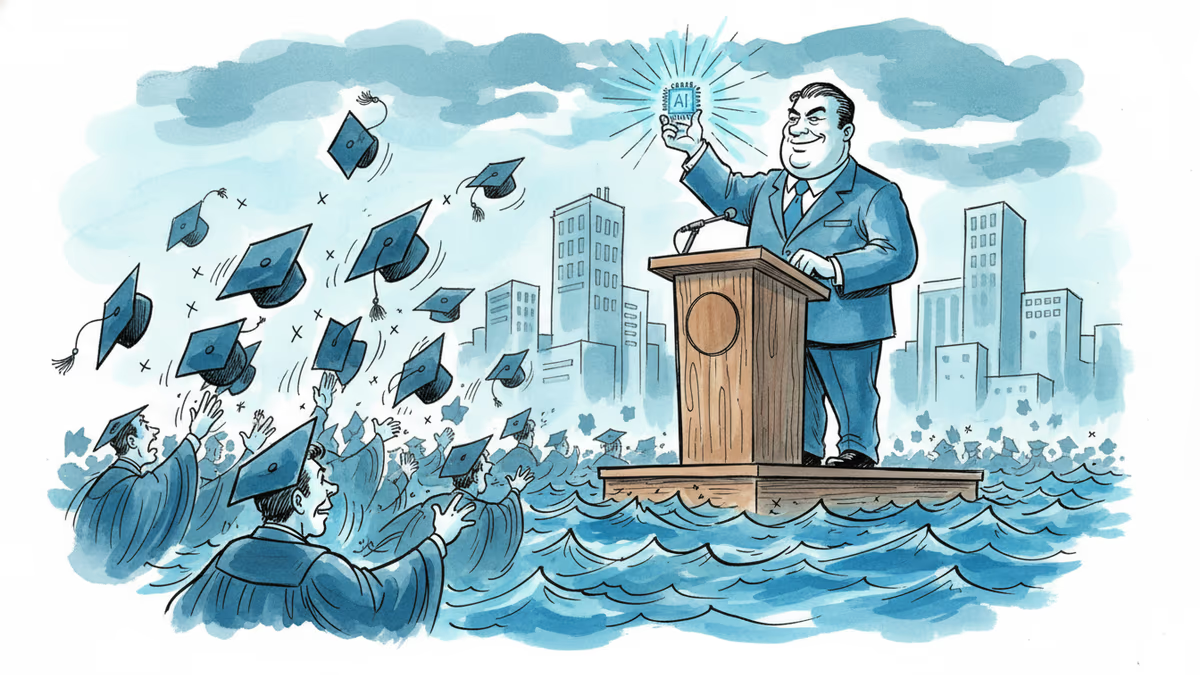
Viral videos show 2026 graduates jeering executives who praise AI at commencement ceremonies. It's not just rudeness — it's a signal about who pays for technological optimism.
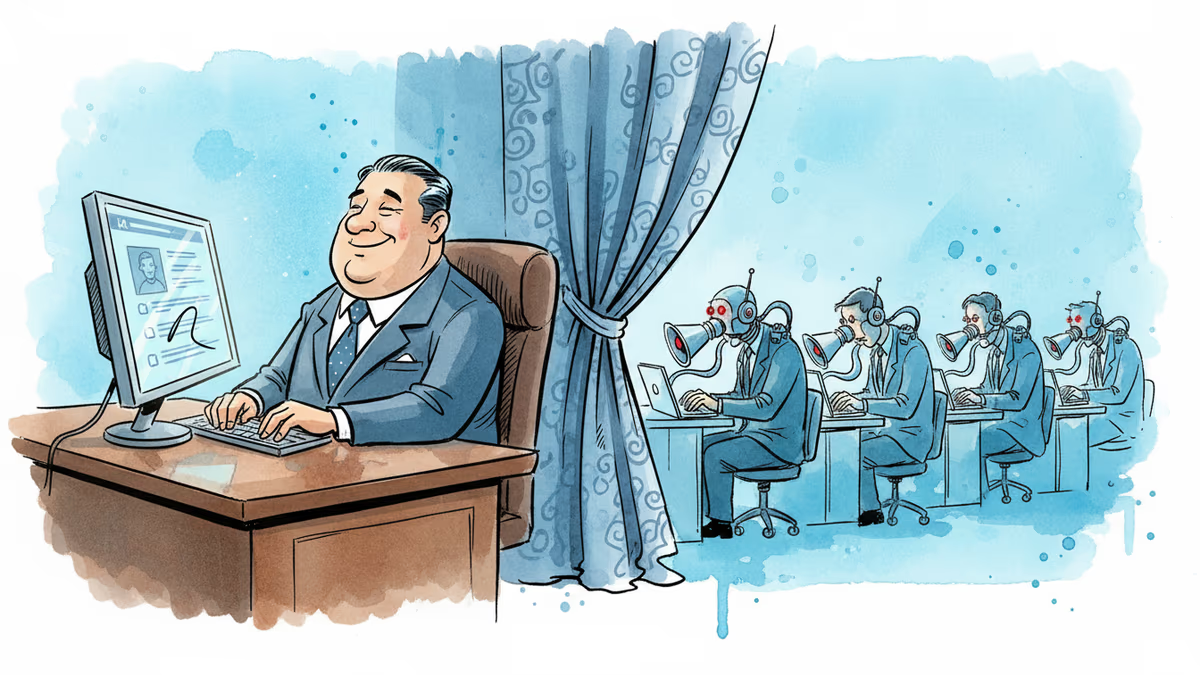
Filipino virtual assistants using AI to ghost-manage LinkedIn profiles for executives is now a structured industry. 30 comments a day, fake engagement rings, and a platform struggling to tell real from fabricated.
Two commencement speakers learned the hard way that AI enthusiasm doesn't land well with today's graduates. The backlash reveals a widening gap between tech optimism and Gen Z's economic reality.
Samsung and SK unveiled a chip and AI investment package worth thousands of trillions of won on June 29. The headline number swings wildly by outlet, but the real contest isn't capital — it's water and power.
Viral videos show 2026 graduates jeering executives who praise AI at commencement ceremonies. It's not just rudeness — it's a signal about who pays for technological optimism.
Filipino virtual assistants using AI to ghost-manage LinkedIn profiles for executives is now a structured industry. 30 comments a day, fake engagement rings, and a platform struggling to tell real from fabricated.
Two commencement speakers learned the hard way that AI enthusiasm doesn't land well with today's graduates. The backlash reveals a widening gap between tech optimism and Gen Z's economic reality.
Thoughts
Share your thoughts on this article
Sign in to join the conversation