
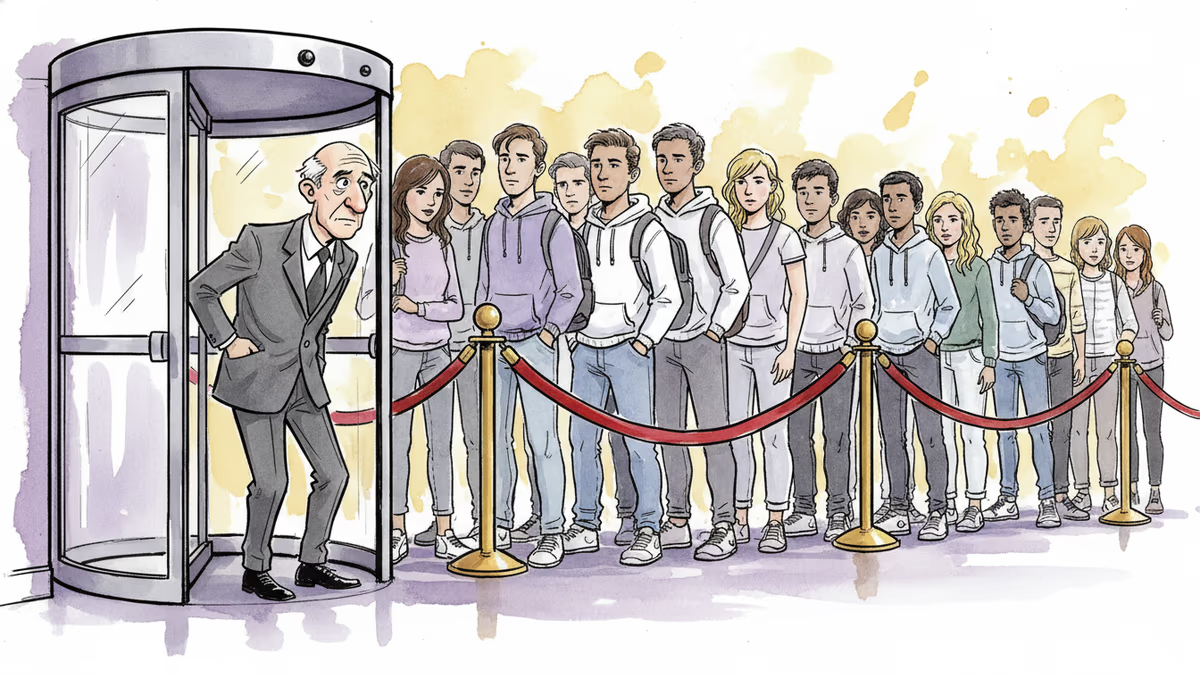
You'll Just Know" — Except You Won't
The average U.S. retirement age has climbed from 57 to well past 65. As people live longer and social bonds outside work erode, the old script for stepping away no longer holds. Here's why.
In The Devil Wears Prada 2, Miranda Priestly — still impeccably dressed, still feared — asks her husband a question that has no clean answer: when does a person know it's time to step aside?
"You'll just know," he says.
It's the kind of reassurance that sounds wise until you actually need it. Because in 2026, for a growing number of working adults, that moment of clarity isn't arriving.
The Retirement Script Has Been Rewritten
For most of the 20th century, retirement followed a legible arc. You worked, you stopped, you rested. The Social Security Act of 1935 and the postwar expansion of employer pensions gave that arc institutional scaffolding. In 1991, the average American retired at 57.
That number has been climbing ever since. According to the U.S. Bureau of Labor Statistics, adults 65 and older are now one of the fastest-growing segments of the labor force. In 2024, nearly 1 in 5 Americans in that age bracket held a job — a figure that rose more than 33% between 2015 and 2024. A 2024 AARP survey found that roughly 1 in 4 adults over 50 expect to never retire at all.
The reasons are layered. Some older workers stay because they want to — staying engaged, purposeful, visible. Others stay because they have to: rising living costs, employer-sponsored health coverage, caregiving obligations, and retirement savings that simply aren't enough. The financial and the existential are tangled together in ways that make the old script nearly impossible to follow.
The Contradiction at the Heart of "Successful Aging"
Society is sending older adults two messages at once, and they point in opposite directions.

The first: stay active, stay productive, stay relevant. The concept of "successful aging" — dominant in public health and gerontology — frames continued workforce participation as a marker of vitality and purpose. Retire too early and you're giving up.
The second: get out of the way. In May 2026, Yale law professor Samuel Moyn published a cover story in Harper's Magazine titled "The Old Guard," arguing that America has become a gerontocracy — a system in which older generations disproportionately control politics, wealth, and institutions, leaving younger Americans economically blocked and politically alienated.
Moyn's critique carries real weight. Concentrated power among older cohorts is a structural problem worth taking seriously. But the argument risks flattening a more complicated reality: many of the older adults staying in the workforce aren't clinging to power. They're managing financial precarity, navigating healthcare gaps, and searching for the social connection that work — however imperfectly — still provides.
What Work Is Actually Providing
This is where the conversation gets uncomfortable.
Research in gerontology and occupational psychology increasingly shows that work, particularly in later life, does far more than generate income. It provides structure, routine, social contact, and a sense of being needed — the raw materials of identity. For many people, the job isn't just what they do. It's a significant part of who they are.
At the same time, the institutions that once offered those things outside of work have been hollowing out for decades. Civic organizations, religious communities, neighborhood associations, even bowling leagues — the connective tissue of community life that Robert Putnam documented in Bowling Alone — have declined sharply. What's left, for many people, is the workplace.
The U.S. Surgeon General has formally designated loneliness and social isolation as public health crises. Work, for all its frustrations, remains one of the few places where adults consistently feel visible, useful, and socially anchored. That's not an argument for working until you collapse. Retirement, for many people, genuinely improves mental health — less stress, more autonomy, more time. But for those whose professional identity is deeply fused with their sense of self, stepping away can trigger something closer to grief than relief.
A System Designed for a Shorter Life
The retirement architecture most Americans still rely on was built for a world where people didn't live this long. Social Security's original full retirement age assumed a lifespan that, for many Americans today, ends 20 to 30 years after they stop working. The financial math was never updated to match the biological reality.
What we're witnessing isn't primarily a story about ambition or generational selfishness. It's a story about a system that extended human lifespans without extending the social infrastructure — the community, the purpose, the belonging — that makes those extra decades livable.
The generational tension is real. So is the financial insecurity driving older workers to stay. So is the loneliness that makes leaving feel like more than just a career decision. These aren't competing narratives. They're all true at once.
This content is AI-generated based on source articles. While we strive for accuracy, errors may occur. We recommend verifying with the original source.
Related Articles
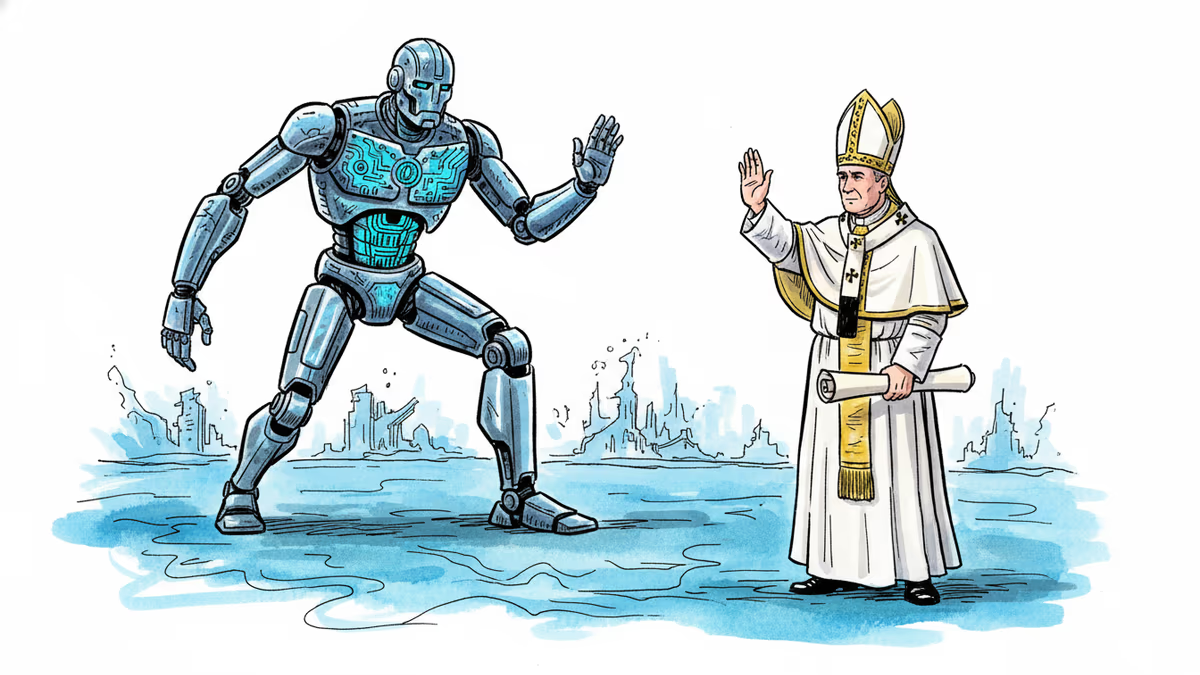
Pope Leo XIV's first encyclical, Magnifica humanitas, calls for democratic guardrails, labor protections, and moral limits on AI. What does it mean when the world's oldest institution confronts its newest disruption?
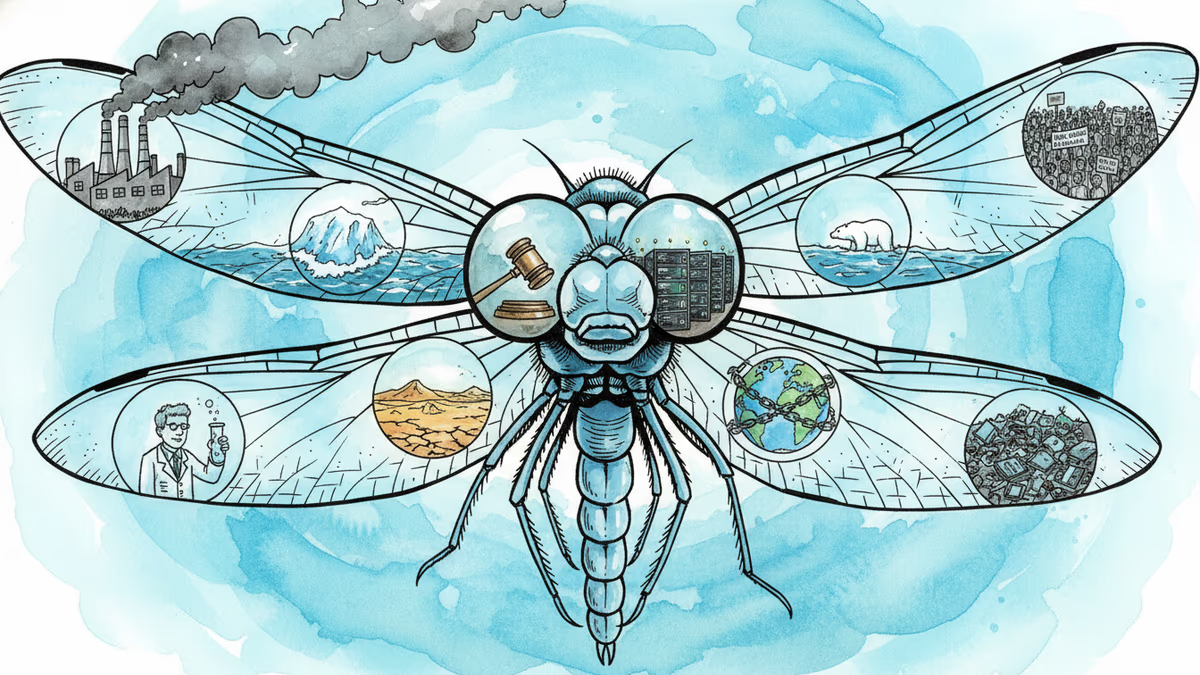
AI looks like liberation, threat, or environmental disaster depending on where you stand. A framework of nine competing narratives reveals why single-lens thinking is the real danger.
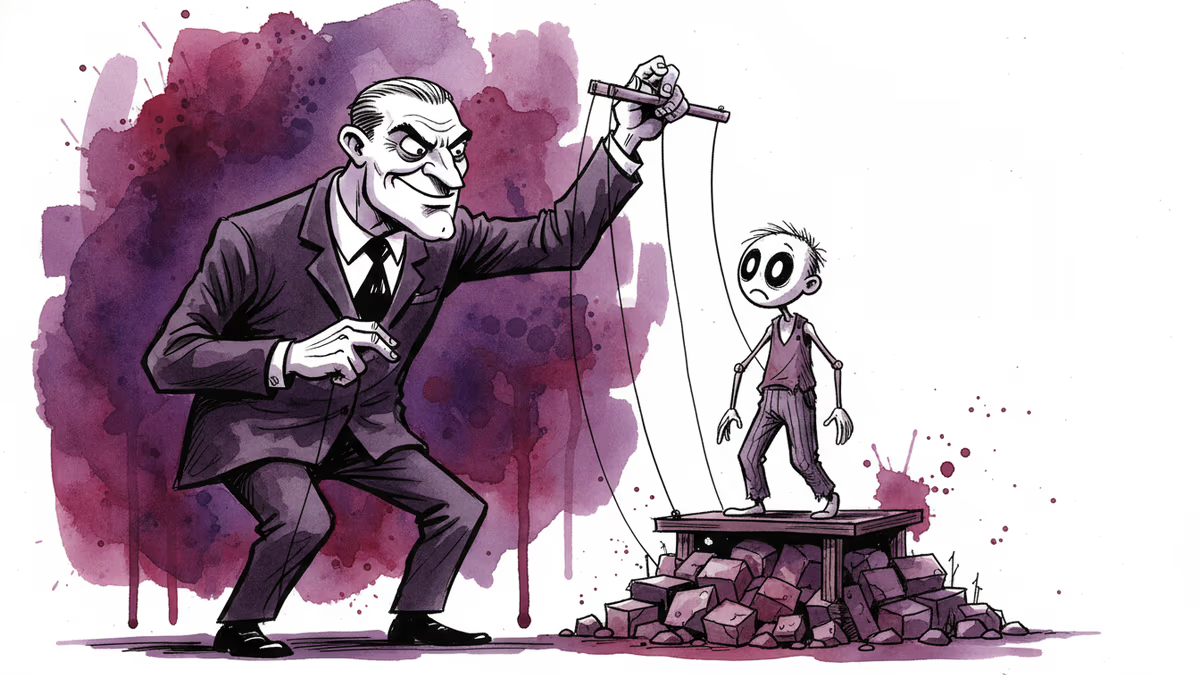
The Wizard of the Kremlin isn't really about Putin's evil. It's about the clever people who thought they could manage him—and what that says about how power actually works.
A satirical graduation address goes viral for one uncomfortable reason: it's not really wrong. What the joke reveals about AI, entry-level jobs, and the deal we made with work.
Pope Leo XIV's first encyclical, Magnifica humanitas, calls for democratic guardrails, labor protections, and moral limits on AI. What does it mean when the world's oldest institution confronts its newest disruption?
AI looks like liberation, threat, or environmental disaster depending on where you stand. A framework of nine competing narratives reveals why single-lens thinking is the real danger.
The Wizard of the Kremlin isn't really about Putin's evil. It's about the clever people who thought they could manage him—and what that says about how power actually works.
A satirical graduation address goes viral for one uncomfortable reason: it's not really wrong. What the joke reveals about AI, entry-level jobs, and the deal we made with work.
Thoughts
Share your thoughts on this article
Sign in to join the conversation