
The Commencement Speech Nobody Wanted to Hear
A satirical graduation address goes viral for one uncomfortable reason: it's not really wrong. What the joke reveals about AI, entry-level jobs, and the deal we made with work.
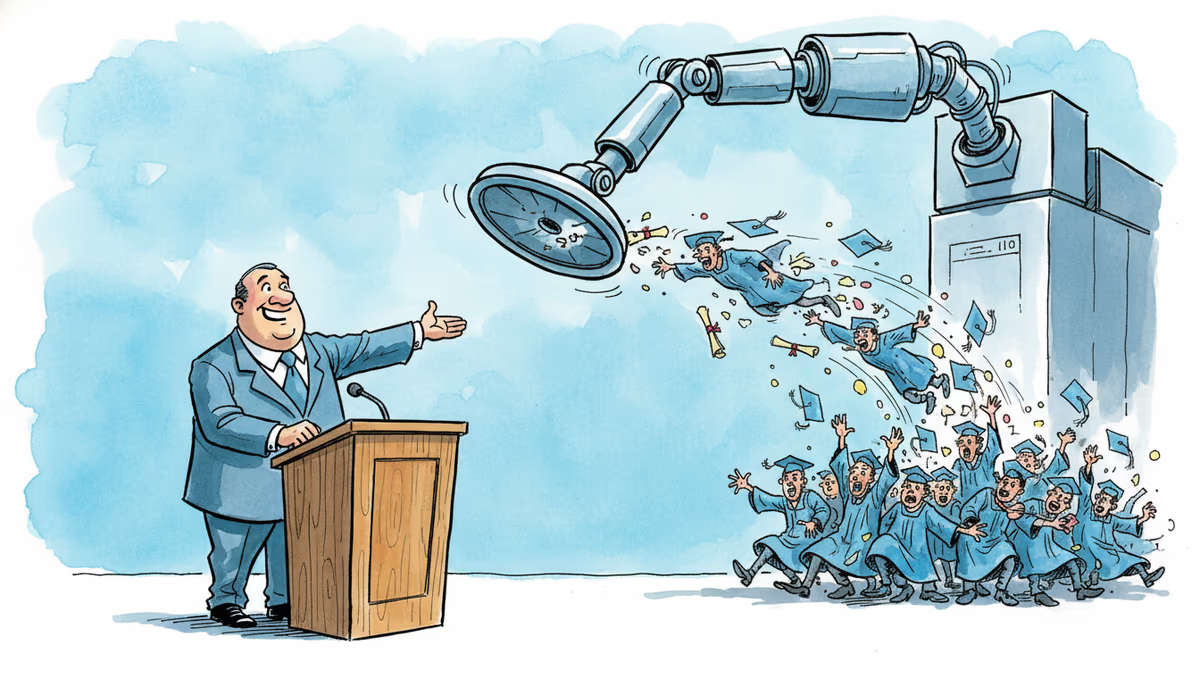
What if the most honest graduation speech of 2026 was the one meant to be a joke?
A satirical column circulating this spring imagines a tech CEO delivering a commencement address to the class of 2026. He congratulates the graduates on entering a job market where he is, quote, "doing his best to see that you are replaced by AI." He suggests that whatever is left for humans might involve "shoveling something" or "breaking rocks by hand underground." He closes by noting that while he's conserving most of his water for the AI, he's confident there will always be demand for their plasma.
People laughed. Then people got quiet.
The Joke That Landed Too Close
Satire works by exaggerating reality just enough to make it visible. The problem with this particular piece is that the exaggeration gap has narrowed considerably.
Entry-level job postings in the United States have declined by an estimated 30 to 40 percent since 2022, according to data from several major hiring platforms. The sharpest drops are in exactly the fields where new graduates traditionally got their footing: content creation, software development, data processing, customer support. Companies are not necessarily shrinking—they're restructuring. One senior employee with Claude or Copilot can now do work that previously required three juniors. The juniors are the variable being optimized away.
This isn't a distant threat. Goldman Sachs estimated in a 2023 report that AI could automate tasks equivalent to 300 million full-time jobs globally. By 2026, that projection is no longer theoretical—it's showing up in hiring freezes, restructured onboarding programs, and the quiet disappearance of roles that once served as the entry point to entire industries.
The satirical CEO asks: "Where in this brave new world is the place for human beings?" Then he admits he doesn't actually know. That admission, buried in absurdist comedy, is the most truthful moment in the piece.

Why This Generation Hears It Differently
Every generation has been told that automation would take their jobs. Every generation has also watched new jobs emerge. So why does this moment feel different to the class of 2026?
Partly it's speed. The agricultural revolution took centuries. The industrial revolution took decades. The current AI transition is compressing into years. The standard reassurance—"new jobs will emerge"—may still be true in the long run, but the long run is cold comfort when rent is due next month. History's optimistic arc doesn't synchronize with individual career timelines.
Partly it's specificity. Previous automation waves primarily displaced physical, repetitive labor. This wave is targeting cognitive, credentialed work—the exact work that a four-year degree was supposed to unlock. A textile worker in 1820 could not have anticipated becoming a software engineer. A 2026 English literature graduate being told to "pivot to prompt engineering" is being asked to abandon the very thing they spent four years and significant debt developing.
And partly it's the messenger. When Elon Musk or Sam Altman stands at a podium and talks about liberating humanity from drudgery, the people most immediately affected by that liberation are not in the room. The satirical CEO's line—"I remember when I had a job lined up, a human girlfriend, and I thought: I can't wait to live in a world where people have none of these things"—lands because it captures a real asymmetry. The people building AI are largely insulated from its displacement effects. The people absorbing those effects are largely not building AI.
The Architecture of the Problem
The deeper issue the satire exposes isn't technological—it's structural.
Modern societies built their social contracts around employment as the primary mechanism for distributing income, healthcare, housing access, and even identity. That architecture was already under strain before AI. The gig economy, wage stagnation, and the erosion of employer-provided benefits had been quietly dismantling the postwar employment compact for decades. AI is accelerating the dismantling, but it didn't design the building.
Universal basic income, reduced working hours, expanded social safety nets, and redesigned education pipelines are all on the policy table. None of them are moving at the speed of the disruption they're meant to address. The satirical CEO jokes that society "still very much demands that you have a job" for healthcare and basic needs—and that's not satire. That's a description of how the system actually works, and why the system's failure to adapt creates genuine suffering rather than mere inconvenience.
Different stakeholders read this moment differently. Investors see productivity gains and margin expansion. Policymakers see a revenue and retraining problem. Educators see a curriculum crisis. And the graduates themselves—Emily, as the satirist names her—see a door that was promised to open, and doesn't.
This content is AI-generated based on source articles. While we strive for accuracy, errors may occur. We recommend verifying with the original source.
Related Articles
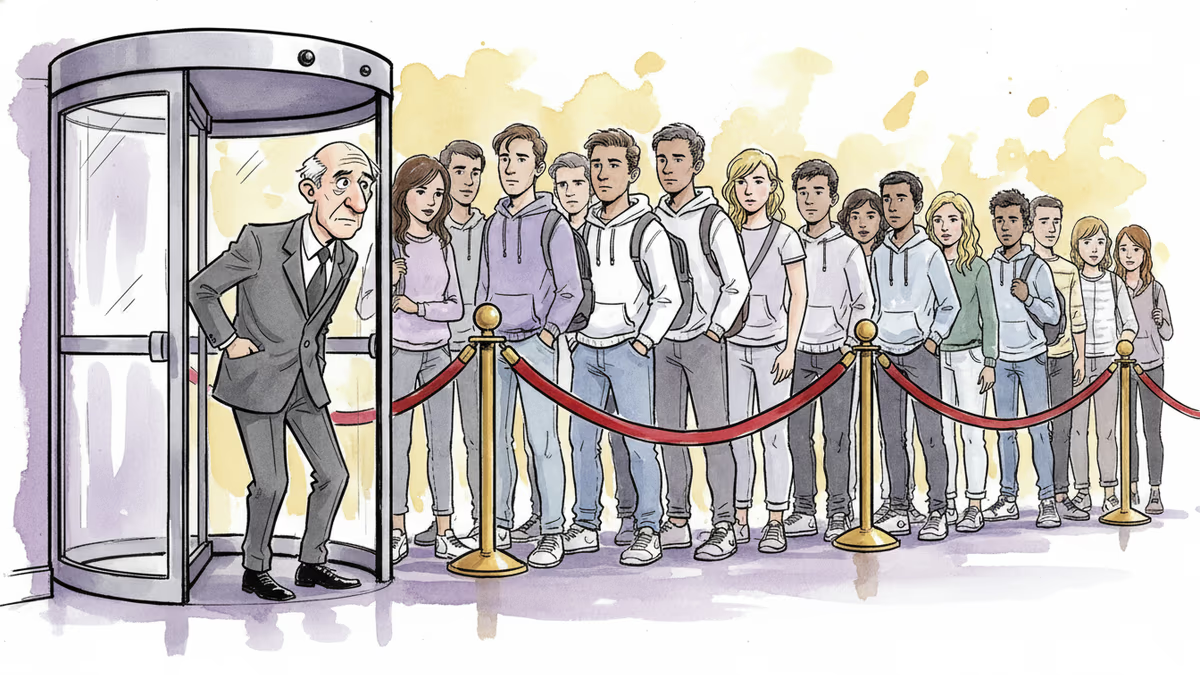
The average U.S. retirement age has climbed from 57 to well past 65. As people live longer and social bonds outside work erode, the old script for stepping away no longer holds. Here's why.
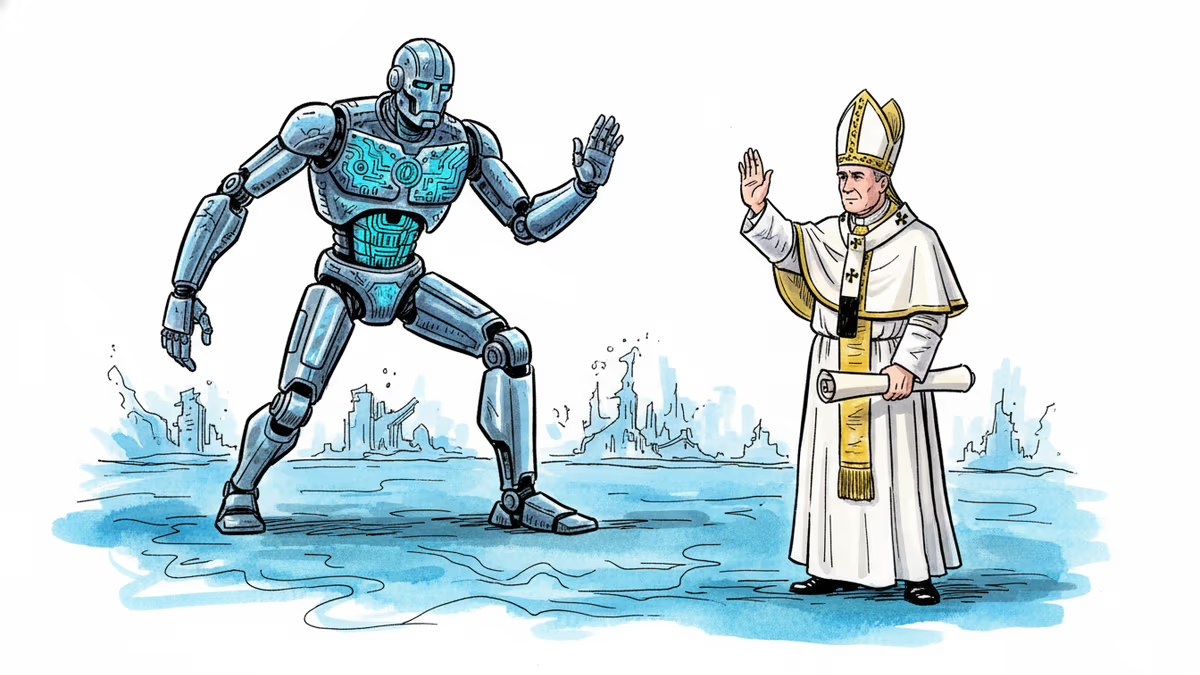
Pope Leo XIV's first encyclical, Magnifica humanitas, calls for democratic guardrails, labor protections, and moral limits on AI. What does it mean when the world's oldest institution confronts its newest disruption?
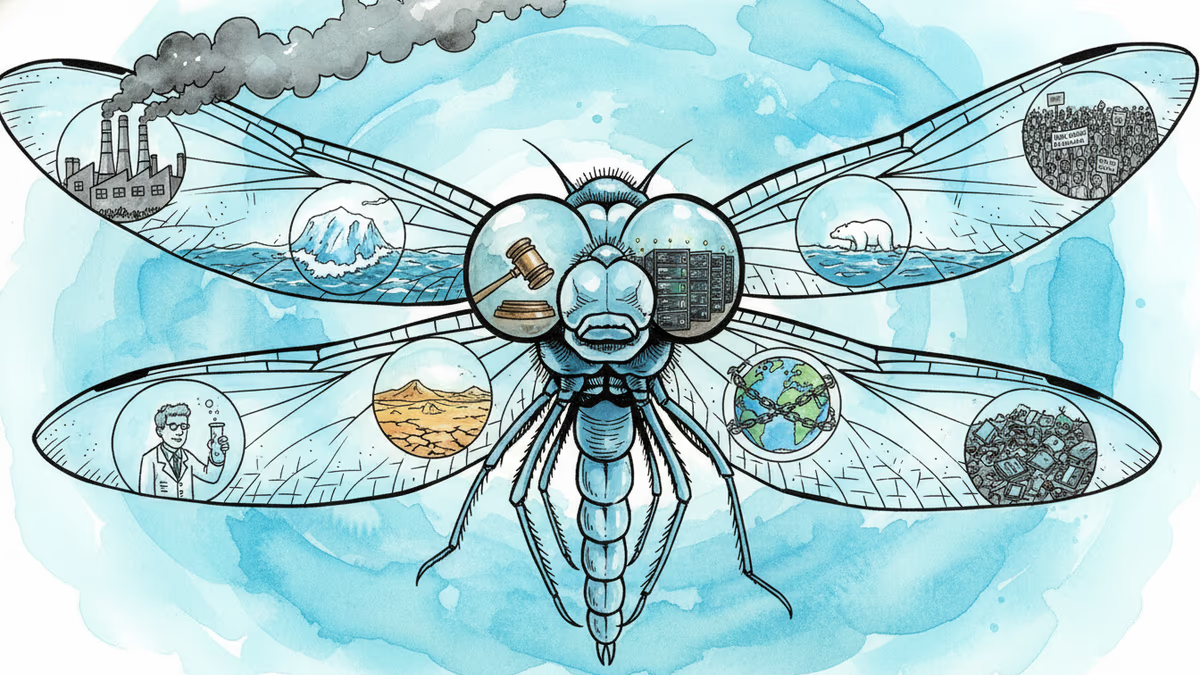
AI looks like liberation, threat, or environmental disaster depending on where you stand. A framework of nine competing narratives reveals why single-lens thinking is the real danger.
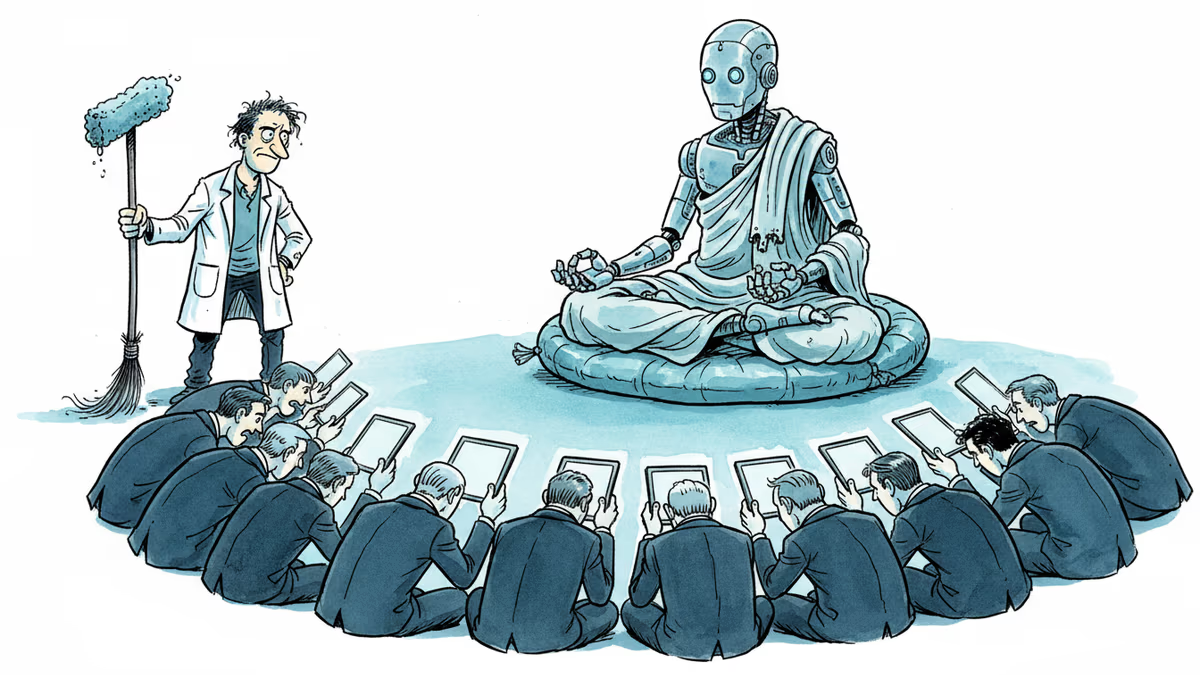
A humanoid robot has been ordained as a Buddhist monk. Another chased wild boars in Warsaw. But a tech journalist who actually poked one with a stick says: this is closer to flying cars than ChatGPT.
The average U.S. retirement age has climbed from 57 to well past 65. As people live longer and social bonds outside work erode, the old script for stepping away no longer holds. Here's why.
Pope Leo XIV's first encyclical, Magnifica humanitas, calls for democratic guardrails, labor protections, and moral limits on AI. What does it mean when the world's oldest institution confronts its newest disruption?
AI looks like liberation, threat, or environmental disaster depending on where you stand. A framework of nine competing narratives reveals why single-lens thinking is the real danger.
A humanoid robot has been ordained as a Buddhist monk. Another chased wild boars in Warsaw. But a tech journalist who actually poked one with a stick says: this is closer to flying cars than ChatGPT.
Thoughts
Share your thoughts on this article
Sign in to join the conversation